


 本文介绍了C++中的右值引用、移动语义和完美转发的概念及应用。通过示例代码展示了右值引用如何用于提高效率,移动构造函数和移动赋值操作符的使用,以及完美转发在函数模板中的作用,解释了如何正确传递参数以保留其原始性质。

右值引用和左值引用
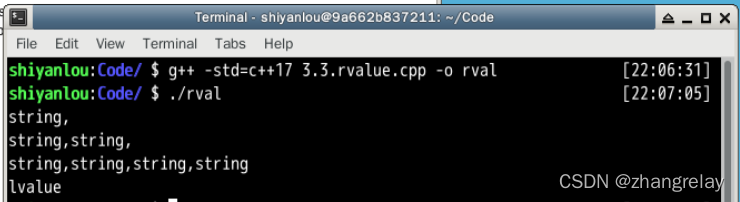
#include <iostream>
#include <string>

void reference(std::string& str) {
    std::cout << "lvalue" << std::endl;
}
void reference(std::string&& str) {
    std::cout << "rvalue" << std::endl;
}

int main()
{
    std::string  lv1 = "string,";       // lv1 is a lvalue
    // std::string&& r1 = lv1;           // illegal, rvalue can't ref to lvalue
    std::string&& rv1 = std::move(lv1); // legal, std::move can convert lvalue to rvalue
    std::cout << rv1 << std::endl;      // string,

    const std::string& lv2 = lv1 + lv1; // legal, const lvalue reference can extend temp variable's lifecycle
    // lv2 += "Test";                   // illegal, const ref can't be modified
    std::cout << lv2 << std::endl;      // string,string

    std::string&& rv2 = lv1 + lv2;      // legal, rvalue ref extend lifecycle
    rv2 += "string";                    // legal, non-const reference can be modified
    std::cout << rv2 << std::endl;      // string,string,string,

    reference(rv2);                     // output: lvalue

    return 0;
}
一个很有趣的历史遗留问题
#include <iostream>

int main() {
    // int &a = std::move(1); // illegal, non-const lvalue reference cannot ref rvalue
    const int &b = std::move(1); // legal, const lvalue reference can

    std::cout << b << std::endl;
}

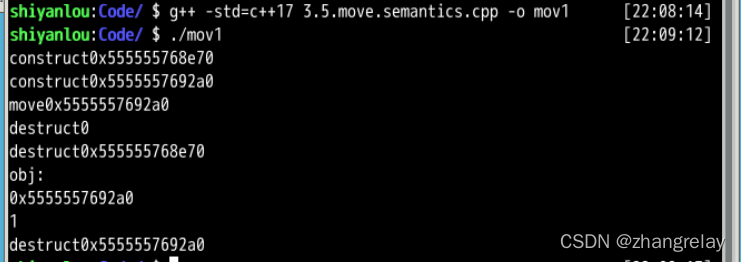
#include <iostream>
class A {
public:
    int *pointer;
    A():pointer(new int(1)) {
        std::cout << "construct" << pointer << std::endl;
    }
    A(A& a):pointer(new int(*a.pointer)) {
        std::cout << "copy" << pointer << std::endl;
    } // meaningless object copy
    A(A&& a):pointer(a.pointer) {
        a.pointer = nullptr;
        std::cout << "move" << pointer << std::endl;
    }
    ~A(){
        std::cout << "destruct" << pointer << std::endl;
        delete pointer;
    }
};
// avoid compiler optimization
A return_rvalue(bool test) {
    A a,b;
    if(test) return a; // equal to static_cast<A&&>(a);
    else return b;     // equal to static_cast<A&&>(b);
}
int main() {
    A obj = return_rvalue(false);
    std::cout << "obj:" << std::endl;
    std::cout << obj.pointer << std::endl;
    std::cout << *obj.pointer << std::endl;
    return 0;
}
移动语义
#include <iostream> // std::cout
#include <utility>  // std::move
#include <vector>   // std::vector
#include <string>   // std::string

int main() {

    std::string str = "Hello world.";
    std::vector<std::string> v;

    // use push_back(const T&), copy
    v.push_back(str);
    // "str: Hello world."
    std::cout << "str: " << str << std::endl;

    // use push_back(const T&&), no copy
    // the string will be moved to vector, and therefore std::move can reduce copy cost
    v.push_back(std::move(str));
    // str is empty now
    std::cout << "str: " << str << std::endl;

    return 0;
}

完美转发
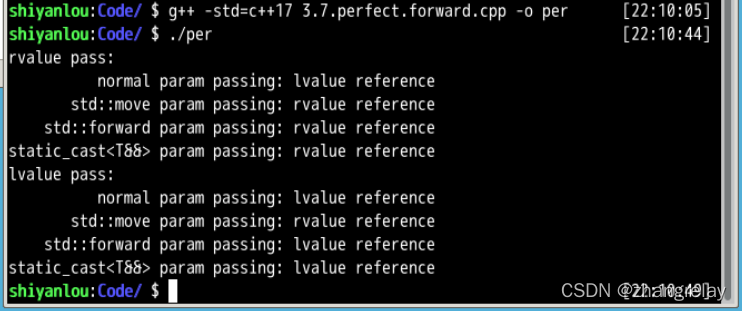
#include <iostream>
#include <utility>
void reference(int& v) {
    std::cout << "lvalue reference" << std::endl;
}
void reference(int&& v) {
    std::cout << "rvalue reference" << std::endl;
}
template <typename T>
void pass(T&& v) {
    std::cout << "          normal param passing: ";
    reference(v);
    std::cout << "       std::move param passing: ";
    reference(std::move(v));
    std::cout << "    std::forward param passing: ";
    reference(std::forward<T>(v));
    std::cout << "static_cast<T&&> param passing: ";
    reference(static_cast<T&&>(v));
}
int main() {
    std::cout << "rvalue pass:" << std::endl;
    pass(1);

    std::cout << "lvalue pass:" << std::endl;
    int l = 1;
    pass(l);

    return 0;
}





 扫一扫
扫一扫


 1059
1059

 被折叠的 条评论
为什么被折叠?
被折叠的 条评论
为什么被折叠?
 到【灌水乐园】发言





