



203. 移除链表元素
重点:
设置哑节点 dummyHead,以便统一对要移除元素是否是头节点的操作
易错点:
最后要返回 dummyHead.next 而不是 head,因为 head 有可能已经被删除
/**
 * Definition for singly-linked list.
 * public class ListNode {
 *     int val;
 *     ListNode next;
 *     ListNode() {}
 *     ListNode(int val) { this.val = val; }
 *     ListNode(int val, ListNode next) { this.val = val; this.next = next; }
 * }
 */
class Solution {
    public ListNode removeElements(ListNode head, int val) {
        ListNode dummyHead = new ListNode();
        dummyHead.next = head;
        ListNode cur = dummyHead;
        while (cur.next != null) {
            if (cur.next.val == val) {
                cur.next = cur.next.next;
            } else {
                cur = cur.next;
            }
        }
        return dummyHead.next;
    }
}
// TODO: 递归方法
707. 设计链表
重点:
- 再创建一个
ListNode类很有必要,MyLinkedList只添加成员变量size和dummyHead - 要找到第 n 个节点,则必须使第 n 个节点为
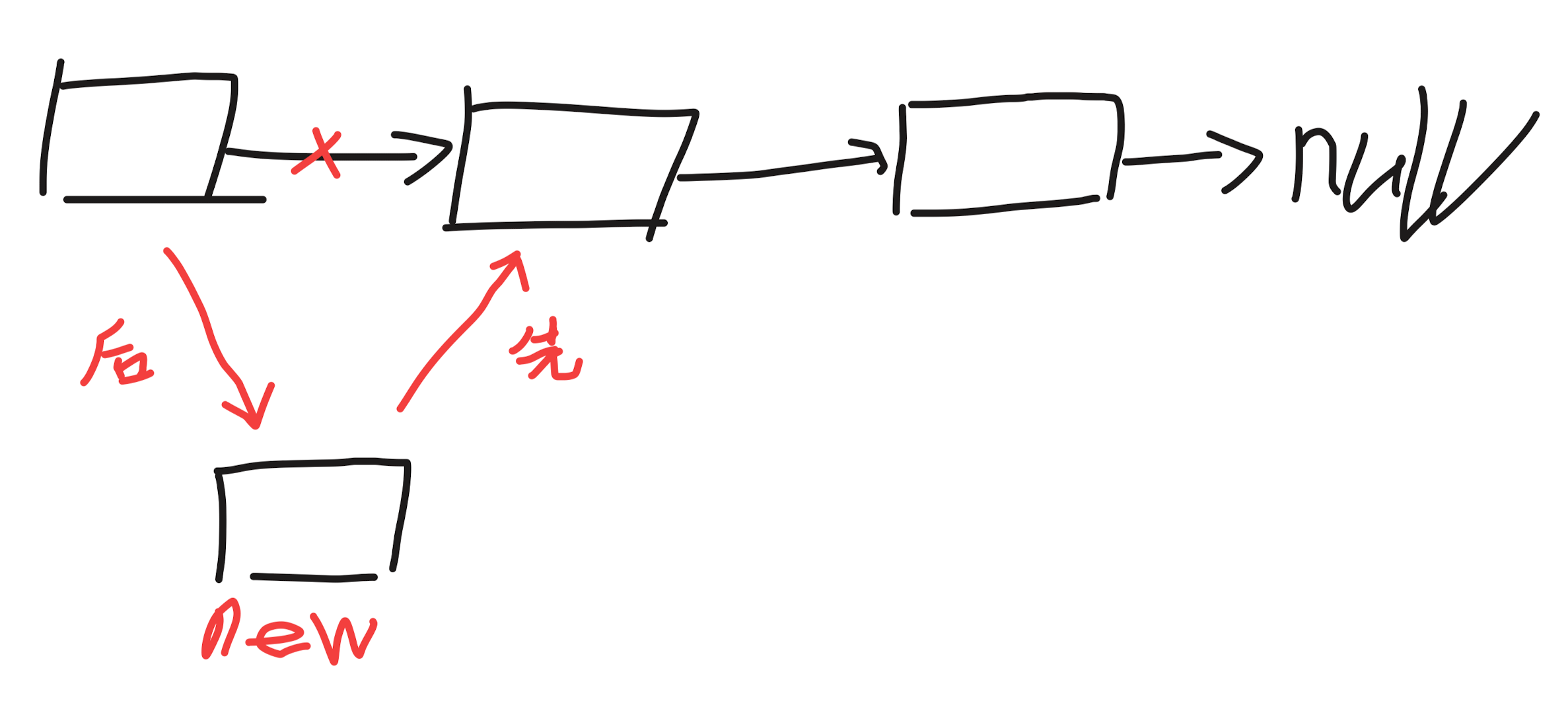
cur.next,也就是使cur指向第 n - 1 个节点 - 增加节点时,先修改右边的,再修改左边的。可以省去创建一个临时变量保存,如图:
易错点:
- 每次增加或删除节点后,
size也要同步增或减 addAtIndex的index范围是0 ~ size(size相当于在末尾添加)
deleteAtIndex的index范围是0 ~ size - 1
class MyLinkedList {
    class ListNode {
        public int val;
        public ListNode next;

        public ListNode(int val) {
            this.val = val;
        }

        public ListNode(int val, ListNode next) {
            this.val = val;
            this.next = next;
        }
    }

    int size;
    ListNode dummyHead;

    public MyLinkedList() {
        dummyHead = new ListNode(0);
    }

    public int get(int index) {
        if (index >= size || index < 0) {
            return -1;
        }
        int n = index;
        ListNode cur = dummyHead.next;
        for (; n > 0; n--) {
            cur = cur.next;
        }
        return cur.val;
    }

    public void addAtHead(int val) {
        ListNode newNode = new ListNode(val);
        newNode.next = dummyHead.next;
        dummyHead.next = newNode;
        size++;
    }

    public void addAtTail(int val) {
        addAtIndex(size, val);
    }

    public void addAtIndex(int index, int val) {
        int n = index;
        if (n < 0 || n > size) {
            return;
        }
        ListNode cur = dummyHead;
        for (; n > 0; n--) {
            cur = cur.next;
        }
        ListNode newNode = new ListNode(val);
        newNode.next = cur.next;
        cur.next = newNode;
        size++;
    }

    public void deleteAtIndex(int index) {
        int n = index;
        if (n < 0 || n >= size) {
            return;
        }
        ListNode cur = dummyHead;
        for (; n > 0; n--) {
            cur = cur.next;
        }
        cur.next = cur.next.next;
        size--;
    }
}
206. 反转链表
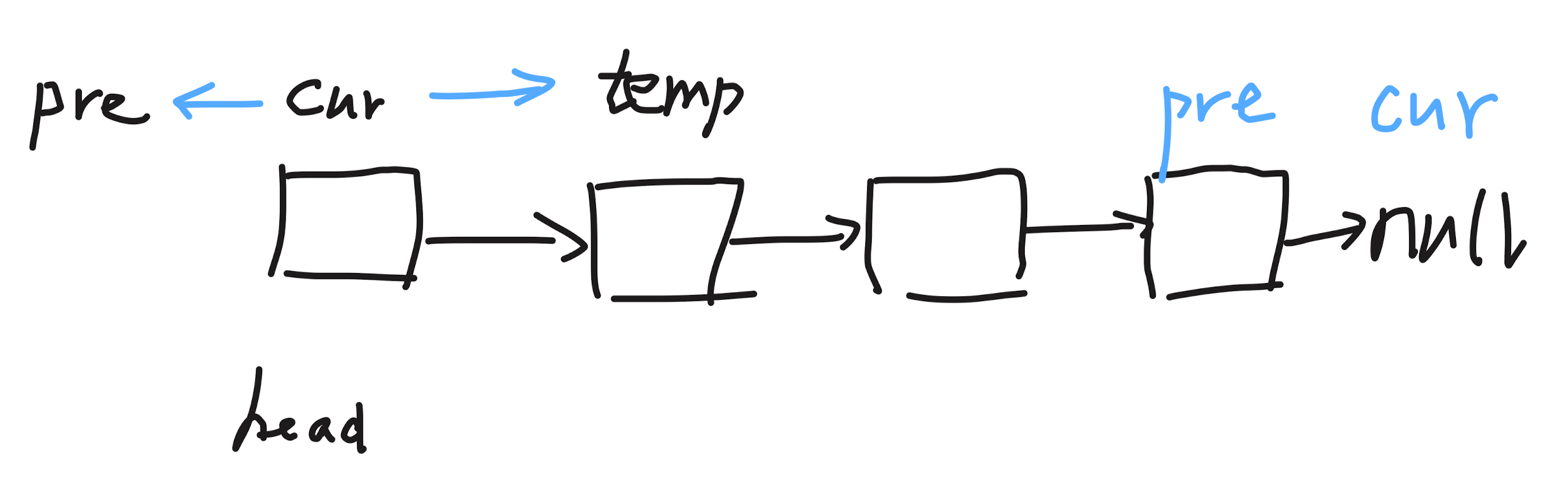
思路:双指针。cur 指向 head,pre 指向 null,同时用一个临时变量 temp 保存 cur.next。最终 cur 指向 null,返回 pre 即可。
双指针:
class Solution {
    public ListNode reverseList(ListNode head) {
        ListNode cur = head;
        ListNode pre = null;
        for (; cur != null;) {
            ListNode temp = cur.next;
            cur.next = pre;
            pre = cur;
            cur = temp;
        }
        return pre;
    }
}
代码随想录递归写法:
其实就是对照着迭代法改的
class Solution {
    public ListNode reverseList(ListNode head) {
        return reverse(head, null);
    }
    public ListNode reverse(ListNode cur, ListNode pre) {
        if (cur == null) {
            return pre;
        }
        ListNode temp = cur.next;
        cur.next = pre;
        return reverse(temp, cur);
    }
}
// TODO 官解递归写法:
有点云里雾里
public ListNode reverseList(ListNode head) {
    // 如果当前节点为空或者只有一个节点,直接返回该节点(递归终止条件)
    if (head == null || head.next == null) {
        return head;
    }

    // 递归调用,将当前节点的下一个节点作为新的头节点
    ListNode newHead = reverseList(head.next);

    // 将当前节点的下一个节点指向当前节点(反转指针方向)
    head.next.next = head;

    // 将当前节点的 next 指向 null(防止形成环)
    head.next = null;

    // 返回新头节点
    return newHead;
}
递归过程示例
以链表 1 -> 2 -> 3 -> 4 -> 5 为例:
reverseList(1)调用reverseList(2)reverseList(2)调用reverseList(3)reverseList(3)调用reverseList(4)reverseList(4)调用reverseList(5)reverseList(5)返回5(因为5.next == null)
然后开始回溯:
reverseList(4)中,4.next.next = 4→5 -> 4,然后4.next = null→5 -> 4reverseList(3)中,3.next.next = 3→5 -> 4 -> 3,然后3.next = null→5 -> 4 -> 3reverseList(2)中,2.next.next = 2→5 -> 4 -> 3 -> 2,然后2.next = null→5 -> 4 -> 3 -> 2reverseList(1)中,1.next.next = 1→5 -> 4 -> 3 -> 2 -> 1,然后1.next = null→5 -> 4 -> 3 -> 2 -> 1
最终返回 5。





 扫一扫
扫一扫


 被折叠的 条评论
为什么被折叠?
被折叠的 条评论
为什么被折叠?
 到【灌水乐园】发言





