



 这篇博客通过一个Unity游戏场景展示了两种不同的赋值方式——普通赋值和使用SO(SerializedObject)赋值,并通过Stopwatch类进行了性能测试。结果显示,两种方式在执行效率上几乎没有显著差异,这对于游戏开发中的性能优化提供了参考。
using System.Collections;
using System.Collections.Generic;
using UnityEngine;
using UGFramework;
using UnityEngine.Events;
using System.Diagnostics;

namespace GamePlay
{
    public class NewBehaviourScript : MonoBehaviour
    {
        public WeaponPropertySObj weaponP;
        public int damage = 30;
        public int damage1 = 0;
        public int damage2 = 0;
        public int TIMES = 100000000;

        void Start()
        {
            Normal();
            SO();
        }

        public void ExcuteTime(UnityAction method)
        {
            Stopwatch sw = new Stopwatch();
            sw.Start();
            method();
            sw.Stop();
            UnityEngine.Debug.Log(string.Format("测试方法总共耗时: {0} ms(毫秒)", sw.ElapsedMilliseconds));
        }

        private void Normal()
        {
            print("普通赋值");

            ToolKit.ExcuteTime(() =>
            {
                for (int i = 0; i < TIMES; i++)
                {
                    damage1 = damage;
                }
            });
        }

        private void SO()
        {
            print("so赋值");

            ToolKit.ExcuteTime(() =>
            {
                for (int i = 0; i < TIMES; i++)
                {
                    damage2 = weaponP.damage;
                }
            });
        }
    }
}
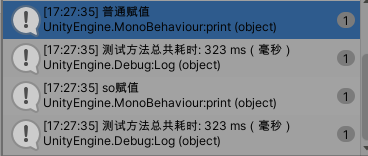
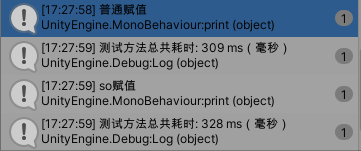
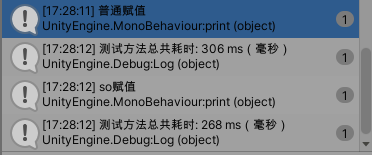
经过多次对结果进行对比,如下图:
从结果可以看到两种方式的执行效率都差不多。





 扫一扫
扫一扫


 1245
1245

 被折叠的 条评论
为什么被折叠?
被折叠的 条评论
为什么被折叠?
 到【灌水乐园】发言





