



1.前言
https://docs.ultralytics.com/zh/中文官网
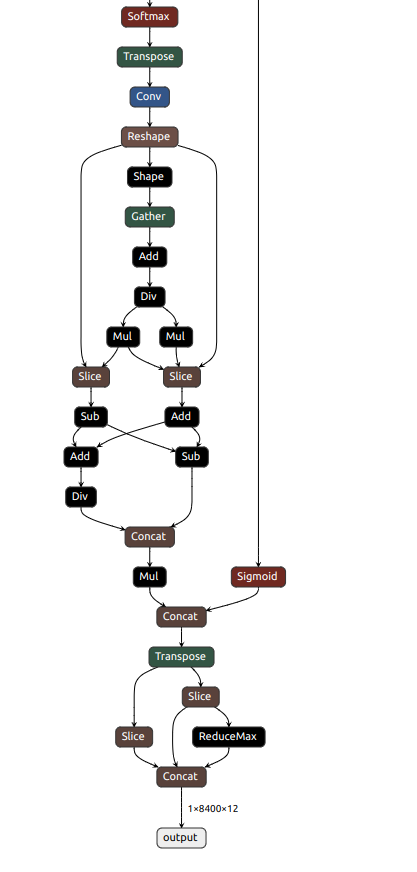
ultralytics训练yolo并导出onnx时经常需要符合一定的结构,如果直接导出onnx并不是我们想要的[1*8400*85]格式,
经典YOLOv5 的输出格式为 [batch, num_anchors, nc+5],如[1*8400*85]其中:
前4个值:边界框 (x_center, y_center, width, height)
第5个值:目标置信度
后80个值:类别概率

如果是自己数据,类别为7,那么最后值应该是4+1+7=12
https://netron.app/可以直接查看导出的onnx结构、输入输出
2.训练
现在训练yolo系列很简单了,导入库、准备好数据、迁移学习就行
如果没有GPU环境可以下载官方docker,已经有的话直接pip install ultralytics即可:
from ultralytics import YOLO

# Load a model
#model = YOLO("yolov5n.pt")
#model = YOLO("yolov8n.pt")
#model = YOLO("yolo11n.pt")
model = YOLO("yolov12n.pt")  # load a pretrained model (recommended for training)
# Train the model
results = model.train(data="data.yaml", epochs=100, imgsz=640)
#data.yaml cfg如下
path: /path_to/datasets/data
train: images/train # 训练集图像路径
val:   images/val     # 验证集图像路径
test:  images/test    # 测试集路径(可选)
#nc: 7
# 类别数量及名称
names:
  0: aaa
  1: bbb
  2: ccc
  3: ddd
  4: eee
  5: fff
  6: ggg
3.部署
最新的导出代码如下,这种结果是封装好的:
from ultralytics import YOLO

# Load a model
model = YOLO("path/to/your/best.pt")  # load a custom trained model

# Export the model
model.export(format="onnx")
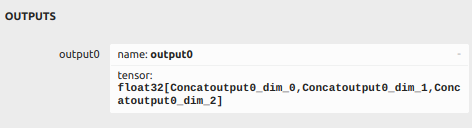
(以下内容节选)
如果想要以前的那种输出[batch, num_anchors,nc+5],可以加一段预处理再导出我们想要的格式:
# 确保模型处于评估模式
model.model.eval()

# 自定义转换模块
class OutputAdapter(nn.Module):
    def __init__(self, model):
        super().__init__()
        self.model = model
        # 直接从模型中获取类别数量
        self.nc = model.model[-1].nc  # 获取最后一层(检测头)的类别数

    def forward(self, x):
        # 获取原始输出
        raw_output = self.model(x)

        # 处理可能的元组输出情况
        if isinstance(raw_output, tuple):
            # YOLOv8可能返回多个输出,我们只需要第一个(检测结果)
            output = raw_output[0]  # 提取第一个输出(主要检测结果)
        else:
            output = raw_output  # 直接使用单个输出

        # 原始输出应为张量:[batch, channels, num_predictions]
        # 转换为:[batch, num_predictions, channels]
        output = output.permute(0, 2, 1)

        # 提取各组成部分
        boxes = output[..., :4]   # 边界框 (cx, cy, w, h)
        class_probs = output[..., 4:4+self.nc]  # 类别概率(根据实际类别数)

        # 计算置信度(取各类别概率的最大值)
        conf = torch.max(class_probs, dim=-1, keepdim=True).values

        # 拼接为 [x_c, y_c, w, h, conf, cls_prob1, ..., cls_probN]
        return torch.cat([boxes, conf, class_probs], dim=-1)  # 形状 [1, 8400, 5+nc]

# 创建虚拟输入
dummy_input = torch.randn(1, 3, 640, 640)

# 封装模型
wrapped_model = OutputAdapter(model.model)
wrapped_model.eval()  # 强制设置为评估模式

# 定义动态轴设置 - 这里我们设置为False(静态尺寸)
dynamic = False  # 定义dynamic变量

test_output = wrapped_model(torch.randn(1, 3, 640, 640))
print("Test output shape:", test_output.shape)

#然后再导出onnx。
完整代码如下:
import torch
import torch.nn as nn
import os
from ultralytics import YOLO

# Load the YOLO11 model
model = YOLO('runs/train/yolov5/weights/best.pt')

# Export the model to ONNX format
# model.export(format="onnx")  # creates 'onnx'

# 确保模型处于评估模式
model.model.eval()

# 自定义转换模块
class OutputAdapter(nn.Module):
    def __init__(self, model):
        super().__init__()
        self.model = model
        # 直接从模型中获取类别数量
        self.nc = model.model[-1].nc  # 获取最后一层(检测头)的类别数

    def forward(self, x):
        # 获取原始输出
        raw_output = self.model(x)

        # 处理可能的元组输出情况
        if isinstance(raw_output, tuple):
            # YOLOv8可能返回多个输出,我们只需要第一个(检测结果)
            output = raw_output[0]  # 提取第一个输出(主要检测结果)
        else:
            output = raw_output  # 直接使用单个输出

        # 原始输出应为张量:[batch, channels, num_predictions]
        # 转换为:[batch, num_predictions, channels]
        output = output.permute(0, 2, 1)

        # 提取各组成部分
        boxes = output[..., :4]   # 边界框 (cx, cy, w, h)
        class_probs = output[..., 4:4+self.nc]  # 类别概率(根据实际类别数)

        # 计算置信度(取各类别概率的最大值)
        conf = torch.max(class_probs, dim=-1, keepdim=True).values

        # 拼接为 [x_c, y_c, w, h, conf, cls_prob1, ..., cls_probN]
        return torch.cat([boxes, conf, class_probs], dim=-1)  # 形状 [1, 8400, 5+nc]

# 创建虚拟输入
dummy_input = torch.randn(1, 3, 640, 640)

# 封装模型
wrapped_model = OutputAdapter(model.model)
wrapped_model.eval()  # 强制设置为评估模式

# 定义动态轴设置 - 这里我们设置为False(静态尺寸)
dynamic = False  # 定义dynamic变量

test_output = wrapped_model(torch.randn(1, 3, 640, 640))
print("Test output shape:", test_output.shape)

# 导出ONNX模型
torch.onnx.export(
    wrapped_model,
    dummy_input,
    "yolov5_custom.onnx",
    input_names=["images"],
    output_names=["output"],
    opset_version=12,
    dynamic_axes={
        'images': {0: 'batch_size'},
        'output': {0: 'batch_size', 1: 'num_boxes'}
    } if dynamic else None  # 根据dynamic变量决定是否使用动态轴
)

print("ONNX模型导出成功!")
4.预测预处理
def postprocess(self, out):
    # 获取batch中的第一个结果
    batch_output = out[0]  # [25200, 85]

    # 筛选置信度高于阈值的预测
    conf_mask = batch_output[:, 4] > self.config.confidence.thresh
    preds = batch_output[conf_mask]

    if preds.size == 0:
       return np.array([]), np.array([]), np.array([])

    # 计算调整后的置信度 = obj_conf * max_cls_conf
    class_confs = preds[:, 5:]
    max_class_conf = np.max(class_confs, axis=1)
    adjusted_conf = preds[:, 4] * max_class_conf

    # 获取边界框
    bboxes = bbox_cxywh_to_xyxy(preds[:, :4])

    # 获取类别
    class_ids = np.argmax(class_confs, axis=1)

    return class_ids, adjusted_conf, bboxes
5.预处理模型配置
yolov5:
不需要归一化
{
  "base": {
    "framework": "onnx",
    "model_name": "yolov5",
    "model_root": null,
    "model_path": "YOLOV8/yolov5/yolov5.onnx",
    "gpu_id": 0,
    "mean": [
      0.0,
      0.0,
      0.0
    ],
    "std": [
      1.0,
      1.0,
      1.0
    ],
    "input_names": [
      "images"
    ],
    "input_shape": [
      [
        1,
        3,
        640,
        640
      ]
    ],
    "output_shape": null,
    "output_names": [
      "output"
    ],
    "asnumpy": true,
    "dtype": "float32",
    "enable_batch_inference": false,
    "extensions": false,
    "encrypted": true,
    "tensorrt": {
      "calib": {
        "batch_size": 32,
        "input_shape": [
          3,
          224,
          224
        ],
        "max_samples": null,
        "calib_data": null,
        "cache_file": null,
        "mean": [
          0.0,
          0.0,
          0.0
        ],
        "std": [
          1.0,
          1.0,
          1.0
        ]
      },
      "dynamic_shapes": null
    }
  },
  "task": "detect",
  "task_inputs": [
    "image",
    "bbox"
  ],
  "task_outputs": [
    "label",
    "confidence",
    "bbox"
  ],
  "save_dir": "results",
  "image_dir": "figures",
  "data_processor": "YOLOV5",
  "normalize": true,
  "patches": null,
  "keep_ratio": true,
  "bbox_resize_scale": 1.0,
  "merge_batch_result": true,
  "label": {
    "target_name": null,
    "target_num": null
  },
  "confidence": {
    "thresh": 0.3
  },
  "keypoint_confidence": {
    "thresh": 0.3
  },
  "bbox": {
    "h_range": null,
    "w_range": null,
    "area_range": null,
    "aspect_ratio_range": null,
    "nms_thresh": 0.45,
    "nms_topk": 100
  },
  "rbbox": {
    "h_range": null,
    "w_range": null,
    "area_range": null,
    "aspect_ratio_range": null,
    "nms_thresh": 0.45,
    "nms_topk": 100
  },
  "mask": {
    "thresh": 0.3,
    "return_type": "mask",
    "fast_resize": false,
    "nms_thresh": null
  },
  "semantic_mask": {
    "thresh": 0.3,
    "fallback": -1
  },
  "class_names": [
    "your_label",
  ],
  "_BaseModel_": "infer.detect.DetectBase",
  "_version_": "3.3.0"
}
yolov8:
{
  "base": {
    "framework": "onnx",
    "model_name": "yolov8",
    "model_root": null,
    "model_path": "YOLOV8/yolov8/yolov8_custom.onnx",
    "gpu_id": 0,
    "mean": [
      0.485,
      0.456,
      0.406
    ],
    "std": [
      0.229,
      0.224,
      0.225
    ],
    "input_names": [
      "images"
    ],
    "input_shape": [
      [
        1,
        3,
        640,
        640
      ]
    ],
    "output_shape": [
      1,
      8400,
      12
    ],
    "output_names": [
      "output"
    ],
    "asnumpy": true,
    "dtype": "float32",
    "enable_batch_inference": true,
    "extensions": false,
    "encrypted": true,
    "tensorrt": {
      "calib": {
        "batch_size": 32,
        "input_shape": [
          3,
          640,
          640
        ],
        "max_samples": null,
        "calib_data": null,
        "cache_file": null,
        "mean": [
          0.0,
          0.0,
          0.0
        ],
        "std": [
          1.0,
          1.0,
          1.0
        ]
      },
      "dynamic_shapes": null
    }
  },
  "task": "detect",
  "task_inputs": [
    "image",
    "bbox"
  ],
  "task_outputs": [
    "label",
    "confidence",
    "bbox"
  ],
  "save_dir": "results",
  "image_dir": "figures",
  "data_processor": "YOLOV5",
  "normalize": true,
  "patches": null,
  "keep_ratio": true,
  "bbox_resize_scale": 1.0,
  "merge_batch_result": true,
  "label": {
    "target_name": null,
    "target_num": null
  },
  "confidence": {
    "thresh": 0.1
  },
  "keypoint_confidence": {
    "thresh": 0.3
  },
  "bbox": {
    "h_range": null,
    "w_range": null,
    "area_range": null,
    "aspect_ratio_range": null,
    "nms_thresh": 0.6,
    "nms_topk": 100
  },
  "rbbox": {
    "h_range": null,
    "w_range": null,
    "area_range": null,
    "aspect_ratio_range": null,
    "nms_thresh": 0.45,
    "nms_topk": 100
  },
  "mask": {
    "thresh": 0.3,
    "return_type": "mask",
    "fast_resize": false,
    "nms_thresh": null
  },
  "semantic_mask": {
    "thresh": 0.3,
    "fallback": -1
  },
  "class_names": [
    "your_label"
  ],
  "_BaseModel_": "infer.detect.DetectBase",
  "_version_": "3.3.0"
}







 扫一扫
扫一扫


 1269
1269

 被折叠的 条评论
为什么被折叠?
被折叠的 条评论
为什么被折叠?
 到【灌水乐园】发言





