


表面着色器光照示例
因为延时光照(Deferred lighting)不能与一些自定义 per-material 光照模式(lighting model)很好的运行,在下面大部分例子中我们只在着色器的正向渲染(Forward Rendering)中编译。
Diffuse 漫反射
Diffuse = 直射光颜色 * max(0,cos夹角(光和法线的夹角) ) Tip:cosθ = 光方向· 法线方向 我们从内置的Lambert光照模式(lighting model)开始:
       Shader
     "Example/Diffuse Texture"

     {

    Properties
     {

      _MainTex
     (
     "Texture"
     ,

     2D
     )

     =

     "white"

     {
     }


     }

    SubShader
     {

      Tags
     {

     "RenderType"

     =

     "Opaque"

     }

      CGPROGRAM

     #
     pragma
      surface surf Lambert


     struct

     Input

     {


     float2
      uv_MainTex
     ;


     }
     ;


     sampler2D
      _MainTex
     ;


     void
      surf
     (
     Input
      IN
     ,
      inout
     SurfaceOutput
      o
     )

     {

          o
     .
     Albedo
     =
      tex2D
     (
     _MainTex
     ,
      IN
     .
     uv_MainTex
     )
     .
     rgb
     ;


     }

      ENDCG

     }

    Fallback
     "Diffuse"


     }
下面是效果一个有纹理(texture)和一个没有真实的纹理(texture)。(在场景中有一个方向光):
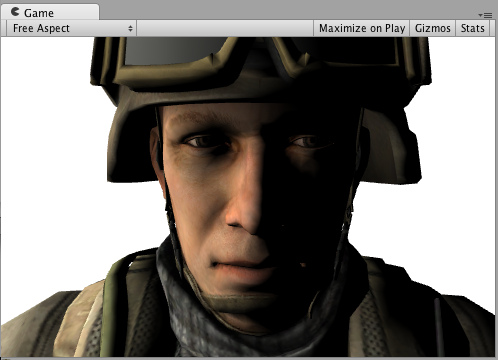
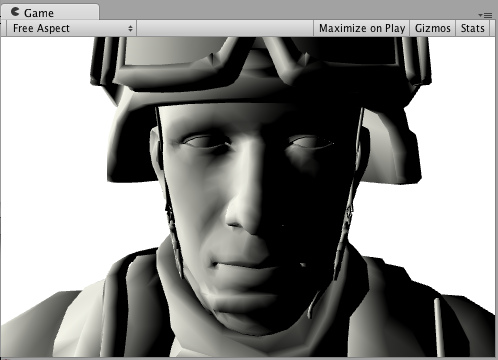
现在,让我们来做一个完全一样的。但,是我们自己编写的光照模式(lighting model)而不是使用内置的Lambert。
表面着色器光照模式(Surface Shader Lighting Models
)仅仅是需要我们编写的一些函数。下面是一个简单的Lambert。注意:"着色器部分"自身并没有改变(即下面的灰色部分)。
       Shader
     "Example/Diffuse Texture"

     {

    Properties
     {

      _MainTex
     (
     "Texture"
     ,

     2D
     )

     =

     "white"

     {
     }


     }

    SubShader
     {

      Tags
     {

     "RenderType"

     =

     "Opaque"

     }

      CGPROGRAM

     #
     pragma
      surface surf SimpleLambert


     half4
      LightingSimpleLambert
     (
     SurfaceOutput
      s
     ,

     half3
      lightDir
     ,

     half
      atten
     )

     {


     fixed
      diff
     =
      max
     (
     0
     ,
      dot
     (
     s
     .
     Normal
     ,
      lightDir
     )
     )
     ;


     fixed4
      c
     ;

          c
     .
     rgb
     =
      s
     .
     Albedo
     *
      _LightColor0
     .
     rgb
     *

     (
     diff
     *
      atten
     *
     2
     )
     ;

          c
     .
     a
     =
      s
     .
     Alpha
     ;


     return
      c
     ;


     }


     struct

     Input

     {


     float2
      uv_MainTex
     ;


     }
     ;


     sampler2D
      _MainTex
     ;


     void
      surf
     (
     Input
      IN
     ,
      inout
     SurfaceOutput
      o
     )

     {

          o
     .
     Albedo
     =
      tex2D
     (
     _MainTex
     ,
      IN
     .
     uv_MainTex
     )
     .
     rgb
     ;


     }

      ENDCG

     }

    Fallback
     "Diffuse"


     }
就这样我们这个点单的漫反射光照模式(Diffuse lighting model)是一个名叫LightingSimpleLambert的函数。它计算的是表面法线(surface normal)与灯光方向(light direction)的点积。然后应用于光线衰减和颜色。
Diffuse Wrap 漫反射遮蔽(半兰伯特)
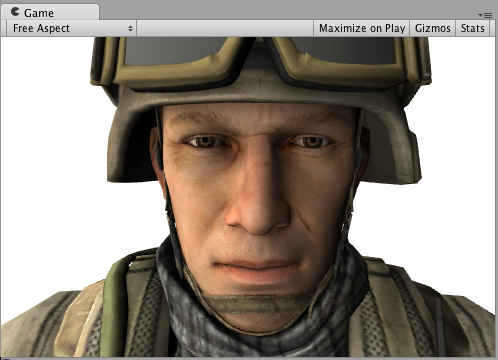
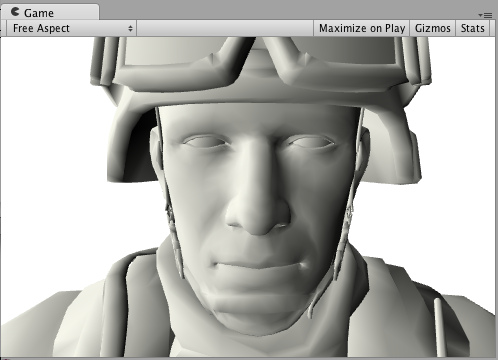
下面是遮蔽的漫反射-漫反射光照的一种改进。照明"环绕(wraps around)"在物体的边缘。它对于假冒子表面(subsurface)散射效果(scattering effect)非常有用。同样的"着色器部分"自身并没有改变(即下面的灰色部分)。我们仅仅用了不同的光照函数(黑体字部分)。
       Shader
     "Example/Diffuse Wrapped"

     {

    Properties
     {

      _MainTex
     (
     "Texture"
     ,

     2D
     )

     =

     "white"

     {
     }


     }

    SubShader
     {

      Tags
     {

     "RenderType"

     =

     "Opaque"

     }

      CGPROGRAM

     #
     pragma
      surface surf WrapLambert


     half4
      LightingWrapLambert
     (
     SurfaceOutput
      s
     ,

     half3
      lightDir
     ,

     half
      atten
     )

     {


     half
      NdotL
     =
      dot
     (
     s
     .
     Normal
     ,
      lightDir
     )
     ;


     half
      diff
     =
      NdotL
     *

     0.5

     +

     0.5
     ;


     half4
      c
     ;

          c
     .
     rgb
     =
      s
     .
     Albedo
     *
      _LightColor0
     .
     rgb
     *

     (
     diff
     *
      atten
     *

     2
     )
     ;

          c
     .
     a
     =
      s
     .
     Alpha
     ;


     return
      c
     ;


     }


     struct

     Input

     {


     float2
      uv_MainTex
     ;


     }
     ;


     sampler2D
      _MainTex
     ;


     void
      surf
     (
     Input
      IN
     ,
      inout
     SurfaceOutput
      o
     )

     {

          o
     .
     Albedo
     =
      tex2D
     (
     _MainTex
     ,
      IN
     .
     uv_MainTex
     )
     .
     rgb
     ;


     }

      ENDCG

     }

    Fallback
     "Diffuse"


     }
Toon Ramp 卡通渐变
下面是一个"渐变(Ramp)"光照模式。他使用一个纹理(texture)定义渐变怎样在表面做出反应,反应角度通过光照方向和法线求得。导入卡通光照(Toon lighting)可以实现多种效果。
       Shader
     "Example/Toon Ramp"

     {

    Properties
     {

      _MainTex
     (
     "Texture"
     ,

     2D
     )

     =

     "white"

     {
     }

      _Ramp
     (
     "Shading Ramp"
     ,

     2D
     )

     =

     "gray"

     {
     }


     }

    SubShader
     {

      Tags
     {

     "RenderType"

     =

     "Opaque"

     }

      CGPROGRAM

     #
     pragma
      surface surf Ramp


     sampler2D
      _Ramp
     ;


     half4
      LightingRamp
     (
     SurfaceOutput
      s
     ,

     half3
      lightDir
     ,

     half
      atten
     )

     {


     half
      NdotL
     =
      dot
     (
     s
     .
     Normal
     ,
      lightDir
     )
     ;


     half
      diff
     =
      NdotL
     *

     0.5

     +

     0.5
     ;


     half3
      ramp
     =
      tex2D
     (
     _Ramp
     ,

     float2
     (
     diff
     ,
     diff
     )
     )
     .
     rgb
     ;


     half4
      c
     ;

          c
     .
     rgb
     =
      s
     .
     Albedo
     *
      _LightColor0
     .
     rgb
     *
      ramp
     *

     (
     atten
     *

     2
     )
     ;

          c
     .
     a
     =
      s
     .
     Alpha
     ;


     return
      c
     ;


     }


     struct

     Input

     {


     float2
      uv_MainTex
     ;


     }
     ;


     sampler2D
      _MainTex
     ;


     void
      surf
     (
     Input
      IN
     ,
      inout
     SurfaceOutput
      o
     )

     {

          o
     .
     Albedo
     =
      tex2D
     (
     _MainTex
     ,
      IN
     .
     uv_MainTex
     )
     .
     rgb
     ;


     }

      ENDCG

     }

    Fallback
     "Diffuse"


     }
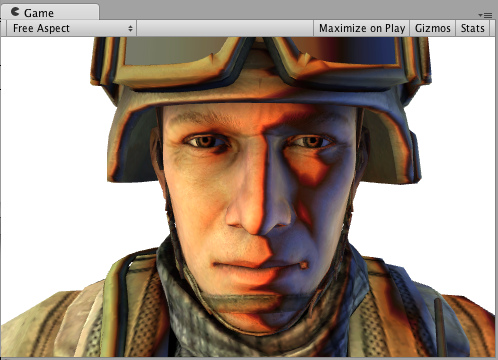
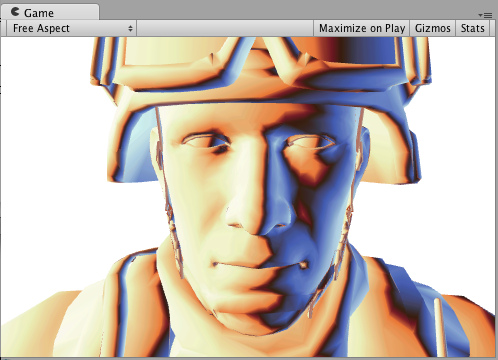

Simple Specular 简单的(phong)高光
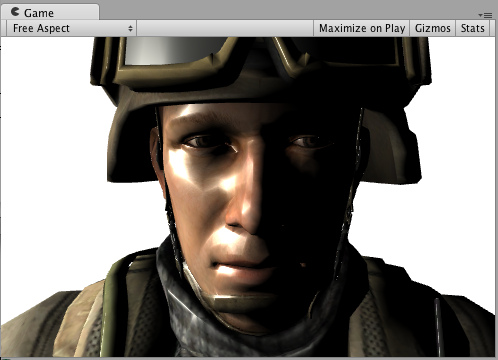
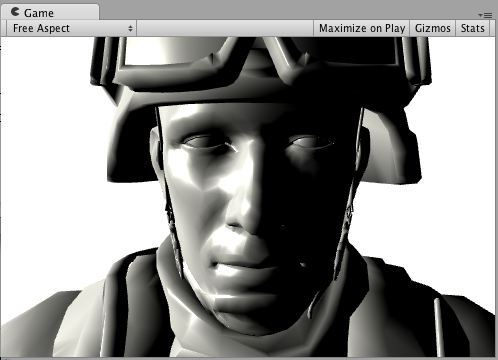
Specular = 直射光*pow(max(cosθ,0),高光的参数) 下面是一个简单的高光光照模式(specular lighting model)。它是内置的Phong,实际上做起来非常简单。放在这里仅仅是为了说明它是如何工作的。
       Shader
     "Example/Simple Specular"

     {

    Properties
     {

      _MainTex
     (
     "Texture"
     ,

     2D
     )

     =

     "white"

     {
     }


     _Spec
     (
     "SpecPower"
     ,

     float
     )

     =

     1


     }

    SubShader
     {

      Tags
     {

     "RenderType"

     =

     "Opaque"

     }

      CGPROGRAM

     #
     pragma
      surface surf SimpleSpecular


     half4
      LightingSimpleSpecular
     (
     SurfaceOutput
      s
     ,

     half3
      lightDir
     ,

     half3
      viewDir
     ,

     half
      atten
     )

     {


     half
      diff
     =
      max
     (
     0
     ,
      dot
     (
     s
     .
     Normal
     ,
      lightDir
     )
     )
     ;


     //phong模型


     //1.光线的反射方向.点到摄像机


     half3
      reflectDir
     =

     normalize
     (
     reflect
     (
     -
     lightDir
     ,
      s
     .
     Normal
     )
     )
     ;


     //2.高光底数


     float
      nh
     =
      max
     (
     0
     ,
      dot
     (
     reflectDir
     ,
      viewDir
     )
     )
     ;


     //3.高光系数:根据高光低数和高光指数求得


     float
      spec
     =
      pow
     (
     nh
     ,
      _Spec
     )
     ;


     half4
      c
     ;

          c
     .
     rgb
     =

     (
     s
     .
     Albedo
     *
      _LightColor0
     .
     rgb
     *
      diff
     +
      _LightColor0
     .
     rgb
     *
      spec
     )

     *

     (
     atten
     *

     2
     )
     ;

          c
     .
     a
     =
      s
     .
     Alpha
     ;


     return
      c
     ;


     }


     struct

     Input

     {


     float2
      uv_MainTex
     ;


     }
     ;


     sampler2D
      _MainTex
     ;


     void
      surf
     (
     Input
      IN
     ,
      inout
     SurfaceOutput
      o
     )

     {

          o
     .
     Albedo
     =
      tex2D
     (
     _MainTex
     ,
      IN
     .
     uv_MainTex
     )
     .
     rgb
     ;


     }

      ENDCG

     }

    Fallback
     "Diffuse"


     }
Simple Specular (BlinnPhong)高光
Specular = 直射光*pow(max(cosθ,0),高光的参数) Tips: θ:是反射光方向和视野方向的夹角 Tips: θ:是半角向量与法线向量的夹角 下面是一个简单的高光光照模式(specular lighting model)。它是内置的BlinnPhong,实际上做起来非常简单。放在这里仅仅是为了说明它是如何工作的。
       Shader
     "Example/Simple Specular"

     {

    Properties
     {

      _MainTex
     (
     "Texture"
     ,

     2D
     )

     =

     "white"

     {
     }


     _Spec
     (
     "SpecPower"
     ,

     float
     )

     =

     1


     }

    SubShader
     {

      Tags
     {

     "RenderType"

     =

     "Opaque"

     }

      CGPROGRAM

     #
     pragma
      surface surf


     half4
      LightingSimpleSpecular
     (
     SurfaceOutput
      s
     ,

     half3
      lightDir
     ,

     half3
      viewDir
     ,

     half
      atten
     )

     {


     half
      diff
     =
      max
     (
     0
     ,
      dot
     (
     s
     .
     Normal
     ,
      lightDir
     )
     )
     ;


     //Blinn-phong:半角向量 点x 发线向量


     //1.半角向量:求(点到光源+点到摄像机)的单位向量,他们的中间平均值


     half3
      h
     =
      normalize
     (
     lightDir
     +
      viewDir
     )
     ;


     //2.高光底数【半角向量与法线向量的余弦值】


     float
      nh
     =
      max
     (
     0
     ,
      dot
     (
     s
     .
     Normal
     ,
      h
     )
     )
     ;


     //3.高光系数:根据高光低数和高光指数求得


     float
      spec
     =
      pow
     (
     nh
     ,
      _Spec
     )
     ;


     half4
      c
     ;

          c
     .
     rgb
     =

     (
     s
     .
     Albedo
     *
      _LightColor0
     .
     rgb
     *
      diff
     +
      _LightColor0
     .
     rgb
     *
      spec
     )

     *

     (
     atten
     *

     2
     )
     ;

          c
     .
     a
     =
      s
     .
     Alpha
     ;


     return
      c
     ;


     }


     struct

     Input

     {


     float2
      uv_MainTex
     ;


     }
     ;


     sampler2D
      _MainTex
     ;


     void
      surf
     (
     Input
      IN
     ,
      inout
     SurfaceOutput
      o
     )

     {

          o
     .
     Albedo
     =
      tex2D
     (
     _MainTex
     ,
      IN
     .
     uv_MainTex
     )
     .
     rgb
     ;


     }

      ENDCG

     }

    Fallback
     "Diffuse"


     }






 扫一扫
扫一扫


 764
764

 被折叠的 条评论
为什么被折叠?
被折叠的 条评论
为什么被折叠?
 到【灌水乐园】发言





