


 本文介绍如何利用梯度下降法求解Logistic回归中的参数优化问题,并提出了一种改进的方法来提高收敛速度和准确性。通过具体公式推导展示了权重更新的过程。
1.推导
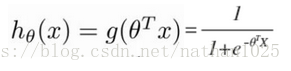 sigmoid函数


2式可以简化为 
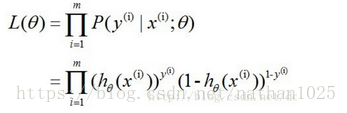
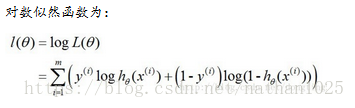
使用梯度下降法求J(θ)的最小值,θ的更新过程:


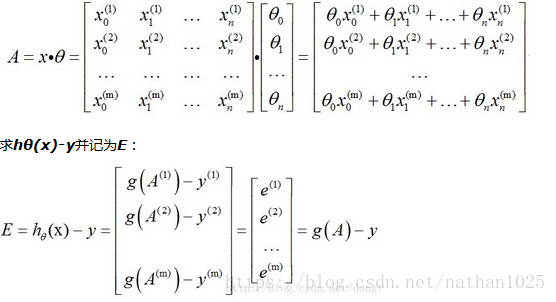
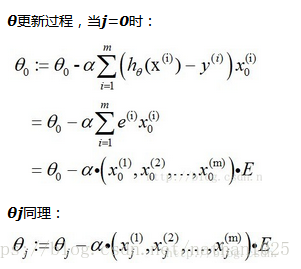
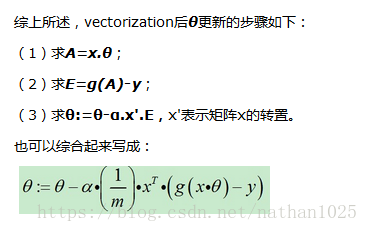
for k in range(maxCycles): #heavy on matrix operations
h = sigmoid(dataMatrix*weights)
error = (labelMat - h) #vector subtraction
weights = weights + alpha * dataMatrix.transpose()* error
return weights
3.改进

for j in range(numIter):
dataIndex = range(m)
for i in range(m):
alpha = 4/(1.0+j+i)+0.0001 #apha decreases with iteration, does not
randIndex = int(random.uniform(0,len(dataIndex)))#go to 0 because of the constant
h = sigmoid(sum(dataMatrix[randIndex]*weights))
error = classLabels[randIndex] - h
weights = weights + alpha * error * mat(dataMatrix[randIndex]).transpose()
del(dataIndex[randIndex])//?不放回
http://blog.jobbole.com/113182/
https://www.cnblogs.com/alfred2017/p/6627824.html





 扫一扫
扫一扫


 1046
1046

 被折叠的 条评论
为什么被折叠?
被折叠的 条评论
为什么被折叠?
 到【灌水乐园】发言





