


 本文介绍了Copula-GLM模型,一种结合Copula函数和广义线性模型的方法,用于分析随机事件间的相关性,尤其在尖峰分析中的应用。通过Matlab代码展示了模型的构建过程和参数估计,以及Granger因果性检测。
💥💥💞💞欢迎来到本博客❤️❤️💥💥
🏆博主优势:🌞🌞🌞博客内容尽量做到思维缜密,逻辑清晰,为了方便读者。
⛳️座右铭:行百里者,半于九十。
📋📋📋本文目录如下:🎁🎁🎁
目录

💥1 概述
Copula-GLM(Copula Generalized Linear Model)是一种基于Copula函数的建模方法,常用于模拟和分析随机事件之间的相关性。 Copula-GLM模型将Copula函数和GLM模型相结合,用于对神经元放电之间的相关性进行建模。
Copula-GLM是一种用于尖峰分析研究的统计模型。尖峰分析是一种用于研究极端事件的方法,例如极端气候事件或金融市场崩盘。Copula-GLM模型基于Copula函数和广义线性模型(GLM)的组合,可以用于建立联合分布函数,从而分析极端事件的概率和影响因素。
Copula函数是一种用于描述随机变量之间依赖关系的数学工具。它可以将边缘分布和相关性分离开来,从而更准确地描述随机变量之间的关系。GLM则是一种广泛使用的统计模型,可以用于建立因变量和自变量之间的关系,包括线性和非线性关系。
在Copula-GLM模型中,首先需要选择合适的Copula函数和边缘分布函数。然后,可以使用GLM建立因变量和自变量之间的关系。最终,可以使用模型来预测极端事件的概率和影响因素。
Copula-GLM模型可以用于各种领域的尖峰分析研究,例如气候变化、金融市场和风险管理等。它可以帮助研究人员更准确地了解极端事件的概率和影响因素,从而制定更有效的应对策略。
📚2 运行结果
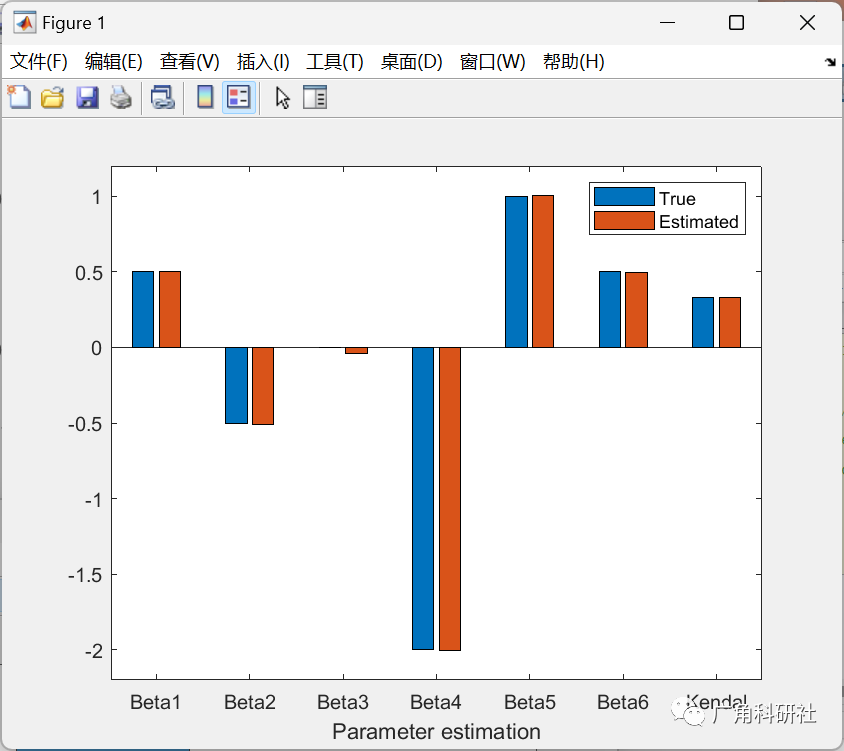
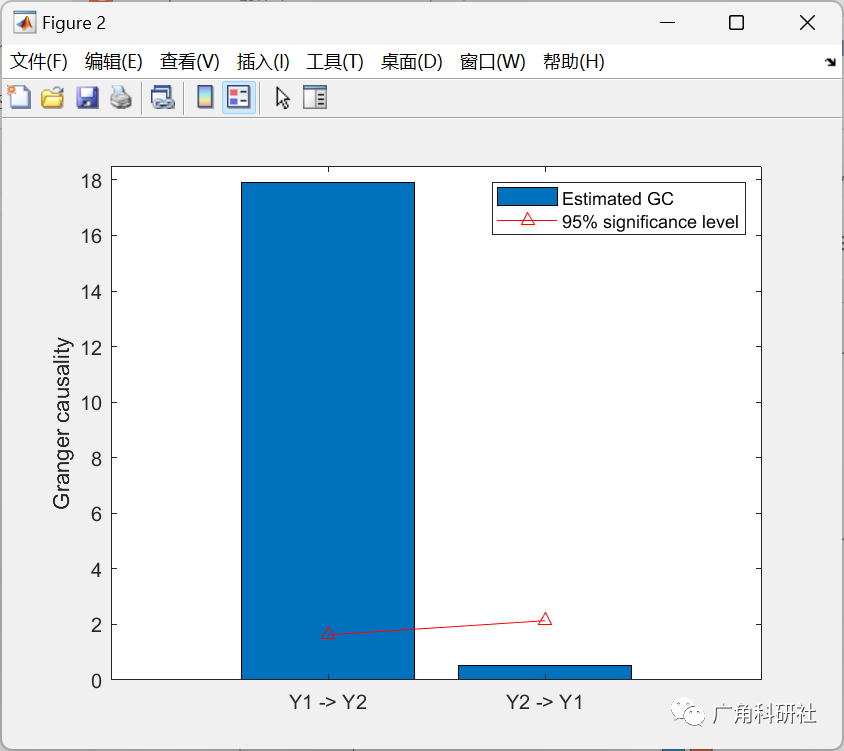
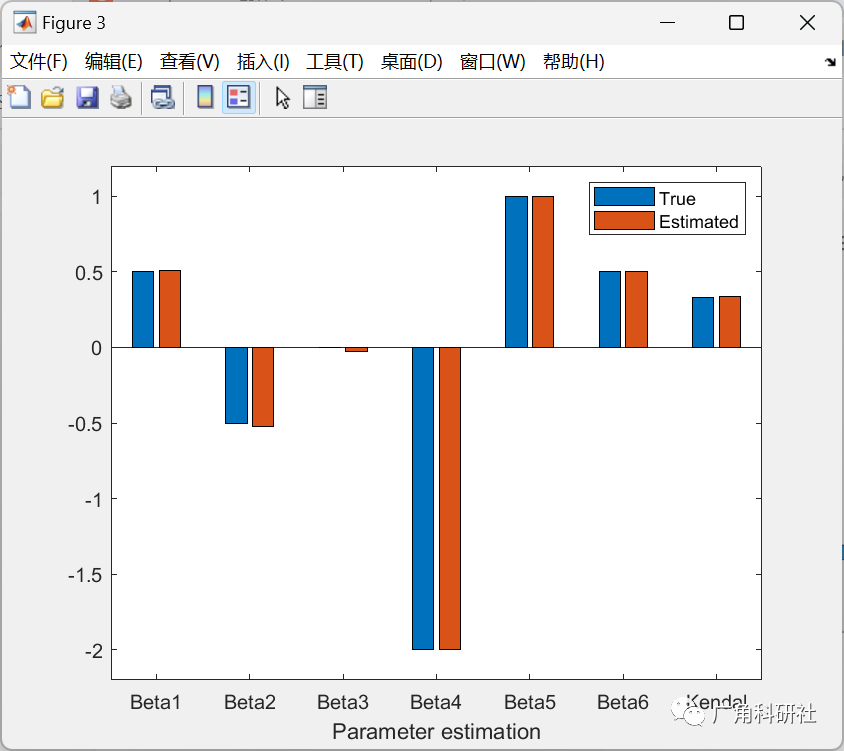
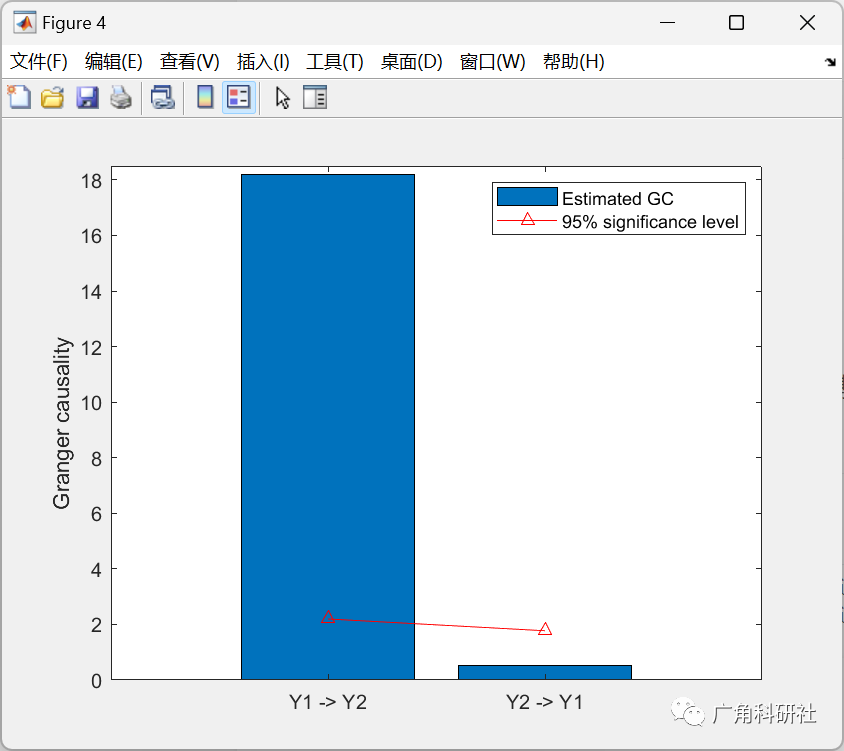
主函数部分代码:
% Demo codes for the Copula-based Granger causality for spike train data
clear
%% Simulated data generation
% number of trials for the simulated data
Ntrial=50;
% Length of simulated data
Npoint=1000;
% copula coefficient for generating simulated data
rho=0.5;
% generate bivariate data with causal influence
% marginal regressions:
% Y1: logit(p1) = beta1 + beta2*Y1(t-1) + beta3*Y2(t-1)
% Y2: logit(p2) = beta4 + beta5*Y1(t-1) + beta6*Y2(t-1)
%
% beta1 = 0.5
% beta2 = -0.5
% beta3 = 0
% beta4 = -2
% beta5 = 1
% beta6 = 0.5
%
% Thus, true Granger causality is Y1 -> Y2
dat = gendata_gc(Ntrial,Npoint,rho);
% model order
porder=1;
% parameter for model estimation
options = optimset('GradObj','on','Display','off','TolFun',1e-4,'TolX',1e-4,'LargeScale','off','MaxIter',200);
%% Copula Granger causality (Frank)
gc12_frank=[];
gc21_frank=[];
para_frank=[];
for n=1:size(dat,1)
Y1=squeeze(dat(n,:,1));
Y2=squeeze(dat(n,:,2));
% designed Granger causality: Y1->Y2
try
% Frank copula
[gc12_frank(n) gc21_frank(n) para_frank(:,n)]=CopuReg_GC_Frank_fminunc(Y1,Y2,porder,options);
end
end
%%%%%%%%% Comparing the true and estimated parameters
beta_est = mean(para_frank(1:6,:)');
ken_est = [];
for i = 1:Ntrial
% rho_est=[rho_est,copulaparam('Gaussian',copulastat('Frank',para_frank(7,i)))];
ken_est=[ken_est,copulastat('Frank',para_frank(7,i))];
end
ken_est = mean(ken_est);
para_true = [0.5 -0.5 0 -2 1 0.5 copulastat('Gaussian',0.5)];
para_est = [beta_est ken_est];
figure
bar([para_true; para_est]')
xlabel('Parameter estimation')
set(gca,'XTick',[1:7],'XTicklabel',{' Beta1 ' ' Beta2 ' ' Beta3 ' ' Beta4 ' ' Beta5 ' ' Beta6 ' 'Kendal'});
ax=axis;
axis([ax(1) ax(2) -2.2 1.2])
legend('True','Estimated')
%%%%%%%%% Granger causality
dat_perm1 = cat(3,dat(randperm(Ntrial),:,1),dat(randperm(Ntrial),:,2));
dat_perm2 = cat(3,dat(randperm(Ntrial),:,1),dat(randperm(Ntrial),:,2));
dat_perm = cat(1,dat_perm1,dat_perm2);
gc12_frank_perm=[];
gc21_frank_perm=[];
for n=1:size(dat_perm,1)
Y1_perm=squeeze(dat_perm(n,:,1));
Y2_perm=squeeze(dat_perm(n,:,2));
% designed Granger causality: Y1->Y2
try
% Frank copula
[gc12_frank_perm(n) gc21_frank_perm(n)]=CopuReg_GC_Frank_fminunc(Y1_perm,Y2_perm,porder,options);
end
end
sig_alpha = 0.05;
gc12tmp = sort(gc12_frank_perm);
gc12_thresh = gc12tmp(fix(length(gc12tmp)*(1-sig_alpha)));
gc21tmp = sort(gc21_frank_perm);
gc21_thresh = gc21tmp(fix(length(gc21tmp)*(1-sig_alpha)));
figure;
bar([mean(gc12_frank) mean(gc21_frank)])
hold on
plot([1,2],[gc12_thresh,gc21_thresh],'color','red','marker','^')
set(gca,'XTick',[1:2],'XTicklabel',{'Y1 -> Y2' 'Y2 -> Y1'});
axis([0 3 0 18.5])
legend('Estimated GC','95% significance level')
ylabel('Granger causality')
%% Copula Granger causality (Gaussian); Note the Gaussian code would run slower than the Frank
gc12_Gauss=[];
gc21_Gauss=[];
para_Gauss=[];
for n=1:size(dat,1)
Y1=squeeze(dat(n,:,1));
Y2=squeeze(dat(n,:,2));
% designed Granger causality: Y1->Y2
try
% Frank copula
[gc12_Gauss(n) gc21_Gauss(n) para_Gauss(:,n)]=CopuReg_GC_Gauss_fminunc(Y1,Y2,porder,options);
end
n
end
%%%%%%%%% Comparing the true and estimated parameters
beta_est = mean(para_Gauss(1:6,:)');
ken_est = [];
for i = 1:Ntrial
% rho_est=[rho_est,copulaparam('Gaussian',copulastat('Frank',para_frank(7,i)))];
tmpgau = -1+2*exp(-exp(para_Gauss(7,i)));
ken_est=[ken_est,copulastat('Gaussian',tmpgau)];
end
ken_est = mean(ken_est);
para_true = [0.5 -0.5 0 -2 1 0.5 copulastat('Gaussian',0.5)];
para_est = [beta_est ken_est];
figure
bar([para_true; para_est]')
xlabel('Parameter estimation')
set(gca,'XTick',[1:7],'XTicklabel',{' Beta1 ' ' Beta2 ' ' Beta3 ' ' Beta4 ' ' Beta5 ' ' Beta6 ' 'Kendal'});
ax=axis;
axis([ax(1) ax(2) -2.2 1.2])
legend('True','Estimated')
%%%%%%%%% Granger causality
dat_perm1 = cat(3,dat(randperm(Ntrial),:,1),dat(randperm(Ntrial),:,2));
dat_perm2 = cat(3,dat(randperm(Ntrial),:,1),dat(randperm(Ntrial),:,2));
dat_perm = cat(1,dat_perm1,dat_perm2);
gc12_Gauss_perm=[];
gc21_Gauss_perm=[];
for n=1:size(dat_perm,1)
Y1_perm=squeeze(dat_perm(n,:,1));
Y2_perm=squeeze(dat_perm(n,:,2));
% designed Granger causality: Y1->Y2
try
% Frank copula
[gc12_Gauss_perm(n) gc21_Gauss_perm(n)]=CopuReg_GC_Gauss_fminunc(Y1_perm,Y2_perm,porder,options);
end
end
sig_alpha = 0.05;
gc12tmp = sort(gc12_Gauss_perm);
gc12_thresh = gc12tmp(fix(length(gc12tmp)*(1-sig_alpha)));
gc21tmp = sort(gc21_Gauss_perm);
gc21_thresh = gc21tmp(fix(length(gc21tmp)*(1-sig_alpha)));
figure;
bar([mean(gc12_Gauss) mean(gc21_Gauss)])
hold on
plot([1,2],[gc12_thresh,gc21_thresh],'color','red','marker','^')
set(gca,'XTick',[1:2],'XTicklabel',{'Y1 -> Y2' 'Y2 -> Y1'});
axis([0 3 0 18.5])
legend('Estimated GC','95% significance level')
ylabel('Granger causality')
🎉3 参考文献
[1]汤超越.基于Copula函数与GLM的集成模型在车险索赔强度中的应用[D].浙江财经大学,2023.
部分理论引用网络文献,若有侵权联系博主删除。






 扫一扫
扫一扫


 621
621

 被折叠的 条评论
为什么被折叠?
被折叠的 条评论
为什么被折叠?
 到【灌水乐园】发言





