

Tensorflow2.0 keras MobileNet 代码实现

本文介绍了使用TensorFlow2.0的Keras搭建MobileNet模型,涉及迁移学习和自定义Block,包括标准的3x3卷积及Depthwise Separable卷积,展示了网络结构和参数配置。

网络介绍请参看:博文
keras搭建深度学习模型的若干方法:博文
直接上网络结构
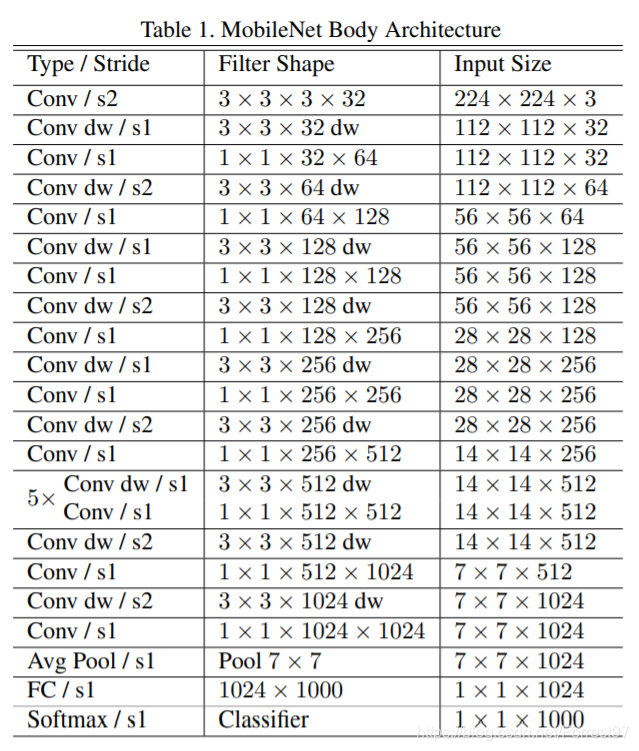
在这里插入图片描述

迁移学习

依旧看看标准答案

import  tensorflow as tf
from    tensorflow import keras

base_model = keras.applications.MobileNet(weights='imagenet')
base_model.summary()
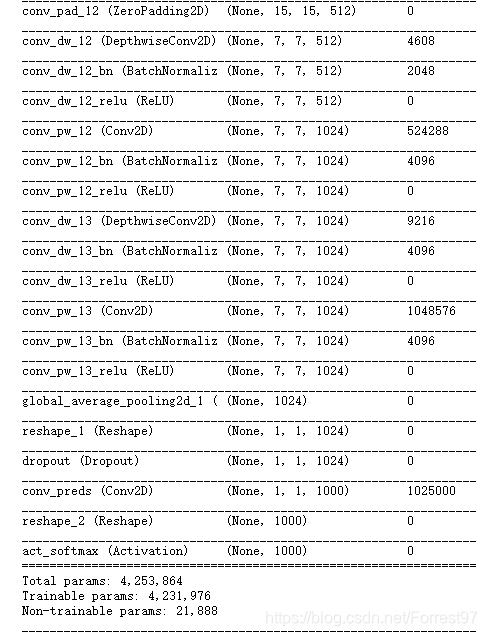
在这里插入图片描述

自编程序

Block

一个是标准的3x3卷积block,另一个就是Depthwise Separable block
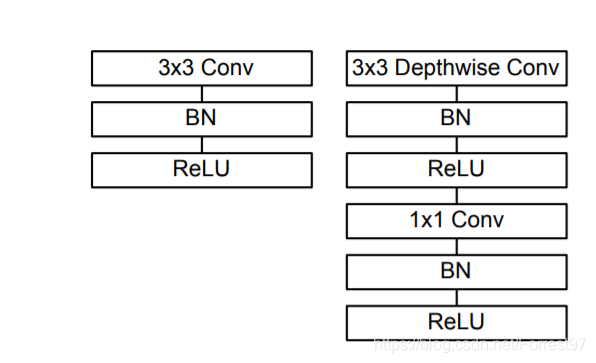
在这里插入图片描述

import  tensorflow as tf
from    tensorflow import keras
import tensorflow.keras.backend as K
from    tensorflow.keras import layers, models, Sequential, backend
from tensorflow.keras.layers import Conv2D, MaxPooling2D, Dense, Flatten, Dropout, BatchNormalization, Activation, GlobalAveragePooling2D
from tensorflow.keras.layers import Concatenate, Lambda, Input, ZeroPadding2D, AveragePooling2D, DepthwiseConv2D, Reshape


def depthwise_separable_block(x, nb_filter, stride=(1, 1), name=None):

    x = DepthwiseConv2D((3,3), padding='same', strides=stride, depth_multiplier=1, use_bias=False, name=name+'_dpconv')(x)
    x = BatchNormalization
### MobileNet 模型架构及应用 #### 一、MobileNet 原理概述 MobileNet 是一种专为移动设备设计的轻量化卷积神经网络架构,其主要特点是通过减少计算复杂度来提高运行效率,同时保持较高的精度。该模型的核心在于引入了一种新的卷积操作——深度可分离卷积(Depthwise Separable Convolution),它显著降低了传统卷积运算中的参数数量和计算成本[^1]。 #### 二、MobileNet 架构详解 MobileNet 的基本构建单元是深度可分离卷积,这种卷积分两步完成: 1. **Depthwise Convolution**: 对输入通道逐个进行卷积操作,而不考虑不同通道之间的交互关系。这一步骤大幅减少了乘法次数。 2. **Pointwise Convolution**: 使用 $1 \times 1$ 卷积核将 Depthwise Convolution 输出的空间维度映射到更高的特征空间中,从而恢复跨通道的信息交流能力。 上述方法使得 MobileNet 能够在资源受限环境下高效执行复杂的视觉任务[^2]。 以下是基于 Python 和 TensorFlow 实现的一个简单版本 MobileNet 结构: ```python import tensorflow as tf from tensorflow.keras import layers, models def depthwise_separable_conv(input_tensor, filters, kernel_size=(3, 3), strides=(1, 1)): x = layers.DepthwiseConv2D(kernel_size=kernel_size, strides=strides, padding='same')(input_tensor) x = layers.BatchNormalization()(x) x = layers.ReLU()(x) x = layers.Conv2D(filters=filters, kernel_size=(1, 1), padding='same')(x) x = layers.BatchNormalization()(x) x = layers.ReLU()(x) return x def create_mobilenet(input_shape=(224, 224, 3), num_classes=1000): inputs = layers.Input(shape=input_shape) x = layers.Conv2D(32, (3, 3), strides=(2, 2), padding='same')(inputs) x = layers.BatchNormalization()(x) x = layers.ReLU()(x) # 添加多个深度可分离卷积层 x = depthwise_separable_conv(x, 64) x = depthwise_separable_conv(x, 128, strides=(2, 2)) x = depthwise_separable_conv(x, 128) x = depthwise_separable_conv(x, 256, strides=(2, 2)) # 更多层省略... x = layers.GlobalAveragePooling2D()(x) outputs = layers.Dense(num_classes, activation='softmax')(x) model = models.Model(inputs, outputs) return model model = create_mobilenet() model.summary() ``` #### 三、MobileNet 应用场景 由于 MobileNet 在性能与速度之间取得了良好的平衡,因此被广泛应用于多种实际场景中,特别是在移动端或嵌入式设备上的实时处理需求下表现优异。例如,在 SSD-MobileNet 中,MobileNet 被作为主干网络用来提取图像特征,而后续则由预测层负责目标检测的具体任务[^3]。 #### 四、总结 综上所述,MobileNet 不仅提供了一个有效的框架以解决资源有限条件下的计算机视觉问题,还因其灵活性能够适应不同的硬件环境以及多样化的业务需求。
评论
添加红包

请填写红包祝福语或标题

红包个数最小为10个

红包金额最低5元

当前余额3.43前往充值 >
需支付:10.00
成就一亿技术人!
领取后你会自动成为博主和红包主的粉丝 规则
hope_wisdom
发出的红包
实付
使用余额支付
点击重新获取
扫码支付
钱包余额 0

抵扣说明:

1.余额是钱包充值的虚拟货币,按照1:1的比例进行支付金额的抵扣。
2.余额无法直接购买下载,可以购买VIP、付费专栏及课程。

余额充值



