



希尔排序
- 原理:
因为插入排序在(1):序列基本有序的情况下;(2)数据较少的情况下;效率较高,对于乱序的大数据效率不高。所以希尔排序对此进行优化,先分组进行插入排序,完成之后序列基本有序,再进行最后总的插入排序。
代码
#include "stdafx.h"
#include <iostream>
#include <time.h>
#include <stdlib.h>

using namespace std;

//对插入排序的改进
void Shell_Sorting(int array[10], int length)
{
	int increase = length;
	int tmp;
	int i,j,k;
	do
	{
		increase = increase / 3 + 1;  //循环到最后肯定是1, 1执行下面代码意味着总的插入排序,但是经过前面几次分组之后,序列基本有序,效率会高很多

		for ( i = 0; i < increase; i++) //进行的是第几组
		{
			for ( j = i + increase; j < length; j += increase) //下面代码对每组进行插入排序
			{
				if (array[j] < array[j - increase])
				{
					tmp = array[j];

					for ( k = j - increase; k >= 0 && tmp < array[k]; k -= increase)
					{
						array[k+increase] = array[k];
					}

					array[k + increase] = tmp;
				}
			}
		}

	} while (increase > 1);  //进行最后一次总的插入排序,increase==1,那么条件不成立,结束了


}

void Insert_Sorting(int array[], int length)
{
	int tmp, j;
	for (int i = 1; i < length; i++)
	{
		if (array[i] < array[i - 1])
		{
			tmp = array[i];
			for (j = i - 1; j >= 0 && tmp < array[j]; j--)
			{
				array[j + 1] = array[j];
			}
			array[j + 1] = tmp;
		}
	}
}


int main()
{
	int array[10];
	int length = sizeof(array) / sizeof(int);
	srand((unsigned)time(NULL));
	cout << "排序前:";
	for (int i = 0; i < length; i++)
	{
		array[i] = rand() % 10;
		cout << array[i] << " ";
	}
	cout << endl;

	Shell_Sorting(array, length);

	cout << "排序后:";
	for (int i = 0; i < length; i++)
		cout << array[i] << " ";
	cout << endl;


    return 0;
}
结果:
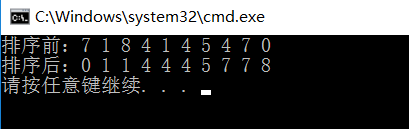
和插入排序对比效率
int main()
{


	int array1[100000];
	int array2[100000];
	int length = sizeof(array1) / sizeof(int);
	srand((unsigned)time(NULL));

	for (int i = 0; i < length; i++)
	{
		array1[i] = rand() ;
	}

	 memcpy(array2,array1,length);

	    cout << "希尔排序" << " :";
		double start1 = GetTickCount();
	    Shell_Sorting(array1, length);
		double end1 = GetTickCount();
		cout << end1 - start1 << " ms"<<endl;

		cout << "插入排序" << " :";
		double start2 = GetTickCount();
		Insert_Sorting(array2, length);
		double end2 = GetTickCount();
		cout << end2 - start2 << " ms" << endl;

    return 0;
}
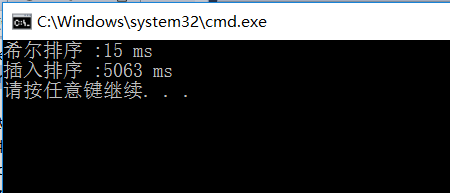
结果:可见希尔排序比插入排序的效率高得多





 扫一扫
扫一扫


 18万+
18万+

 被折叠的 条评论
为什么被折叠?
被折叠的 条评论
为什么被折叠?
 到【灌水乐园】发言





