



 本文对比了两种方法:迭代和递归,详细介绍了如何在O(n)时间复杂度下反转单链表。两种方法的空间复杂度分别为O(1)和O(n),展示了链表反转的经典问题及其解决方案。
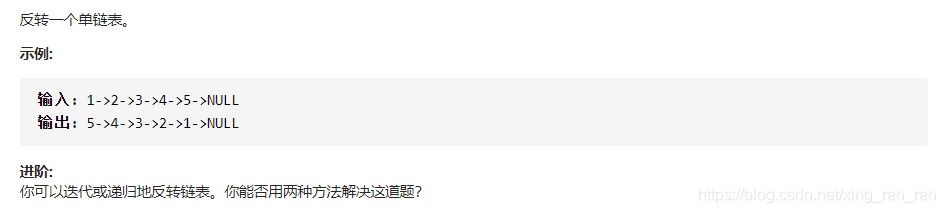
思路1:迭代
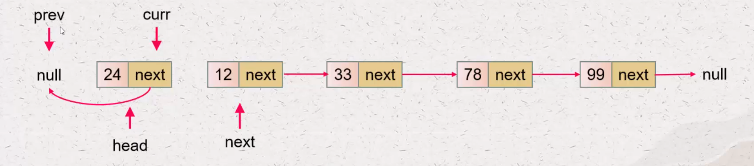
初始:
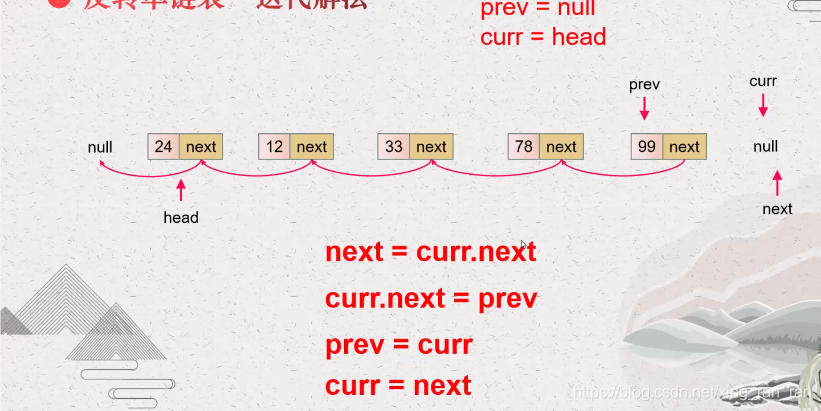
——时间复杂度:O(n),其中 n 是链表的长度。需要遍历链表一次。
——空间复杂度:O(1)。
/**
 * Definition for singly-linked list.
 * public class ListNode {
 *     int val;
 *     ListNode next;
 *     ListNode() {}
 *     ListNode(int val) { this.val = val; }
 *     ListNode(int val, ListNode next) { this.val = val; this.next = next; }
 * }
 */
class Solution {
    public ListNode reverseList(ListNode head) {
        ListNode prev = null;
        ListNode curr = head;
        while (curr != null) {
            ListNode next = curr.next;
            curr.next = prev;
            prev = curr;
            curr = next;
        }
        return prev;
    }
}
思路2:递归
链表具有天然的递归性质!反转单链表可以使用递归实现:符合递归编程的三个条件!
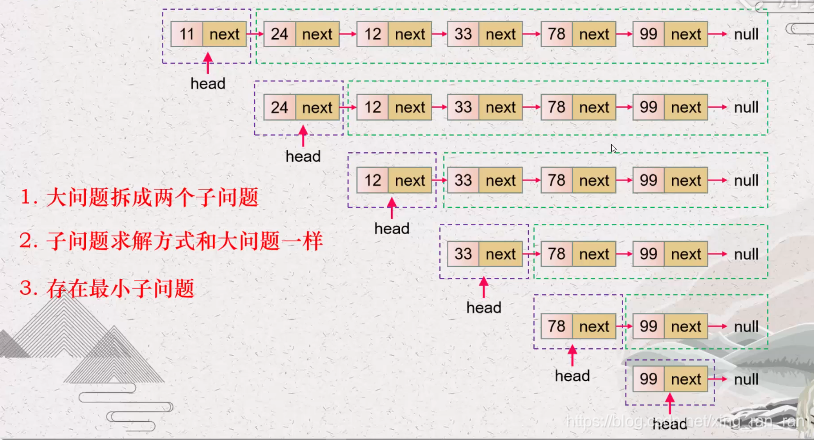
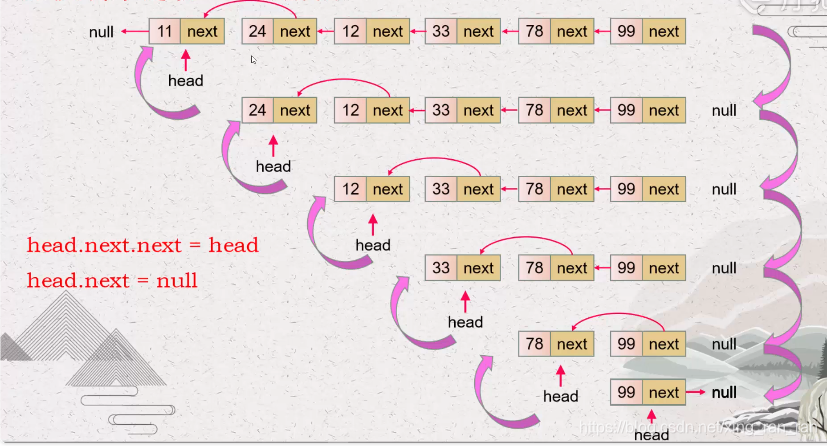
——时间复杂度:O(n),其中 n 是链表的长度。需要对链表的每个节点进行反转操作。
——空间复杂度:O(n),其中 n 是链表的长度。空间复杂度主要取决于递归调用的栈空间,最多为 n 层。
/**
 * Definition for singly-linked list.
 * public class ListNode {
 *     int val;
 *     ListNode next;
 *     ListNode() {}
 *     ListNode(int val) { this.val = val; }
 *     ListNode(int val, ListNode next) { this.val = val; this.next = next; }
 * }
 */
class Solution {
    public ListNode reverseList(ListNode head) {
        //递归终止条件
        if (head == null || head.next == null) {
            return head;
        }
        ListNode p = reverseList(head.next);
        head.next.next = head;
        head.next = null;
        return p;
    }
}





 扫一扫
扫一扫


 8万+
8万+

 被折叠的 条评论
为什么被折叠?
被折叠的 条评论
为什么被折叠?
 到【灌水乐园】发言





