



 本文详细介绍Python面向对象编程的基础知识,包括类与对象的概念、实例属性与类属性的区别、方法的种类(如普通方法、类方法、静态方法)、私有属性与方法的实现方式,以及构造函数、析构函数和__str__方法的使用。此外还介绍了如何通过继承来扩展类的功能。
Python从入门到实战(一)——Python基础
Python从入门到实战(二)——程序流程控制
Python从入门到实战(三)——组合数据类型
Python从入门到实战(四)——函数
Python从入门到实战(五)——模块和包
Python从入门到实战(六)——文件
Python从入门到实战(七)——面向对象
Python从入门到实战(八)——异常
Python从入门到实战(九)——多线程
Python从入门到实战(十)——爬虫
文章目录
面向对象概念
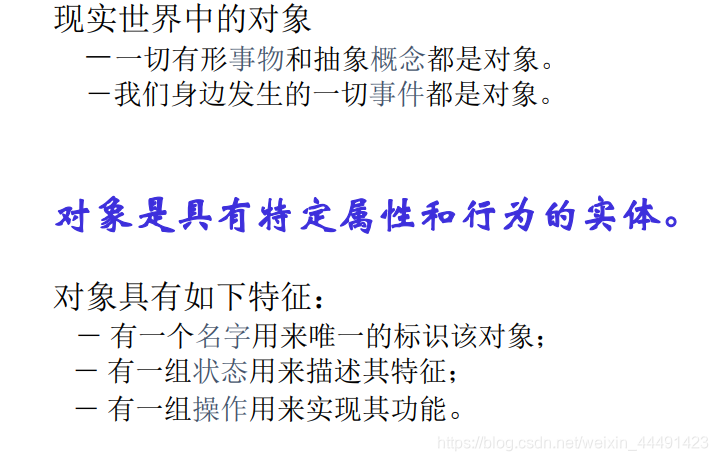
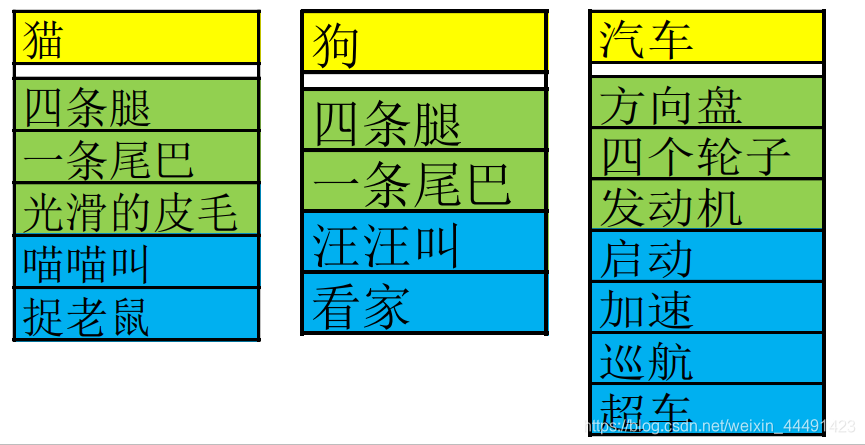
每个颜色对应,名字,状态,操作。
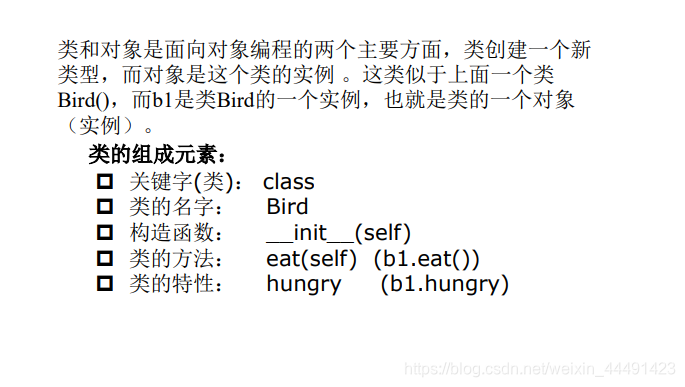
类和对象
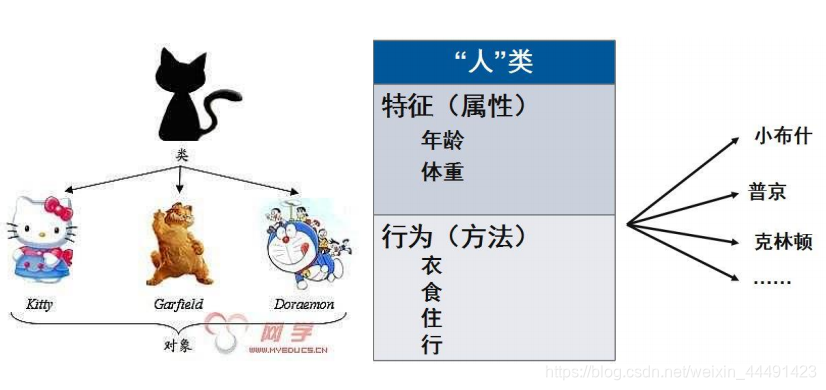
总的来说,类是抽象的,对象是具体的实例

class Myclass(object):
    def infor(self):
        print("this is a class")
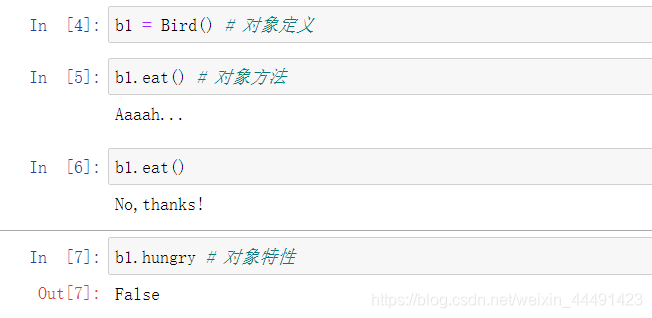
类与对象实例
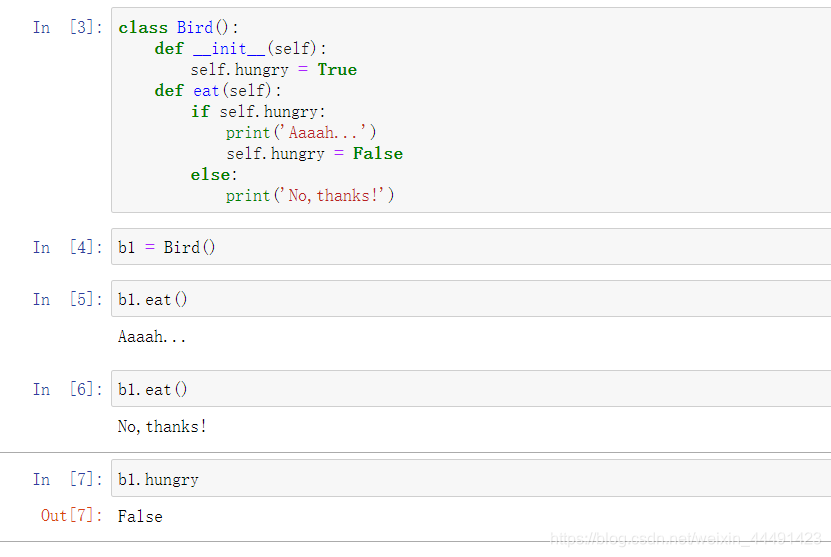
class Bird():
    def __init__(self):
        self.hungry = True
    def eat(self):
        if self.hungry:
            print('Aaaah...')
            self.hungry = False
        else:
            print('No,thanks!')
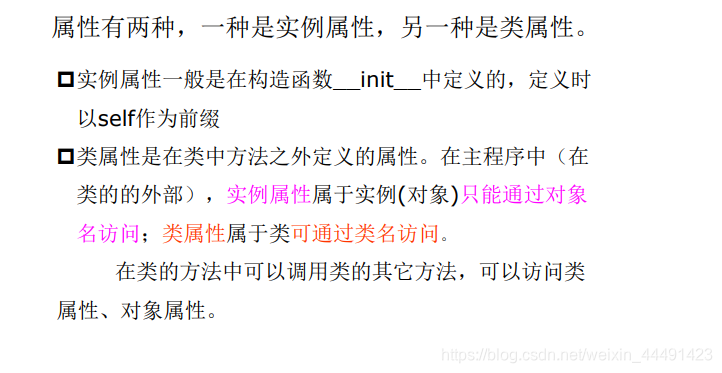
实例属性和类属性
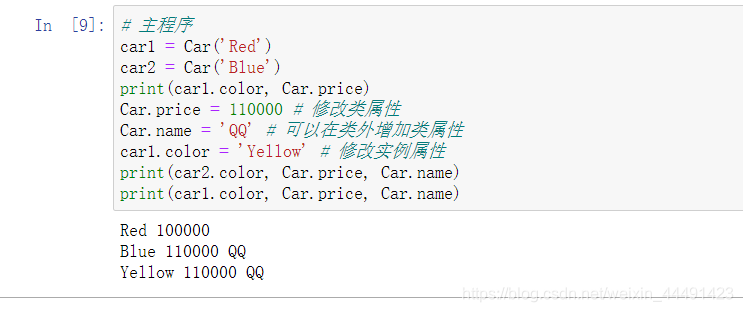
class Car:
    price = 100000 # 定义类属性
    def __init__(self, c):
        self.color = c # 定义实例属性
# 主程序
car1 = Car('Red')
car2 = Car('Blue')
print(car1.color, Car.price)
Car.price = 110000 # 修改类属性
Car.name = 'QQ' # 可以在类外增加类属性
car1.color = 'Yellow' # 修改实例属性
print(car2.color, Car.price, Car.name)
print(car1.color, Car.price, Car.name)
如果属性名以__(双下划线)开头则是私有属性,否则是公有属性。私有属性在类外不能直接访问。
但Python提供了访问私有属性的方式,可用于程序的测试和调试。
对象名._类名私有成员名
示例
class Food:
    def __init__(self):
        self.__color = 'red'
        self.price = 10
apple = Food()
apple.price = 20
print(apple.price, apple._Food__color) # 访问私有成员
apple._Food__color = "Blue" # 修改私有成员
print(apple.price, apple._Food__color)
print(apple.__color) # 不能直接访问私有属性
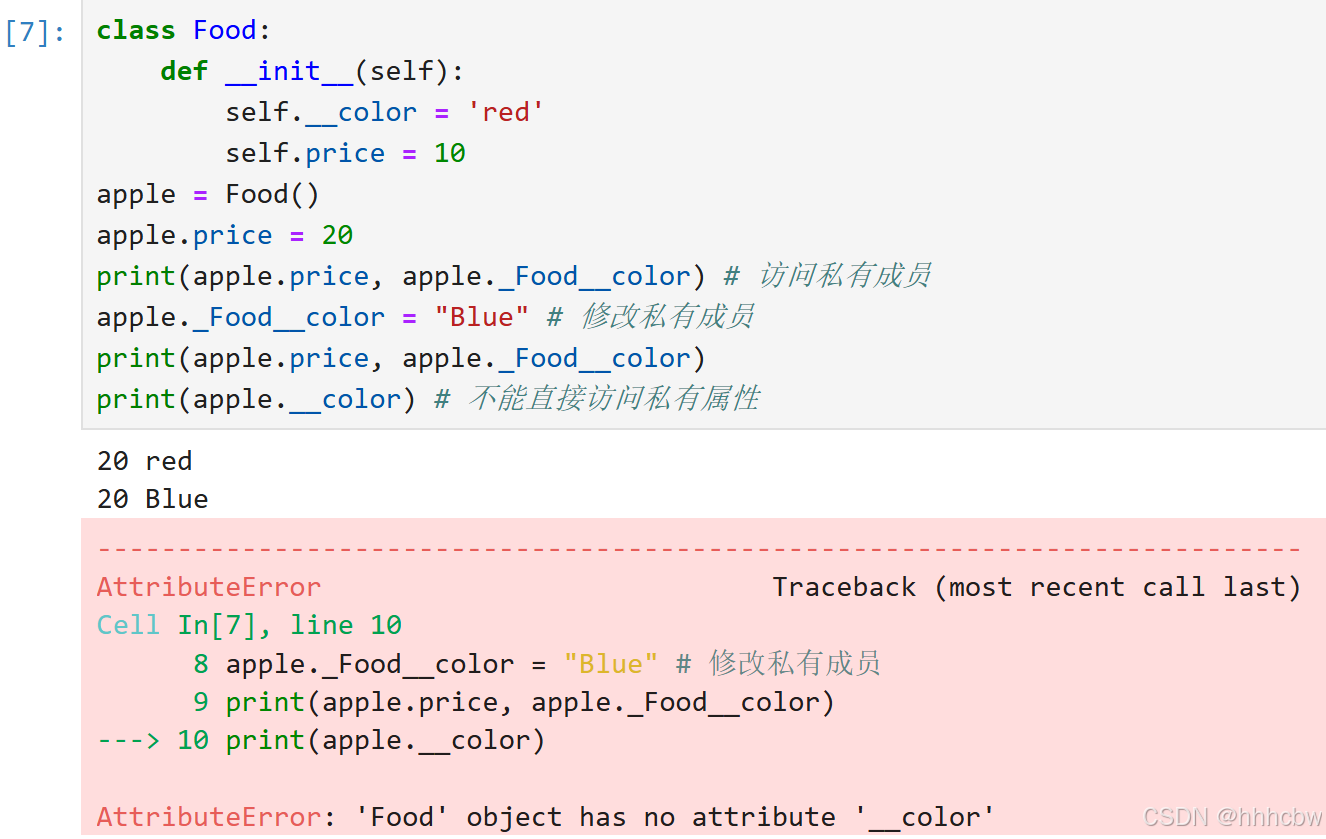
所以,Python没有真正意义上的私有属性。
Python可以动态地添加和删除实例和类的属性。
class Point1:
    cd1 = 1

    def __init__(self):
        self.pd1 = 2
        print('Class Point1 created!')

    # 在普通方法内,也可以用self增加实例属性
    def testpd(self):
        self.pd2 = 3

p1 = Point1()
p1.testpd()

print(p1.pd1)
print(p1.pd2)

p1.pd3 = 4 # 在类外可以用实例名增加实例属性

print(p1.cd1)

print(p1.__dict__.items()) #显示实例的属性
print(Point1.__dict__.items()) #显示类的属性即方法

del p1.pd3 # 删除p1实例的d3属性
print(p1.__dict__.items())

Point1.cd2 = 5
print(Point1.__dict__.items())
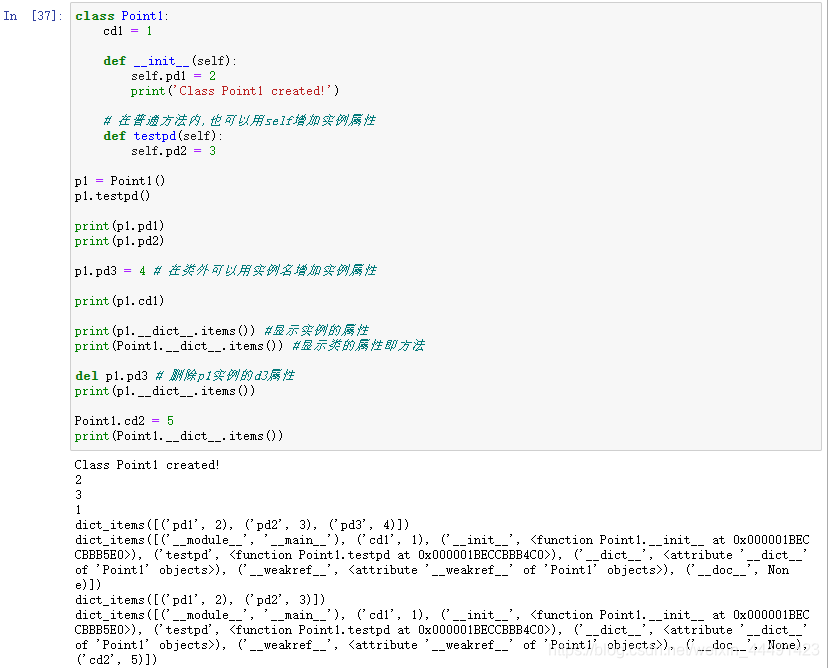
类属性和实例属性可以同名
类的方法
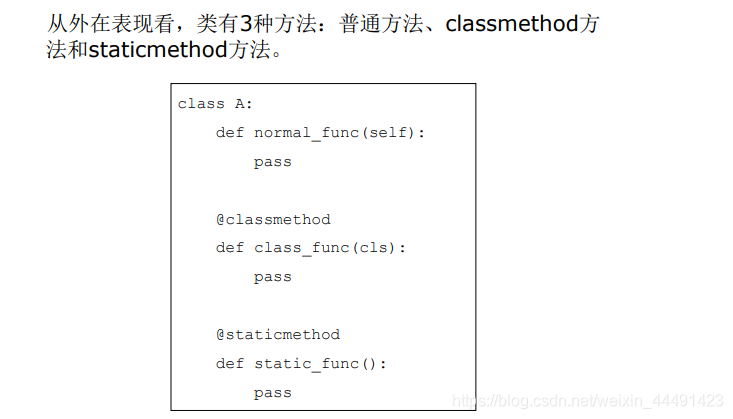
普通方法

class MyClass:
    """A simple example class"""
    i = 12345

    def f1(c): # 如果带了一个或多个参数,不管第一个参数是否叫self,都会被作为实例本身的引用,所以只能使用实例名加.的方式访问

        return  str(c) + 'hello world'

    def f2(): # 如果没有带参数,只能使用类名加.的方式访问
        return 'hehe'
classmethod
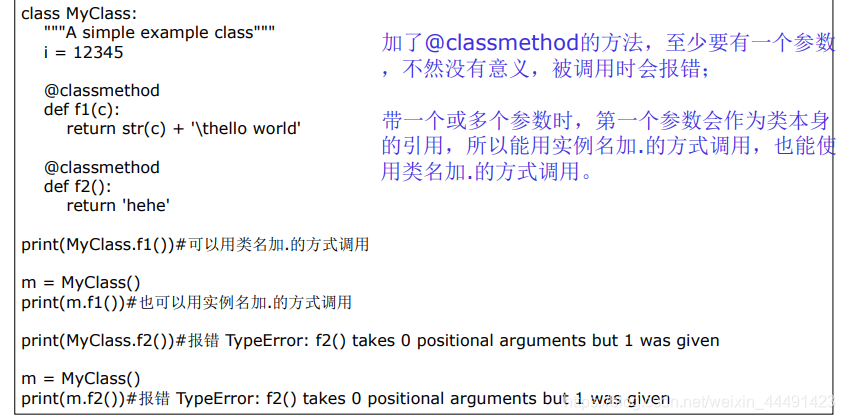
class MyClass:
    """A simple example class"""
    i = 12345

    @classmethod
    def f1(c): # 带一个或多个参数时,第一个参数会作为类本身的引用,所以能用实例名加.的方式调用,也能使用类名加.的方式调用
        return  str(c) + 'hello world'

    @classmethod
    def f2(): # 加了@classmethod的方法,至少要有一个参数,不然没有意义,被调用时会报错
        return 'hehe'

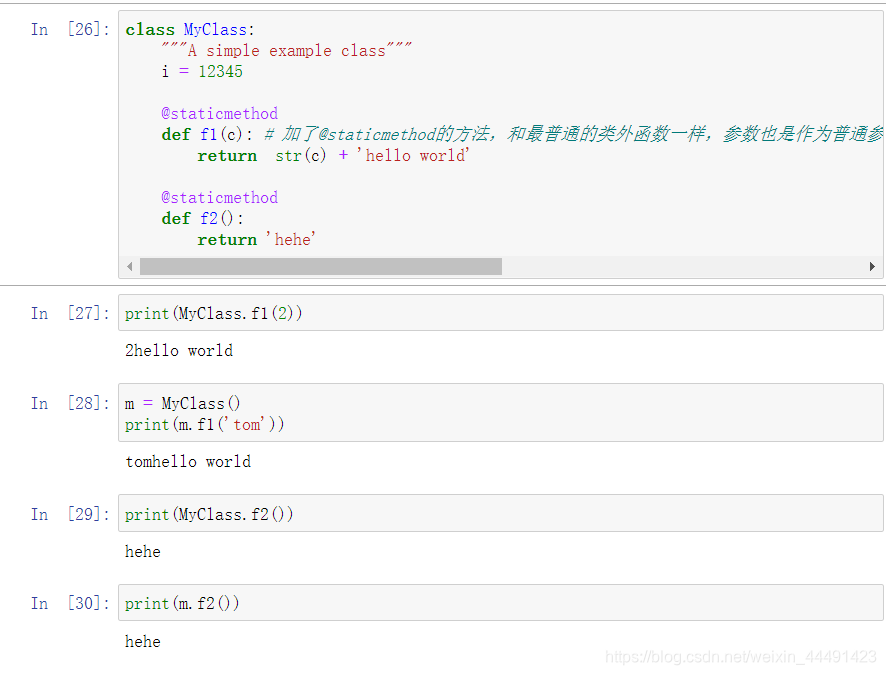
staticmethod
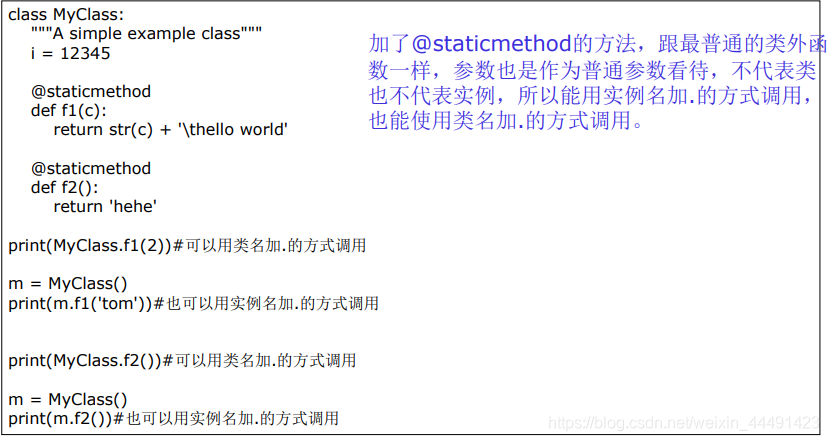
class MyClass:
    """A simple example class"""
    i = 12345

    @staticmethod
    def f1(c): # 加了@staticmethod的方法,和最普通的类外函数一样,参数也是作为普通参数看待,不代表类也不代表实例,所以能用实例名加.的方式调用,也能使用类名加.的方式调用
        return  str(c) + 'hello world'

    @staticmethod
    def f2():
        return 'hehe'
私有方法
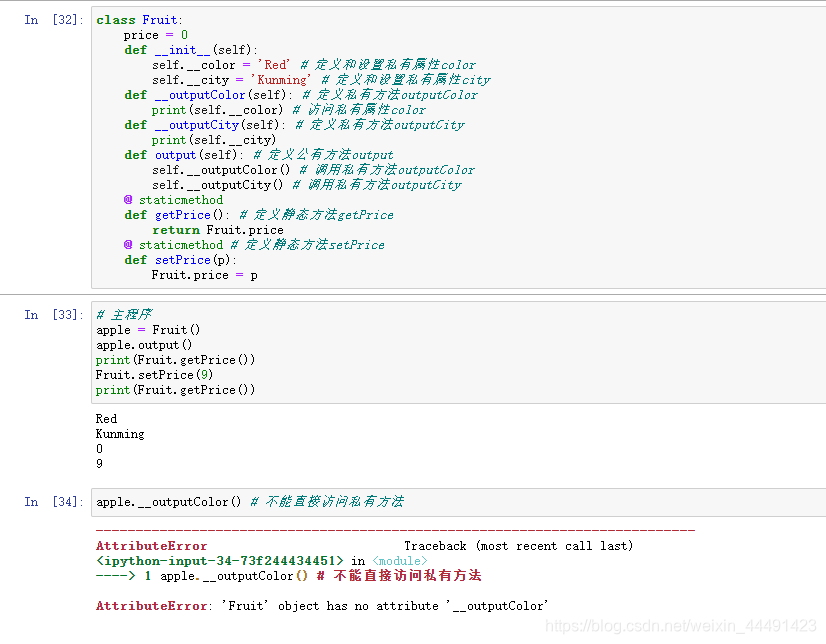
双下划线__开头的方法称为私有方法。
class Fruit:
    price = 0
    def __init__(self):
        self.__color = 'Red' # 定义和设置私有属性color
        self.__city = 'Kunming' # 定义和设置私有属性city
    def __outputColor(self): # 定义私有方法outputColor
        print(self.__color) # 访问私有属性color
    def __outputCity(self): # 定义私有方法outputCity
        print(self.__city)
    def output(self): # 定义公有方法output
        self.__outputColor() # 调用私有方法outputColor
        self.__outputCity() # 调用私有方法outputCity
    @ staticmethod
    def getPrice(): # 定义静态方法getPrice
        return Fruit.price
    @ staticmethod # 定义静态方法setPrice
    def setPrice(p):
        Fruit.price = p
# 主程序
apple = Fruit()
apple.output()
print(Fruit.getPrice())
Fruit.setPrice(9)
print(Fruit.getPrice())
构造函数与析构函数
构造函数
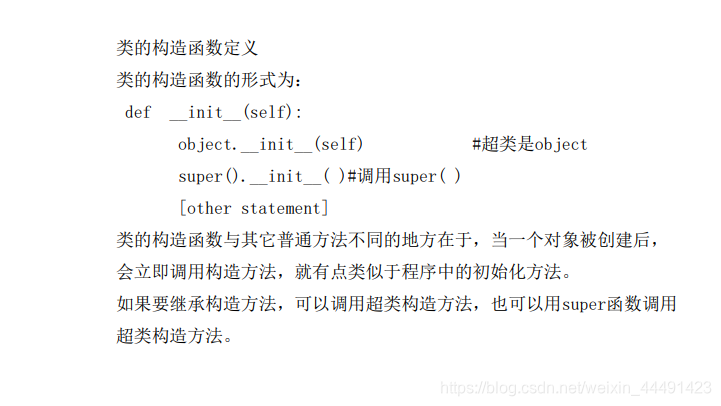
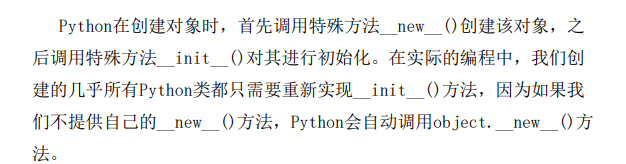
class Student(object):
    def __init__(self, first='', last='', id=0):
        self.firstnamestr = first
        self.lastnamestr = last
        self.idint = id

s1 = Student()
print(s1.firstnamestr)
s2 = Student(last='Python',first='Hello')
print(s2.lastnamestr)


析构函数

class Car:
    def __init__(self, n):
        self.num = n
        print('编号为', self.num, '的对象出生了')
    def __del__(self):
        print('编号为', self.num, '的对象死了')
car1 = Car(1)
def func():
    car2 = Car(2)
del car1
func() # 函数结束会释放内存

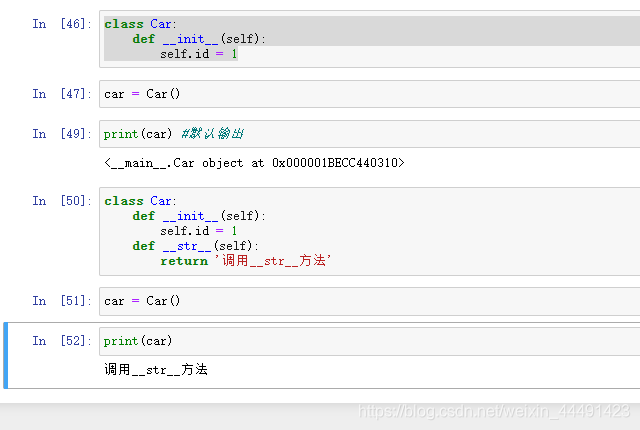
__str__方法
__str__方法可以在访问实例的时候调用。
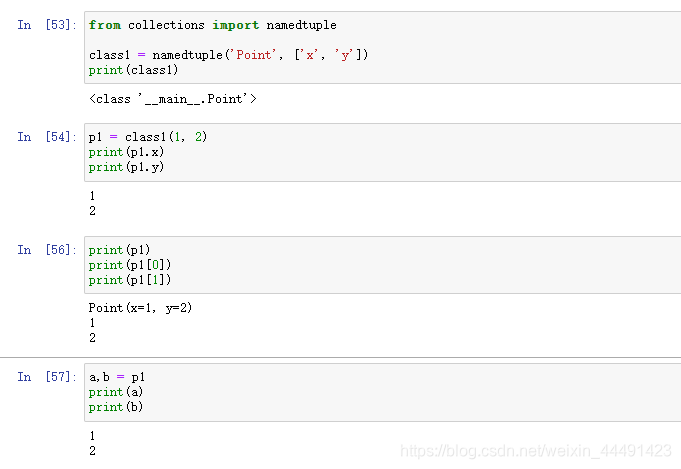
namedtuple函数
collections模块提供的namedtuple函数,可以很方便地创建类,并且属性可以用下标的方式访问。
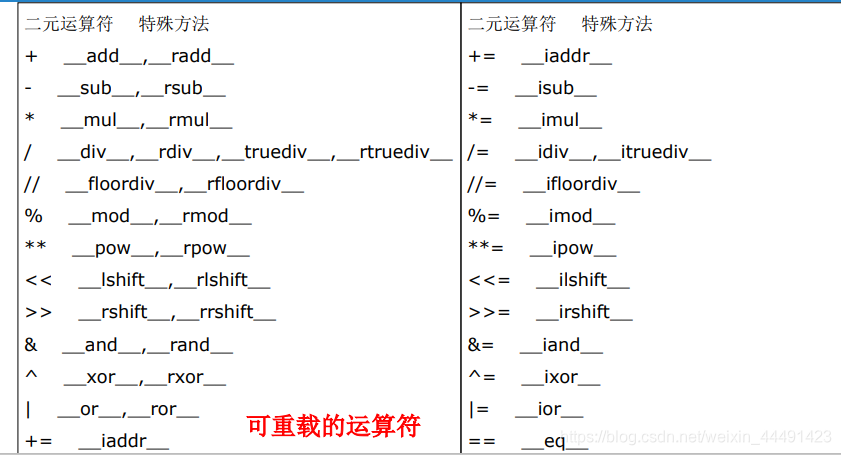
运算符的重载
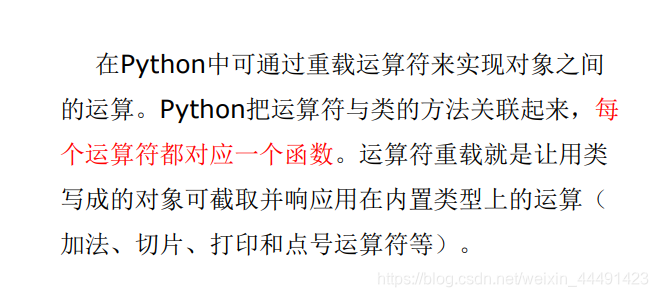

class Number:
    def __init__(self, start):
        self.data = start
    def __sub__(self,other):
        return Number(self.data - other.data)
x = Number(5)
y = Number(2)
z = x - y
z.data
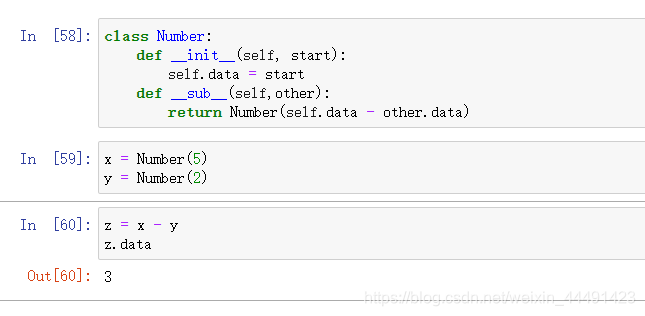
重载方法举例

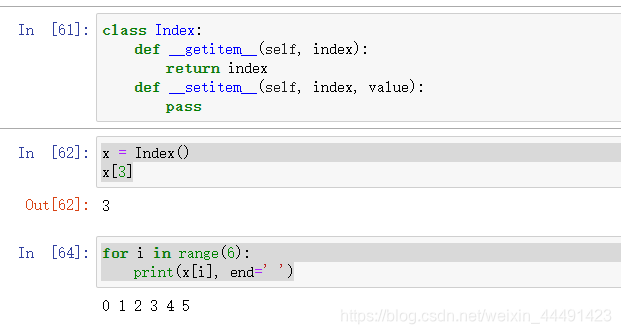
class Index:
    def __getitem__(self, index):
        return index
    def __setitem__(self, index, value):
        pass
x = Index()
print(x[3])
for i in range(6):
    print(x[i], end=' ')
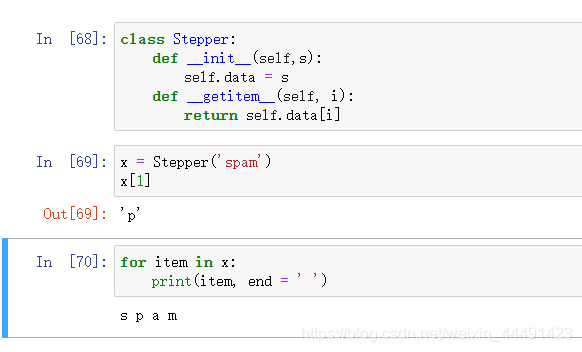
class Stepper:
    def __init__(self,s):
        self.data = s
    def __getitem__(self, i):
        return self.data[i]
x = Stepper('spam')
print(x[1])
for item in x:
    print(item, end = ' ')

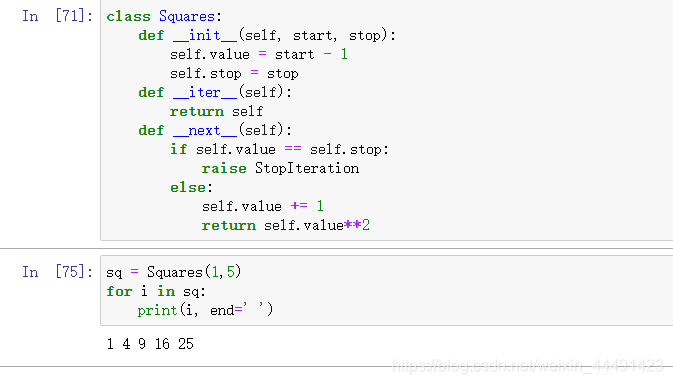
class Squares:
    def __init__(self, start, stop):
        self.value = start - 1
        self.stop = stop
    def __iter__(self):
        return self
    def __next__(self):
        if self.value == self.stop:
            raise StopIteration
        else:
            self.value += 1
            return self.value**2
sq = Squares(1,5)
for i in sq:
    print(i, end=' ')
继承
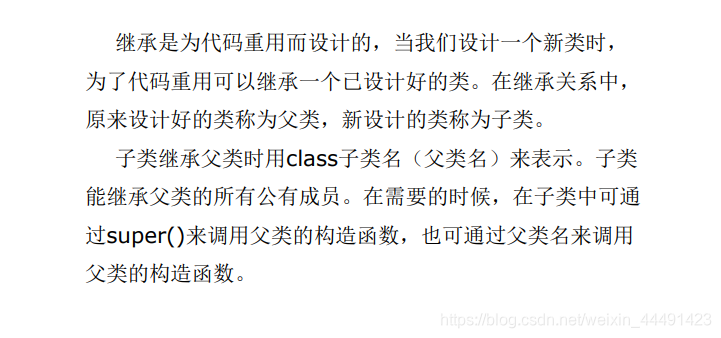
单继承
父类
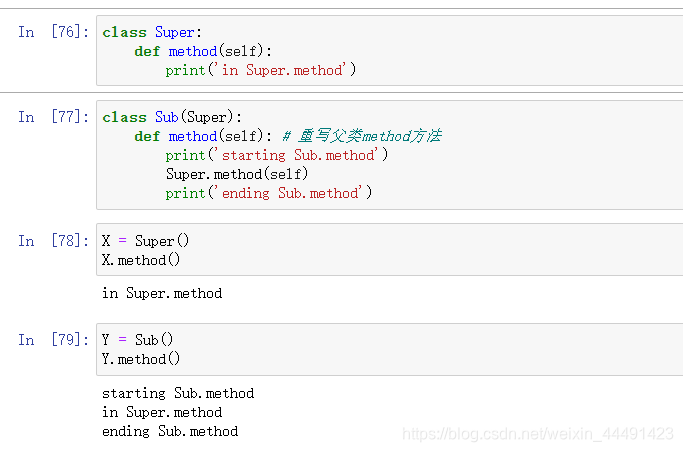
class Super:
    def method(self):
        print('in Super.method')
子类
class Sub(Super):
    def method(self): # 重写父类method方法
        print('starting Sub.method')
        Super.method(self)
        print('ending Sub.method')
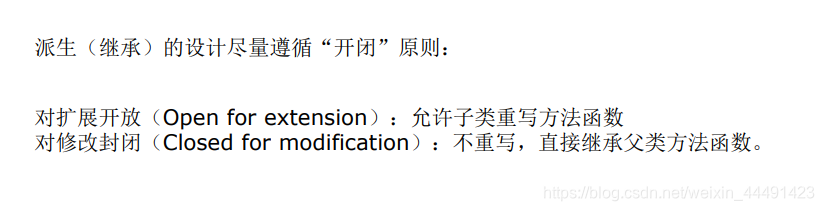
继承(也称为派生)的主要目的是功能扩展和更新
父类
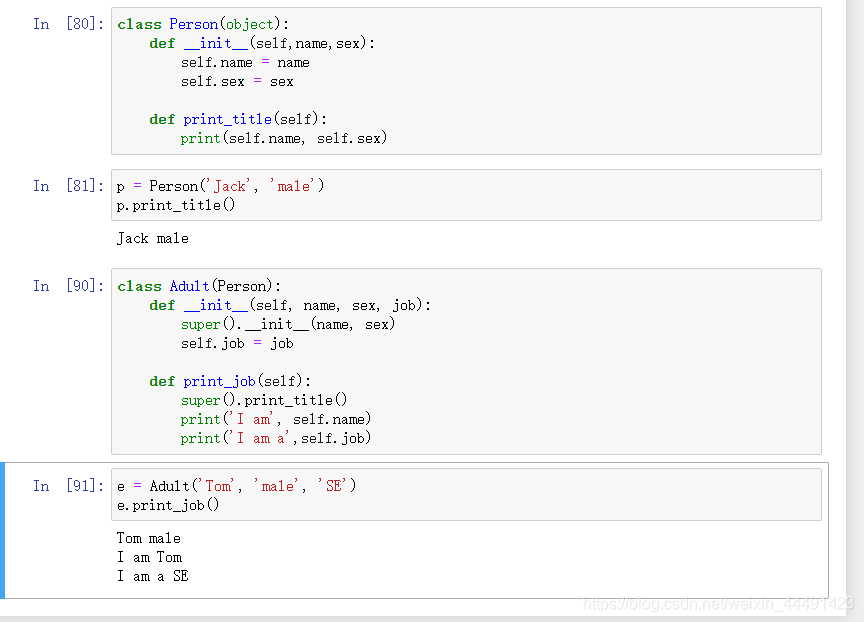
class Person(object):
    def __init__(self,name,sex):
        self.name = name
        self.sex = sex

    def print_title(self):
        print(self.name, self.sex)
子类
class Adult(Person):
    def __init__(self, name, sex, job):
        super().__init__(name, sex)
        self.job = job

    def print_job(self):
        super().print_title()
        print('I am', self.name)
        print('I am a',self.job)
多继承
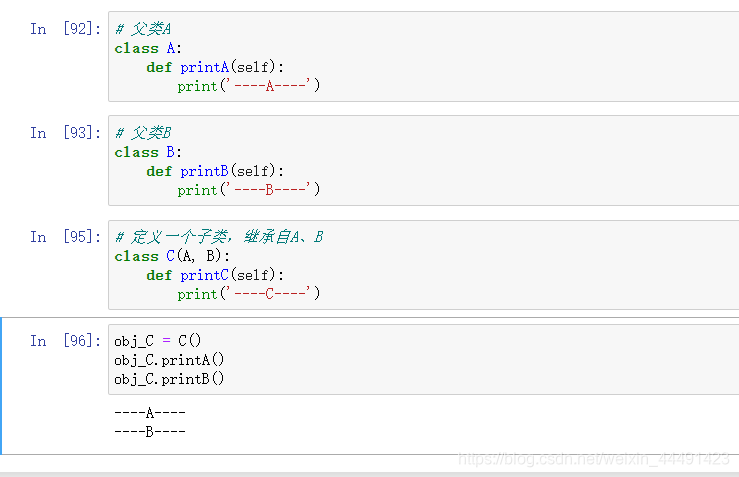
子类有多个父类,并且具有他们的特征
父类A
# 父类A
class A:
    def printA(self):
        print('----A----')
父类B
# 父类B
class B:
    def printB(self):
        print('----B----')
子类C,继承A,B
# 定义一个子类,继承自A、B
class C(A, B):
    def printC(self):
        print('----C----')





 扫一扫
扫一扫


 608
608

 被折叠的 条评论
为什么被折叠?
被折叠的 条评论
为什么被折叠?
 到【灌水乐园】发言





