



 本文探讨了集合划分的概念及其与第二类Stirling数的关系,介绍了Bell数及其递推公式,展示了Bell三角形的生成过程。同时,提到了Bell数的模素数性质,并提供了C++和Python代码实现集合划分。此外,还讨论了整数分拆的有序和无序分拆及其Ferrers图表示。
Bell数
Bell数定义
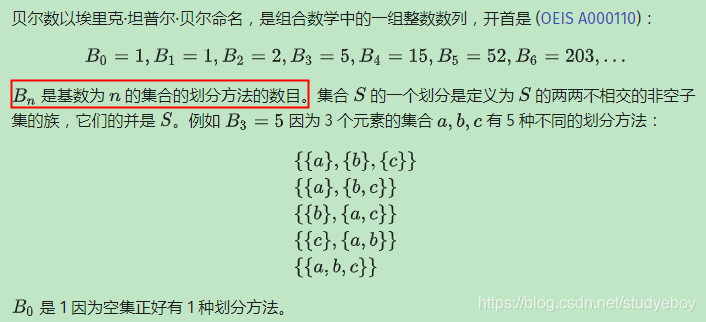
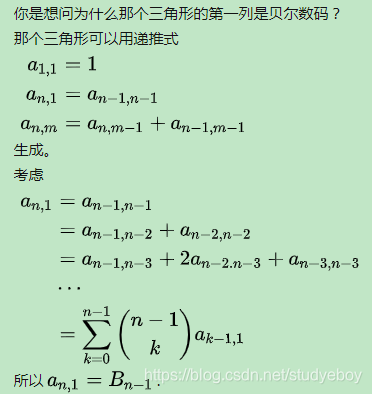
递推公式
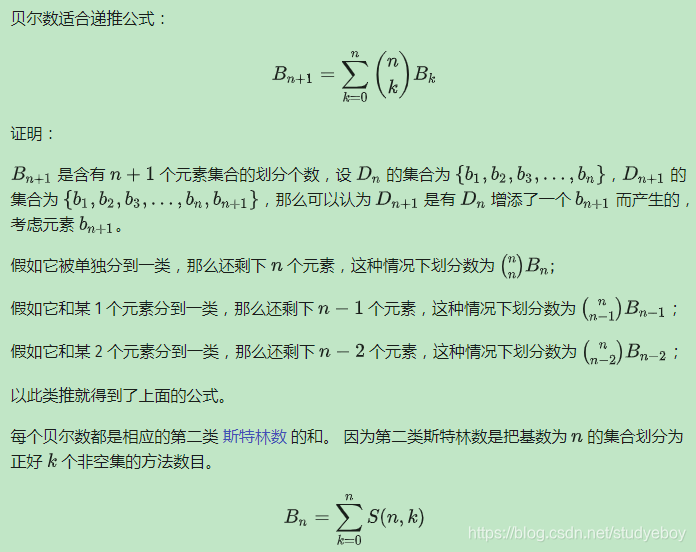
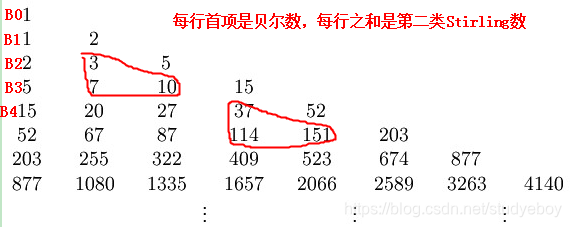
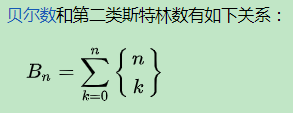
第二类Stirling数的含义是:S(n,k)表示将n个物体划分成k个非空的不可辨别的(可以理解为盒子没有编号)集合的方法数。很明显,每一个Bell是对应的第二类Stirling数之和。
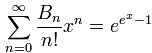
Bell数的指数生成函数是:
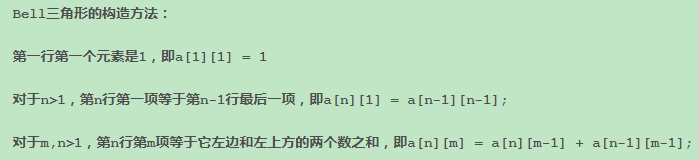
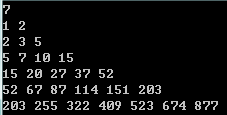
Bell三角形(类似于杨辉三角形)
#include <stdio.h>
//贝尔三角形程序
void belltriangle()
{
    int n, i, j, temp, temp2;
    scanf("%d", &n);
    int *bell = new int[n];
    bell[0] = 1;
    for (i = 1; i < n; i++)
    {
        temp = bell[0];
        bell[0] = bell[i - 1];
        for (j = 1; j <= i; j++)
        {
             temp2 = bell[j];
             bell[j] = temp + bell[j - 1];
             temp = temp2;
        }
        for (j = 0; j <= i; j++)
            printf("%d ", bell[j]);
        printf("\n");
    }
}

int main(void)
{
    belltriangle();
    return 0;
}
Bell数两个重要的同余性质


其中p是不大于100的素数,可以通过上面的性质来计算Bell数模小于100的素数值。
Bell数模素数p的周期为:

Stirling数
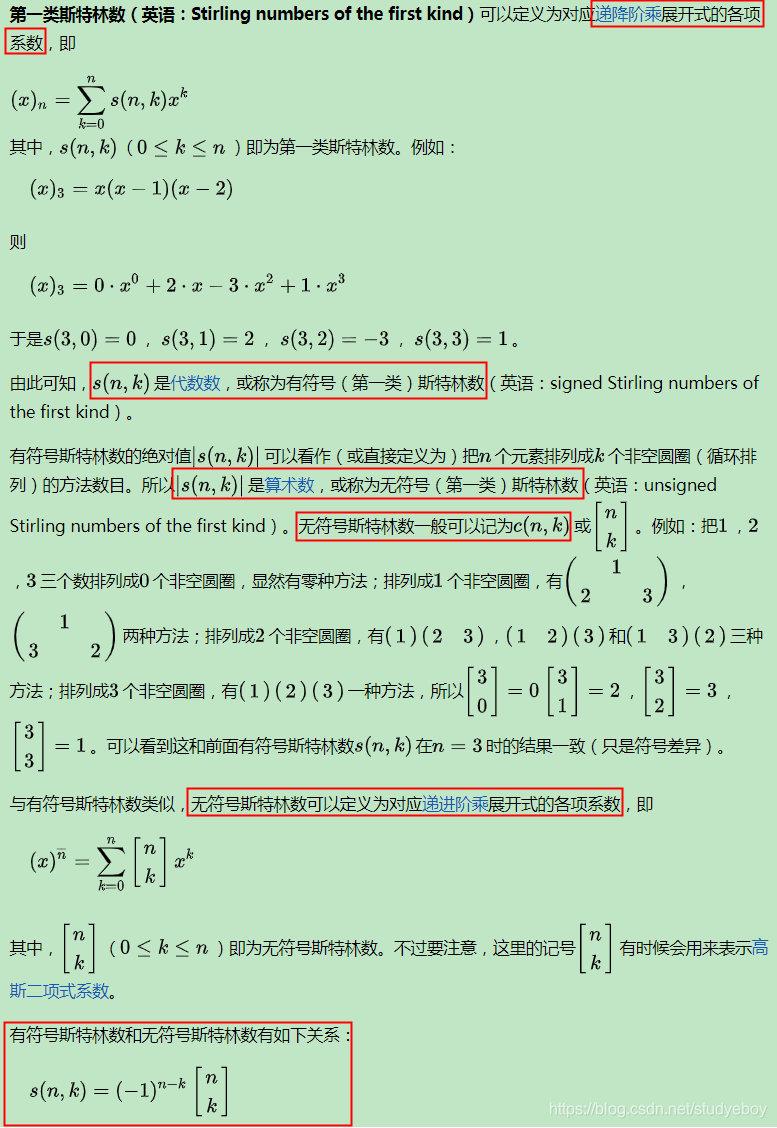
在数学中,斯特林数(Stirling number)用于解决各种数学分析和组合数学问题,斯特林数是两组不同的数,均是18世纪由詹姆斯·斯特林(James Stirling(mathematician))引入并以其命名,以第一类斯特林数(Stirling numbers of the first kind)和第二类斯特林数(Stirling numbers of thesecond kind)的称呼区分。此外,有时候也将拉赫数(Lah number)称为第三类斯特林数。
第一类斯特林数
-
定义
-
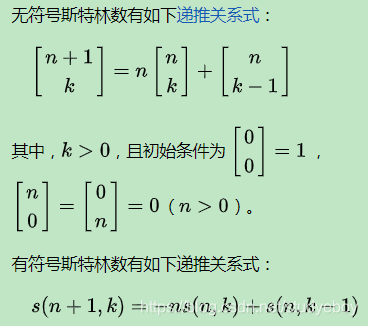
递推关系式
-
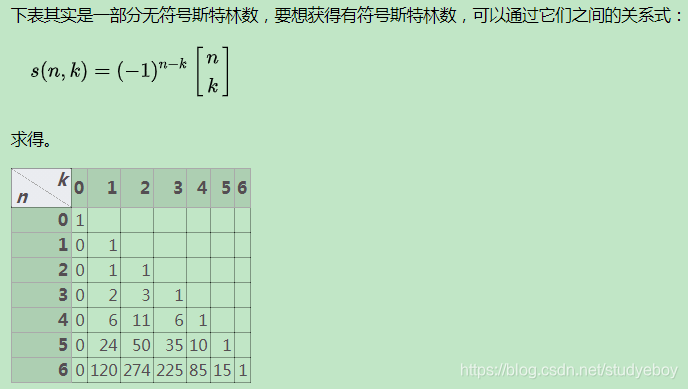
第一类斯特林数表
-
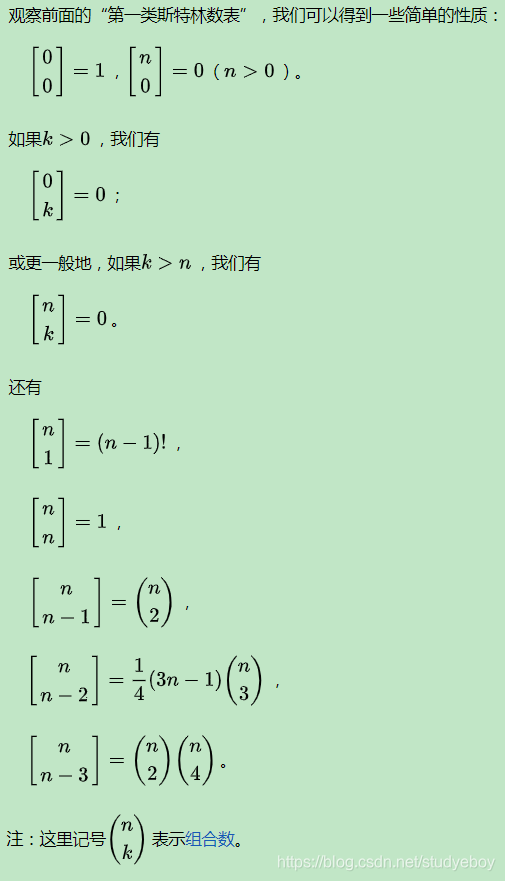
简单性质
第二类斯特林数
-
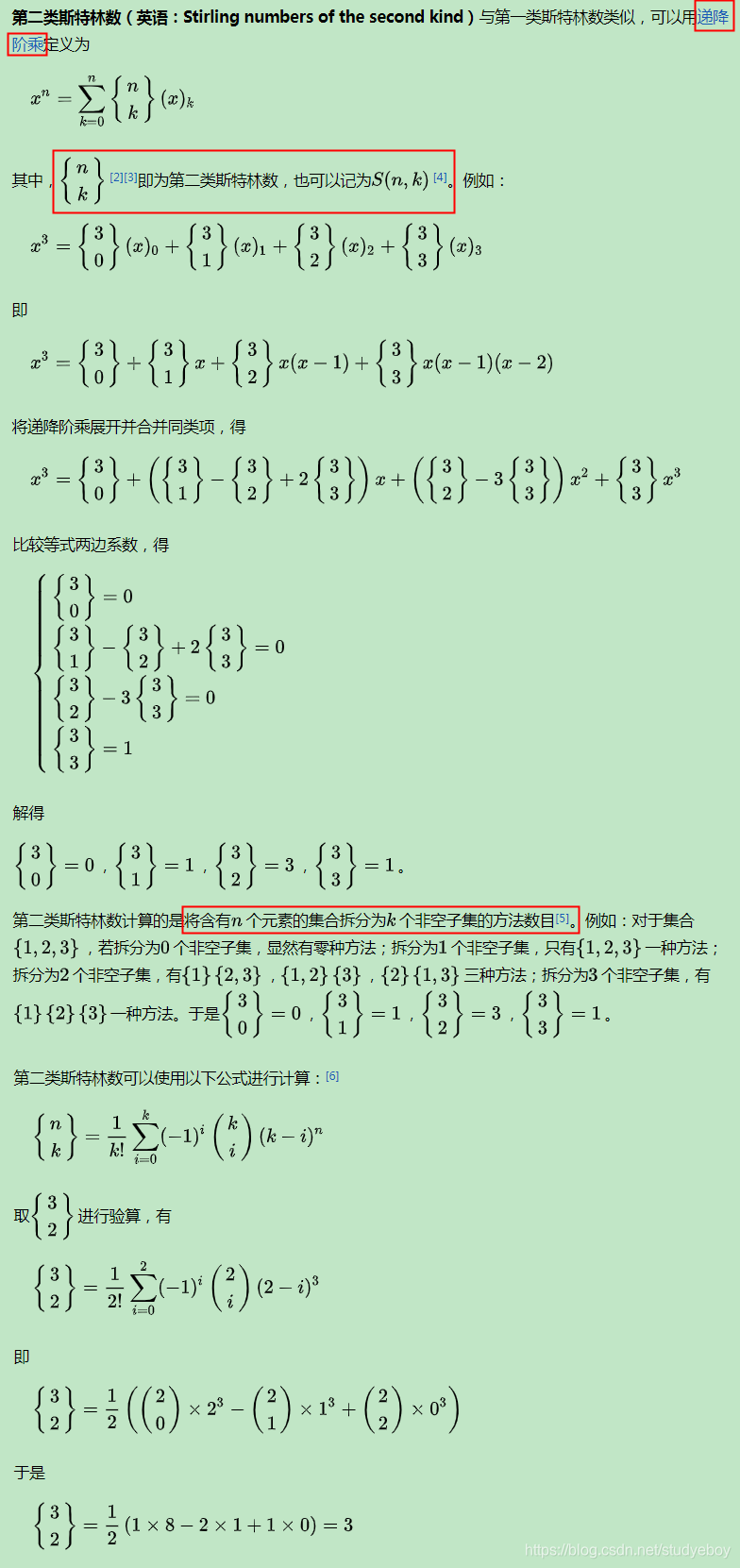
定义
-
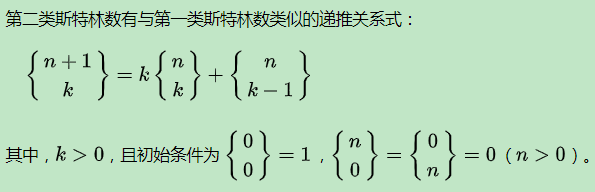
递推关系式
-
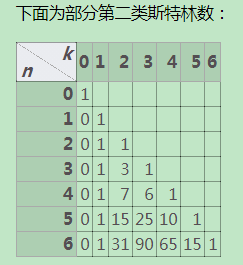
第二类斯特林数表
-
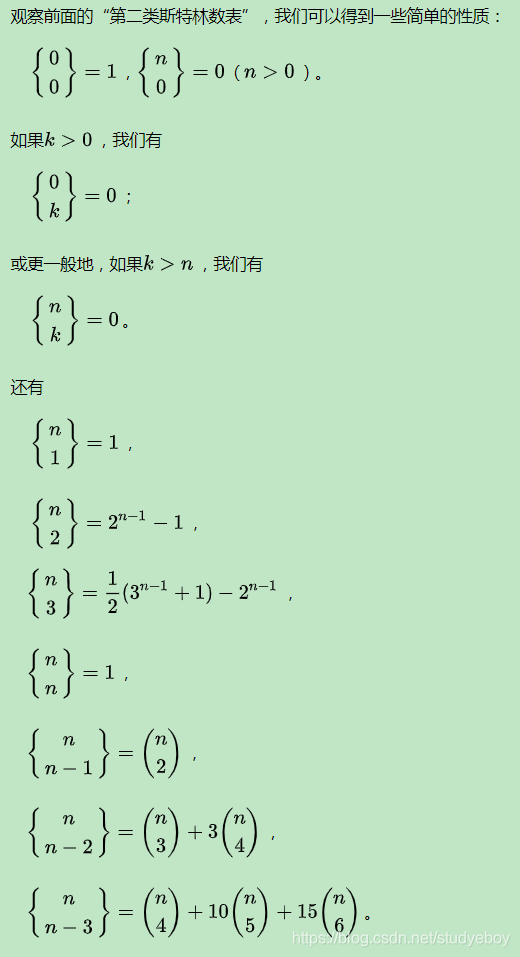
简单性质
-
其他性质
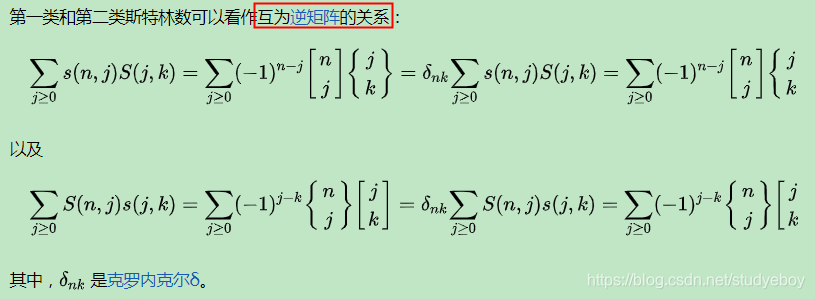
两类之间的关系
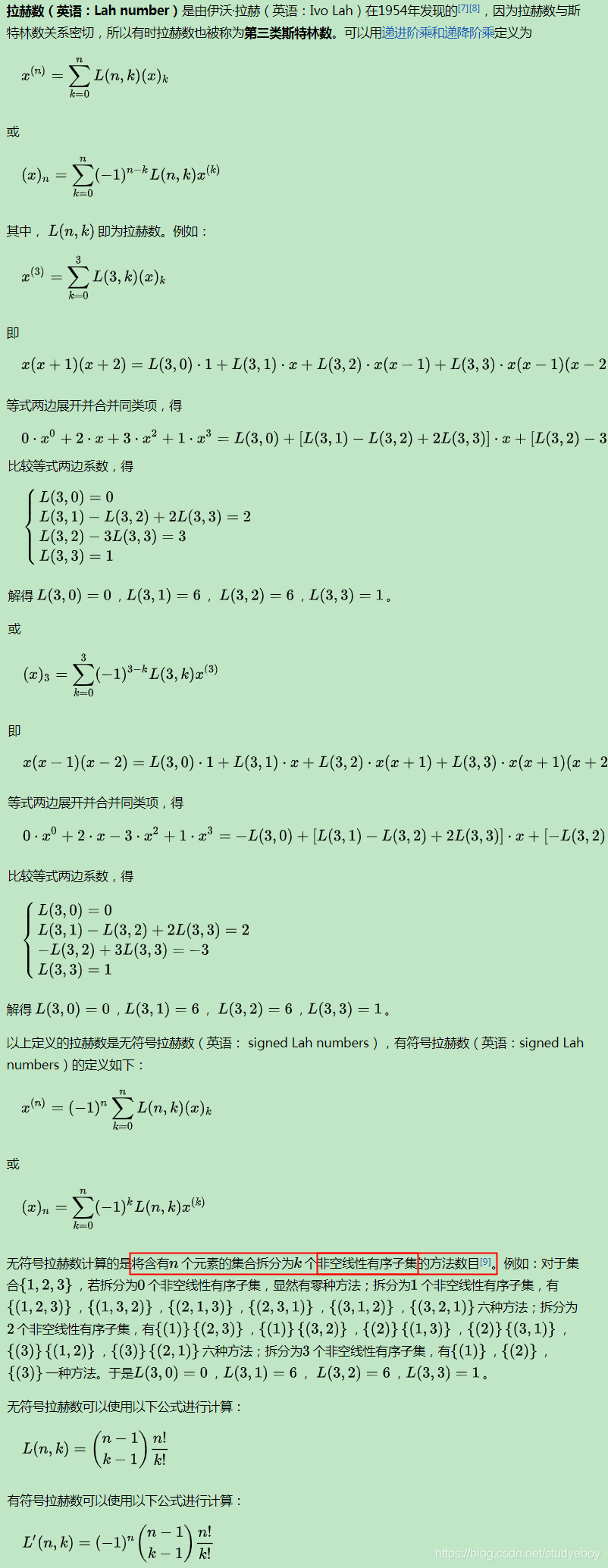
拉赫数
-
定义
-
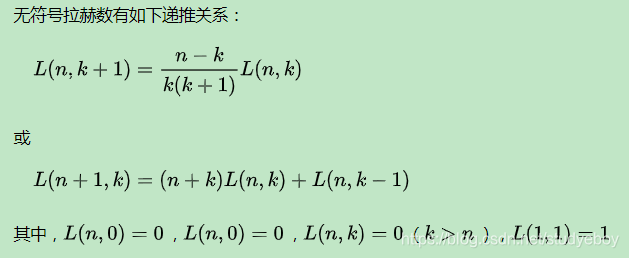
递推关系式
-
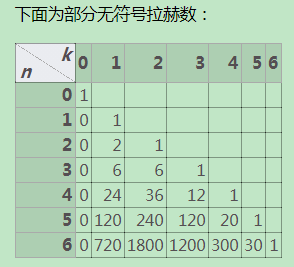
拉赫数表
-
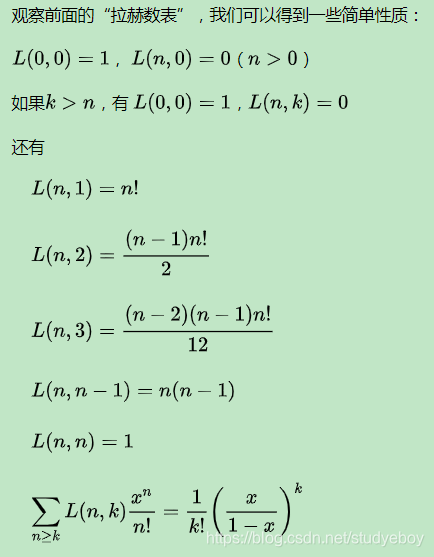
简单性质
-
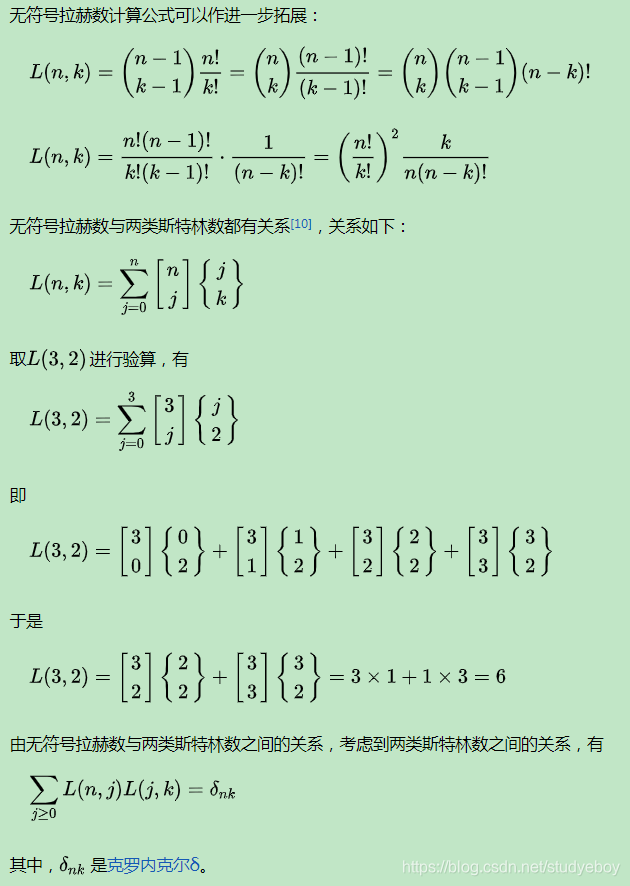
其他性质
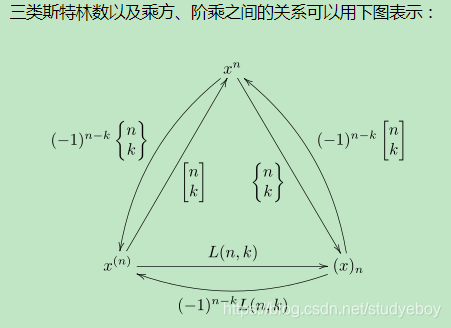
三类之间的关系
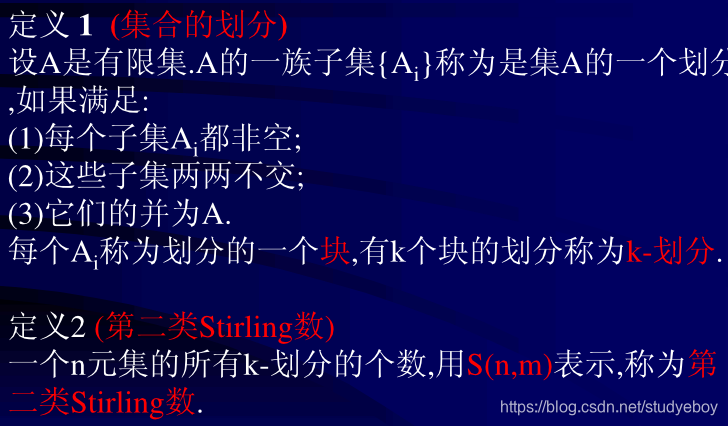
集合划分
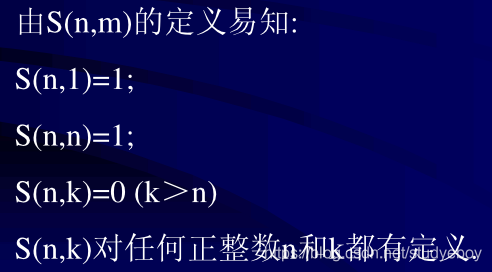
集合的分划和第二类Stirling数

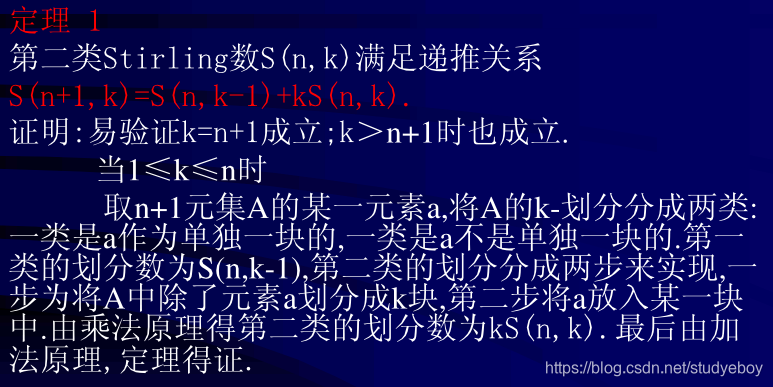
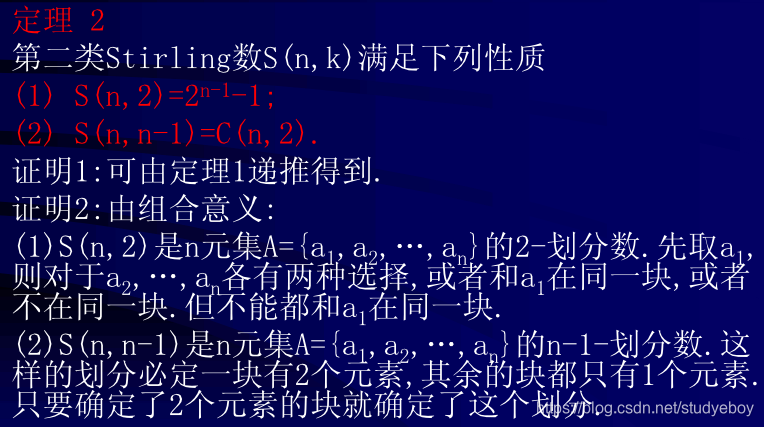
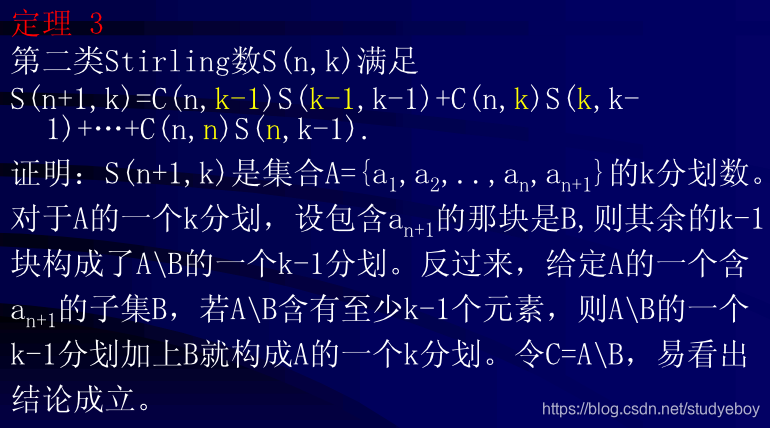
第二类Stirling数的性质
计算n个集合划分为非空子集的个数
int gatherRecursion(int n, int m)
{
	if (m == 1 || m == n)
	{
		return 1;
	}
	else
	{
		return m * gatherRecursion(n - 1, m) + gatherRecursion(n - 1, m - 1);
	}
}
int main(void)
{
	int gatherElement = 4;
	int sum = 0;
	for (int i = 1; i <= gatherElement; i++)
	{
		int result = gatherRecursion(gatherElement, i);
		sum = sum + result;
		printf("gatherNum(%d, %d) = %d\n", gatherElement, i, result);
	}
	printf("集合%d的所有划分数为: %d\n", gatherElement, sum);
	system("pause");
	return 0;
}
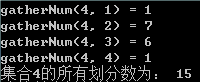
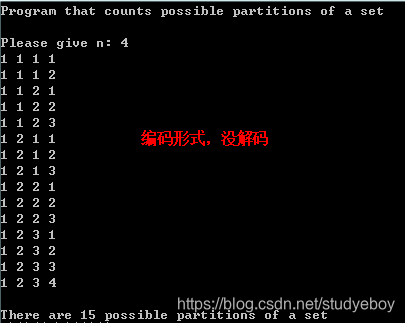
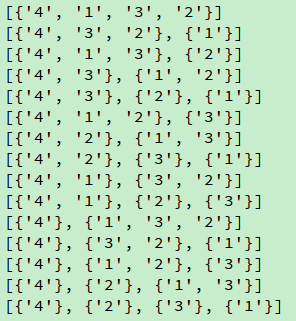
n个集合划分为非空子集的所有划分方式
- C++版本
#include <iostream>
#include <fstream>
using namespace std;
void printarr(int tab[], int n);
void part_gen(int tab[], int n);
bool check(int tab[], int n);
fstream file;
int main() {
	cout << "Program that counts possible partitions of a set" << endl;
	int n;
	cout << "\nPlease give n: ";
	cin >> n;
	int *tab = new int[n];
	for (int i = 0; i < n; i++) {
		tab[i] = 1;
	}
	file.open("MP_L2.txt", fstream::out);
	printarr(tab, n);
	int counter = 1;
	while (tab[n - 1] != n) {
		part_gen(tab, n);
		printarr(tab, n);
		counter++;
	}
	cout << endl <<"There are "<< counter<<" possible partitions of a set"<<endl;
	file<< endl << "There are " << counter << " possible partitions of a set" << endl;
	delete[]tab;
	file.close();
	system("pause");
	return 0;
}
void part_gen(int tab[], int n)
{
	if (check(tab, n)) {
		tab[n - 1]++;
	}
	else
	{
		part_gen(tab, n - 1);
		for (int i = n - 1; i < n; i++)
			tab[i] = 1;

	}

}
void printarr(int tab[], int n)
{
	for (int i = 0; i < n; i++) {
		cout << tab[i] << " ";
		file << tab[i] << " ";
	}
	file << "\n";
	cout << endl;
}
bool check(int tab[], int n)
{
	for (int i = 0; i < n - 1; i++) {
		if (tab[i] == tab[n - 1])
			return true;

	}
	return false;
}
- Python 版本
def partitions(set_):
    if not set_:
        yield []
        return
    for i in range(int(2**len(set_)/2)):
        parts = [set(), set()]
        for item in set_:
            parts[i&1].add(item)
            i >>= 1
        for b in partitions(parts[1]):
            yield [parts[0]]+b

for p in partitions(["1", "2", "3", "4"]):
    print(p)
整数分拆
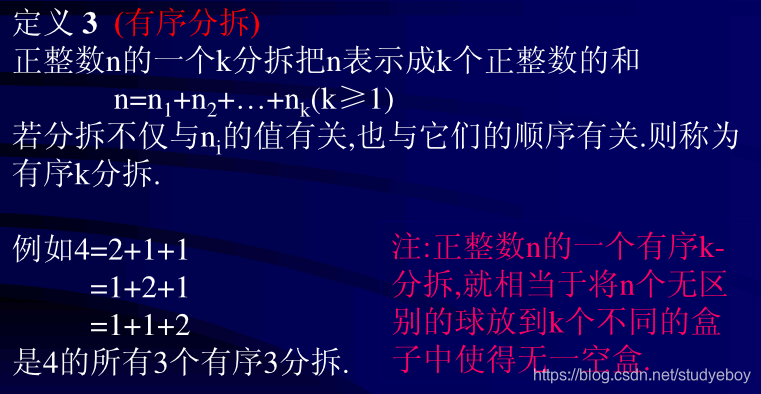
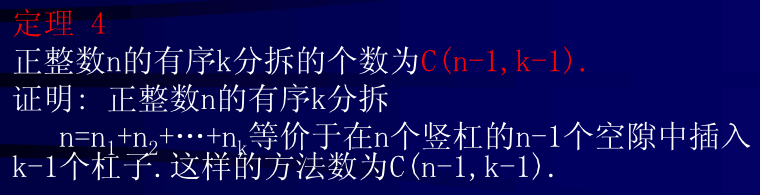
正整数的有序分拆
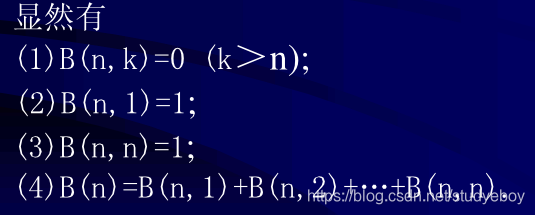
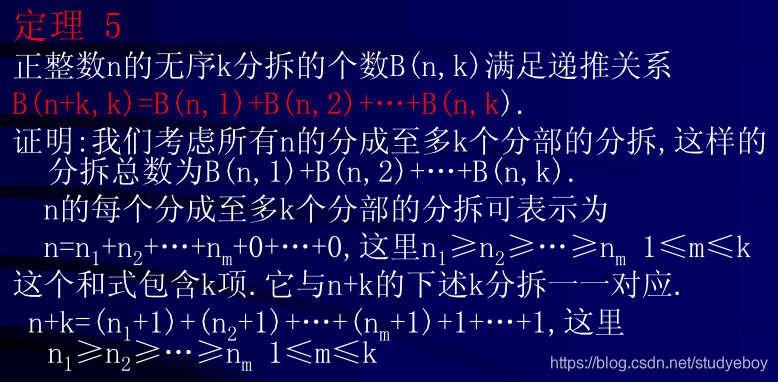
正整数的无序分拆


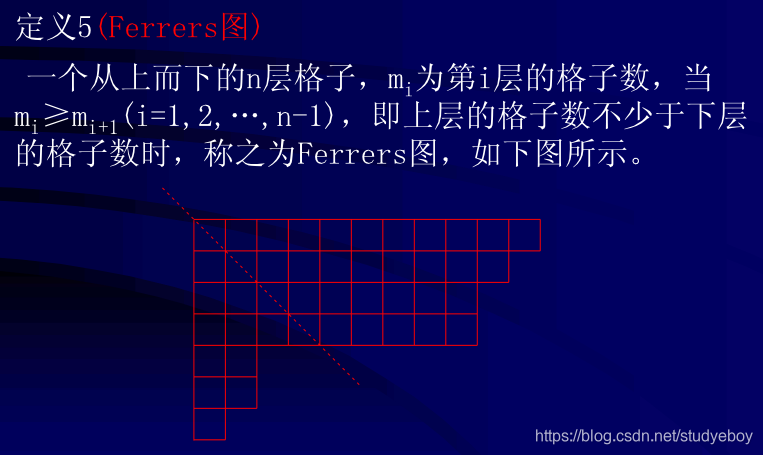
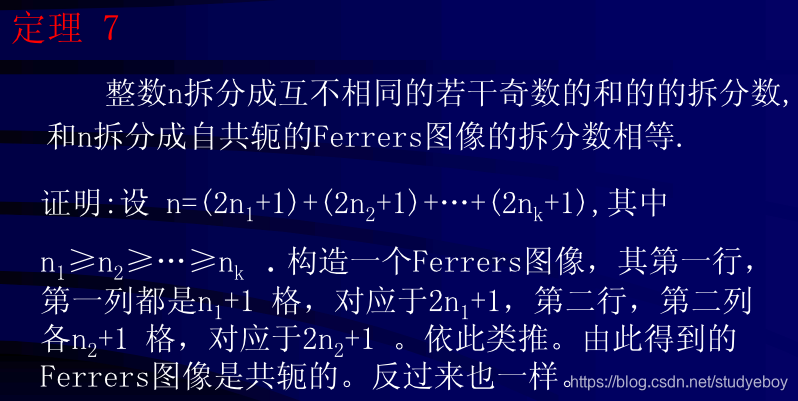
无序分拆的Ferrers图



参考资料
贝尔数
Bell数
贝尔数为什么可以通过贝尔三角形推算出来?
Stirling数
第四讲集合分划和整数分拆
C算法 集合划分问题
集合划分生成器
Efficient Generation of Set Partitions
集合划分或列表的所有可能的分组(partition of a set or all possible subgroups of a list)
partitions-of-a-set





 扫一扫
扫一扫


 8129
8129

 被折叠的 条评论
为什么被折叠?
被折叠的 条评论
为什么被折叠?
 到【灌水乐园】发言





