




 本文深入探讨了C++中字符操作的三种不同方式:通过++ch实现字符的直接递增输出,通过ch+1获得字符的ASCII值加一,以及通过ch++进行先输出后递增的操作,并附带代码示例及运行结果。
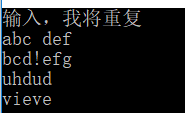
1.++ch,代表字符+1输出,比如输入是a,那么输出是b
#include<iostream>
using namespace std;
int main()
{
	char ch;

	cout << "输入,我将重复\n";
	cin.get(ch);
	while (ch != '.')
	{
		if (ch == '\n')
			cout << ch;
		else
			cout << ++ch;//将ch往后加1输出字符
		cin.get(ch);
	}
	cout <<"OK"<< endl;
	system("pause");
	return 0;
}
运行结果:
2.ch+1,代表字符+1后ASCII输出,比如输入是a,那么输出是98
#include<iostream>
using namespace std;
int main()
{
	char ch;

	cout << "输入,我将重复\n";
	cin.get(ch);
	while (ch != '.')
	{
		if (ch == '\n')
			cout << ch;
		else
			cout << ch+1;
		cin.get(ch);
	}
	cout <<"OK"<< endl;
	system("pause");
	return 0;
}
运行结果:
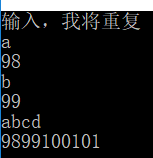
当然如果想输出原始ASCII值,可以ch+1-1,但是这样不如int(ch)方便
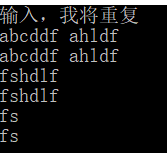
3.ch++,代表字符先输出,后加1,所以输入abc,输出还是abc
#include<iostream>
using namespace std;
int main()
{
	char ch;

	cout << "输入,我将重复\n";
	cin.get(ch);
	while (ch != '.')
	{
		if (ch == '\n')
			cout << ch;
		else
			cout << ch++;
		cin.get(ch);
	}
	cout <<"OK"<< endl;
	system("pause");
	return 0;
}
运行结果
有人问,那ch++没有任何作用吗?
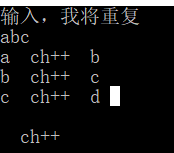
回答是否定的!肯定有作用,我们加一句cout输出语句
#include<iostream>
using namespace std;
int main()
{
	char ch;

	cout << "输入,我将重复\n";
	cin.get(ch);
	while (ch != '.')
	{
		if (ch == '\n')
			cout << ch;
		else
			cout << ch++;
		cout << "  ch++  " << ch <<endl;
		cin.get(ch);
	}
	cout <<"OK"<< endl;
	system("pause");
	return 0;
}






 扫一扫
扫一扫


 2716
2716


 到【灌水乐园】发言



