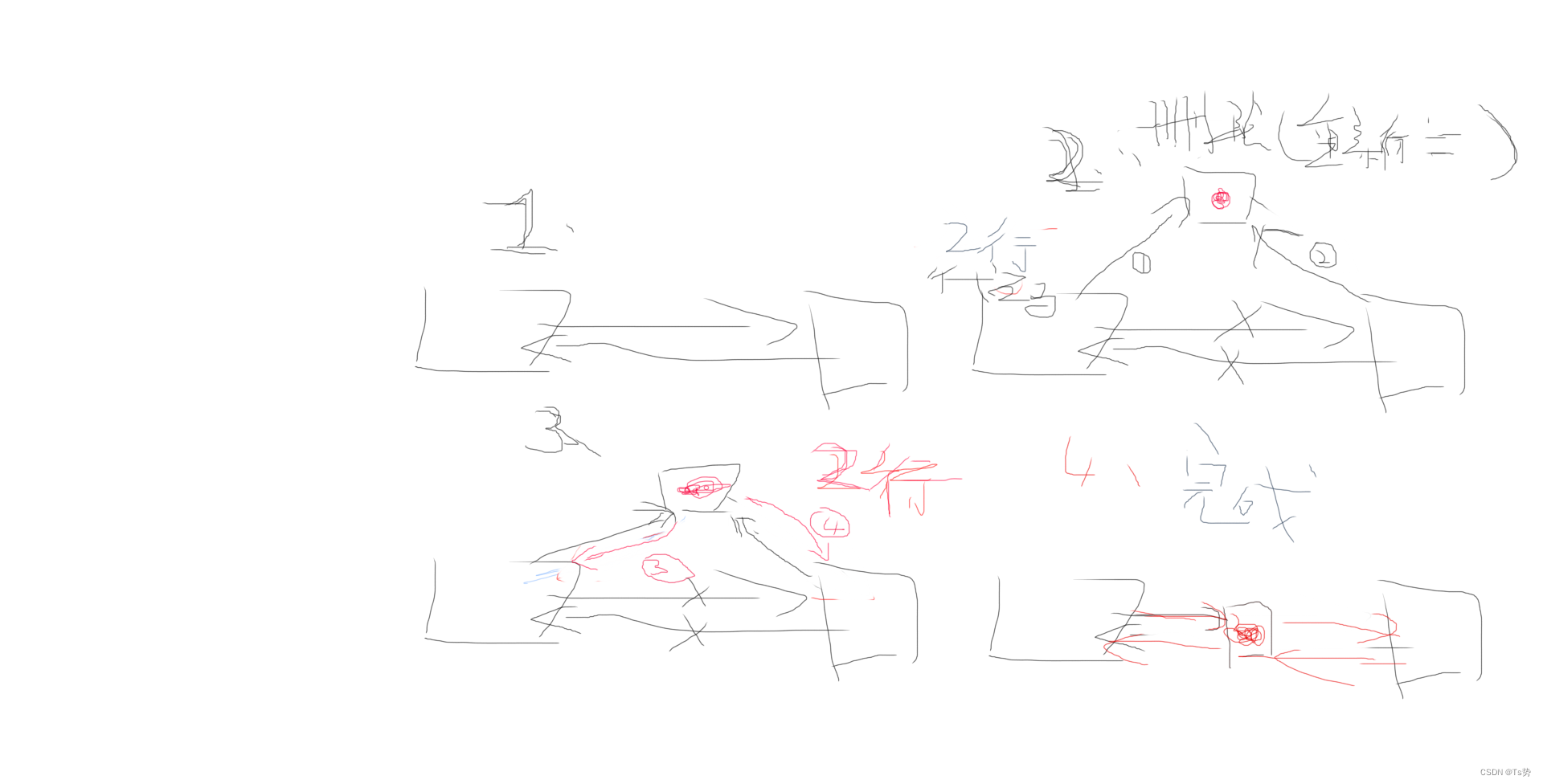
草稿图#双向链表的节点插入

本文深入探讨了双向链表的插入操作,通过详细的步骤解析和图表展示,帮助读者理解双向链表的数据结构及其操作。从初始化链表到在链表中插入节点,每个过程都清晰地呈现出来,旨在提升对数据结构基础知识的掌握。

双向链表插入:

  • 1、。。。
  • 2、。。。
  • 3、。。。
  • 4、。。。
    在这里插入图片描述

注:画图软件,AutoDesk SketchBook

======

一个常见的双向链表:

   ┌────────────────────────────────────────────────────────────┐
   │                                                            │
   │                                                            │
   │            data strunct 1                2         ....    │
   │           ┌─────────────┐          ┌─────────────┐         │
   │           │             │          │             │         │
   │           │             │          │             │         │
   ▼           │             │          │             │         │
               │             │          │             │         │
 list_head     │ list_head   │          │ list_head   │         │
┌───────┐ ◄┐   ├─────────────┤ ◄─┐      └─────────────┤ ◄────┐  │
│ next  ├──┼──►│   next      ├───┼──────►  next       ├──────┼──┘
├───────┤  │   ├─────────────┤   │      ┌─────────────┤      │
│ prev  │  └───┤   prev      │   └──────┤  prev       │      │
└───┬───┘      ├─────────────┤          ├─────────────┤      │
    │          │             │          │             │      │
    │          │             │          │             │      │
    │          │             │          │             │      │
    │          │             │          │             │      │
    │          │             │          │             │      │
    │          │             │          │             │      │
    │          │             │          │             │      │
    │          └─────────────┘          └─────────────┘      │
    │                                                        │
    │                                                        │
    └────────────────────────────────────────────────────────┘


                  ┌────────┐  ┌──────┐
                  │        ▼  ▼      │
                  │      list_head   │
                  │     ┌────────┐   │
                  │     │ next   ├───┘
                  │     ├────────┤
                  └─────┤ prev   │
                        └────────┘
                     一个空的双向链表
### USACO 2016 January Contest Subsequences Summing to Sevens Problem Solution and Explanation In this problem from the USACO contest, one is tasked with finding the size of the largest contiguous subsequence where the sum of elements (IDs) within that subsequence is divisible by seven. The input consists of an array representing cow IDs, and the goal is to determine how many cows are part of the longest sequence meeting these criteria; if no valid sequences exist, zero should be returned. To solve this challenge efficiently without checking all possible subsequences explicitly—which would lead to poor performance—a more sophisticated approach using prefix sums modulo 7 can be applied[^1]. By maintaining a record of seen remainders when dividing cumulative totals up until each point in the list by 7 along with their earliest occurrence index, it becomes feasible to identify qualifying segments quickly whenever another instance of any remainder reappears later on during iteration through the dataset[^2]. For implementation purposes: - Initialize variables `max_length` set initially at 0 for tracking maximum length found so far. - Use dictionary or similar structure named `remainder_positions`, starting off only knowing position `-1` maps to remainder `0`. - Iterate over given numbers while updating current_sum % 7 as you go. - Check whether updated value already exists inside your tracker (`remainder_positions`). If yes, compare distance between now versus stored location against max_length variable's content—update accordingly if greater than previous best result noted down previously. - Finally add entry into mapping table linking latest encountered modulus outcome back towards its corresponding spot within enumeration process just completed successfully after loop ends normally. Below shows Python code implementing described logic effectively handling edge cases gracefully too: ```python def find_largest_subsequence_divisible_by_seven(cow_ids): max_length = 0 remainder_positions = {0: -1} current_sum = 0 for i, id_value in enumerate(cow_ids): current_sum += id_value mod_result = current_sum % 7 if mod_result not in remainder_positions: remainder_positions[mod_result] = i else: start_index = remainder_positions[mod_result] segment_size = i - start_index if segment_size > max_length: max_length = segment_size return max_length ```
评论
成就一亿技术人!
拼手气红包6.0元
还能输入1000个字符
 
红包 添加红包
表情包 插入表情
 条评论被折叠 查看
添加红包

请填写红包祝福语或标题

红包个数最小为10个

红包金额最低5元

当前余额3.43前往充值 >
需支付:10.00
成就一亿技术人!
领取后你会自动成为博主和红包主的粉丝 规则
hope_wisdom
发出的红包
实付
使用余额支付
点击重新获取
扫码支付
钱包余额 0

抵扣说明:

1.余额是钱包充值的虚拟货币,按照1:1的比例进行支付金额的抵扣。
2.余额无法直接购买下载,可以购买VIP、付费专栏及课程。

余额充值