



 本文通过一个具体的数学问题,介绍了两种不同的算法实现方式——递归法与迭代法,并对比了它们在内存使用上的差异。通过对递归法中出现的Memory Limit Exceeded错误进行分析,进而提出了一种优化方案,即采用迭代法来解决问题,有效避免了内存溢出的情况。
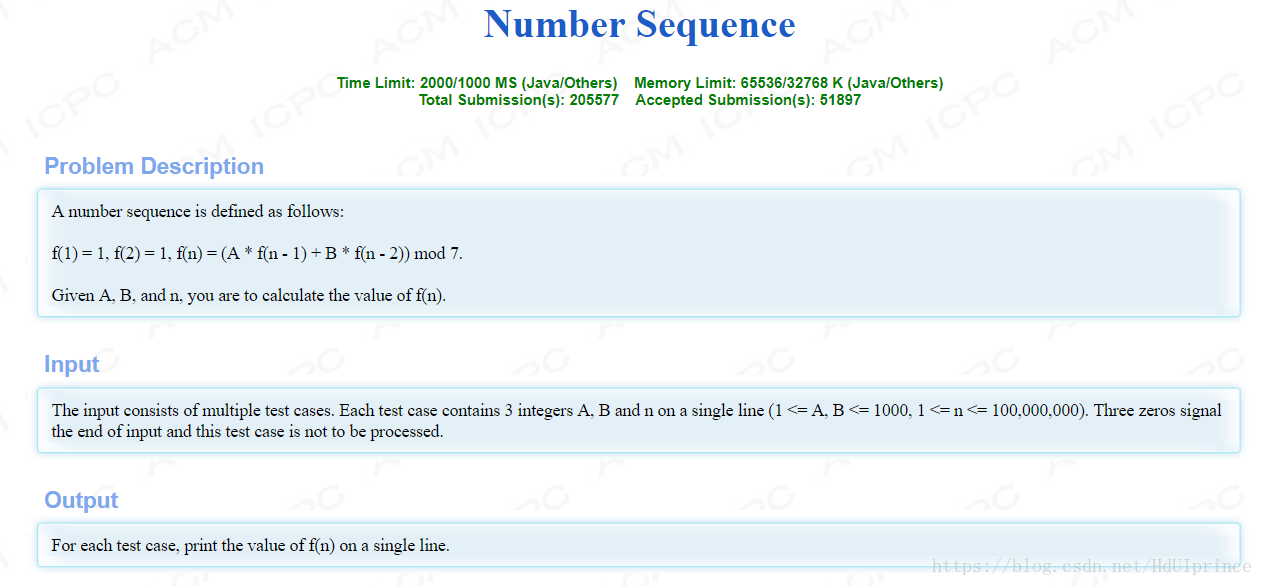
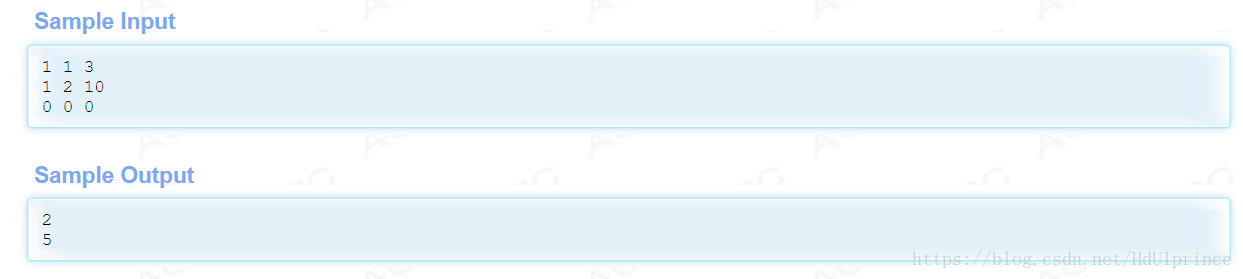
#include <iostream>
using namespace std;
int a, b;
int process(int n);

int main()
{
	int n;
	while(1)
	{
		cin>>a>>b>>n;
		if(a==0 && b ==0 && n==0)
			break;
		else
			cout<<process(n);
	}
	return 0;
}

int process(int n)
{
	if(n!=1 && n!=2)
		return ((a*process(n-1)+b*process(n-2))%7);
	else
		return 1;
}
递归法:Memory Limit Exceeded
#include <iostream>
using namespace std;

int main()
{
	int a, b, n;
	while(cin>>a>>b>>n)
	{
	int arr[50] = {0};
	arr[1] = 1;
	arr[2] = 1;
	if (a==0 && b==0 && n==0)
		break;

	for(int i=3; i<50; i++)
	{
		arr[i] = (a*arr[i-1] + b*arr[i-2])%7;
	}

	int t = n%49;
	cout<<arr[t]<<endl;
	}

	return 0;
}





 扫一扫
扫一扫


 804
804

 被折叠的 条评论
为什么被折叠?
被折叠的 条评论
为什么被折叠?
 到【灌水乐园】发言





