



list的介绍
1.底层是双向链表,节点主要由三部分构成,节点数据,上一个节点的指针和下一个节点的指针
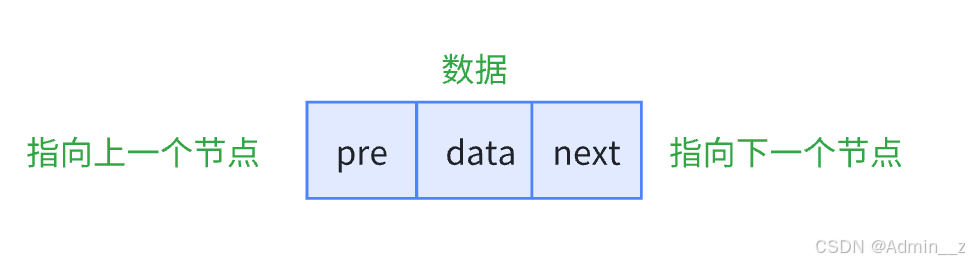

list结构设计
list结构分为三部分:list类,节点类(ListNode),迭代器类(ListIterator)
- list类:成员变量一般只有链表的头结点,成员函数负责初始化,插入删除等功能。
- ListNode类:定义节点的结构
- ListIterator类:封装节点的指针,用来模仿指针的功能,实现*,++等功能
节点类的实现(ListNode)
 template <class T>
 struct ListNode
 {
     T _data;
     ListNode<T>* _pre;
     ListNode<T>* _next;
     ListNode(const T& data = T())
     {
         _data = data;
         _pre = _next = nullptr;
     }
 };
迭代器类的讲解与实现(ListIterator)
讲解
为什么要实现迭代器类
由于链表的数据存储位置是分散的,节点内部需要节点的指针来把数据连接在一起,不能像数组一样直接通过指针解引用来获取数据,所以需要迭代器类对节点的封装,模仿指针的行为
类成员函数的讲解
- *的模拟实现
对指针解引用是为了获取该地址的数据,节点的数据存在节点的_data成员变量中,所以解引用可以通过返回节点的_data值来实现 - ->的模拟实现
->运算符是为了通过指针访问节点的成员变量,所以就需要获取当前节点数据的指针,需要注意的是在使用时,编译器简化成一个->,所以list的->的使用和其他容器无异 - 迭代器++模拟实现
节点中有下一个结点的结点指针,可以通过next指针对当前结点指针的覆盖,完成迭代器的++
注意
类模板参数添加了T的引用和T的指针,这里是为了list类可以根据传不同的参数实例化出iterator类和const_iterator类
实现
 template <class T, class Ref, class Ptr>
 struct ListIterator
 {
     typedef ListNode<T>  Node;
     typedef  ListIterator<T, Ref, Ptr> Self;
       Node*  _pnode;
           ListIterator(Node* pnode = nullptr)
    {
        _pnode = pnode;
    }

    ListIterator(const Self& l )
    {
        _pnode = l._pnode;
    }
    T& operator*()
    {
        return  _pnode->_data;
    }
    T* operator->()
    {
        return &(operator*());
    }
    Self operator++()
    {
        return Self(_pnode->_next);
    }
    Self operator++(int)
    {
        Self tmp = *this;
        _pnode = _pnode->_next;
        return tmp;
    }
    Self operator--()
    {
        return Self(_pnode->_pre);
    }
    Self operator--(int)
    {
        Self tmp = this;
        this = this->_pnode->_pre;
        return tmp;

    }
    bool operator!=(const Self& l)
    {
        return _pnode !=l._pnode;
    }
    bool operator==(const Self& l)
    {
        return _pnode == l._pnode;
    }
};
list类的实现
 template <class T>
 class list
 {
 public:
     typedef ListNode<T> Node;
     typedef  ListIterator<T, T&, T*> iterator;
     typedef  ListIterator<T, const T&, const T*> const_iterator;
     list()
     {
         _phead = new Node();
         _phead->_pre = _phead;
         _phead->_next = _phead;
     }
            void emptyInit()
    {
        _phead = new Node();
        _phead->_pre = _phead;
        _phead->_next = _phead;
  }
    list(int n, const T& value = T())
    {
        emptyInit();
        while (n--)
        {
            push_back(value);
        }
    }
    template <class Iterator>
    list(Iterator first, Iterator last)
    {
        emptyInit();
        while (first != last)
        {
            push_back(*first);
            first++;
        }
    }
    list(const list<T>& l)
    {
        emptyInit();
        for (const_iterator it=l.begin();it!=l.end();it++)
        {
            push_back(*it);
        }
    }

    list<T>& operator=(const list<T> l)
    {
        //clear();
        swap(l);
        return *this;
    }

    ///////////////////////////////////////////////////////////////
    // List Capacity
    size_t size()const
    {
        return _size;
    }
    bool empty()const
    {
        return _size == 0;
    }
    // List Access
    T& front()
    {
        return *begin();
    }
    const T& front()const
    {
        return *begin();
    }
    T back()
    {
        return  *(--end());
    }
    const T back()const
    {
        return  *(--end());
    }


    iterator begin()
    {
        return iterator(_phead->_next);
    }
    iterator end()
    {
        return iterator(_phead);
    }

    const_iterator begin()const
    {
        return  const_iterator(_phead->_next);
    }
    const_iterator end()const
    {
        return const_iterator(_phead);
    }
    void push_back(const T& val)
    {
        insert(end(), val);
    }
    void pop_back()
    {
        erase(--end());
    }
    void push_front(const T& val)
    {
        insert(begin(), val);
    }
    void pop_front()
    {
        erase(begin());
    }
    //// 在pos位置前插入值为val的节点
    iterator insert(iterator pos, const T& val)
    {
        Node* pre = pos._pnode->_pre;
        Node* newnode = new Node(val);
        pre->_next = newnode;
        newnode->_pre = pre;
        newnode->_next = pos._pnode;
        pos._pnode->_pre = newnode;
        _size++;
        return pos;
    }
    // 删除pos位置的节点,返回该节点的下一个位置
    iterator erase(iterator pos)
    {

            Node* pre = pos._pnode->_pre;
            Node* next = pos._pnode->_next;
            if (pre == next)
            {
                delete pre->_next;
                pre->_next = nullptr;
                return _phead;
            }
            pre->_next = next;
            next->_pre = pre;
            delete pos._pnode;
            pos._pnode = nullptr;
            _size--;
            return next;

    }
    void clear()
    {
        iterator it = begin();
        while (it!=end())
        {
            it=erase(it);
        }
    }

    ~list()
    {
        clear();
        delete _phead;
        _phead = nullptr;
    }
    void swap(list<T> l)
    {
        std::swap(_phead, l._phead);
        std::swap(_size, l._size);
   }


private:
    Node*  _phead;
    size_t _size;
};





 扫一扫
扫一扫


 334
334

 被折叠的 条评论
为什么被折叠?
被折叠的 条评论
为什么被折叠?
 到【灌水乐园】发言





