



目录
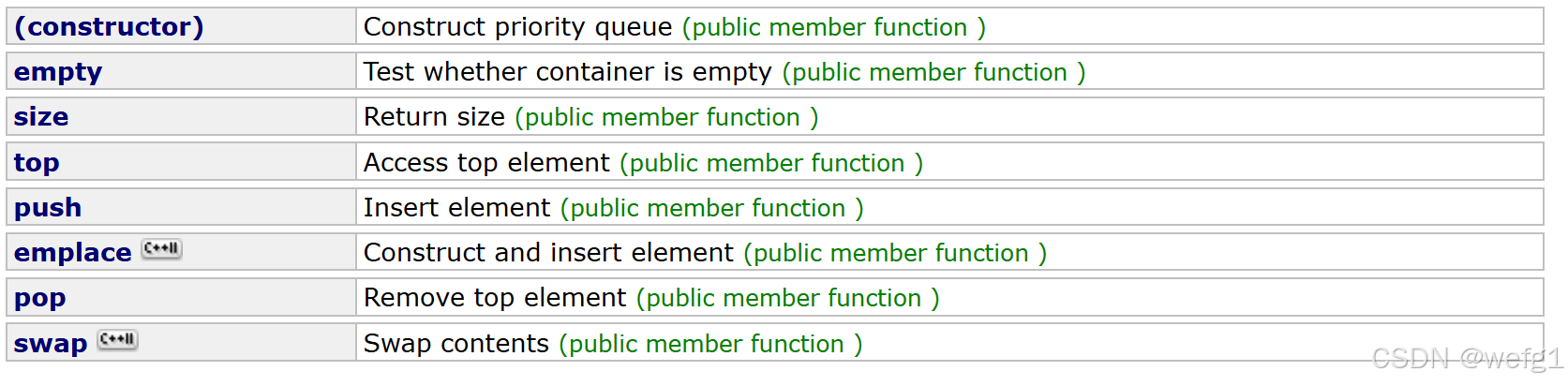
priority_queue的介绍
- 优先级队列是一种容器适配器,其特性被设计为:按照某种严格的弱排序准则,其首元素始终是所包含元素中的最大值。
- 这种结构类似于堆(heap)的概念,允许随时插入新元素,但只能访问最大的堆元素(即优先队列顶部的元素)。
- 优先队列作为容器适配器实现,这些适配器类将特定容器类的封装对象作为底层容器,通过提供特定的成员函数集合来访问元素。元素从特定容器的"末端"弹出(此末端在优先队列中被称为顶部)。
- 底层容器可以是任何标准容器类模板,也可以是其他专门设计的容器类。该容器必须满足以下操作要求:
- empty()(判空)
- size()(获取大小)
- front()(访问首元素)
- push_back()(尾部插入)
- pop_back()(尾部删除)
- 标准容器类vector和deque均满足这些要求。若未为特定priority_queue类实例指定容器类,则默认使用标准容器vector。
- 之所以要求支持随机访问迭代器,是为了能在内部始终保持堆结构。容器适配器通过自动调用算法函数make_heap、push_heap和pop_heap(在需要时)来维护这一结构。
priority_queue的使用
优先级队列默认使用vector作为其底层存储数据的容器,在vector上又使用了堆算法将vector中元素构造成堆的结构,因此priority_queue就是堆,所有需要用到堆的位置,都可以考虑使用priority_queue。注意:默认情况下priority_queue是大堆。
#include <vector>
#include <queue>
#include <functional> // greater算法的头文件
void TestPriorityQueue()
{
 // 默认情况下,创建的是大堆,其底层按照小于号比较
 vector<int> v{3,2,7,6,0,4,1,9,8,5};
 priority_queue<int> q1;
 for (auto& e : v)
 q1.push(e);
 cout << q1.top() << endl;
 // 如果要创建小堆,将第三个模板参数换成greater比较方式
 priority_queue<int, vector<int>, greater<int>> q2(v.begin(), v.end());
 cout << q2.top() << endl;
}
仿函数
在一个类中重载了()运算符,使得该类的对象可以像函数一样使用,这就叫仿函数
class less
{
public:
    bool operator()(int x,int y)
    {
        return x < y;
    }
}

int main()
{
    less lessfunc;
    lessfunc(1,2); // lessfunc.operator()(1,2)
    return 0;
}
仿函数的优点
1. 保持状态的能力
仿函数可以拥有成员变量,因此可以在多次调用之间保持状态,这是普通函数无法做到的。
cpp
class Counter {
    int count = 0;
public:
    int operator()() { return ++count; }
};

Counter c;
c(); // 返回1
c(); // 返回2
2. 作为参数传递时的优势
在STL算法中,仿函数比函数指针更灵活高效:
cpp
// 函数指针版本
void sort(vector<int>& v, bool (*comp)(int, int));

// 仿函数版本
template<typename Compare>
void sort(vector<int>& v, Compare comp);
3. 模板编程中的灵活性
仿函数可以作为模板参数传递,编译器可以进行更好的优化:
cpp
template<typename Func>
void process(Func f) {
    f(42);
}

struct MyFunctor {
    void operator()(int x) { /*...*/ }
};

process(MyFunctor());
4. 内联优化
仿函数的
operator()通常可以被编译器内联,而函数指针则难以内联。5. 多态行为
仿函数可以继承和组合,实现更复杂的行为:
cpp
template<typename Base>
class AddPrefix : public Base {
    string prefix;
public:
    AddPrefix(const string& p) : prefix(p) {}
    void operator()(const string& s) {
        Base::operator()(prefix + s);
    }
};
模拟实现
#pragma once
#include<vector>
#include<functional>
#include<stdbool.h>
#include<iostream>
using namespace std;
namespace program
{
    // 仿函数
    template <class T>
    class less
    {
    public:
        bool operator()(T a, T b)
        {
            return a < b;
        }
    };
    template <class T>
    class greater
    {
    public:
        bool operator()(T a, T b)
        {
            return a > b;
        }
    };
    template <class T, class Container = vector<T>, class Compare = less<T>>
    class priority_queue
    {
    public:
        priority_queue()
        {}
        void adjustdown(int parent)
        {
            int chlid = parent * 2 + 1;
            if (chlid + 1 < c.size() && comp(c[chlid],c[chlid + 1]))
            chlid++;

            while (chlid < c.size())
            {
                if (comp(c[parent], c[chlid])) swap(c[parent], c[chlid]);
                else break;

                parent = chlid;
                chlid = parent * 2 + 1;

                if (chlid + 1 < c.size() && comp(c[chlid], c[chlid + 1]))
                chlid++;
            }
        }

        void adjustup(int chlid)
        {
            int parent = (chlid - 1) / 2;

            while (chlid > 0)
            {
                if (comp(c[parent], c[chlid])) swap(c[parent], c[chlid]);
                else break;

                chlid = parent;
                parent = (chlid - 1) / 2;
            }
        }
        template <class InputIterator>


        priority_queue(InputIterator first, InputIterator last)
        {
            while (first != last)
            {
                c.push_back(*first);
                first++;
            }

            for (int i = (int)(c.size() - 1 - 1) / 2; i >= 0; i--)
            {
                adjustdown(i);
            }
        }

        bool empty() const
        {
            return c.empty();
        }

        size_t size() const
        {
            return c.size();
        }

        const T& top() const
        {
            return c.front();
        }

        void push(const T& x)
        {
            c.push_back(x);

            adjustup((int)c.size() - 1);
        }

        void pop()
        {
            if (!c.empty())
            {
                swap(c[0], c[c.size() - 1]);
                c.pop_back();
                adjustdown(0);
            }
        }

    private:
        Container c;
        Compare comp;
    };

};
应用
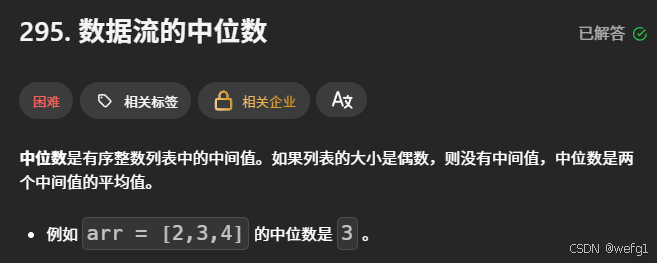
大小堆维护数据流的中位数
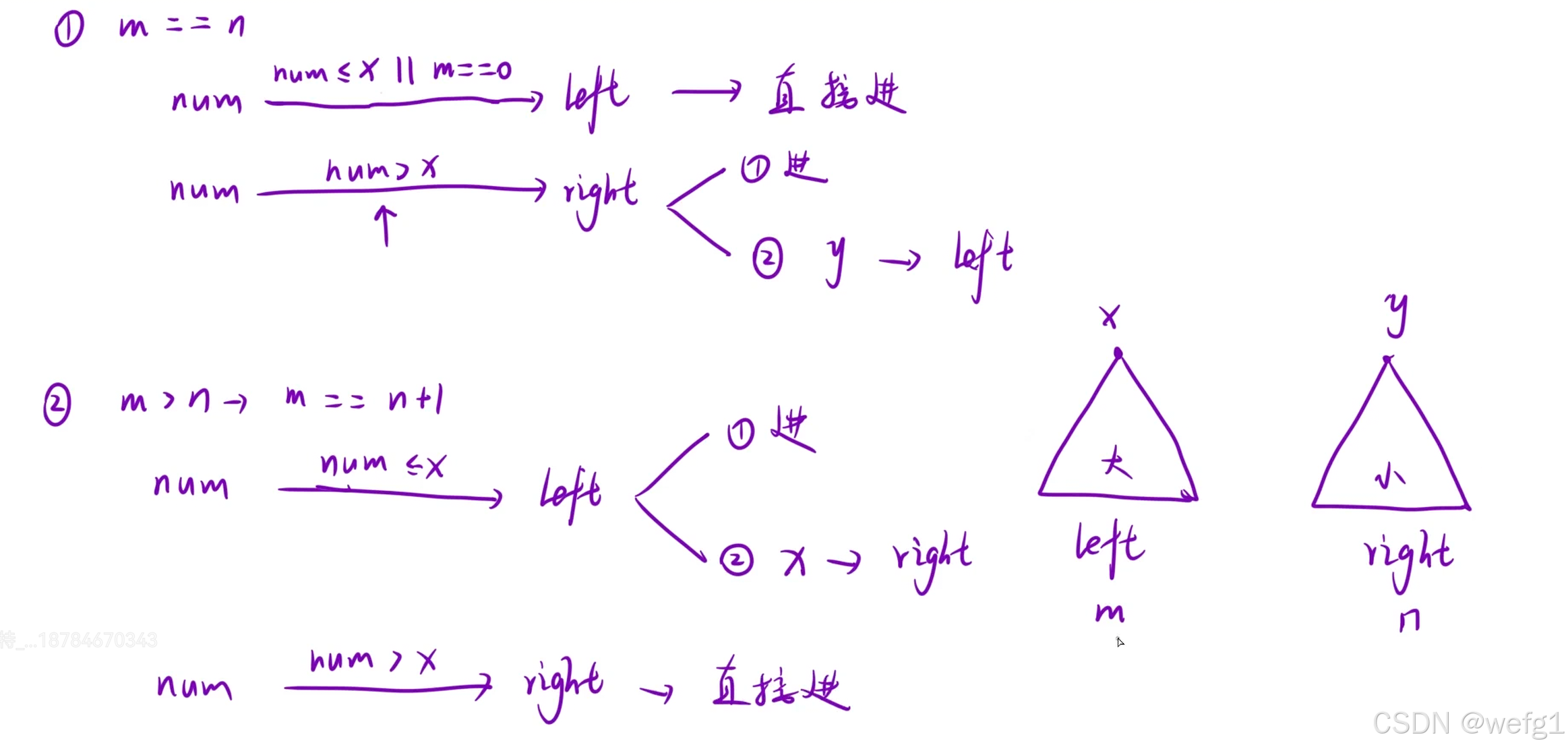
假设一些有序的数据流,小于中位数的元素被放到一个大根堆里面,大于中位数的元素被放到一个小根堆里面,并规定:大根堆的元素个数为 m,小根堆的元素个数为 n,大根堆的堆顶元素为 下,小根堆的堆顶元素为 n,规定 m 和 n 一定要满足:要么 m == n,要么 m == n + 1。
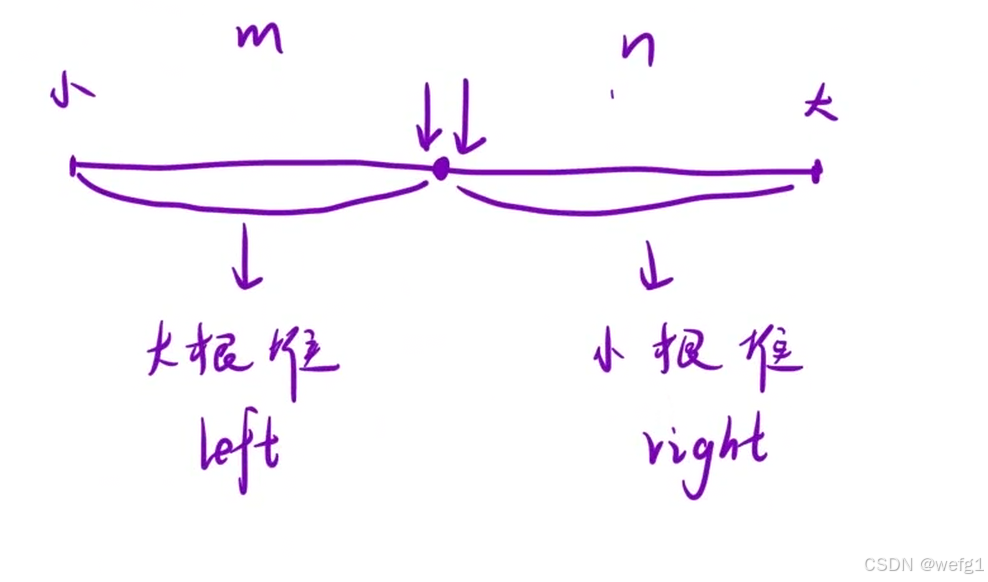
如果满足规定:这时要求数据流的中位数,如果 m == n,中位数 == (x + y)/ 2,如果 m == n + 1,中位数 == x。
任何插入元素保证以上规定:(分类讨论)
class MedianFinder {
public:
    MedianFinder()
    {}

    void addNum(int num) {
        if(left.size() == right.size())
        {
            if(left.size() == 0 || num <= left.top()) left.push(num);
            else
            {
                right.push(num);
                left.push(right.top());
                right.pop();
            }

        }
        else
        {
            if(num <= left.top())
            {
                left.push(num);
                right.push(left.top());
                left.pop();
            }
            else right.push(num);
        }
    }

    double findMedian() {
        if(left.size() == right.size()) return (left.top() + right.top()) / 2.0;

        return left.top();
    }

private:
    priority_queue<double> left;
    priority_queue<double,vector<double>,greater<double>> right;
};





 扫一扫
扫一扫


 1539
1539

 被折叠的 条评论
为什么被折叠?
被折叠的 条评论
为什么被折叠?
 到【灌水乐园】发言





