


 本文主要介绍了Java中的多线程,包括线程改名、创建线程的三种方式(Thread继承、Runnable接口实现、Callable接口实现)、线程状态与调度(如线程优先级、休眠、等待和礼让),以及线程同步的概念和synchronized关键字的应用。
多线程
main( )方法是主线程入口,关键词Thread
一、线程改名
public static void main(String[] args) {
    Thread t=new Thread("线程1");
    Thread th=Thread.currentThread();
    th.setName("主线程");
    System.out.println(th.getName());
    System.out.println(t.getName());
}
二、线程创建
线程的创建方式:
1. 继承Thread类
2. 实现Runnable接口
3. 实现Callable接口
方法1:
继承Thread类
public void run(){
        for (int i = 1; i <=100 ; i++) {
            System.out.println(Thread.currentThread().getName()
                    +":"+i);
        }
    }

    public static void main(String[] args) {
//        TestThread t1=new TestThread();
//        t1.setName("线程1");
//        TestThread t2=new TestThread();
//        t2.setName("线程2");
//        t1.start();
//        t2.start();
            TestThread t=new TestThread();
            Thread th1=new Thread(t);
            th1.setName("线程1");
            Thread th2=new Thread(t);
            th2.setName("线程2");
            th1.start();
            th2.start();
    }
方法2:
使用Runnable接口
public class TestRunnable implements Runnable{
    @Override
    public void run() {
        for (int i = 1; i <=100 ; i++) {
            System.out.println(Thread.currentThread().getName()
                    +":"+i);
        }
    }

    public static void main(String[] args) {
        TestRunnable runnable= new TestRunnable();
        Thread t1=new Thread(runnable,"线程1");
        Thread t2=new Thread(runnable,"线程2");
        t1.start();
        t2.start();
    }
}
方法3:
使用Callable接口
public class TestCallable implements Callable<Integer> {
    @Override
    public Integer call() {
        for (int i = 0; i <10 ; i++) {
            System.out.println(Thread.currentThread().getName()+":"+(i+1));
        }
        return 3;
    }

    public static void main(String[] args) throws ExecutionException, InterruptedException {
        TestCallable t=new TestCallable();
        FutureTask<Integer> f=new FutureTask<>(t);
        Thread th=new Thread(f);
        th.start();
        System.out.println(f.get());
    }
}
区别:
- 继承Thread类
编写简单,可直接操作线程
适用于单继承 - 实现Runnable接口
避免单继承局限性
便于共享资源
Callable接口与Runnable接口类似,多一个返回值
三、线程的状态及调度
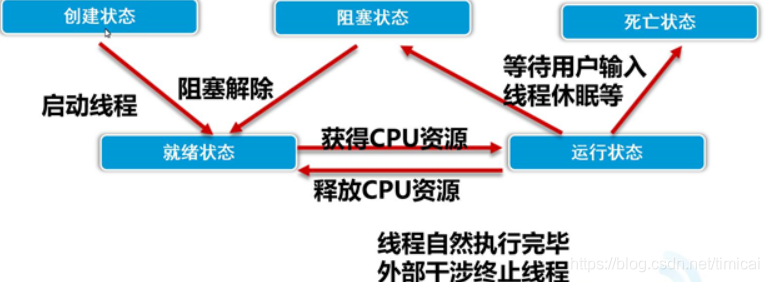
线程调度:
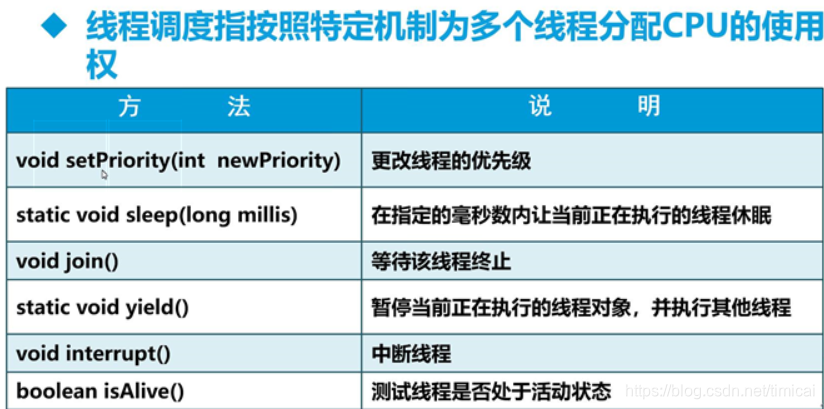
setPriority( ) 线程优先级,1-10,默认5
sleep( ) 一般在run( )中用,表示线程休眠
join( ) 一般加在主线程中,主线程等待需要执行的子程执行完后再继续执行
yield( ) 在run( )方法中添加,表示执行一次后礼让,之后再次抢资源,(只会提供一种可能,不保证一定会礼让)
例:
需求说明
某科室一天需看普通号50个,特需号10个,
特需号看病时间是普通号的2倍,
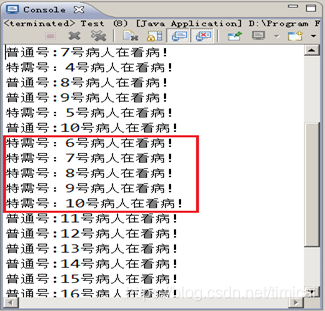
开始时普通号和特需号并行叫号,叫到特需号的概率比普通号高,
当普通号叫完第10号时,要求先看完全部特需号,再看普通号,
使用多线程模拟这一过程
public class Call implements Runnable{
    public void run(){
        for (int i = 1; i <=10 ; i++) {
            System.out.println("特需号"+i+"看病中");
            try {
                Thread.sleep(20);
            } catch (InterruptedException e) {
                e.printStackTrace();
            }
        }
    }

   public static void main(String[] args) throws InterruptedException {
        Runnable runnable=new Call();
        Thread t1=new Thread(runnable,"普通号");
        t1.setPriority(8);
        t1.start();
        for (int i = 1; i <=50 ; i++) {
            System.out.println("普通号"+i);
            Thread.sleep(10);
            if (i==10){
                t1.join();
            }
        }
    }
}
四、线程同步
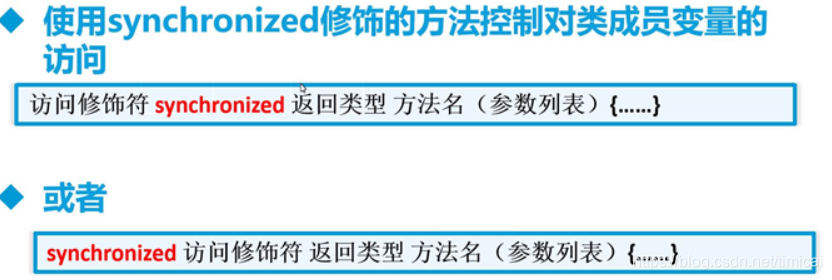
synchronized( )方法: -->线程安全
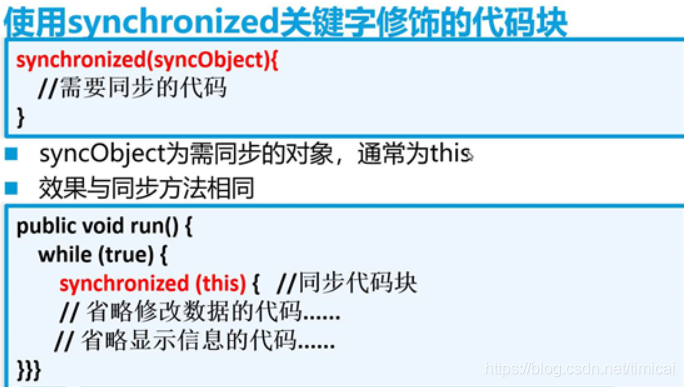
例:
模拟抢票
public class TestTicket implements Runnable{
    int ticket=100;
    int sale=0;
    @Override
    public  void run() {
        while(ticket>0){
            synchronized (this){
                    ticket--;
                    sale++;
                if (ticket<0)return;
                System.out.println(Thread.currentThread().getName()+"买到了第"
                    +sale+"张票,还剩"+ticket);
                try {
                    Thread.sleep(30);
                } catch (InterruptedException e) {
                    e.printStackTrace();
                }
            }
        }
    }

    public static void main(String[] args) {
        Runnable runnable=new TestTicket();
        Thread t1=new Thread(runnable,"水友1");
        Thread t2=new Thread(runnable,"水友2");
        t1.start();
        t2.start();
    }
}





 扫一扫
扫一扫


 10万+
10万+

 被折叠的 条评论
为什么被折叠?
被折叠的 条评论
为什么被折叠?
 到【灌水乐园】发言





