



 文章介绍了C++11对enum的两个新特性:一是可以限制枚举变量的值大小,例如通过`enumDEV_TYPE:unsignedchar`限制最大值;二是引入了枚举类(enumclass),这可以限制枚举的作用域,避免命名冲突。通过枚举类,可以更安全地使用枚举,比如在示例中防止了与全局变量red的冲突。
看到 c++11 中 enum 的两个新用法,记录一下。
1,限制枚举变量值大小
#include <stdio.h>
#include <stdlib.h>

enum DEV_TYPE: unsigned char
{
    DEV_A,
    DEV_B,
    DEV_C,
    DEV_D = 255
};

int main()
{
    return 0;
}
类似于 class 中的继承的语法,这里的作用是限制了 enum 元素的最大值,如上 DEV_D 的最大值就是 255,如果赋值大于 255 会怎样呢?
#include <stdio.h>
#include <stdlib.h>

enum DEV_TYPE: unsigned char
{
    DEV_A,
    DEV_B,
    DEV_C,
    DEV_D = 256
};

int main()
{
    return 0;
}
编译失败:

2,枚举类
#include <stdio.h>
#include <stdlib.h>

enum class COLOR
{
    white,
    red,
    black,
    gray,
    green
};

int main()
{
    return 0;
}
这样用有什么好处----限制了枚举的变量的作用域。如果没有这个作用域是怎样的呢?如:
#include <stdio.h>
#include <stdlib.h>

int main()
{
    enum COLOR
    {
        white,
        red,
        black,
        gray,
        green
    };

    bool red = true;
    return 0;
}
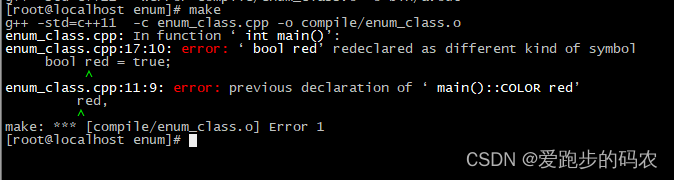
编译错误,因为这个main作用域内已经有了一个枚举类型值 red。改用枚举类就不一样了:
#include <stdio.h>
#include <stdlib.h>

int main()
{
    enum class COLOR
    {
        white,
        red,
        black,
        gray,
        green
    };

    bool red = true;

    //使用域限定符
    COLOR color = COLOR::red;

    return 0;
}
有了枚举类限定了枚举类型的作用域,减少了命名空间的冲突。





 扫一扫
扫一扫


 1482
1482

 被折叠的 条评论
为什么被折叠?
被折叠的 条评论
为什么被折叠?
 到【灌水乐园】发言





