



7. Bean的自动装配
7.1. 环境搭建及测试
- 环境搭建
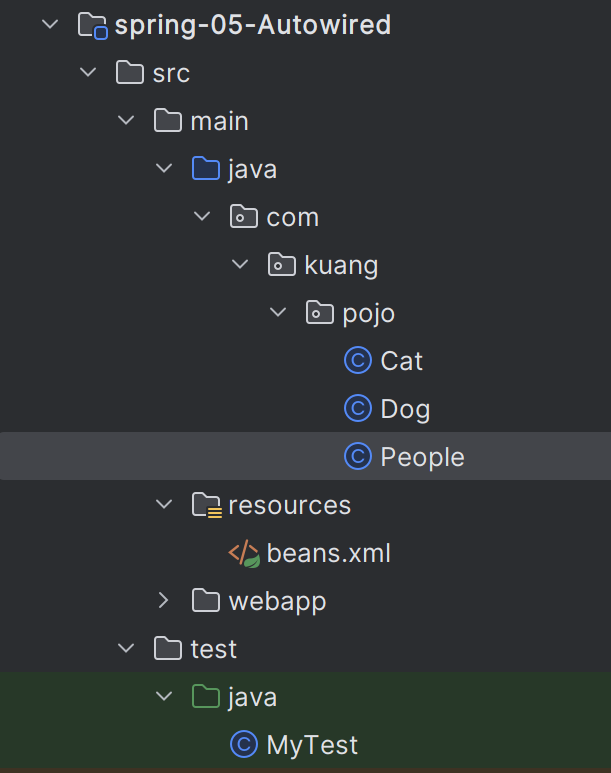
- 编写实体类Cat, Dog, People
package com.kuang.pojo;

public class Cat {
    public void shout() {
        System.out.println("miao~");
    }
}
package com.kuang.pojo;

public class Dog {
    public void shout() {
        System.out.println("wang~");
    }
}
package com.kuang.pojo;

public class People {
    private Cat cat;
    private Dog dog;
    private String name;

    public Cat getCat() {
        return cat;
    }

    public void setCat(Cat cat) {
        this.cat = cat;
    }

    public Dog getDog() {
        return dog;
    }

    public void setDog(Dog dog) {
        this.dog = dog;
    }

    public String getName() {
        return name;
    }

    public void setName(String name) {
        this.name = name;
    }

    @Override
    public String toString() {
        return "Perple{" +
                "cat=" + cat +
                ", dog=" + dog +
                ", name='" + name + '\'' +
                '}';
    }
}
- 编写spring配置文件beans.xml
<?xml version="1.0" encoding="UTF-8"?>
<beans xmlns="http://www.springframework.org/schema/beans"
       xmlns:xsi="http://www.w3.org/2001/XMLSchema-instance"
       xsi:schemaLocation="http://www.springframework.org/schema/beans
        http://www.springframework.org/schema/beans/spring-beans.xsd">

    <bean id="cat" class="com.kuang.pojo.Cat"/>
    <bean id="dog" class="com.kuang.pojo.Dog"/>

    <bean id="people" class="com.kuang.pojo.People">
        <property name="name" value="哇哈哈"/>
        <property name="cat" ref="cat"/>
        <property name="dog" ref="dog"/>

    </bean>

</beans>
- 测试
import com.kuang.pojo.People;
import org.springframework.context.support.ClassPathXmlApplicationContext;

public class MyTest {
    public static void main(String[] args) {
        ClassPathXmlApplicationContext context = new ClassPathXmlApplicationContext("beans.xml");
        People people = context.getBean("people", People.class);
        people.getCat().shout();
        people.getDog().shout();
    }
}
7.2. ByName自动装配
package com.kuang.pojo;

public class People {
    private Cat cat;
    private Dog dog;
    private String name;

    public Cat getCat() {
        return cat;
    }

    public void setCat(Cat cat) {
        this.cat = cat;
    }

    public Dog getDog() {
        return dog;
    }

    public void setDog(Dog dog) {
        this.dog = dog;
    }

    public String getName() {
        return name;
    }

    public void setName(String name) {
        this.name = name;
    }

    @Override
    public String toString() {
        return "Perple{" +
        "cat=" + cat +
        ", dog=" + dog +
        ", name='" + name + '\'' +
        '}';
    }
}
<?xml version="1.0" encoding="UTF-8"?>
<beans xmlns="http://www.springframework.org/schema/beans"
       xmlns:xsi="http://www.w3.org/2001/XMLSchema-instance"
       xsi:schemaLocation="http://www.springframework.org/schema/beans
        http://www.springframework.org/schema/beans/spring-beans.xsd">

    <bean id="cat" class="com.kuang.pojo.Cat"/>
    <bean id="dog" class="com.kuang.pojo.Dog"/>

    <bean id="people" class="com.kuang.pojo.People" autowire="byName">
        <property name="name" value="哇哈哈"/>
    </bean>

</beans>
byName:会自动在容器上下文中查找,和自己对象set方法后而的值对应的beanid!
7.3. ByType自动装配
<?xml version="1.0" encoding="UTF-8"?>
<beans xmlns="http://www.springframework.org/schema/beans"
  xmlns:xsi="http://www.w3.org/2001/XMLSchema-instance"
  xsi:schemaLocation="http://www.springframework.org/schema/beans
  http://www.springframework.org/schema/beans/spring-beans.xsd">

  <bean id="cat" class="com.kuang.pojo.Cat"/>
  <bean id="dog" class="com.kuang.pojo.Dog"/>

  <bean id="people" class="com.kuang.pojo.People" autowire="byType">
    <property name="name" value="哇哈哈"/>
  </bean>

</beans>
byType:会自动在容器上下文中查找,和自己对象属性类型机同的bean!
小结:
- byname的时候,需要保证所有bean的id唯一,并且这个bean需要和自动注入的属性的set方法的值一致!
- bytype的时候,需要保证所有bean的class唯一,并且这个bean需要和自动注入的属性的类型一致!
7.4. 使用注解实现自动装配
- 修改beans.xml
- 导入context约束
- 配置注解的支持:<context:annotation-config/>
<?xml version="1.0" encoding="UTF-8"?>
<beans xmlns="http://www.springframework.org/schema/beans"
       xmlns:xsi="http://www.w3.org/2001/XMLSchema-instance"
       xmlns:context="http://www.springframework.org/schema/context"
       xmlns:aop="http://www.springframework.org/schema/aop"
       xsi:schemaLocation="http://www.springframework.org/schema/beans
        http://www.springframework.org/schema/beans/spring-beans.xsd
        http://www.springframework.org/schema/context
        https://www.springframework.org/schema/context/spring-context.xsd
        http://www.springframework.org/schema/aop
        https://www.springframework.org/schema/context/spring-aop.xsd">

    <!-- 开启注解的支持 -->
    <context:annotation-config/>

    <bean id="cat" class="com.kuang.pojo.Cat"/>
    <bean id="dog" class="com.kuang.pojo.Dog"/>
    <bean id="people" class="com.kuang.pojo.People"/>


</beans>
- 修改People.java
 @Autowired
    private Cat cat;
    @Autowired
    private Dog dog;
- 直接在属性上使用!也可以在set方式上使用!
- 使用Autowired我们可以不用编写Set方法了,前提是你这个自动装配的属性在IOC(Spring)容器中存在,且符合名字byname!
- 测试
import com.kuang.pojo.People;
import org.springframework.context.support.ClassPathXmlApplicationContext;

public class MyTest {
    public static void main(String[] args) {
        ClassPathXmlApplicationContext context = new ClassPathXmlApplicationContext("beans.xml");
        People people = context.getBean("people", People.class);
        people.getCat().shout();
        people.getDog().shout();
    }
}
小结,@Resource 和@Autowired的区别:
- 都是用来自动装配的,都可以放在属性字段上!
- @Autowired 通过byType的方式实现,而且必须要求这个对象存在!
- @Resource默认通过byname的方式实现,如果找不到名字,则通过byType实现!如果两个都找不到的情况下,就报错!【常用】
- 执行顺序不同:@Autowired通过byType的方式实现。@Resource默认通过byname的方式实现。





 扫一扫
扫一扫


 137
137

 被折叠的 条评论
为什么被折叠?
被折叠的 条评论
为什么被折叠?
 到【灌水乐园】发言





