


一、实验介绍
1.1 实验内容
感知器是现存最简单的神经网络。感知器的一个历史性的缺点是它不能学习数据中存在的一些非常重要的模式。例如,查看图4-1中绘制的数据点。这相当于非此即彼(XOR)的情况,在这种情况下,决策边界不能是一条直线(也称为线性可分)。在这个例子中,感知器失败了。
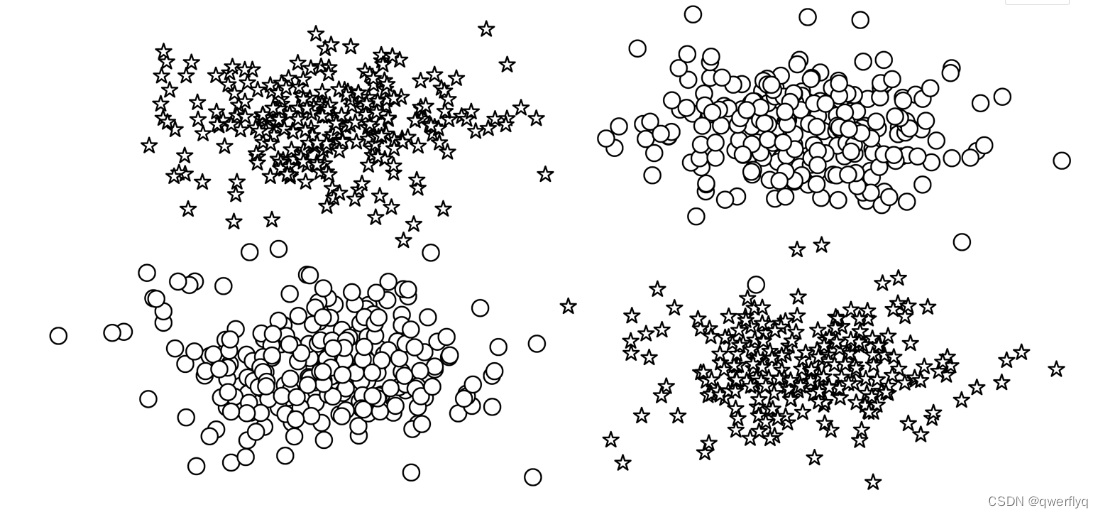
图4-1 XOR数据集中的两个类绘制为圆形和星形。请注意,没有任何一行可以分隔这两个类。
在本次实验中,我们将探索传统上称为前馈网络的神经网络模型,以及两种前馈神经网络:多层感知器和卷积神经网络。多层感知器在结构上扩展了我们在实验3中研究的简单感知器,将多个感知器分组在一个单层,并将多个层叠加在一起。我们稍后将介绍多层感知器,并在“示例:带有多层感知器的姓氏分类”中展示它们在多层分类中的应用。
本实验研究的第二种前馈神经网络,卷积神经网络,在处理数字信号时深受窗口滤波器的启发。通过这种窗口特性,卷积神经网络能够在输入中学习局部化模式,这不仅使其成为计算机视觉的主轴,而且是检测单词和句子等序列数据中的子结构的理想候选。我们在“卷积神经网络”中概述了卷积神经网络,并在“示例:使用CNN对姓氏进行分类”中演示了它们的使用。
在本实验中,多层感知器和卷积神经网络被分组在一起,因为它们都是前馈神经网络,并且与另一类神经网络——递归神经网络(RNNs)形成对比,递归神经网络(RNNs)允许反馈(或循环),这样每次计算都可以从之前的计算中获得信息。在实验6和实验7中,我们将介绍RNNs以及为什么允许网络结构中的循环是有益的。
在我们介绍这些不同的模型时,需要理解事物如何工作的一个有用方法是在计算数据张量时注意它们的大小和形状。每种类型的神经网络层对它所计算的数据张量的大小和形状都有特定的影响,理解这种影响可以极大地有助于对这些模型的深入理解。
1.2 实验要点
通过“示例:带有多层感知器的姓氏分类”,掌握多层感知器在多层分类中的应用
掌握每种类型的神经网络层对它所计算的数据张量的大小和形状的影响
1.3 实验环境
Python 3.6.7
二、实验原理
2.1 The Multilayer Perceptron(多层感知器)
2.1.1 基本结构
多层感知器(Multilayer Perceptron,MLP)是一种基本的前馈神经网络,被认为是最基本的神经网络构建模块之一。除了输入输出层,它中间可以有多个隐层,最简单的MLP只含一个隐层,即三层的结构
输入层:第一阶段是输入向量。这是给定给模型的向量。给定输入向量,第一个线性层计算一个隐藏向量——表示的第二阶段。隐藏向量之所以这样被调用,是因为它是位于输入和输出之间的层的输出。我们所说的“层的输出”是什么意思?理解这个的一种方法是隐藏向量中的值是组成该层的不同感知器的输出。
隐藏层:使用这个隐藏的向量,第二个线性层计算一个输出向量。在像Yelp评论分类这样的二进制任务中,输出向量仍然可以是1。在多类设置中,将在本实验后面的“示例:带有多层感知器的姓氏分类”一节中看到,输出向量是类数量的大小。虽然在这个例子中,我们只展示了一个隐藏的向量,但是有可能有多个中间阶段,每个阶段产生自己的隐藏向量。
输出层:最终向量总是通过线性层和非线性的组合映射到输出向量。
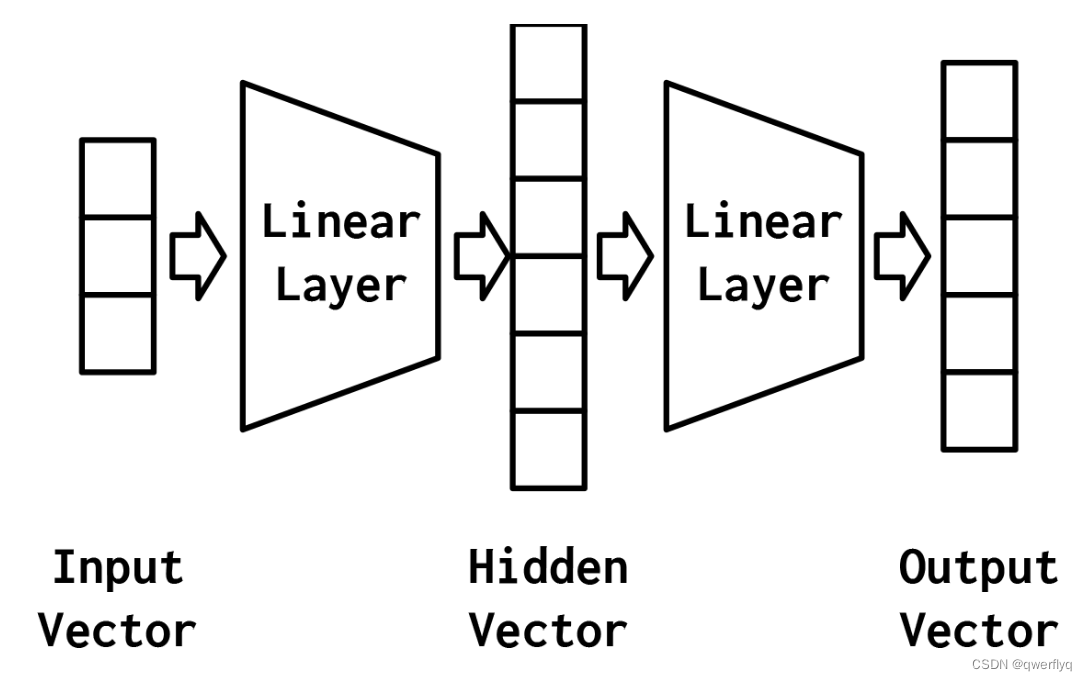
图4-2 一种具有两个线性层和三个表示阶段(输入向量、隐藏向量和输出向量)的MLP的可视化表示
mlp的力量来自于添加第二个线性层和允许模型学习一个线性分割的的中间表示——该属性的能表示一个直线(或更一般的,一个超平面)可以用来区分数据点落在线(或超平面)的哪一边的。学习具有特定属性的中间表示,如分类任务是线性可分的,这是使用神经网络的最深刻后果之一,也是其建模能力的精髓。
2.1.2 激活函数
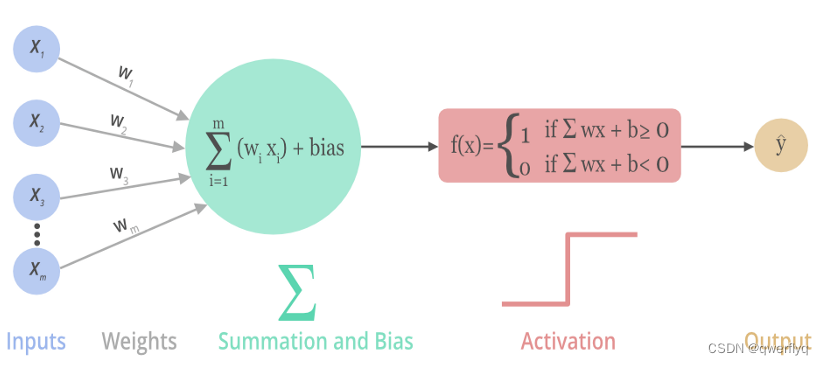
图4-3 一个神经元是如何输入激活函数以及如何得到该神经元最终的输出
输入层没什么好说,你输入什么就是什么,比如输入是一个n 维向量,就有n 个神经元。
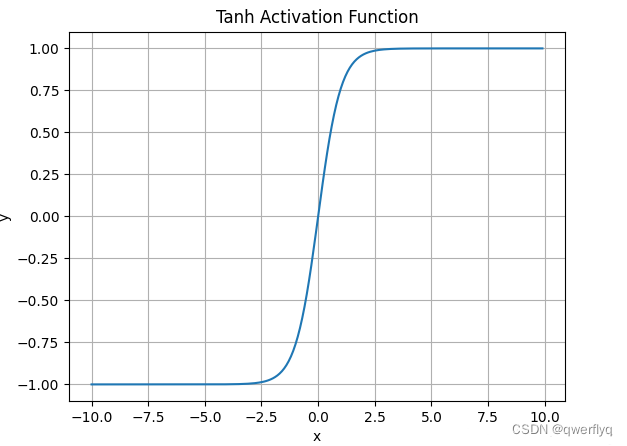
隐藏层的神经元怎么得来?首先它与输入层是全连接的,假设输入层用向量X 表示,则隐藏层的输出就是f ( ∑ i = 1 n W i X + b ),W i 是权重(也叫连接系数),b 是偏置系数,函数f 可以是常用的sigmoid函数或者tanh函数:
Sigmoid函数
Sigmoid函数的数学表达式为:
f(x)={1\over 1+e^{-x}}
导数表达式为:
f ′ ( x ) = f ( x ) ( 1 − f ( x ) )
函数图像如下:
2.2 卷积神经网络CNN
在神经网络中,不同类型的层对输入数据张量的大小和形状都有影响。例如:
全连接层(Dense):全连接层将输入数据张量展平,并将其与权重矩阵相乘,输出一个新的张量。这会改变张量的形状和大小。
卷积层(Convolutional):卷积层通过滑动卷积核在输入数据上提取特征。卷积操作会改变数据张量的大小,通常会减小数据的空间维度。
池化层(Pooling):池化层用于减小特征图的空间维度,通常通过取最大值或平均值来实现。池化操作会改变数据张量的大小,但不会改变其深度。
前馈神经网络的结构简单,易于实现和训练并且能够处理高维数据,而在自然语言处理中文本数据通常是高维的,故前馈神经网络十分适用于完成各种自然语言处理的任务。现在前馈神经网络被广泛应用于各种自然语言处理任务,包括但不限于以下几个方面:
文本分类:前馈神经网络可以用于文本分类任务,例如情感分析、垃圾邮件过滤、新闻分类等。输入文本数据经过处理后,通过前馈神经网络可以实现对文本进行自动分类。
语言模型:前馈神经网络可以用于构建语言模型,从而实现自然语言生成和语言理解任务。通过训练前馈神经网络,可以学习文本序列之间的模式和关系,从而生成自然流畅的文本或对文本进行理解。
序列标注:在词性标注、命名实体识别、文本分类等序列标注任务中,前馈神经网络也被广泛应用。通过将输入序列数据经过前馈神经网络的处理,可以实现对序列数据进行标注或分类。
机器翻译:前馈神经网络在机器翻译任务中也有应用。通过构建编码器-解码器结构的前馈神经网络,可以实现将一种语言的文本翻译成另一种语言的功能。
文本生成:前馈神经网络还可用于文本生成任务,如对话生成、摘要生成等。通过学习文本序列的模式和关系,前馈神经网络可以生成自然语言文本。
数据预处理
数据集名为surname.csv,它从互联网上不同的姓名来源收集了了来自18个不同国家的10,000个姓氏。数据预处理的目的一是为了平衡数据集中18个国家的姓氏在数据集中的比例,均匀的比例分布有利于训练有效的模型。另外要将数据集分为三个部分:70%到训练数据集,15%到验证数据集,最后15%到测试数据集,以便跨这些部分的类标签分布具有可比性。
from argparse import Namespace
from collections import Counter
import json
import os
import string

import numpy as np
import pandas as pd

import torch
import torch.nn as nn
import torch.nn.functional as F
import torch.optim as optim
from torch.utils.data import Dataset, DataLoader
from tqdm import tqdm_notebook


class Vocabulary(object):
    """Class to process text and extract vocabulary for mapping"""

    def __init__(self, token_to_idx=None, add_unk=True, unk_token="<UNK>"):
        """
        Args:
            token_to_idx (dict): a pre-existing map of tokens to indices
            add_unk (bool): a flag that indicates whether to add the UNK token
            unk_token (str): the UNK token to add into the Vocabulary
        """

        if token_to_idx is None:
            token_to_idx = {}
        self._token_to_idx = token_to_idx

        self._idx_to_token = {idx: token
                              for token, idx in self._token_to_idx.items()}

        self._add_unk = add_unk
        self._unk_token = unk_token

        self.unk_index = -1
        if add_unk:
            self.unk_index = self.add_token(unk_token)

    def to_serializable(self):
        """ returns a dictionary that can be serialized """
        return {'token_to_idx': self._token_to_idx,
                'add_unk': self._add_unk,
                'unk_token': self._unk_token}

    @classmethod
    def from_serializable(cls, contents):
        """ instantiates the Vocabulary from a serialized dictionary """
        return cls(**contents)

    def add_token(self, token):
        """Update mapping dicts based on the token.
        Args:
            token (str): the item to add into the Vocabulary
        Returns:
            index (int): the integer corresponding to the token
        """
        try:
            index = self._token_to_idx[token]
        except KeyError:
            index = len(self._token_to_idx)
            self._token_to_idx[token] = index
            self._idx_to_token[index] = token
        return index

    def add_many(self, tokens):
        """Add a list of tokens into the Vocabulary

        Args:
            tokens (list): a list of string tokens
        Returns:
            indices (list): a list of indices corresponding to the tokens
        """
        return [self.add_token(token) for token in tokens]

    def lookup_token(self, token):
        """Retrieve the index associated with the token
          or the UNK index if token isn't present.

        Args:
            token (str): the token to look up
        Returns:
            index (int): the index corresponding to the token
        Notes:
            `unk_index` needs to be >=0 (having been added into the Vocabulary)
              for the UNK functionality
        """
        if self.unk_index >= 0:
            return self._token_to_idx.get(token, self.unk_index)
        else:
            return self._token_to_idx[token]

    def lookup_index(self, index):
        """Return the token associated with the index

        Args:
            index (int): the index to look up
        Returns:
            token (str): the token corresponding to the index
        Raises:
            KeyError: if the index is not in the Vocabulary
        """
        if index not in self._idx_to_token:
            raise KeyError("the index (%d) is not in the Vocabulary" % index)
        return self._idx_to_token[index]

    def __str__(self):
        return "<Vocabulary(size=%d)>" % len(self)

    def __len__(self):
        return len(self._token_to_idx)


class SurnameVectorizer(object):
    """ The Vectorizer which coordinates the Vocabularies and puts them to use"""

    def __init__(self, surname_vocab, nationality_vocab):
        """
        Args:
            surname_vocab (Vocabulary): maps characters to integers
            nationality_vocab (Vocabulary): maps nationalities to integers
        """
        self.surname_vocab = surname_vocab
        self.nationality_vocab = nationality_vocab

    def vectorize(self, surname):
        """
        Args:
            surname (str): the surname
        Returns:
            one_hot (np.ndarray): a collapsed one-hot encoding
        """
        vocab = self.surname_vocab
        one_hot = np.zeros(len(vocab), dtype=np.float32)
        for token in surname:
            one_hot[vocab.lookup_token(token)] = 1

        return one_hot

    @classmethod
    def from_dataframe(cls, surname_df):
        """Instantiate the vectorizer from the dataset dataframe

        Args:
            surname_df (pandas.DataFrame): the surnames dataset
        Returns:
            an instance of the SurnameVectorizer
        """
        surname_vocab = Vocabulary(unk_token="@")
        nationality_vocab = Vocabulary(add_unk=False)

        for index, row in surname_df.iterrows():
            for letter in row.surname:
                surname_vocab.add_token(letter)
            nationality_vocab.add_token(row.nationality)

        return cls(surname_vocab, nationality_vocab)

    @classmethod
    def from_serializable(cls, contents):
        surname_vocab = Vocabulary.from_serializable(contents['surname_vocab'])
        nationality_vocab = Vocabulary.from_serializable(contents['nationality_vocab'])
        return cls(surname_vocab=surname_vocab, nationality_vocab=nationality_vocab)

    def to_serializable(self):
        return {'surname_vocab': self.surname_vocab.to_serializable(),
                'nationality_vocab': self.nationality_vocab.to_serializable()}


class SurnameDataset(Dataset):
    def __init__(self, surname_df, vectorizer):
        """
        Args:
            surname_df (pandas.DataFrame): the dataset
            vectorizer (SurnameVectorizer): vectorizer instatiated from dataset
        """
        self.surname_df = surname_df
        self._vectorizer = vectorizer

        self.train_df = self.surname_df[self.surname_df.split == 'train']
        self.train_size = len(self.train_df)

        self.val_df = self.surname_df[self.surname_df.split == 'val']
        self.validation_size = len(self.val_df)

        self.test_df = self.surname_df[self.surname_df.split == 'test']
        self.test_size = len(self.test_df)

        self._lookup_dict = {'train': (self.train_df, self.train_size),
                             'val': (self.val_df, self.validation_size),
                             'test': (self.test_df, self.test_size)}

        self.set_split('train')

        # Class weights
        class_counts = surname_df.nationality.value_counts().to_dict()

        def sort_key(item):
            return self._vectorizer.nationality_vocab.lookup_token(item[0])

        sorted_counts = sorted(class_counts.items(), key=sort_key)
        frequencies = [count for _, count in sorted_counts]
        self.class_weights = 1.0 / torch.tensor(frequencies, dtype=torch.float32)

    @classmethod
    def load_dataset_and_make_vectorizer(cls, surname_csv):
        """Load dataset and make a new vectorizer from scratch

        Args:
            surname_csv (str): location of the dataset
        Returns:
            an instance of SurnameDataset
        """
        surname_df = pd.read_csv(surname_csv)
        train_surname_df = surname_df[surname_df.split == 'train']
        return cls(surname_df, SurnameVectorizer.from_dataframe(train_surname_df))

    @classmethod
    def load_dataset_and_load_vectorizer(cls, surname_csv, vectorizer_filepath):
        """Load dataset and the corresponding vectorizer.
        Used in the case in the vectorizer has been cached for re-use

        Args:
            surname_csv (str): location of the dataset
            vectorizer_filepath (str): location of the saved vectorizer
        Returns:
            an instance of SurnameDataset
        """
        surname_df = pd.read_csv(surname_csv)
        vectorizer = cls.load_vectorizer_only(vectorizer_filepath)
        return cls(surname_df, vectorizer)

    @staticmethod
    def load_vectorizer_only(vectorizer_filepath):
        """a static method for loading the vectorizer from file

        Args:
            vectorizer_filepath (str): the location of the serialized vectorizer
        Returns:
            an instance of SurnameVectorizer
        """
        with open(vectorizer_filepath) as fp:
            return SurnameVectorizer.from_serializable(json.load(fp))

    def save_vectorizer(self, vectorizer_filepath):
        """saves the vectorizer to disk using json

        Args:
            vectorizer_filepath (str): the location to save the vectorizer
        """
        with open(vectorizer_filepath, "w") as fp:
            json.dump(self._vectorizer.to_serializable(), fp)

    def get_vectorizer(self):
        """ returns the vectorizer """
        return self._vectorizer

    def set_split(self, split="train"):
        """ selects the splits in the dataset using a column in the dataframe """
        self._target_split = split
        self._target_df, self._target_size = self._lookup_dict[split]

    def __len__(self):
        return self._target_size

    def __getitem__(self, index):
        """the primary entry point method for PyTorch datasets

        Args:
            index (int): the index to the data point
        Returns:
            a dictionary holding the data point's:
                features (x_surname)
                label (y_nationality)
        """
        row = self._target_df.iloc[index]

        surname_vector = \
            self._vectorizer.vectorize(row.surname)

        nationality_index = \
            self._vectorizer.nationality_vocab.lookup_token(row.nationality)

        return {'x_surname': surname_vector,
                'y_nationality': nationality_index}

    def get_num_batches(self, batch_size):
        """Given a batch size, return the number of batches in the dataset

        Args:
            batch_size (int)
        Returns:
            number of batches in the dataset
        """
        return len(self) // batch_size


def generate_batches(dataset, batch_size, shuffle=True,
                     drop_last=True, device="cpu"):
    """
    A generator function which wraps the PyTorch DataLoader. It will
      ensure each tensor is on the write device location.
    """
    dataloader = DataLoader(dataset=dataset, batch_size=batch_size,
                            shuffle=shuffle, drop_last=drop_last)

    for data_dict in dataloader:
        out_data_dict = {}
        for name, tensor in data_dict.items():
            out_data_dict[name] = data_dict[name].to(device)
        yield out_data_dict
构建多层感知机模型
class SurnameClassifier(nn.Module):
    """ A 2-layer Multilayer Perceptron for classifying surnames """

    def __init__(self, input_dim, hidden_dim, output_dim):
        """
        Args:
            input_dim (int): the size of the input vectors
            hidden_dim (int): the output size of the first Linear layer
            output_dim (int): the output size of the second Linear layer
        """
        super(SurnameClassifier, self).__init__()
        self.fc1 = nn.Linear(input_dim, hidden_dim)
        self.fc2 = nn.Linear(hidden_dim, output_dim)

    def forward(self, x_in, apply_softmax=False):
        """The forward pass of the classifier

        Args:
            x_in (torch.Tensor): an input data tensor.
                x_in.shape should be (batch, input_dim)
            apply_softmax (bool): a flag for the softmax activation
                should be false if used with the Cross Entropy losses
        Returns:
            the resulting tensor. tensor.shape should be (batch, output_dim)
        """
        intermediate_vector = F.relu(self.fc1(x_in))
        prediction_vector = self.fc2(intermediate_vector)

        if apply_softmax:
            prediction_vector = F.softmax(prediction_vector, dim=1)

        return prediction_vector


def make_train_state(args):
    return {'stop_early': False,
            'early_stopping_step': 0,
            'early_stopping_best_val': 1e8,
            'learning_rate': args.learning_rate,
            'epoch_index': 0,
            'train_loss': [],
            'train_acc': [],
            'val_loss': [],
            'val_acc': [],
            'test_loss': -1,
            'test_acc': -1,
            'model_filename': args.model_state_file}


def update_train_state(args, model, train_state):
    """Handle the training state updates.
    Components:
     - Early Stopping: Prevent overfitting.
     - Model Checkpoint: Model is saved if the model is better
    :param args: main arguments
    :param model: model to train
    :param train_state: a dictionary representing the training state values
    :returns:
        a new train_state
    """

    # Save one model at least
    if train_state['epoch_index'] == 0:
        torch.save(model.state_dict(), train_state['model_filename'])
        train_state['stop_early'] = False

    # Save model if performance improved
    elif train_state['epoch_index'] >= 1:
        loss_tm1, loss_t = train_state['val_loss'][-2:]

        # If loss worsened
        if loss_t >= train_state['early_stopping_best_val']:
            # Update step
            train_state['early_stopping_step'] += 1
        # Loss decreased
        else:
            # Save the best model
            if loss_t < train_state['early_stopping_best_val']:
                torch.save(model.state_dict(), train_state['model_filename'])

            # Reset early stopping step
            train_state['early_stopping_step'] = 0

        # Stop early ?
        train_state['stop_early'] = \
            train_state['early_stopping_step'] >= args.early_stopping_criteria

    return train_state


def compute_accuracy(y_pred, y_target):
    _, y_pred_indices = y_pred.max(dim=1)
    n_correct = torch.eq(y_pred_indices, y_target).sum().item()
    return n_correct / len(y_pred_indices) * 100


def set_seed_everywhere(seed, cuda):
    np.random.seed(seed)
    torch.manual_seed(seed)
    if cuda:
        torch.cuda.manual_seed_all(seed)


def handle_dirs(dirpath):
    if not os.path.exists(dirpath):
        os.makedirs(dirpath)
训练模型
args = Namespace(
    # Data and path information
    surname_csv="surnames_with_splits.csv",
    vectorizer_file="vectorizer.json",
    model_state_file="model.pth",
    save_dir="model_storage/ch4/surname_mlp",
    # Model hyper parameters
    hidden_dim=300,
    # Training  hyper parameters
    seed=1337,
    num_epochs=100,
    early_stopping_criteria=5,
    learning_rate=0.001,
    batch_size=64,
    # Runtime options
    cuda=False,
    reload_from_files=False,
    expand_filepaths_to_save_dir=True,
)

if args.expand_filepaths_to_save_dir:
    args.vectorizer_file = os.path.join(args.save_dir,
                                        args.vectorizer_file)

    args.model_state_file = os.path.join(args.save_dir,
                                         args.model_state_file)

    print("Expanded filepaths: ")
    print("\t{}".format(args.vectorizer_file))
    print("\t{}".format(args.model_state_file))

# Check CUDA
if not torch.cuda.is_available():
    args.cuda = False

args.device = torch.device("cuda" if args.cuda else "cpu")

print("Using CUDA: {}".format(args.cuda))

# Set seed for reproducibility
set_seed_everywhere(args.seed, args.cuda)

# handle dirs
handle_dirs(args.save_dir)

if args.reload_from_files:
    # training from a checkpoint
    print("Reloading!")
    dataset = SurnameDataset.load_dataset_and_load_vectorizer(args.surname_csv,
                                                              args.vectorizer_file)
else:
    # create dataset and vectorizer
    print("Creating fresh!")
    dataset = SurnameDataset.load_dataset_and_make_vectorizer(args.surname_csv)
    dataset.save_vectorizer(args.vectorizer_file)

vectorizer = dataset.get_vectorizer()
classifier = SurnameClassifier(input_dim=len(vectorizer.surname_vocab),
                               hidden_dim=args.hidden_dim,
                               output_dim=len(vectorizer.nationality_vocab))

classifier = classifier.to(args.device)
dataset.class_weights = dataset.class_weights.to(args.device)

loss_func = nn.CrossEntropyLoss(dataset.class_weights)
optimizer = optim.Adam(classifier.parameters(), lr=args.learning_rate)
scheduler = optim.lr_scheduler.ReduceLROnPlateau(optimizer=optimizer,
                                                 mode='min', factor=0.5,
                                                 patience=1)

train_state = make_train_state(args)

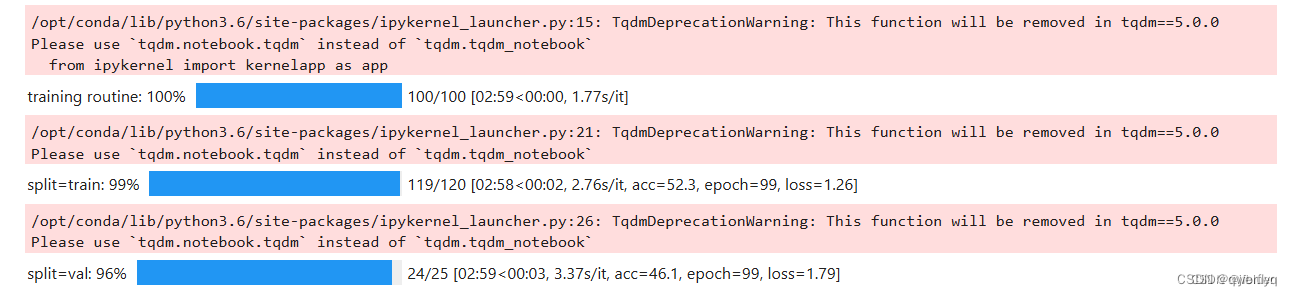
epoch_bar = tqdm_notebook(desc='training routine',
                          total=args.num_epochs,
                          position=0)

dataset.set_split('train')
train_bar = tqdm_notebook(desc='split=train',
                          total=dataset.get_num_batches(args.batch_size),
                          position=1,
                          leave=True)
dataset.set_split('val')
val_bar = tqdm_notebook(desc='split=val',
                        total=dataset.get_num_batches(args.batch_size),
                        position=1,
                        leave=True)

try:
    for epoch_index in range(args.num_epochs):
        train_state['epoch_index'] = epoch_index

        # Iterate over training dataset

        # setup: batch generator, set loss and acc to 0, set train mode on

        dataset.set_split('train')
        batch_generator = generate_batches(dataset,
                                           batch_size=args.batch_size,
                                           device=args.device)
        running_loss = 0.0
        running_acc = 0.0
        classifier.train()

        for batch_index, batch_dict in enumerate(batch_generator):
            # the training routine is these 5 steps:

            # --------------------------------------
            # step 1. zero the gradients
            optimizer.zero_grad()

            # step 2. compute the output
            y_pred = classifier(batch_dict['x_surname'])

            # step 3. compute the loss
            loss = loss_func(y_pred, batch_dict['y_nationality'])
            loss_t = loss.item()
            running_loss += (loss_t - running_loss) / (batch_index + 1)

            # step 4. use loss to produce gradients
            loss.backward()

            # step 5. use optimizer to take gradient step
            optimizer.step()
            # -----------------------------------------
            # compute the accuracy
            acc_t = compute_accuracy(y_pred, batch_dict['y_nationality'])
            running_acc += (acc_t - running_acc) / (batch_index + 1)

            # update bar
            train_bar.set_postfix(loss=running_loss, acc=running_acc,
                                  epoch=epoch_index)
            train_bar.update()

        train_state['train_loss'].append(running_loss)
        train_state['train_acc'].append(running_acc)

        # Iterate over val dataset

        # setup: batch generator, set loss and acc to 0; set eval mode on
        dataset.set_split('val')
        batch_generator = generate_batches(dataset,
                                           batch_size=args.batch_size,
                                           device=args.device)
        running_loss = 0.
        running_acc = 0.
        classifier.eval()

        for batch_index, batch_dict in enumerate(batch_generator):
            # compute the output
            y_pred = classifier(batch_dict['x_surname'])

            # step 3. compute the loss
            loss = loss_func(y_pred, batch_dict['y_nationality'])
            loss_t = loss.to("cpu").item()
            running_loss += (loss_t - running_loss) / (batch_index + 1)

            # compute the accuracy
            acc_t = compute_accuracy(y_pred, batch_dict['y_nationality'])
            running_acc += (acc_t - running_acc) / (batch_index + 1)
            val_bar.set_postfix(loss=running_loss, acc=running_acc,
                                epoch=epoch_index)
            val_bar.update()

        train_state['val_loss'].append(running_loss)
        train_state['val_acc'].append(running_acc)

        train_state = update_train_state(args=args, model=classifier,
                                         train_state=train_state)

        scheduler.step(train_state['val_loss'][-1])

        if train_state['stop_early']:
            break

        train_bar.n = 0
        val_bar.n = 0
        epoch_bar.update()
except KeyboardInterrupt:
    print("Exiting loop")
预测结果
# compute the loss & accuracy on the test set using the best available model

classifier.load_state_dict(torch.load(train_state['model_filename']))

classifier = classifier.to(args.device)
dataset.class_weights = dataset.class_weights.to(args.device)
loss_func = nn.CrossEntropyLoss(dataset.class_weights)

dataset.set_split('test')
batch_generator = generate_batches(dataset,
                                   batch_size=args.batch_size,
                                   device=args.device)
running_loss = 0.
running_acc = 0.
classifier.eval()

for batch_index, batch_dict in enumerate(batch_generator):
    # compute the output
    y_pred = classifier(batch_dict['x_surname'])

    # compute the loss
    loss = loss_func(y_pred, batch_dict['y_nationality'])
    loss_t = loss.item()
    running_loss += (loss_t - running_loss) / (batch_index + 1)

    # compute the accuracy
    acc_t = compute_accuracy(y_pred, batch_dict['y_nationality'])
    running_acc += (acc_t - running_acc) / (batch_index + 1)

train_state['test_loss'] = running_loss
train_state['test_acc'] = running_acc

print("Test loss: {};".format(train_state['test_loss']))
print("Test Accuracy: {}".format(train_state['test_acc']))

def predict_nationality(surname, classifier, vectorizer):
    """Predict the nationality from a new surname

    Args:
        surname (str): the surname to classifier
        classifier (SurnameClassifer): an instance of the classifier
        vectorizer (SurnameVectorizer): the corresponding vectorizer
    Returns:
        a dictionary with the most likely nationality and its probability
    """
    vectorized_surname = vectorizer.vectorize(surname)
    vectorized_surname = torch.tensor(vectorized_surname).view(1, -1)
    result = classifier(vectorized_surname, apply_softmax=True)

    probability_values, indices = result.max(dim=1)
    index = indices.item()

    predicted_nationality = vectorizer.nationality_vocab.lookup_index(index)
    probability_value = probability_values.item()

    return {'nationality': predicted_nationality, 'probability': probability_value}


new_surname = input("Enter a surname to classify: ")
classifier = classifier.to("cpu")
prediction = predict_nationality(new_surname, classifier, vectorizer)
print("{} -> {} (p={:0.2f})".format(new_surname,
                                    prediction['nationality'],
                                    prediction['probability']))

vectorizer.nationality_vocab.lookup_index(8)


def predict_topk_nationality(name, classifier, vectorizer, k=5):
    vectorized_name = vectorizer.vectorize(name)
    vectorized_name = torch.tensor(vectorized_name).view(1, -1)
    prediction_vector = classifier(vectorized_name, apply_softmax=True)
    probability_values, indices = torch.topk(prediction_vector, k=k)

    # returned size is 1,k
    probability_values = probability_values.detach().numpy()[0]
    indices = indices.detach().numpy()[0]

    results = []
    for prob_value, index in zip(probability_values, indices):
        nationality = vectorizer.nationality_vocab.lookup_index(index)
        results.append({'nationality': nationality,
                        'probability': prob_value})

    return results


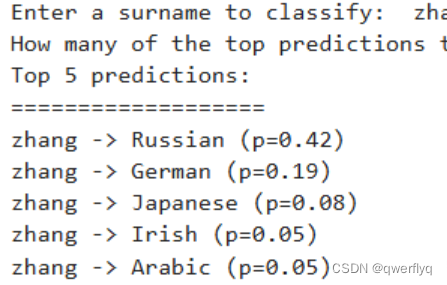
new_surname = input("Enter a surname to classify: ")
classifier = classifier.to("cpu")

k = int(input("How many of the top predictions to see? "))
if k > len(vectorizer.nationality_vocab):
    print("Sorry! That's more than the # of nationalities we have.. defaulting you to max size :)")
    k = len(vectorizer.nationality_vocab)

predictions = predict_topk_nationality(new_surname, classifier, vectorizer, k=k)

print("Top {} predictions:".format(k))
print("===================")
for prediction in predictions:
    print("{} -> {} (p={:0.2f})".format(new_surname,
                                        prediction['nationality'],
                                        prediction['probability']))
四、实验总结
4.1 多层感知机MLP
“基于多层感知器的姓氏分类”展示了多层感知器(MLP)在多层分类任务中的应用。该示例的目标是通过训练一个 MLP 模型来自动将给定的姓氏分类为不同的国家。
数据准备:收集并准备用于训练和测试的姓氏数据集。数据集应包含姓氏及其对应的所属国家标签。
特征工程:将原始的姓氏数据转换为机器学习算法可以理解的特征表示形式。常见的特征工程方法包括独热编码、词袋模型等。
数据划分:将数据集划分为训练集和测试集。训练集用于模型的训练,测试集用于评估模型的性能。
模型构建:构建多层感知器模型。MLP 是一种前馈神经网络,由多个全连接层组成。每个层都由多个神经元组成,其中每个神经元与上一层的所有神经元相连接。
模型训练:使用训练集对 MLP 模型进行训练。训练过程通常包括定义损失函数、选择优化算法以及迭代更新模型参数。
模型评估:使用测试集评估训练好的 MLP 模型的性能。常用的评估指标包括准确率、精确率等。
预测应用:使用训练好的 MLP 模型对新的姓氏数据进行预测,即根据模型学习到的规律,将新的姓氏分类为对应的国家。
通过这个示例,我们可以学习到如何使用多层感知器作为一种多层分类模型,以自动从输入数据中学习特征,并进行分类任务。这是多层感知器在机器学习中的常见应用之一。
4.2 卷积神经网络CNN
“基于卷积神经网络的姓氏分类”使用卷积神经网络(CNN)来对姓氏进行分类。我们的目标是根据姓氏的拼写将它们归类到不同的国家或文化中。这是一个多层分类问题,因为我们有多个类别(即不同的国家)。
数据收集和准备:收集具有不同国家姓氏的数据集。确保数据集中包含足够数量的样本,并且每个样本都有其相应的标签(即所属的国家)。
数据预处理:将数据集分割成训练集、验证集和测试集。对姓氏进行标准化处理,例如转换为小写字母、移除特殊字符等。还要将文本转换为模型可处理的数字表示形式,例如使用单词嵌入或者单词索引。
构建CNN模型:设计一个适合姓氏分类的卷积神经网络模型。通常,这个模型包括几个卷积层、池化层和全连接层。卷积层用于提取特征,池化层用于减少特征图的大小,全连接层用于将提取的特征映射到输出类别。
模型训练:使用训练集来训练CNN模型。在训练过程中,通过反向传播算法更新模型的权重,以最小化预测错误。可以尝试不同的优化算法、学习率和正则化技术来提高模型的性能。
模型评估:使用验证集评估模型的性能。可以使用准确率、精确率、召回率等指标来评估模型的分类性能。根据评估结果对模型进行调整,以提高其性能。
模型测试:在测试集上对最终模型进行测试,评估其在未见过的数据上的泛化能力。确保模型在实际应用中表现良好。
模型部署:将训练好的模型部署到生产环境中,以便对新的姓氏进行分类预测。
通过这个示例,我们可以更好地掌握CNN在多层分类中的应用。
参考文献
Ioffe, S., & Szegedy, C. (2015). Batch Normalization: Accelerating Deep Network Training by Reducing Internal Covariate Shift.
Srivastava, N., Hinton, G., Krizhevsky, A., Sutskever, I., & Salakhutdinov, R. (2014). Dropout: A Simple Way to Prevent Neural Networks from Overfitting.





 扫一扫
扫一扫


 2341
2341


 到【灌水乐园】发言



