





 本文探讨了ESP32微控制器如何利用其内置的多线程能力进行并发处理。通过示例代码,展示了如何创建并管理线程,以实现更高效的资源利用和任务并行。
ESP32多线程
代码:
void setup()
{
  // put your setup code here, to run once:
  Serial.begin(115200);

  delay(1000);
  xTaskCreate(
    taskOne,   /* Task function. */
    "TaskOne", /* String with name of task. */
    10000,     /* Stack size in bytes. */
    NULL,      /* Parameter passed as input of the task */
    1,         /* Priority of the task. */
    NULL);     /* Task handle. */

  xTaskCreate(
    taskTwo,   /* Task function. */
    "TaskTwo", /* String with name of task. */
    10000,     /* Stack size in bytes. */
    NULL,      /* Parameter passed as input of the task */
    1,         /* Priority of the task. */
    NULL);     /* Task handle. */
}


void loop()
{
  // put your main code here, to run repeatedly:
  delay(1000);
}

void taskOne(void *parameter)

{

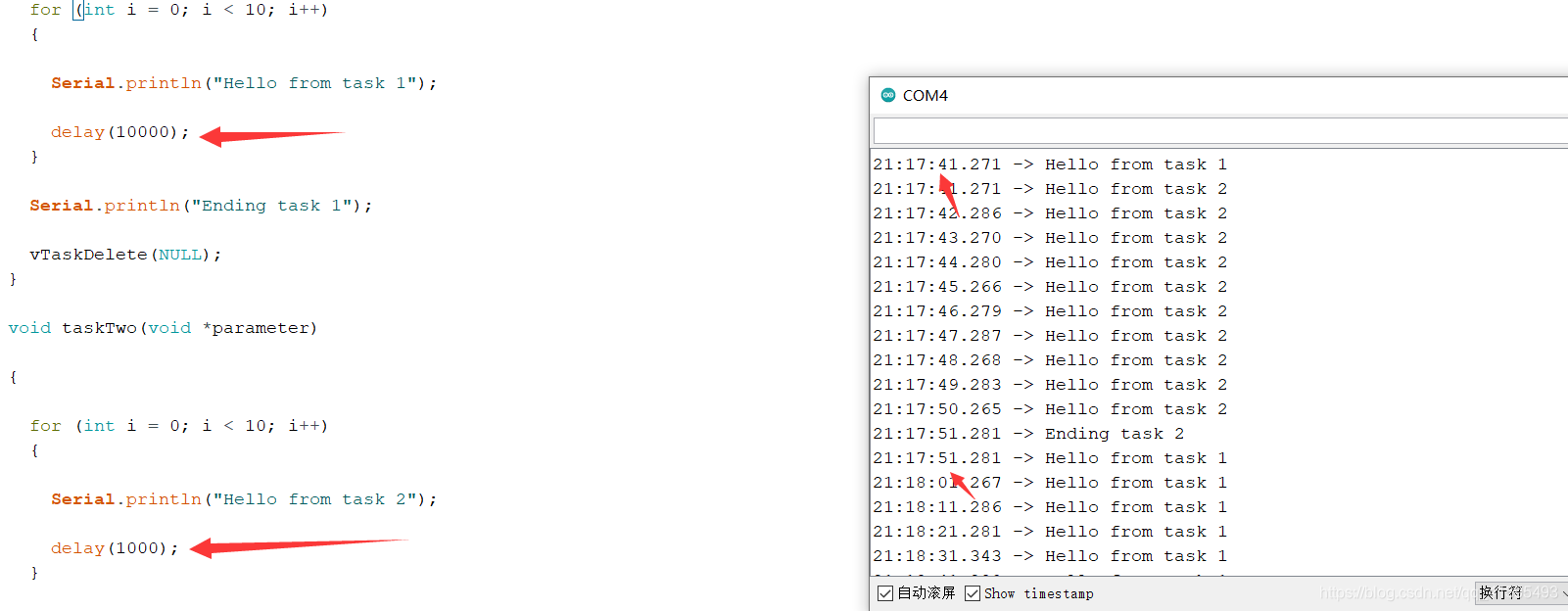
  for (int i = 0; i < 10; i++)
  {

    Serial.println("Hello from task 1");

    delay(10000);
  }

  Serial.println("Ending task 1");

  vTaskDelete(NULL);
}

void taskTwo(void *parameter)

{

  for (int i = 0; i < 10; i++)
  {

    Serial.println("Hello from task 2");

    delay(1000);
  }

  Serial.println("Ending task 2");

  vTaskDelete(NULL);
}





 扫一扫
扫一扫


 1884
1884

 被折叠的 条评论
为什么被折叠?
被折叠的 条评论
为什么被折叠?
 到【灌水乐园】发言





