



## 操作符:
https://www.cprogramming.com/reference/preprocessor/token-pasting-operator.html
## macro operator
<token> ## <token>
The ## operator takes two separate tokens and pastes them together to form a single token. The resulting token could be a variable name, class name or any other identifier. A trivial example would be
#define type i##nt
type a; // same as int a; since i##nt pastes together to "int"
Real world uses of the token pasting operator often involve class, variable, or function names. For example, you might decide to create a macro that declares two variables, one with a name based on parameter to the macro and another with a different name, that stores the original value of the variable (perhaps for debugging).
#define DECLARE_AND_SET(type, varname, value) type varname = value; type orig_##varname = varname;
Now you can write code like
DECLARE_AND_SET( int, area, 2 * 6 );
and orig_area always has the original value of area no matter how the variable is changed.
Hazel项目例子:
#define EVENT_CLASS_TYPE(type) static EventType GetStaticType() { return EventType::##type; }\
	virtual EventType GetEventype()const override { return GetStaticType(); }\
	virtual const char* GetName() const override { return #type; }
EVENT_CLASS_TYPE(MouseScrolled)相当于:
static EventType GetStaticType() { return EventType::MouseScrolled; }
virtual EventType GetEventype()const override { return GetStaticType(); }
virtual const char* GetName() const override { return "MouseScrolled"; }
# 操作符: 返回字符串引用
# macro operator
https://www.geeksforgeeks.org/and-operators-in-c/
The # operator, which is generally called the stringize operator, turns the argument it precedes into a quoted string.
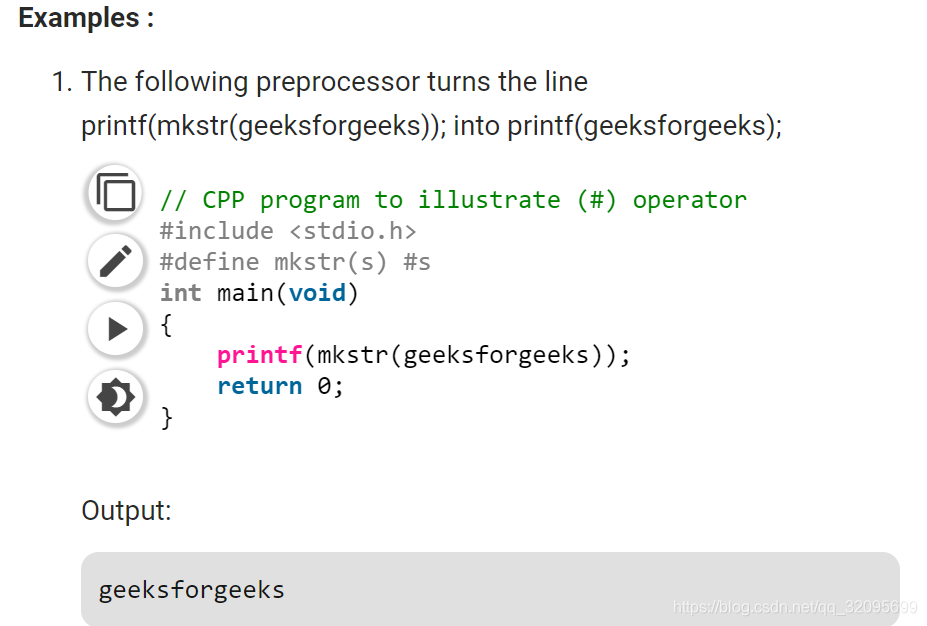
std::cout<< 用Macro简化
#include<iostream>

#define LOG(x) std::cout<<x<<std::endl;

//pass that memery address to that function
void increment(int *value){
	(*value)++;
}

int main(int argc, char const *argv[])
{
	int a =5;
	increment(&a);
	LOG(a)
	std::cin.get();
	return 0;
}





 扫一扫
扫一扫


 2409
2409

 被折叠的 条评论
为什么被折叠?
被折叠的 条评论
为什么被折叠?
 到【灌水乐园】发言





