



 本文讲述了作者在一个周日早晨赖床直到午餐时间,窗外阴雨连绵,姑妈来访时发现已经很晚的故事。
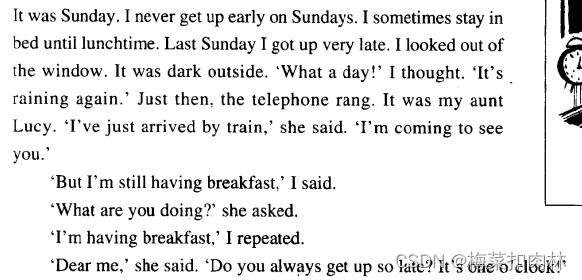
这是一个星期天。我从来不在星期天早起,我又是一直赖床到午餐时间。上个星期填我起的非常晚。我看着窗外,外面是黑压压的,“鬼天气!"我想。“又在下雨”,不一会儿,电话铃声响起,是我的姑妈露西。“我刚刚坐火车到了”她说“我即将去看你”“但是我还在吃早餐”我说。“你正在做什么”她问到,“我正在吃早餐”我重复到,“我的老天”她说“总是起的这么晚吗?现在已经一点钟了”
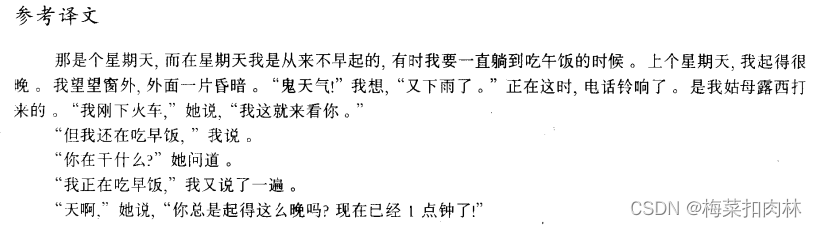
第一次回译:It was Sunday.I never get up early on Sunday.Sometimes I stay in the bed until lunchtime. Last Sunday,I got up late,I watched out the window,it was dark. "What’s a day!"I thought,"it is rainy again"just them,the telephone rang.it is my uncle Lucy."I was arravied by train"she say,“I am coming to visit you”
"but I still having breakfest"I said.
"What are you doing?"she asked.
"I am having breakfest"I repead.
"Oh dear me!“she said"Do you always get up so late?It is one o’clock!”
GPT修正
It was Sunday. I never get up early on Sundays. Sometimes I stay in bed until lunchtime. Last Sunday, I got up late and looked out the window; it was dark. “What a day!” I thought. “It’s rainy again.” Just then, the telephone rang. It was my aunt Lucy. “I have arrived by train,” she said. “I am coming to visit you.”
“But I’m still having breakfast,” I said.
“What are you doing?” she asked.
“I’m having breakfast,” I repeated.
“Oh dear!” she said. “Do you always get up so late? It’s one o’clock!”
以下是一些主要的改正点:
“Sunday"后面应该使用复数形式,因为通常的习惯是指每个星期天。
添加了一些标点符号来更清楚地分隔句子。
“watched out the window” 改为 “looked out the window”,更自然地描述了动作。
“What’s a day!” 改为 “What a day!” 删除了不必要的缩写形式,更正了感叹号。
“it is rainy again” 改为 “It’s rainy again.”,修正了主语和动词的一致性,并使用了缩写形式。
“it is my uncle Lucy” 改为 “It was my aunt Lucy”。Lucy通常是女性的名字,所以应该是"aunt"而不是"uncle”。
“I was arravied by train” 改为 “I have arrived by train”,修正了时态和拼写错误。
“I am coming to visit you” 已正确,无需修改。
“but I still having breakfest” 改为 “But I’m still having breakfast”,修正了拼写和语法。
“I repead” 改为 “I repeated”,修正了拼写。
“Oh dear me!” 改为 “Oh dear!”,更自然的表达惊讶。
最后,添加了一些缺失的逗号和分号,以提高整体的可读性。
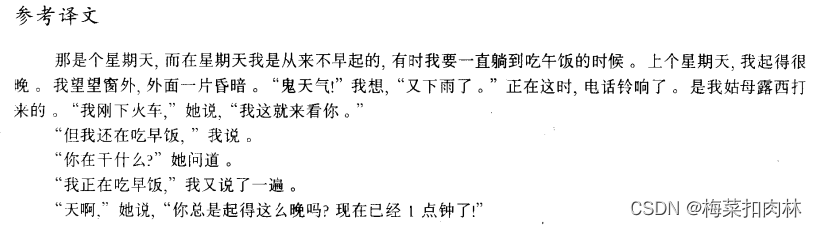
It was a Sunday.However,I never get up early on Sundays.Sometimes,I lying on the bed until have lunch.Last Sunday, I got up late.I looked out the window,It is dark.“what a day!” I thought,"It is rainy again."Just then,the ring rang.It was my aunt Lucy,“I have arrived by train”,she said,“I am coming to visit you。”
"But I am still having breakfast,"I said.
"What are you doing?"she asked.
"I am having breakfast."I repided.
"My dear!“she said"Do you always get up so late?It is 1 o’clock!”
GPT修改
It was a Sunday. However, I never get up early on Sundays. Sometimes, I lie in bed until lunchtime. Last Sunday, I got up late. I looked out the window; it was dark. “What a day!” I thought, “It’s rainy again.” Just then, the phone rang. It was my aunt Lucy. “I have arrived by train,” she said, “I am coming to visit you.”
“But I’m still having breakfast,” I said.
“What are you doing?” she asked.
“I’m having breakfast,” I replied.
“My dear!” she said. “Do you always get up so late? It’s 1 o’clock!”
- Changed “lying on the bed” to “lie in bed”.
- Replaced “It is dark” with “it was dark” for consistency in past tense.
- Changed “It is rainy again” to “It’s rainy again” for contraction consistency.
- Replaced “the ring rang” with “the phone rang” for clarity.
- Corrected “repided” to “replied”.
- Added missing punctuation for direct speech.
- Adjusted direct speech formatting for better clarity and grammatical correctness.





 扫一扫
扫一扫


 963
963

 被折叠的 条评论
为什么被折叠?
被折叠的 条评论
为什么被折叠?
 到【灌水乐园】发言





