


由于某些原因需要给某对象提供一个代理以控制该对象的访问,这时,访问对象不适合或者说不能直接引用目标对象,代理对象作为访问对象与目标对象之间的中介.
java中根据代理类生成的时机不同分为静态代理和动态代理
静态代理是指代理类在编译时期就生成
动态代理是指代理类在java运行时期动态生成的代理类
代理Proxy有三种角色:
抽象主题: 通过接口或者抽象类声明真是主体和代理对象实现业务的方法.
真实主题: 实现了轴向主题中的具体业务,也就是需要被代理的对象.
代理类proxy: 代理真实主题 它实现了与真实主题相同的接口,并引用了真实主题.可以对真实主题的方法进行扩展
1.静态代理
抽象主题: 代理类和真实主题都需要实现该接口 重写接口中的全部方法
/**
 * 静态代理: 代理类在编译时期生成
 * 动态代理: 代理类在java程序运行时期,动态生成
 * 抽象主题: 抽象的业务方法 给真实主题实现 以及代理类实现
 *
 * @author Administrator
 */
public interface TestInterface {

    /**
     * 抽象主题的抽象方法
     */
    void doSomeThing();
}
真实主题: 需要被代理的对象,实现抽象主题 重写抽象主题中的党发
/**
 * 真实主题: 实现抽象主题 重写抽象主题的方法
 *
 * @author Administrator
 */
public class TestInterfaceImpl implements TestInterface {
    @Override
    public void doSomeThing() {
        System.out.println("假设我这里是火车站卖票!");
    }
}
代理类proxy: 同样的实现抽象主题,并且引用了真实主题
/**
 * 代理 : 与真实主题实现相同的接口 其作用是替代真实主题完成卖票任务
 * @author Administrator
 */
public class TestProxy implements TestInterface {

    private TestInterfaceImpl impl;

    public TestProxy(TestInterfaceImpl impl) {
        this.impl = impl;
    }

    @Override
    public void doSomeThing() {
        // 收取手续费
        System.out.println("代售点收取部分手续费!");
        // 真实主题售票
        impl.doSomeThing();
    }
}
测试:
/**
 * 静态代理测试类
 *
 * @author Administrator
 */
public class Test {
    public static void main(String[] args) {

        // 相当于火车站售票窗口
        TestInterfaceImpl testInterface = new TestInterfaceImpl();
        testInterface.doSomeThing();

        System.out.println("=================================");

        // 代理点售票
        TestProxy proxy = new TestProxy(new TestInterfaceImpl());
        proxy.doSomeThing();
    }
测试结果:
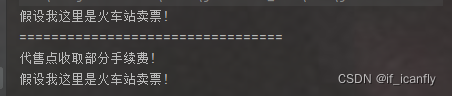
可以看到代售点对售票做了扩展,增加了收取手续费这个操作.
2.动态代理
-2.1 jdk动态代理
抽象主题:真实主题需要实现该接口 重写接口中的全部方法
/**
 * 静态代理: 代理类在编译时期生成
 * 动态代理: 代理类在java程序运行时期,动态生成
 * 抽象主题: 抽象的业务方法 给真实主题实现 以及代理类实现
 *
 * @author Administrator
 */
public interface TestInterface {

    /**
     * 抽象主题的抽象方法
     */
    void doSomeThing();
}
真实主题: 需要被代理的对象,实现抽象主题 重写抽象主题中的党发
/**
 * 真实主题: 实现抽象主题 重写抽象主题的方法
 *
 * @author Administrator
 */
public class TestInterfaceImpl implements TestInterface {
    @Override
    public void doSomeThing() {
        System.out.println("假设我这里是火车站卖票!");
    }
}
代理类:
使用ProxyFactory工厂的模式生成代理对象
/**
 * jdk动态代理实现方式I: 使用ProxyFactory工厂的模式生成代理对象
 *
 * @author Administrator
 */
public class TestProxyI {

    private TestInterfaceImpl impl;

    public TestProxyI(TestInterfaceImpl impl) {
        this.impl = impl;
    }

    public TestInterface getProxyObject() {

        /**
         * 使用Porxy获取代理对象
         * 通过调用Proxy的newProxyInstance()方法来生成代理对象
         * newProxyInstance()方法参数说明
         * ClassLoader loader, 类加载器 通过真实对象可以获得impl.getClass().getClassLoader()
         * Class<?>[] interfaces, 真实对象实现的接口 impl.getClass().getInterfaces()
         * InvocationHandler h 代理对象调用的处理逻辑 这里使用的lamand表达式
         *
         * InvocationHandler参数说明
         * proxy: 代理对象
         * method:对应于在代理对象上调用的接口方法的Method实例
         * args: 传递的参数
         */
        TestInterface o = (TestInterface) Proxy.newProxyInstance(impl.getClass().getClassLoader(), impl.getClass().getInterfaces(), (proxy, method, args) -> {
            System.out.println("代售点收取手续费!");
            // 执行真实对象的方法
            Object invoke = method.invoke(impl, args);
            return invoke;
        });
        return o;
    }
实现InvocationHandler接口
/**
 * jdk动态代理实现方式II: 实现InvocationHandler接口
 *
 * @author Administrator
 */
public class TestProxyII implements InvocationHandler {

    private Object impl;

    public TestProxyII(Object impl) {
        this.impl = impl;
    }

    @Override
    public Object invoke(Object proxy, Method method, Object[] args) throws Throwable {
        System.out.println("代售点收取手续费");
        Object invoke = method.invoke(impl, args);
        return invoke;
    }
}
测试:
public class Test {

    public static void main(String[] args) {
        // 使用ProxyFactory工厂的模式生成代理对象
        TestProxyI proxyI = new TestProxyI(new TestInterfaceImpl());
        TestInterface proxy = proxyI.getProxyObject();
        proxy.doSomeThing();
        System.out.println("=================================");
        // 实现InvocationHandler接口的方式
        TestInterfaceImpl testInterface = new TestInterfaceImpl();
        TestProxyII proxyII = new TestProxyII(testInterface);
        TestInterface proxyi = (TestInterface) Proxy.newProxyInstance(
                testInterface.getClass().getClassLoader(),
                testInterface.getClass().getInterfaces(),
                proxyII);
        proxyi.doSomeThing();
    }

}
debug查看:
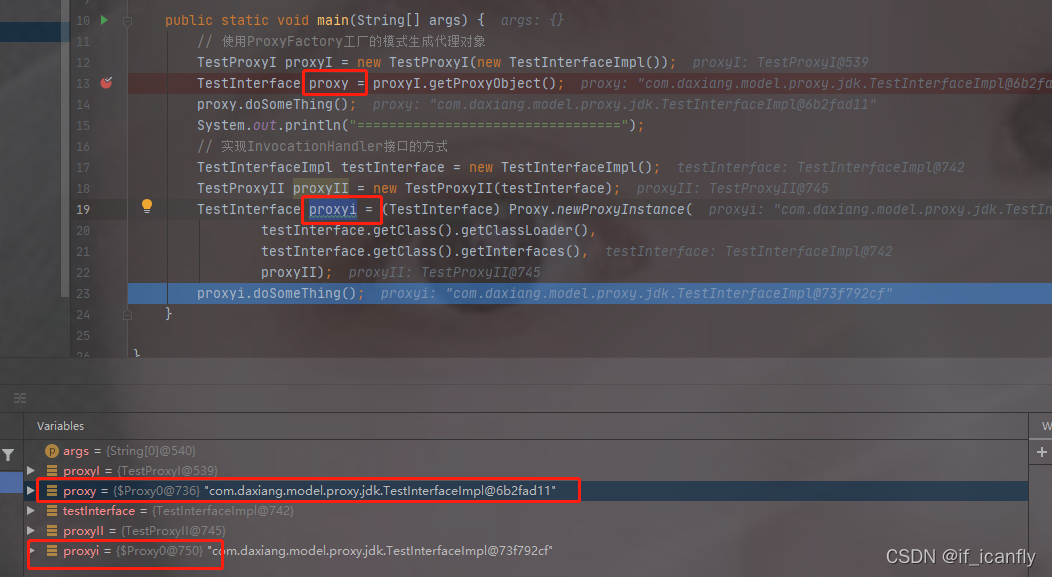
上图看出2种方式生成的对象都是代理类($开头)
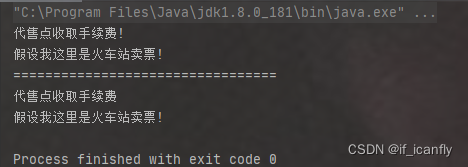
结果:
-2.2cglib动态代理
cglib动态代理只需要真实主题与代理类
导入cglib依赖包
        <dependency>
            <groupId>cglib</groupId>
            <artifactId>cglib</artifactId>
            <version>2.2.2</version>
        </dependency>
真实主题: 需要被代理的对象
/**
 * 真实主题:
 *
 * @author Administrator
 */
public class TestInterfaceImpl {

    public void doSomeThing() {
        System.out.println("假设我这里是火车站卖票!");
    }
}
代理对象:代理真实主题
/**
 * cglib动态代理 : 实现MethodInterceptor接口 重写intercept方法
 *
 * @author Administrator
 */
public class TestProxy implements MethodInterceptor {

    private TestInterfaceImpl impl;

    public TestProxy(TestInterfaceImpl impl) {
        this.impl = impl;
    }

    public Object getProxyObject() {
        // 创建Enhancer对象
        Enhancer enhancer = new Enhancer();
        // 设置回调函数 也就是下面的intercept方法
        enhancer.setCallback(this);
        // 设置父类的字节码对象
        enhancer.setSuperclass(impl.getClass());
        // 创建代理对象
        Object o = enhancer.create();
        return o;
    }

    /**
     * @param o           道理对象
     * @param method      真实对象中的方法的Method对实例
     * @param objects     实际参数
     * @param methodProxy 代理对象中的方法的method实例
     * @return
     * @throws Throwable
     */
    @Override
    public Object intercept(Object o, Method method, Object[] objects, MethodProxy methodProxy) throws Throwable {
        System.out.println("代售点收取手续费!");
        Object invoke = methodProxy.invokeSuper(o, objects);
        return invoke;
    }
}
测试:
/**
 * @author Administrator
 */
public class Test {
    public static void main(String[] args) {
        TestInterfaceImpl impl = new TestInterfaceImpl();
        TestProxy proxy = new TestProxy(impl);
        TestInterfaceImpl proxyObject = (TestInterfaceImpl) proxy.getProxyObject();
        proxyObject.doSomeThing();
    }
}
结果:

-2.3.cglib动态代理与jdk动态代理的区别:
cglib动态代理不需要被代理对象(真实主题)实现接口.它使用的是cglib包enhancer来创建的代理对象
jdk动态代理需要被代理的对象(真实主题)实现接口.他使jdk提供的Proxy类的newProxyInstance生成代理对象
3.使用代理的优点:
1.代理对象可以扩展目标对象的功能.
2.代理模式可以将客户端与目标对象分离 在一定程度上实现解耦
3.代理对象隔离了目标对象与客户端,在一定程度上保护了目标对象.
4.使用代理的缺点:
增加了系统的复杂性.





 扫一扫
扫一扫


 1606
1606

 被折叠的 条评论
为什么被折叠?
被折叠的 条评论
为什么被折叠?
 到【灌水乐园】发言





