 使用双栈实现队列操作


 该博客介绍了一种利用两个栈实现队列操作的方法。在`CQueue`类中,`appendTail`方法用于在队尾插入元素,通过将栈s1中的所有元素转移到栈s2,然后将新元素压入s1,最后恢复s2。`deleteHead`方法则用于删除队首元素,直接从s1弹出即可。这种方法巧妙地利用了栈的特性来模拟队列的行为。
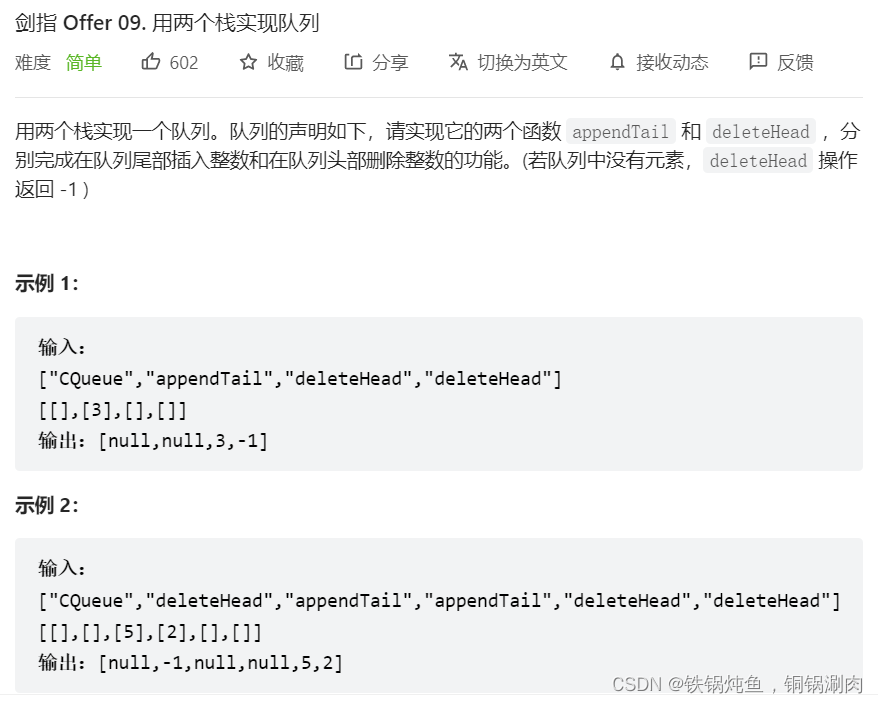
【解题思路】
用两个栈,在删除队首元素时直接弹出;在队尾插入元素时,用另一个栈辅助,先把栈中其他元素移过去,把新元素插在栈底,最后把原来的元素恢复回去。
class CQueue {
    Stack<Integer> s1;
    Stack<Integer> s2;

    public CQueue() {
        s1 = new Stack<Integer>();
        s2 = new Stack<Integer>();
    }

    public void appendTail(int value) {
        while(!s1.isEmpty())
        {
            s2.push(s1.pop());
        }
        s1.push(value);
        while(!s2.isEmpty())
        {
            s1.push(s2.pop());
        }
    }

    public int deleteHead() {
        if(s1.isEmpty())
        {
            return -1;
        }
        else
        {
            int ans = s1.peek();
            s1.pop();
            return ans;
        }
    }
}

/**
 * Your CQueue object will be instantiated and called as such:
 * CQueue obj = new CQueue();
 * obj.appendTail(value);
 * int param_2 = obj.deleteHead();
 */





 扫一扫
扫一扫


 474
474

 被折叠的 条评论
为什么被折叠?
被折叠的 条评论
为什么被折叠?
 到【灌水乐园】发言





