


 这篇博客聚焦于数据结构的函数题目,包括单链表逆转、顺序表操作、链式表查找、双堆栈实现、二叉树高度计算、链表节点阶乘和、二叉搜索树操作、最近公共祖先查找、邻接矩阵与邻接表的图遍历等算法问题。
函数题
6-1 单链表逆转
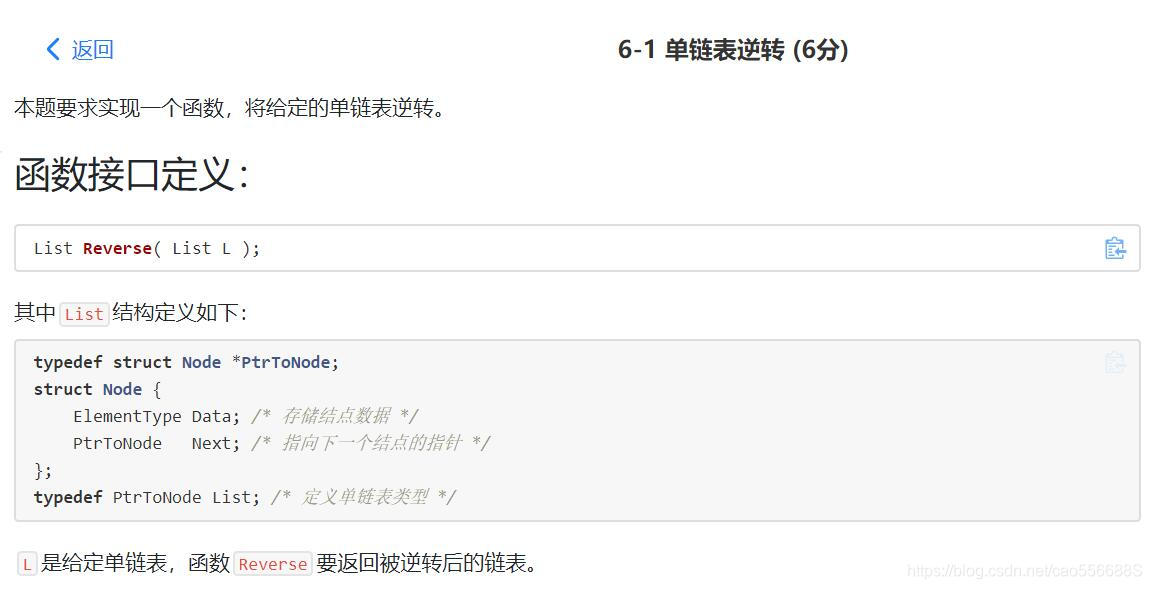
List Reverse(List L)
{
	List head, tail, mid;
	tail = NULL;
	mid = L;

	while (mid != NULL)
	{
		head = mid->Next;
		mid->Next = tail;
		tail = mid;
		mid = head;

	}

	return tail;
}
6-2 顺序表操作集
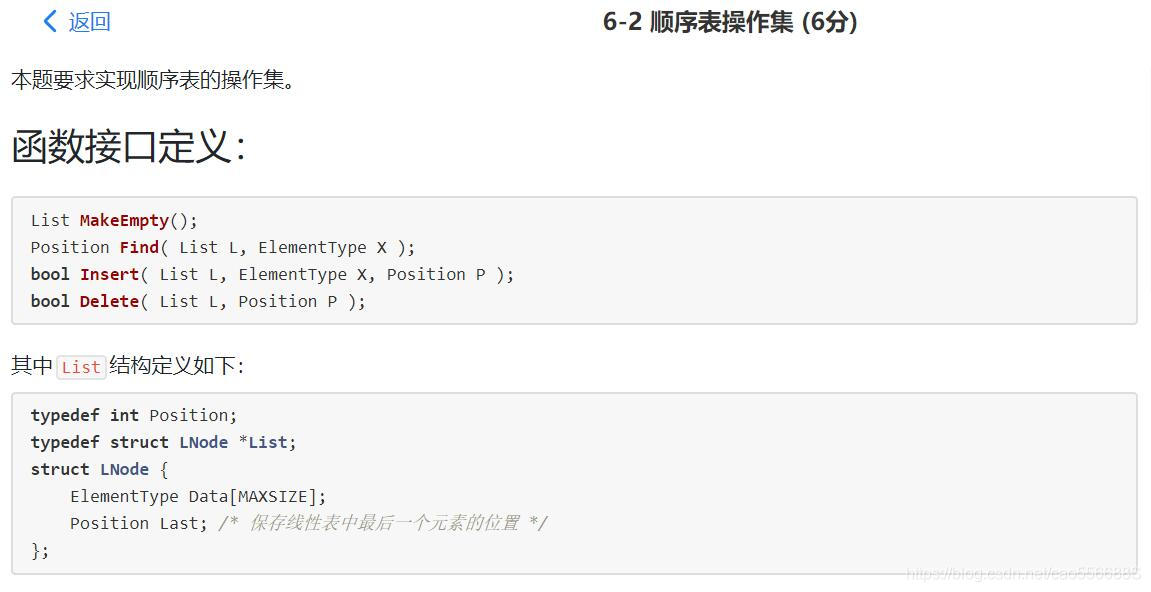
List MakeEmpty(){
	List L;
	L=(List)malloc(sizeof(struct LNode));
	L->Last=-1;
	return L;
}
Position Find( List L, ElementType X ){
	Position i=0;
	while(i<=L->Last&&L->Data[i]!=X)
	      i++;
	    if(i>L->Last) return ERROR;
	    else return i;
}
bool Insert( List L, ElementType X, Position P ){
     Position i;
     if(L->Last==MAXSIZE-1){
     	printf("FULL");
        return false;
	 }
	if(P<0||P>L->Last+1){
		printf("ILLEGAL POSITION");
		return false;
	}
	for(i=L->Last;i>=P;i--)
		L->Data[i+1]=L->Data[i];
		L->Data[P]=X;
		L->Last++;
		return true;
}
bool Delete( List L, Position P ){
	Position j;
	if(P<0||P>L->Last){
		printf("POSITION %d EMPTY",P);
		return false;
	}
	for(j=P;j<L->Last;j++)
	   L->Data[j]=L->Data[j+1];
	   L->Last--;
	   return true;
}
6-3 链式表的按序号查找
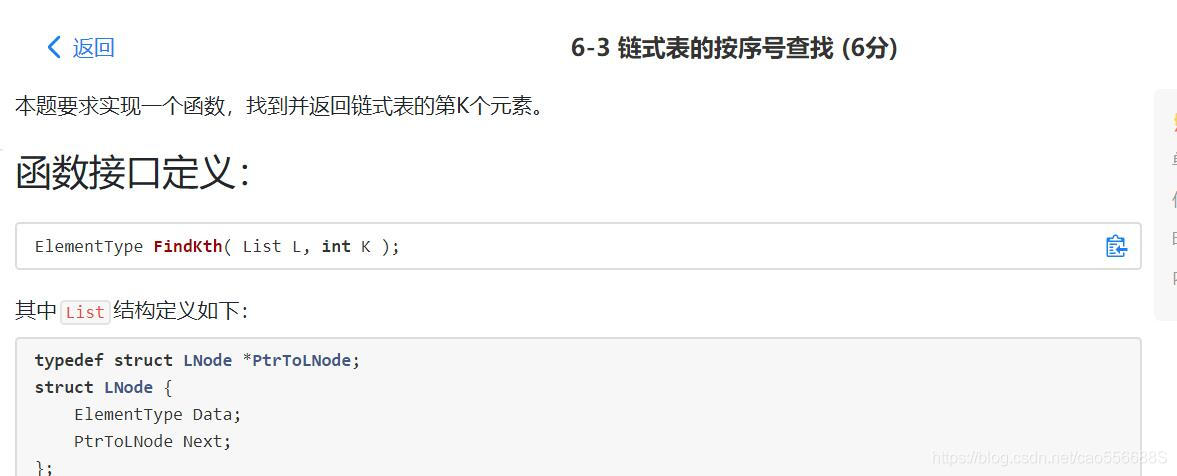
ElementType FindKth( List L, int K )
{
    if(L==NULL)
      return ERROR;
    while(--K)                //此处用k--会报错,注意前缀和后缀区别
    {                         //往后移动K-1次,查找第K个元素
        if(!L->Next)
          return ERROR;      //若K值大于链表长度,则返回ERROR
        else L=L->Next;
    }
    return L->Data;         //返回第K个元素的数据域
}
6-4 在一个数组中实现两个堆栈
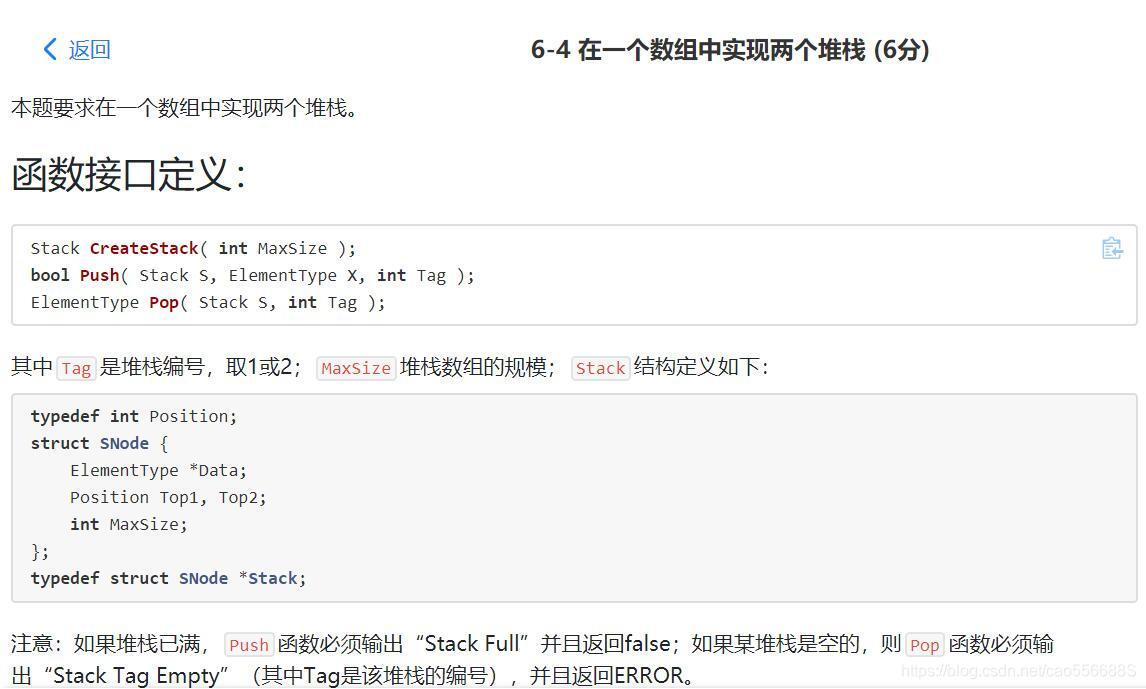
/* 你的代码将被嵌在这里 */
Stack CreateStack( int MaxSize )
{
	Stack p=(Stack)malloc(sizeof(struct SNode));
	p->MaxSize=MaxSize;
	p->Data=(ElementType*)malloc(sizeof(ElementType)*MaxSize);
	p->Top1=-1;
	p->Top2=MaxSize;
	return p;
}
bool Push( Stack S, ElementType X, int Tag )
{
//如果堆栈已满,Push函数必须输出“Stack Full”并且返回false
	if(S->Top2-S->Top1==1)
	{
		printf("Stack Full\n");
		return false;
	}
	if(Tag==1)
	{
		S->Top1++;
		S->Data[S->Top1]=X;
	}
	else
	{
		S->Top2--;
		S->Data[S->Top2]=X;
	}
	return true;
}
ElementType Pop( Stack S, int Tag )
{
	//如果某堆栈是空的,则Pop函数必须输出“Stack Tag Empty”(其中Tag是该堆栈的编号),并且返回ERROR
	if(Tag==1)
	{
		if(S->Top1==-1)
		{
			printf("Stack %d Empty\n",Tag);
			return ERROR;
		}
		return S->Data[S->Top1--];
	}
	else
	{
		if(S->Top2==S->MaxSize)
		{
			printf("Stack %d Empty\n",Tag);
			return ERROR;
		}
		return S->Data[S->Top2++];
	}
}
6-5 求二叉树高度
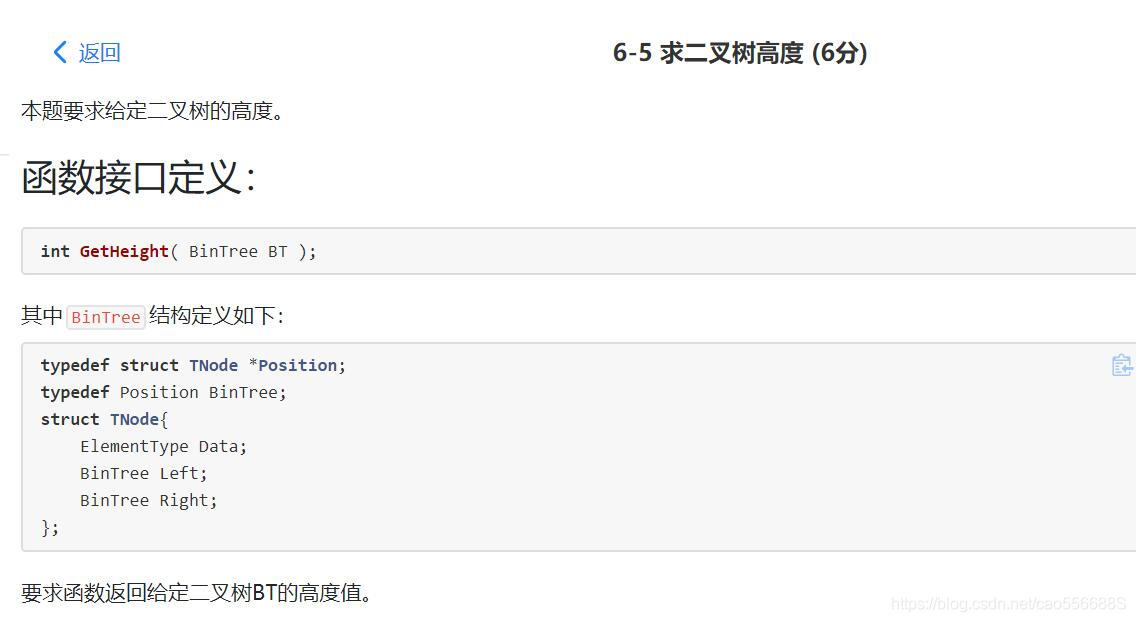
int GetHeight( BinTree BT ){
    if(BT==NULL)return 0;
    int x,y;
    x=GetHeight(BT->Left)+1;
    y=GetHeight(BT->Right)+1;
    return x>y?x:y;
}
6-6 求单链表结点的阶乘和
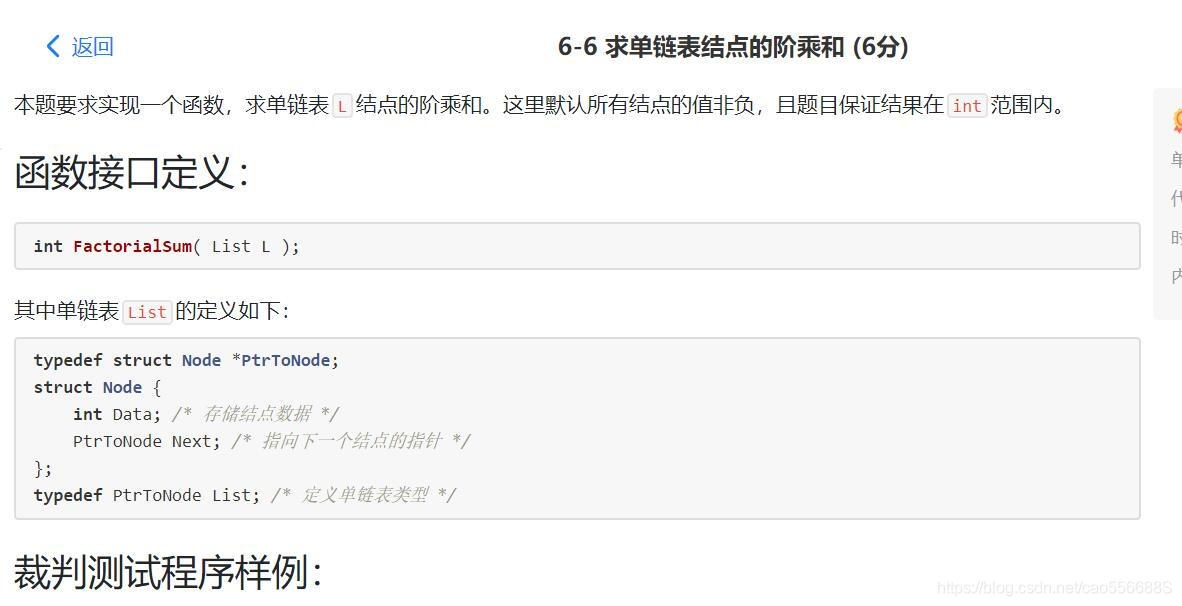
int factoral( int n );

int FactorialSum( List L ){
int ansFac = 0;
for ( List point = L; point != NULL; point = point->Next ) {
ansFac += factoral(point->Data);
}
return ansFac;}

int factoral( int n )
{
int ans = 1;
if ( n == 0 ) {
ans = 1;
} else {
for ( int i = 1; i <= n; i ++ ) {
ans *= i;}
}
return ans;}
6-7 二叉搜索树的操作集
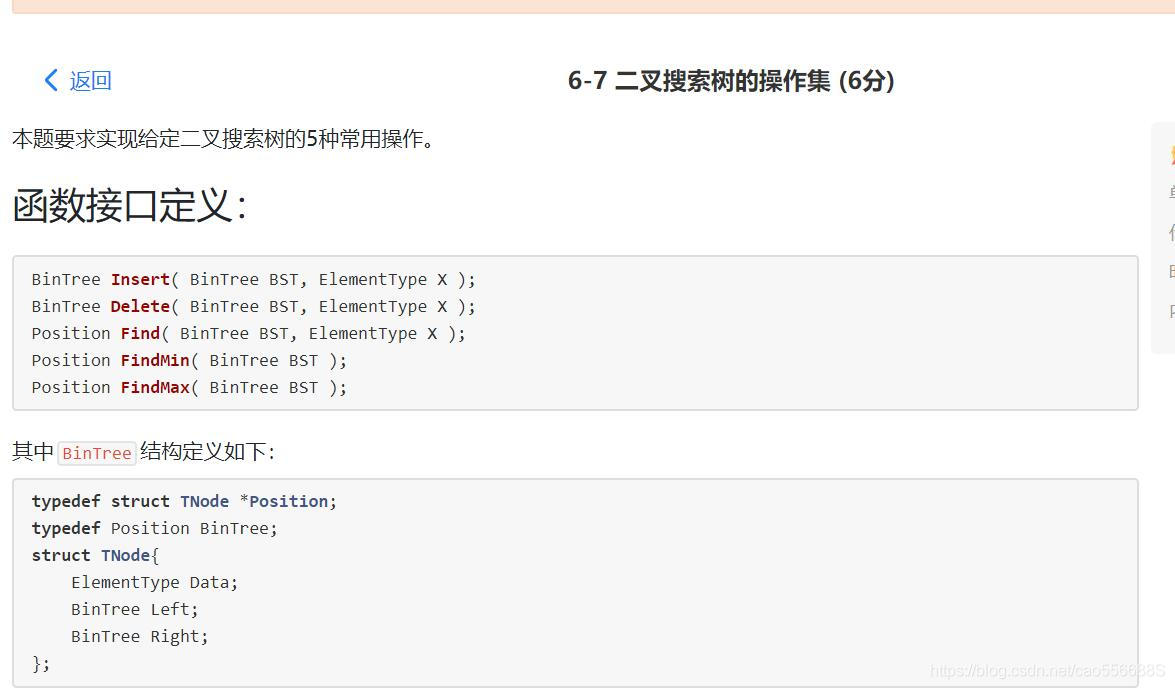
BinTree Insert( BinTree BST, ElementType X )
{
	if(BST==NULL)
	{
		BinTree gg=(BinTree)malloc(sizeof(struct TNode));
		gg->Data=X;
		gg->Left=NULL;
		gg->Right=NULL;
		BST=gg;
		return BST;
	}
	else
	{
		BinTree hh=BST,parent;
		int flag;
		while(hh!=NULL)
		{
			parent=hh;
			if(X>hh->Data)
			hh=hh->Right,flag=1;
			else
			hh=hh->Left,flag=0;
		}
		BinTree tmp=(BinTree)malloc(sizeof(struct TNode));
		tmp->Data=X;
		tmp->Left=NULL;
		tmp->Right=NULL;
		hh=tmp;
		if(flag)parent->Right=hh;
		else parent->Left=hh;
		return BST;
	}
}
Position Find( BinTree BST, ElementType X )
{
	if(BST)
	{
		while(BST)
		{
			if(X==BST->Data)return BST;
			else if(X>BST->Data)
			BST=BST->Right;
			else if(X<BST->Data)
			BST=BST->Left;
		}
	}
	return BST;
}
Position FindMin( BinTree BST )//找到搜索二叉树中最小值
{
	BinTree gg=NULL;
	if(BST)
	{
		while(BST)
		gg=BST,	BST=BST->Left;
	}
	return gg;
}
Position FindMax( BinTree BST )//找到搜索二叉树最大值
{
	BinTree gg=NULL;
	if(BST)
	{
		while(BST)
		gg=BST,BST=BST->Right;
	}
	return gg;
}
BinTree Delete( BinTree BST, ElementType X )
{
	//删除处理的关键在于 删除这个节点
	//之后还要就是将后面是节点给补上去
	Position tmp;
    if(!BST)
	{
		printf("Not Found\n");
		return BST;
	}
	else if(X<BST->Data)
	BST->Left=Delete(BST->Left,X);
	else if(X>BST->Data)
	BST->Right=Delete(BST->Right,X);
	else
	{
		 if(BST->Left && BST->Right) {               /* 被删除的结点有左右子结点 */
            tmp=FindMin(BST->Right);                /* 在右子树中找到最小结点填充删除结点 */
            BST->Data = tmp ->Data;
            BST->Right=Delete(BST->Right,BST->Data);/* 递归删除要删除结点的右子树中最小元素 */
			//这一步无法理解
		}else
		{
			if(!BST->Left)
			BST=BST->Right;
			else if(!BST->Right)
			BST=BST->Left;
		}
	}
	return BST;
}
6-8 二叉搜索树中的最近公共祖先
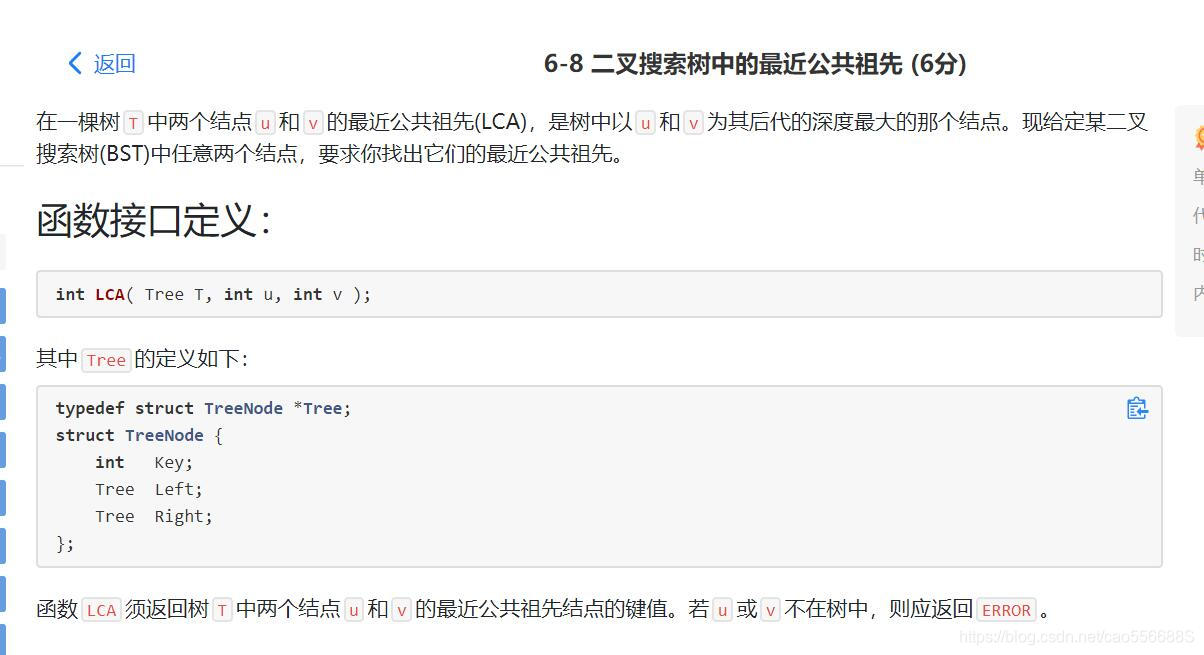
int find(Tree T,int u)
{
    if(!T)
        return 0;
    if(T->Key==u)
        return 1;
    if(T->Key<u)
        return find(T->Right,u);
    if(T->Key>u)
        return find(T->Left,u);
}

int LCA( Tree T,  int u, int v )
{
    if(!T)
        return ERROR;
    if(!find(T,u)||!find(T,v))
        return ERROR;
    if(u==T->Key||v==T->Key)
        return T->Key;
    if(u>T->Key&&v<T->Key||u<T->Key&&v>T->Key)
        return T->Key;
    if(u>T->Key)
        return LCA(T->Right,u,v);
    if(u<T->Key)
        return LCA(T->Left,u,v);
}
6-9 邻接矩阵存储图的深度优先遍历
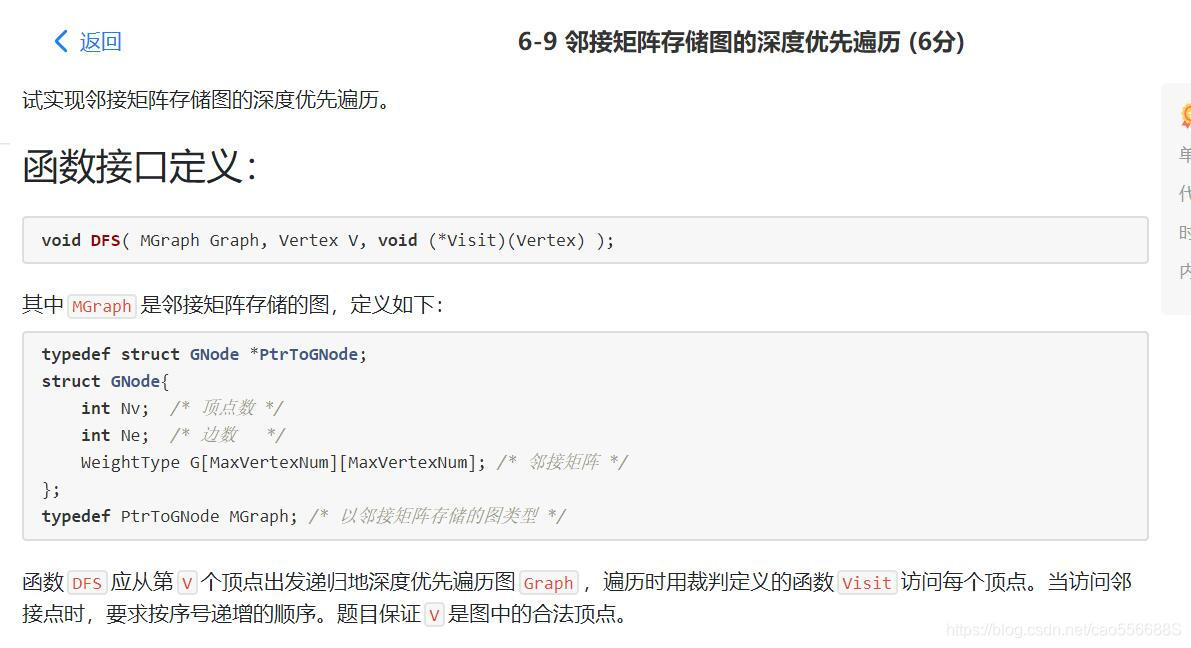
void DFS( MGraph Graph, Vertex V, void (*Visit)(Vertex) )
/*第一个参数是传入二维数组的头地址(即图)
第二个参数是结点编号
第三个参数是传入Visit()这个函数的地址(可以自行百度函数是怎么作为参数传递的)*/
{
    /*从第V个顶点出发递归地深度优先遍历图G*/
    int i;
    Visited[V] = true;//标记为true,说明已经遍历过了
    Visit(V); //打印出V这个结点
    for(i = 0; i < Graph->Nv; i++) //遍历V的每个邻接点
    {
        if(Graph->G[V][i] == 1 && !Visited[i])
        /*Graph->G[V][i] == 1说明有结点,!Visited[i]为真,说明未遍历过*/
        {
           DFS(Graph, i, Visit); //递归调用DFS
        }
    }
}
6-10 邻接表存储图的广度优先遍历
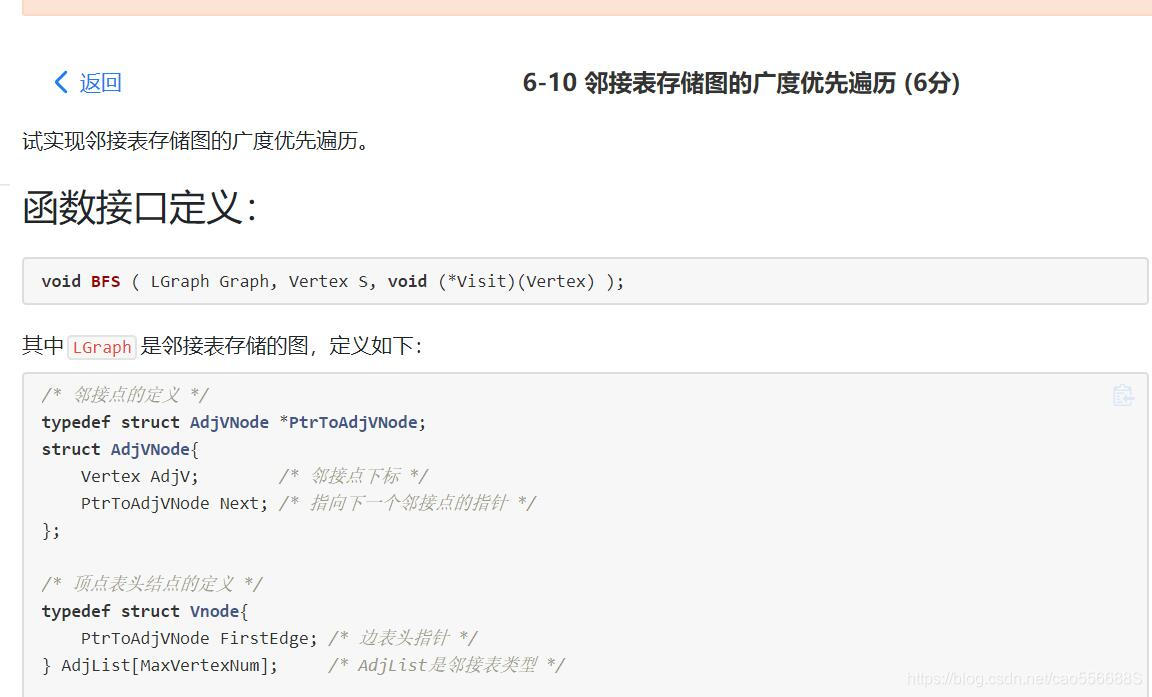
void BFS ( LGraph Graph, Vertex S, void (*Visit)(Vertex) )
{
    int queue[11]; //定义一个队列
    int l = 0, r = 0;
    queue[r++] = S;
    Visit(S);
    Visited[S] = true;
    PtrToAdjVNode tmp;
    while(l != r) //队列不为空
    {
        tmp = Graph->G[queue[l++]].FirstEdge;
        while(tmp)
        {
            Vertex pos = tmp->AdjV;
            if(!Visited[pos])
            {
                Visit(pos);
                Visited[pos] = true;
                queue[r++] = pos;
            }
            tmp = tmp->Next;
        }
    }
}
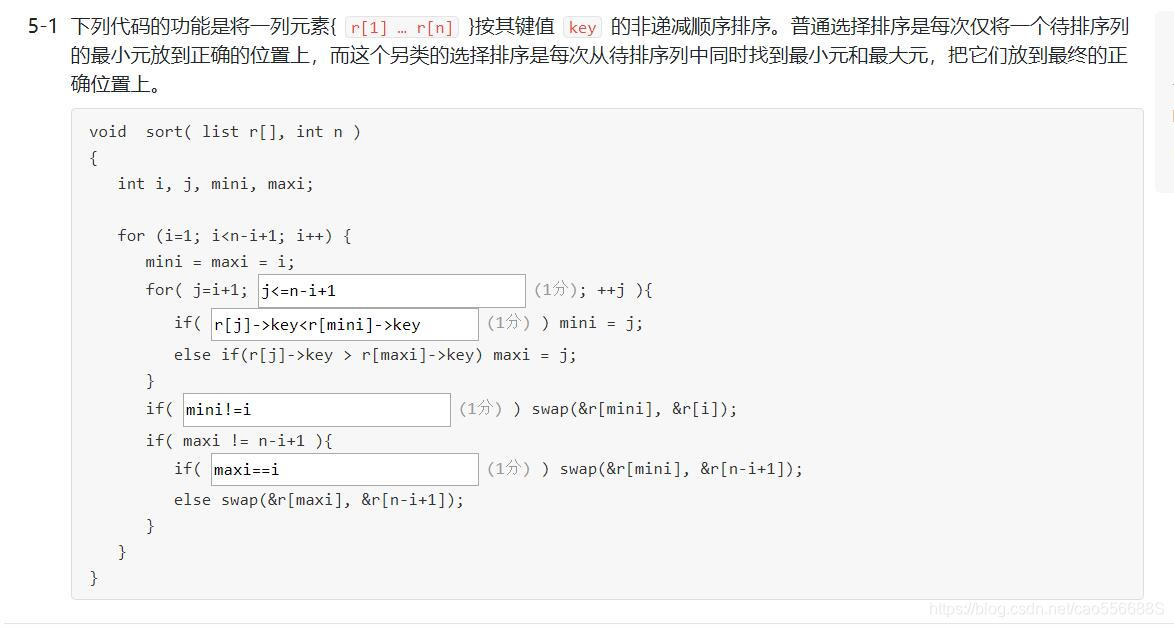
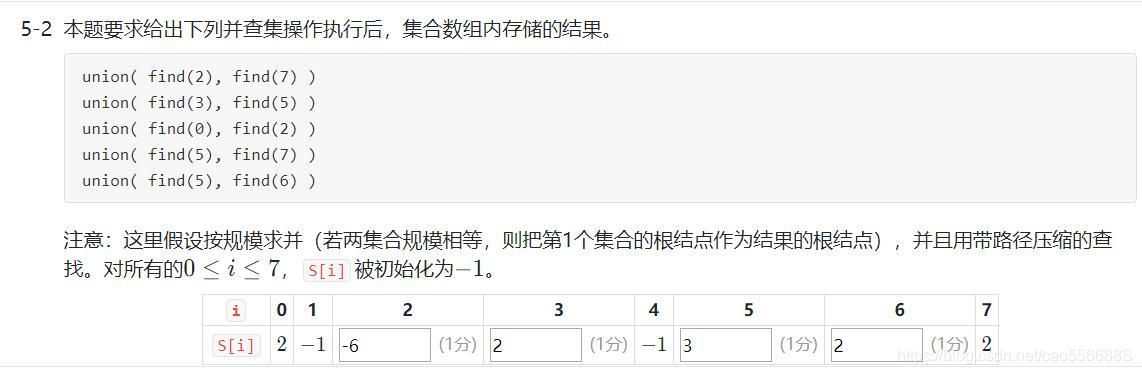
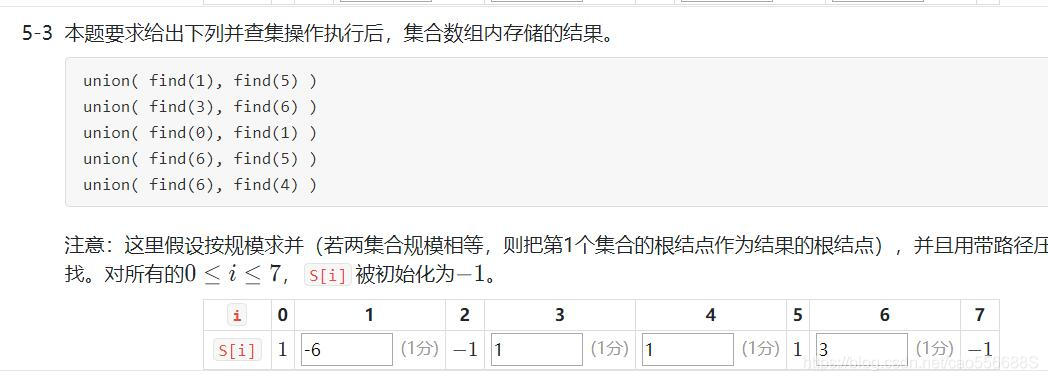
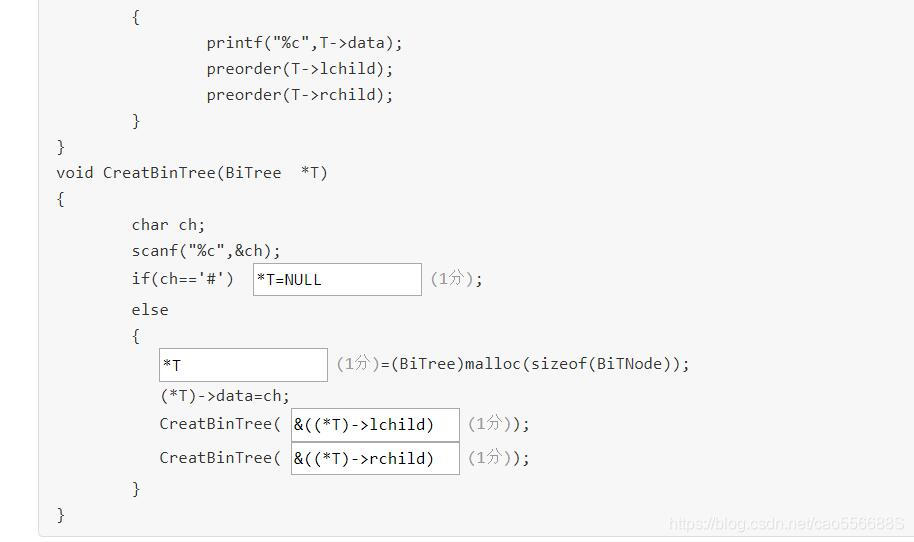
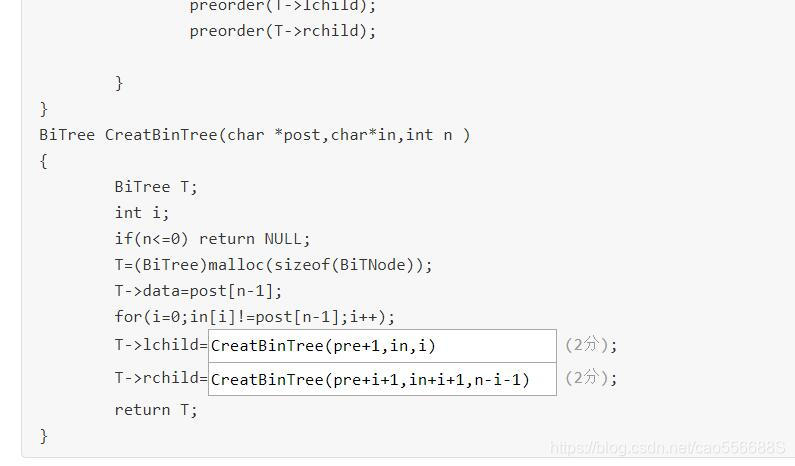
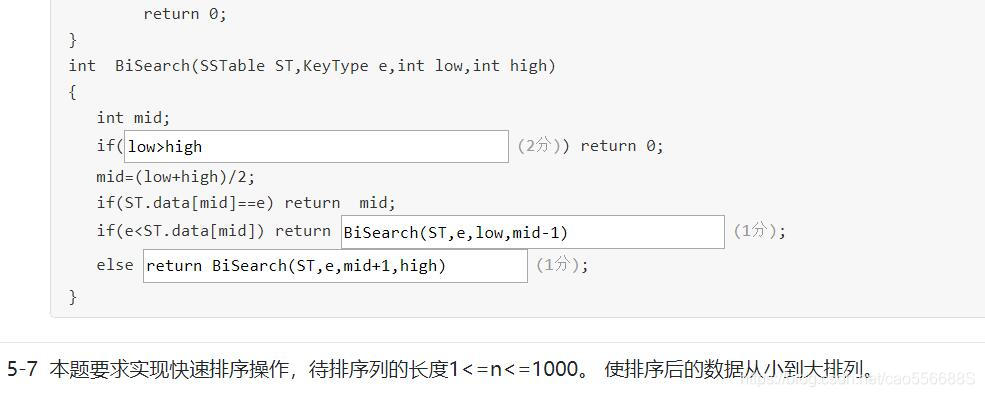
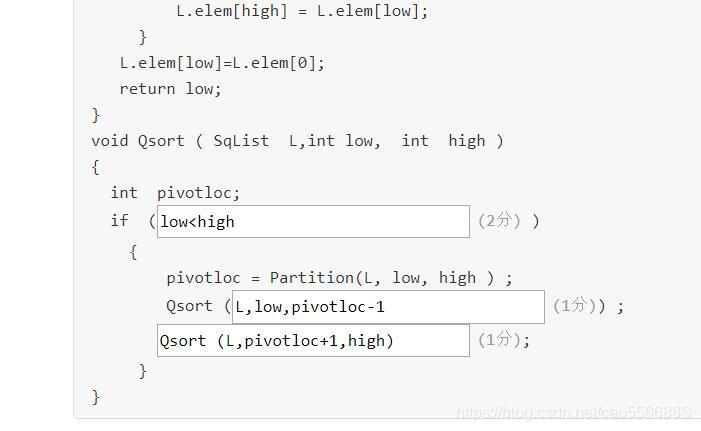
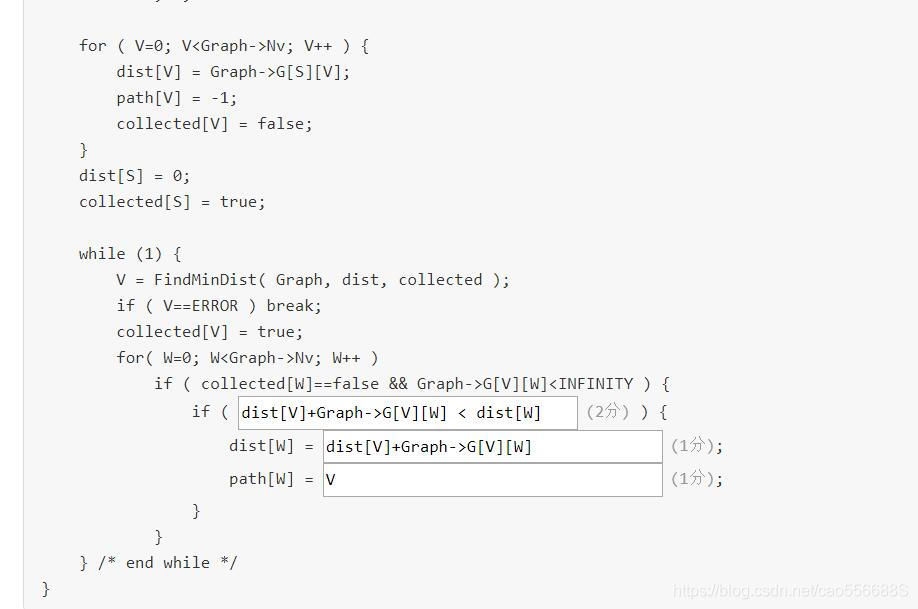
程序填空题





 扫一扫
扫一扫


 4187
4187

 被折叠的 条评论
为什么被折叠?
被折叠的 条评论
为什么被折叠?
 到【灌水乐园】发言





