


 本文探讨了Seq2Seq模型中Return Sequences与Repeat Vector的应用场景。具体而言,Return Sequences返回所有历史状态输出,适用于计算注意力权重等场景;而Repeat Vector则重复编码器的最后一项输出,适合快速实现无教师强迫训练。
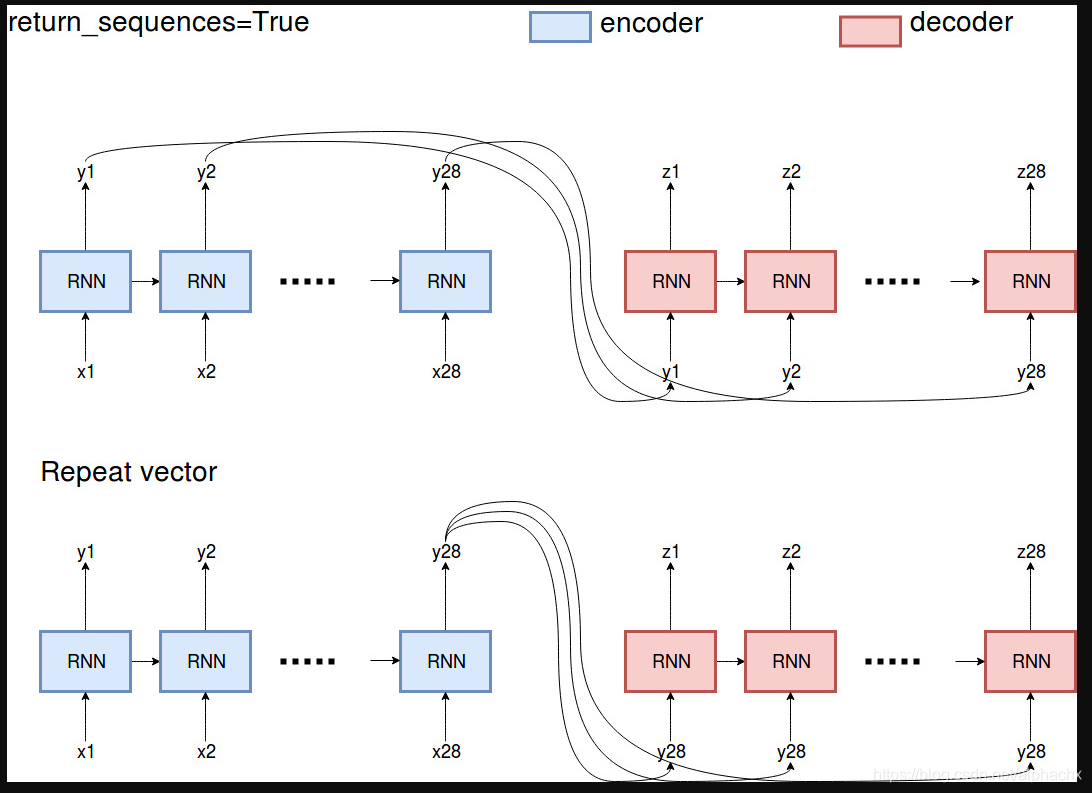
Essentially, return_sequences=True returns all the outputs the encoder observed in the past,
where RepeatVector repeats the very last output of the encoder
some tips for the use of the two statements:
one example is machine translation. For example, if you have a seq2seq model and you don't want to use teacher forcing and want a quick and dirty solution, you can pass in the last state of the encoder RNN (last blue box) using RepeatVector and return_sequences=False. But if you are to compute attention weights for the encoder states, you will need to use return_sequences=True as you need all encoder states to compute attention weights.





 扫一扫
扫一扫


 1469
1469

 被折叠的 条评论
为什么被折叠?
被折叠的 条评论
为什么被折叠?
 到【灌水乐园】发言





