



 本文探讨了C++中移动语义的基本概念,特别是在const对象上的应用。通过具体代码示例展示了移动构造函数与复制构造函数的区别,以及如何避免在返回值中使用const来启用移动语义。
1.Move Semantics for const Objects
被const修饰的对象 不能被move
move就是要修改传入的值,去"偷"
2.类的定义
class MyString
{
public:
     MyString(int Len = 0, const char* Str = nullptr) : nLen{ Len }
     {
          cout << "默认构造函数" << endl;
          pStr = new char[nLen + 1];
          memcpy(pStr, Str, nLen + 1);
     }

     MyString(const MyString& Temp) : nLen{ Temp.nLen }
     {
          cout << "复制构造函数" << endl;
          pStr = new char[nLen + 1];
          memcpy(pStr, Temp.pStr, nLen + 1);
     }

     MyString(MyString&& Temp) noexcept :nLen{ Temp.nLen }, pStr{ Temp.pStr }
     {
          cout << "移动构造函数" << endl;
          Temp.nLen = 0;
          Temp.pStr = nullptr;
     }

     ~MyString()
     {
          if (nullptr != pStr)
          {
               nLen = 0;
               delete[]pStr;
          }
     }

     friend ostream& operator<<(ostream& os, const MyString& Temp)
     {
          if (nullptr != Temp.pStr)
          {
               os << Temp.pStr;
          }

          return os;
     }


private:
     char* pStr;
     int nLen;
};
3 代码1
 	 MyString a(5, "Hello");
     cout <<"a" << a << endl;

     cout << "*******************" << endl;

     MyString b = a;
     cout << "a" << a << endl;
     cout << "b" << b << endl;
     cout << "*******************" << endl;


     MyString c = std::move(a);
     cout << "a" << a << endl;
     cout << "b" << b << endl;
      cout << "c" << c << endl;
运行结果
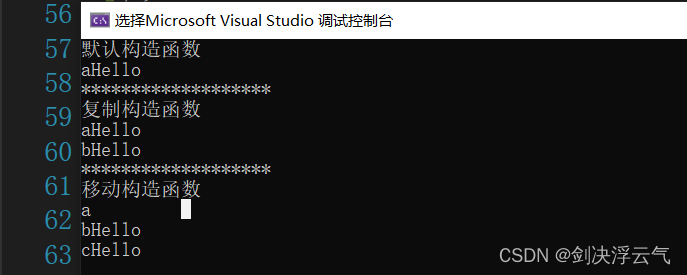
MyString a(5, “Hello”);
MyString c = std::move(a);
调用的是移动构造函数
4.代码2
	 const MyString a(5, "Hello");
     cout <<"a" << a << endl;

     cout << "*******************" << endl;

     MyString b = a;
     cout << "a" << a << endl;
     cout << "b" << b << endl;
     cout << "*******************" << endl;


     MyString c = std::move(a);
     cout << "a" << a << endl;
     cout << "b" << b << endl;
      cout << "c" << c << endl;
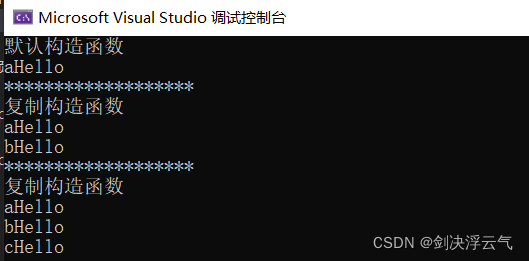
const MyString a(5, “Hello”);
MyString c = std::move(a);
调用的是拷贝构造函数
5.const Return Values
const会禁用移动语意,所以从C++11开始 不要在return const value
比如 这么干
const std::string getValue();
引用和指针肯定不受影响





 扫一扫
扫一扫


 476
476

 被折叠的 条评论
为什么被折叠?
被折叠的 条评论
为什么被折叠?
 到【灌水乐园】发言





