



文章目录
成员变量
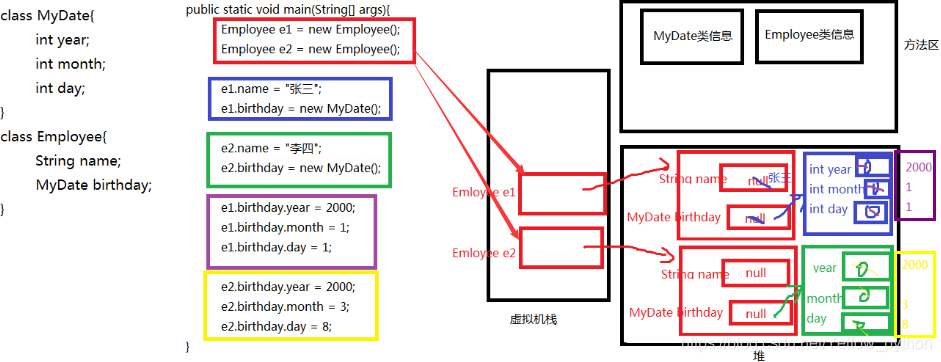
成员变量的内存图
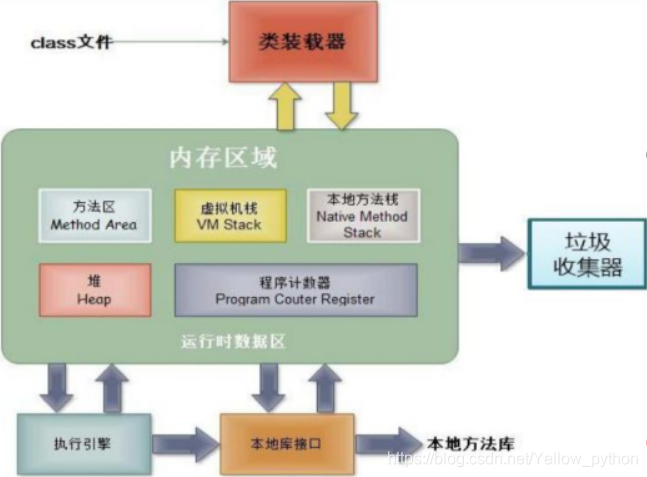
| 区域名称 | 作用 |
|---|---|
| 程序计数器 | 程序计数器是CPU中的寄存器,它包含每一个线程下一条要执行的指令的地址 |
| 本地方法栈 | 当程序中调用了native的本地方法时,本地方法执行期间的内存区域 |
| 方法区 | 存储已被虚拟机加载的类信息、常量、静态变量、即时编译器编译后的代码等数据。 |
| 堆内存 | 存储对象(包括数组对象),new出来的那些 |
| 虚拟机栈 | 存储正在执行的每个Java方法的局部变量表等。局部变量表存放了编译期可知长度的各种基本数据类型、对象引用,方法执行完,自动释放 |
class MyDate{
	int year;
	int month;
	int day;
}
class Employee{
	String name;
	MyDate birthday;
}
public class Hello{
	public static void main(String[] args){
		//创建两个员工对象
		Employee e1 = new Employee();
		Employee e2 = new Employee();

		//为两个员工对象的成员变量赋值
		e1.name = "张三";
		e1.birthday = new MyDate();

		e2.name = "李四";
		e2.birthday = new MyDate();

		e1.birthday.year = 2000;
		e1.birthday.month = 1;
		e1.birthday.day = 1;

		e2.birthday.year = 2000;
		e2.birthday.month = 3;
		e2.birthday.day = 8;
	}
}
上面代码的内存图
构造方法、方法重载、方法重写、继承、多态
- 构造方法:constructor
- 方法重载:overload
- 方法重写:override
- 继承:extends(extend的第三人称单数形式)
- 多态:polymorphic
public class Hello {
    public static void main(String[] args) {
        // 创建对象
        Dogface d = new Dogface("小兵");
        Hero h = new Hero("先知", 200, 15, 15);
        // 互相攻击
        d.attack(h); // 多态
        h.attack(d); // 本态
        // 打印现有血量
        System.out.println(d.name + "现有血量为:" + d.hp); // 小兵现有血量为:70
        System.out.println(h.name + "现有血量为:" + h.hp); // 先知现有血量为:190
    }
}

class Dogface {
    // 类里面的变量(下面3个是普通成员变量)
    String name;
    int hp = 100;
    int ad = 10;

    // 构造器(类似Python的__init__)
    Dogface(String name) {
        this.name = name;
    }

    // 构造器重载(overload)
    Dogface(String name, int hp, int ad) {
        this.name = name;
        this.hp = hp;
        this.ad = ad;
    }

    // 方法(method,类似Python的函数)
    public void attack(Dogface other) {
        other.hp -= ad;
    }
}

// 继承(extends)
class Hero extends Dogface {
    int ap = 0;

    Hero(String name, int hp, int ad, int ap) {
        super(name, hp, ad); // 继承父类特性
        this.ap = ap; // 子类新特性
    }

    // 重写方法(override,关键词可写可不写,建议写)
    @Override
    public void attack(Dogface other) {
        super.attack(other); // 调用父类方法
        other.hp -= ap;
    }
}
代码块
public class Hello {
    public static void main(String[] args) {
        new A();
        new A();
    }
}

class A {
    {
        System.out.println("代码块");
    }
    static {
        System.out.println("静态代码块");
    }
}
打印结果
静态代码块
代码块
代码块
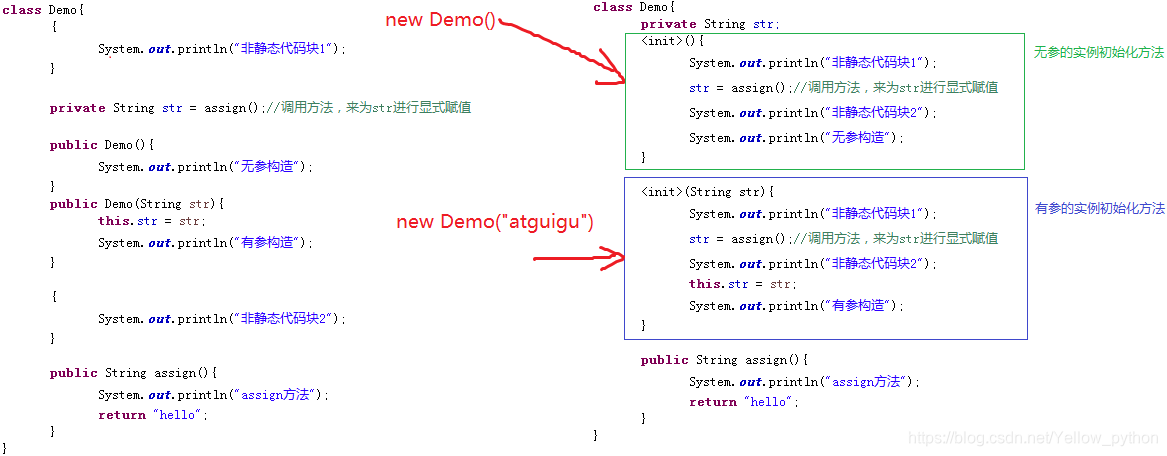
对象初始化
实例化初始化方法
public class Hello {
    public static void main(String[] args) {
        new A();
    }
}

class A {
    {
        System.out.println("1、代码块");
    }

    private int a = setA();

    A() {
        System.out.println("2、构造方法");
    }

    public int setA() {
        System.out.println("3、赋值");
        return 1;
    }

    {
        System.out.println("4、代码块");
    }
}
/*
打印结果
    1、代码块
    3、赋值
    4、代码块
    2、构造方法
*/
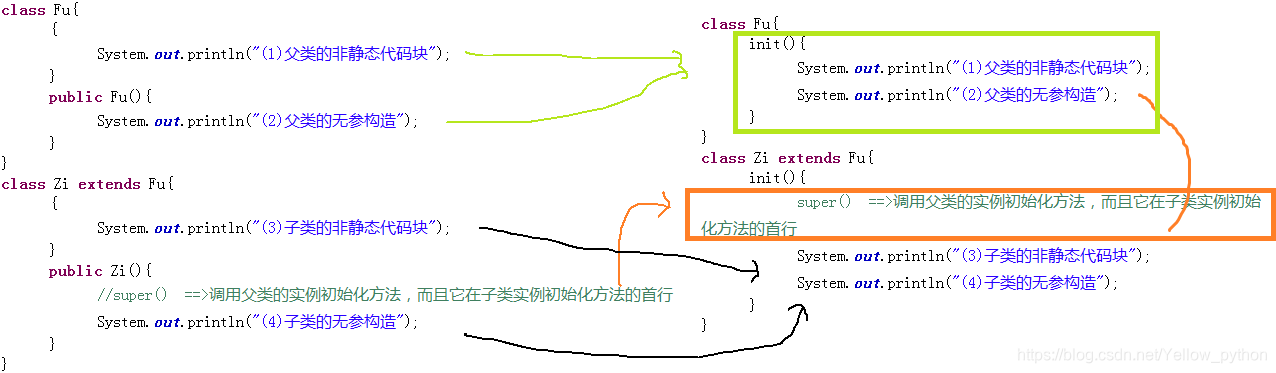
父子类实例化初始化方法
public class Hello {
    public static void main(String[] args) {
        new B();
    }
}

class A {
    {
        System.out.println("1、A代码块");
    }

    private int a = setA();

    A() {
        System.out.println("2、A构造方法");
    }

    public int setA() {
        System.out.println("3、A赋值");
        return 1;
    }
}

class B extends A {
    {
        System.out.println("4、B代码块");
    }
    private int b = setB();

    B() {
        System.out.println("5、B构造方法");
    }

    public int setB() {
        System.out.println("6、B赋值");
        return 2;
    }
}
/*
打印结果
    1、A代码块
    3、A赋值
    2、A构造方法
    4、B代码块
    6、B赋值
    5、B构造方法
*/
类初始化
public class Hello {
    public static void main(String[] args) {
        new A();
    }
}

class A {
    {
        System.out.println("1、代码块");
    }

    static {
        System.out.println("2、静态代码块");
    }

    private int a = setA();
    private static int b = 2;

    A() {
        System.out.println("3、构造方法,打印a值:" + a);
    }

    public int setA() {
        System.out.println("4、a现值" + a);
        return b;
    }
}
/*
打印结果
    2、静态代码块
    1、代码块
    4、a现值0
    3、构造方法,打印a值:2
*/
public class Hello {
    public static void main(String[] args) {
        new B();
    }
}

class A {
    {
        System.out.println("1、A代码块");
    }

    int a = setA();

    static {
        System.out.println("2、A静态代码块");
    }

    A() {
        System.out.println("3、A构造方法,并打印a:" + a);
    }

    public int setA() {
        System.out.println("4、A的a赋值前:" + a);
        return 1;
    }
}

class B extends A {
    {
        System.out.println("5、B代码块");
    }

    int b = setB();

    static {
        System.out.println("6、B静态代码块");
    }

    B() {
        System.out.println("7、B构造方法,并打印a值:" + a + "和b值:" + b);
    }

    public int setB() {
        System.out.println("8、B的b赋值前" + b);
        return 2;
    }
}
/*
打印结果
    2、A静态代码块
    6、B静态代码块
    1、A代码块
    4、A的a赋值前:0
    3、A构造方法,并打印a:1
    5、B代码块
    8、B的b赋值前0
    7、B构造方法,并打印a值:1和b值:2
*/
封装
packaging
| 修饰符 | 本类 | 本包 | 其他包子类 | 其他包非子类 | 其他模块 |
|---|---|---|---|---|---|
| private | √ | × | × | × | × |
| 缺省 | √ | √ | × | × | × |
| protected | √ | √ | √ | × | × |
| public | √ | √ | √ | √ | 默认不可以,可以建立依赖 |
| 名称 | 修饰允许 |
|---|---|
| 外部类 | public和缺省 |
| 成员变量 | public,protected,缺省,private |
| 成员方法 | public,protected,缺省,private |
| 构造器 | public,protected,缺省,private |
JavaBean:Java语言编写类的一种标准规范
- 类必须是具体的和公共的
- 具有无参数的构造方法
- 成员变量私有化,并提供用来操作成员变量的
set和get方法
public class ClassName{
  //成员变量

  //构造方法
  	//无参构造方法【必须】
  	//有参构造方法【建议】

  //getXxx()
  //setXxx()
  //其他成员方法
}
public class Student {
	// 成员变量
	private String name;
	private int age;

	// 构造方法
	public Student() {
	}

	public Student(String name, int age) {
		this.name = name;
		this.age = age;
	}

	// get/set成员方法
	public void setName(String name) {
		this.name = name;
	}

	public String getName() {
		return name;
	}

	public void setAge(int age) {
		this.age = age;
	}

	public int getAge() {
		return age;
	}

    //其他成员方法列表
    public String getInfo(){
        return "姓名:" + name + ",年龄:" + age;
    }
}
类型转换
数据类型转换
double i2f = 2; //自动类型转换
int f2i = (int)2.3; //强制类型转换
System.out.println(i2f); // 2.0
System.out.println(f2i); // 2
引用数据类型转换
public class Hello {
    public static void main(String[] args) {
        // 创建对象
        Animal a = new Animal();
        Cat c = new Cat();

        // 向上转型(upcasting):子类 -> 父类(猫 -> 动物)
        Animal c2a = c;
        c2a.eat(); // 吃鱼
        //c2a.attack(); // 没有这个方法

        // 向下转型(downcasting):父类 -> 子类(动物 -> 猫)
        Cat a2c = (Cat) c2a;
        a2c.eat(); // 吃鱼
        a2c.attack(); // 喵喵拳

        // 编译通过,但运行报错
        //Cat c2 = (Cat) a; // ClassCastException
    }
}

class Animal {
    public void eat() {
        System.out.println("吃");
    }
}

class Cat extends Animal {
    public void eat() {
        System.out.println("吃鱼");
    }

    public void attack() {
        System.out.println("喵喵拳");
    }
}
判断实例是否属于某类(instance of)
instance of(类似Python的is instance)
public class Hello {
    public static void main(String[] args) {
        // 创建对象
        Animal a = new Animal();
        Cat c = new Cat();
        // 猫属于动物
        System.out.println(a instanceof Animal); // true
        System.out.println(a instanceof Cat);    // false
        System.out.println(c instanceof Animal); // true
        System.out.println(c instanceof Cat);    // true
    }
}

class Animal {}
class Cat extends Animal {}
修饰符
静态(static):类方法、静态属性、静态代码块
static(类似Python的@classmethod)
public class Hello {
    public static void main(String[] args) {
        Cat.attack();
    }
}

class Cat {
    static void attack() {
        System.out.print("喵爪");
    }
}
静态方法没有多态,也没有重写
public class Hello {
    public static void main(String[] args) {
        Animal a = new Cat();
        a.attack(); // 打印【攻击】而不是【喵爪】
    }
}

abstract class Animal {
    static void attack() {
        System.out.print("攻击");
    }
}

class Cat extends Animal{
    static void attack() {
        System.out.print("喵爪");
    }
}
最终(final)
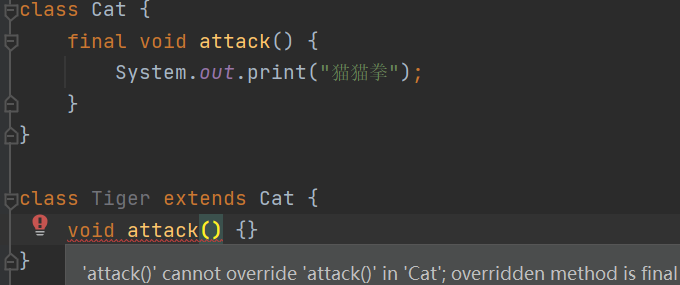
子类不能重写父类的最终方法
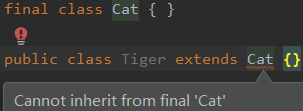
子类不能继承final类
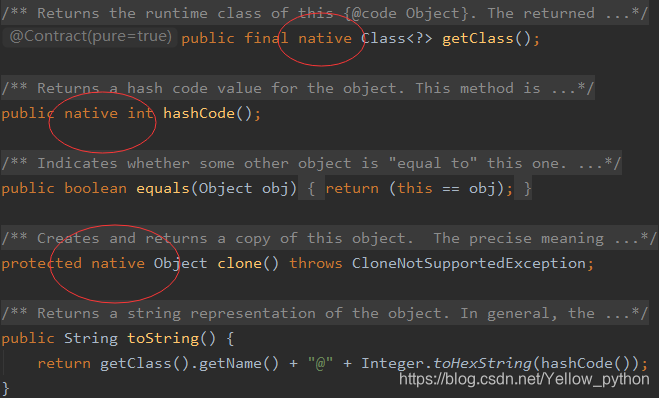
原生的(native)
- 只能修饰方法
- 表示这个方法的方法体代码不是用Java语言实现的,而是由C/C++语言编写的。
- 但是对于Java程序员来说,可以当做Java的方法一样去正常调用它,或者子类重写它。
一些源码
抽象(abstract):抽象方法、抽象类
public class Hello {
    public static void main(String[] args) {
        Graph[] g = new Graph[2];
        g[1] = new Circle(1.0);
        System.out.println(g[1].Area());
    }
}

// 抽象类
abstract class Graph {
    // 抽象方法,抽象方法必须在抽象类中,没有方法体
    abstract double Area();
}

class Circle extends Graph {
    double radius;

    Circle(double radius) {
        this.radius = radius;
    }

    @Override
    double Area() {
        return Math.PI * radius * radius;
    }
}
接口(interface):比抽象类更抽象
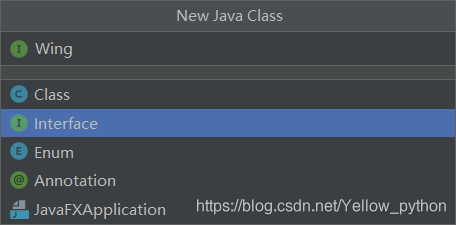
IDE可以创建接口
// 接口:翅膀
public interface Wing {
    // 默认的【public、abstract】可省略
    public abstract void fly();

    // default修饰的方法,有方法体,由实现类的对象来调用
    public default void lay() {
        System.out.println("default方法:下蛋");
    }

    // static修饰的方法,有方法体;调用方法:Wing.information()
    public static void information() {
        System.out.println("static方法:翅膀");
    }
}
// 抽象类:动物
abstract class Animal {
    private String name;

    Animal(String name) {
        this.name = name;
    }

    @Override
    public String toString() {
        return "名字:" + this.name;
    }
}

// 鸟类:继承1个抽象类,实现n个接口
class Bird extends Animal implements Wing {

    Bird(String name) {
        super(name);
    }

    @Override
    public void fly() {
        System.out.println("implement方法:树上飞");
    }
}

// 运行,打印
public class Hello {
    public static void main(String[] args) {
        Bird b = new Bird("鹏");
        System.out.println(b); // 名字:鹏
        b.fly(); // implement方法:树上飞
        b.lay(); // default方法:下蛋
        Wing.information(); // static方法:翅膀
    }
}
枚举(enumerate)
IDE可以创建枚举
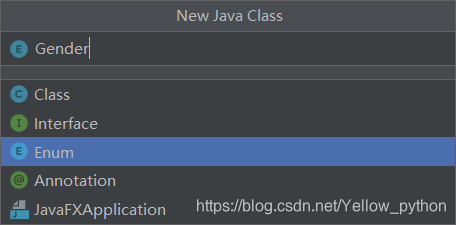
public enum Gender {
    BOY("男"), GIRL("女");

    private String str;
    Gender(String str) { this.str = str; }

    @Override
    public String toString() { return str; }
}
// 打印
System.out.println(Gender.BOY); // 男
System.out.println(Gender.GIRL); // 女
// 遍历
for (Gender g : Gender.values()) { System.out.print(g); }  // 男女
内部类
// 外部类:外部类里面有内部类
public class Outer{
    // 成员内部类
    class Inner {}

    // 静态成员内部类
    static class staticInner {}

    public void myMethod() {
        // 局部内部类
        class localInner {}
    }
}
成员内部类
// 心脏
interface Heart {
    void beat();
}

// 青蛙
public class Frog {
    String name;
    boolean live;
    private Heart heart = new FrogHeart();

    Frog(String name, boolean live) {
        this.name = name;
        this.live = live;
    }

    private class FrogHeart implements Heart {
        @Override
        public void beat() {
            System.out.print(name);
            // 直接访问外部类成员
            if (live) {
                System.out.println("心脏在跳动");
            } else {
                System.out.println("心脏不跳了");
            }
        }
    }

    public Heart getHeart() {
        System.out.println("取出" + name + "心脏");
        return heart;
    }
}
public class Hello {
    public static void main(String[] args) {
        Frog f1 = new Frog("青蛙1号", true);
        Heart b1 = f1.getHeart();
        b1.beat();
        Frog f2 = new Frog("青蛙2号", false);
        Heart b2 = f2.getHeart();
        b2.beat();
    }
}
打印结果
取出青蛙1号心脏
青蛙1号心脏在跳动
取出青蛙2号心脏
青蛙2号心脏不跳了
局部内部类
// 接口(将会被局部内部类实现)
interface Shoot {
    void shoot(String bullet);
}

// Hello是外部类
public class Hello {
    public static void main(String[] args) {
        // 局部内部类(有名)
        class Gun implements Shoot {
            @Override
            public void shoot(String bullet) {
                System.out.println("射" + bullet);
            }
        }
        (new Gun()).shoot("箭");
        // 局部内部类(匿名)
        (new Shoot() {
            @Override
            public void shoot(String bullet) {
                System.out.println("射" + bullet);
            }
        }).shoot("枪");
        // 接口参数,必须传入接口的实现类对象
        shoot((new Shoot() {
            @Override
            public void shoot(String bullet) {
                System.out.println("射" + bullet);
            }
        }), "水");
        // IDE优化
        shoot((bullet -> System.out.println("射" + bullet)), "水");
    }

    // 方法的参数要求:传入接口的实现类对象
    private static void shoot(Shoot s, String bullet) {
        s.shoot(bullet);
    }
}
/*
打印结果
    射箭
    射枪
    射水
    射水
*/
根父类(Object)
其它类的父类
import java.util.Objects;

class Hello {
    public static void main(String[] args) {
        Object[] a = new Object[2];
        a[0] = new Object();
        a[1] = new Hero("剑圣", 6);
        for (Object o : a) {
            // toString
            System.out.println(o);
            // hashCode
            System.out.println(o.hashCode());
            // getClass
            System.out.println(o.getClass());
            // equals
            System.out.println(o.equals(new Hero("剑圣", 6)));
            System.out.println("-------------------------------------");
        }
        // finalize
        System.gc();
    }
}


class Hero {
    String name;
    int lv;

    Hero(String name, int lv) {
        this.name = name;
        this.lv = lv;
    }

    @Override
    public String toString() {
        return "Hero:name=" + name;
    }

    @Override
    protected void finalize() {
        System.out.println("__del__");
    }

    @Override
    public boolean equals(Object o) {
        if (this == o) return true;
        if (o == null || getClass() != o.getClass()) return false;
        Hero hero = (Hero) o;
        return lv == hero.lv && Objects.equals(name, hero.name);
    }

    @Override
    public int hashCode() {
        return Objects.hash(name, lv);
    }
}

/*
打印结果
    java.lang.Object@677327b6
    1735600054
    class java.lang.Object
    false
    -------------------------------------
    Hero:name=剑圣
    20943637
    class agu.com.hell0.Hero
    true
    -------------------------------------
    __del__
    __del__
 */
| python | str | class | del | hash | eq |
|---|---|---|---|---|---|
| java | toString | getClass | finalize | hashCode | equals |
class Hero:
    def __init__(self, name, lv=1):
        self.name = name
        self.lv = lv

    def __str__(self):
        return 'toString:' + self.name

    def __del__(self):
        print('finalize')

    def __hash__(self):
        return hash(self.name)

    def __eq__(self, other):
        return (self is other) and \
               (self.__class__ == other.__class__) and \
               (hash(self) == hash(other)) and \
               (self.name == other.name)


h = Hero('剑圣')
print(h)
# toString:剑圣
print(hash(h), hash(h.name) == hash(h))
# 445903300893569928 True
print(h == Hero('剑圣', 6))
# finalize
# True
# finalize
包装类
用包装类来包装基本数据类型,方便用API
| 基本数据类型 | 包装类(java.lang包) | 缓存对象 |
|---|---|---|
| byte | Byte | -128~127 |
| short | Short | -128~127 |
| int | Integer | -128~127 |
| long | Long | -128~127 |
| float | Float | 没有 |
| double | Double | 没有 |
| char | Character | 0~127 |
| boolean | Boolean | true和false |
| void | Void |
装箱、拆箱
- 装箱:把基本数据类型转为包装类对象
- 拆箱:把包装类对象拆为基本数据类型
int i = 99;
String s = "100";
// int -> Integer
Integer integer2 = i; // 自动装箱
// Integer -> i
int v1 = integer; // 自动拆箱
// String -> Integer
Integer s1 = Integer.valueOf(s);
// String -> int
int si = Integer.parseInt(s);
// int -> String
String is1 = Integer.toString(i);
String is2 = "" + i;
// Integer -> String
String is3 = integer.toString();
String is4 = "" + integer;
缓存对象
Integer i = 1;
Integer j = 1;
System.out.println(i == j);//true

Integer i = 128;
Integer j = 128;
System.out.println(i == j);//false

Integer i = new Integer(1);//新new的在堆中
Integer j = 1;//这个用的是缓冲的常量对象,在方法区
System.out.println(i == j);//false

Integer i = new Integer(1);//新new的在堆中
Integer j = new Integer(1);//另一个新new的在堆中
System.out.println(i == j);//false
注解(annotation)
系统预定义的常用注解
-
检测被修饰的方法为有效的重写方法,如果不是,则报编译错误
只能标记在 方法上
它会被编译器程序读取 -
抑制编译警告
可用于修饰 类、属性、方法、构造、局部变量、参数
它会被编译器程序读取 -
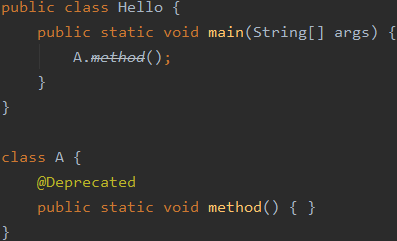
表示
反对使用
可用于修饰 属性、方法、构造、类、包、局部变量、参数
它会被编译器程序读取
@Override
@SuppressWarnings
@Deprecated
自写注解
| 元注解 | 说明 | 例如 |
|---|---|---|
@Target | 描述注解的使用范围 | TYPE、FIELD、METHOD、CONSTRUCTOR、PACKAGE… |
@Retention | 描述注解的生命周期 | SOURCE(源代码)、CLASS(字节码)、RUNTIME(运行时) |
@Documented | 该被javadoc工具记录 | |
@Inherited | 允许子类继承父类中 |
IDE可以创建
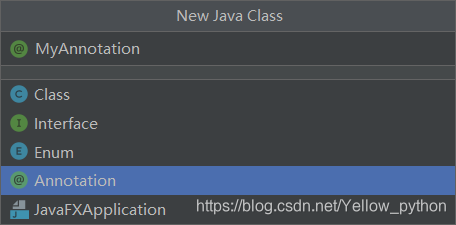
import java.lang.annotation.ElementType;
import java.lang.annotation.RetentionPolicy;
import java.lang.annotation.Retention;
import java.lang.annotation.Target;

@Target(ElementType.TYPE)
@Retention(RetentionPolicy.RUNTIME)
@interface Table {
    String value();
}

@Target(ElementType.FIELD)
@Retention(RetentionPolicy.RUNTIME)
@interface Column {
    String name();
    String type();
}

@Table("t_user")
class User {
    @Column(name = "identification", type = "int")
    private String id;
    @Column(name = "username", type = "varchar(20)")
    private String name;
    @Column(name = "password", type = "char(6)")
    private String pwd;
}
附录
| en | 🔉 | cn |
|---|---|---|
| native | ˈneɪtɪv | adj. 本地出生的;天生的;土著的;天然的;n. 本地人; |
| bean | /biːn/ | n. 豆;嘴峰;毫无价值的东西;vt. 击…的头部 |
| construct | /kənˈstrʌkt/ | v. 建造;n. 构想 |
| constructor | /kənˈstrʌktər/ | n. 构造函数 |
| overload | /ˌoʊvərˈloʊd/ | v. (使)过载,超载;(使)负担过重;(使)电力系统超负荷;n. 超载量 |
| override | /ˌoʊvərˈraɪd/ | vt. 推翻;不顾;践踏;n. 代理佣金 |
| extend | /ɪkˈstend/ | v 延伸 |
| polymorphic | /pɑlɪ’mɔrfɪk/ | adj. [生物] 多态的;[生物] 多形的;多形态的; |
| retention | rɪˈtenʃn | n. 保留;滞留;记忆力 |
| annotation | ˌænəˈteɪʃn | n. 注释;注解 |
| protected | prəˈtektɪd | adj. 受保护的 |
| inherit | ɪnˈherɪt | vt. 继承 |
-Xms | 初始堆内存大小 | |
-Xmx | 最大堆内存大小 |





 扫一扫
扫一扫


 143
143

 被折叠的 条评论
为什么被折叠?
被折叠的 条评论
为什么被折叠?
 到【灌水乐园】发言





