
Comprehensive Comparison of Qualcomm IPQ9554 and IPQ9514 Chips: Choosing in the WiFi 7 Era

In the rapidly evolving field of network technology, Qualcomm's IPQ series chips are highly regarded, particularly the IPQ9554 and IPQ9514. These two chips aim to meet the demands of high performance and multitasking in networking but have differences in their performance, features, and application scenarios. This article provides a comprehensive comparison to help users choose the right solution in the WiFi 7 era.
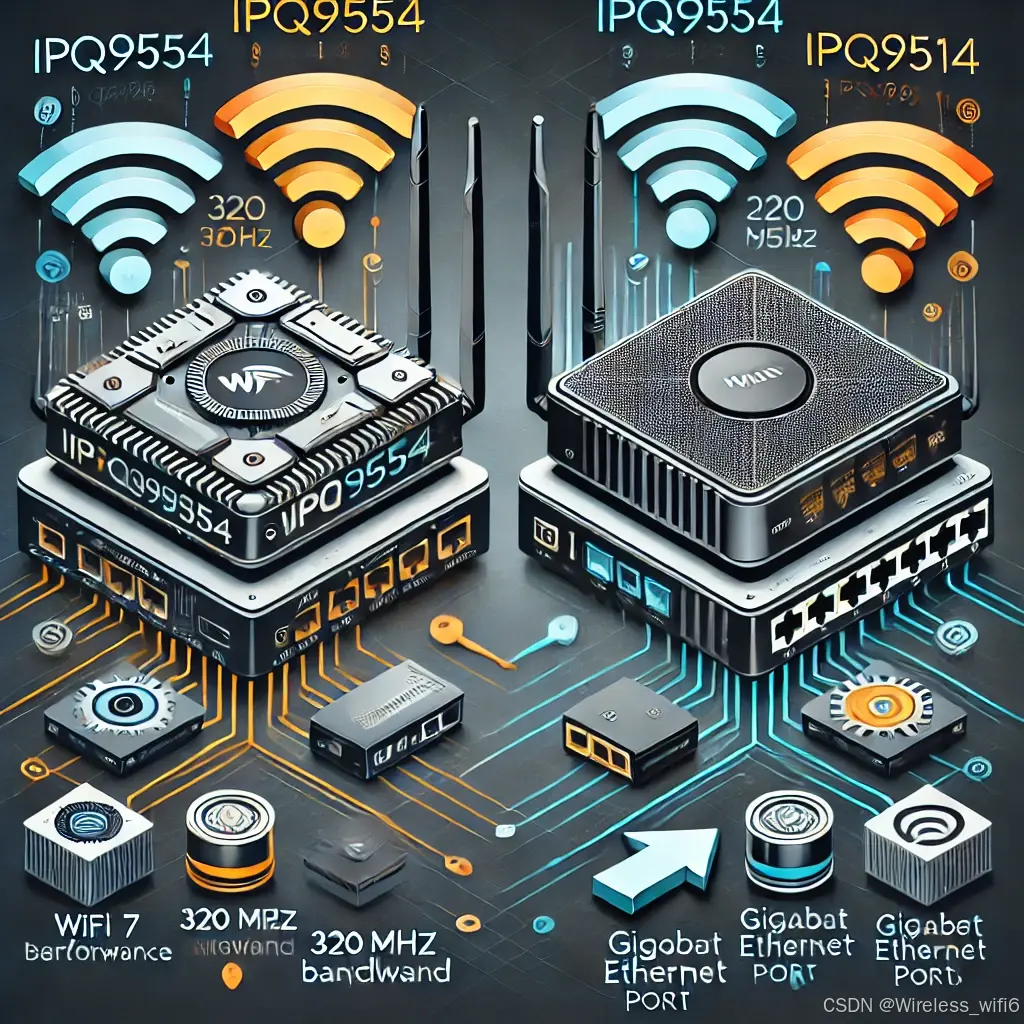
1. Overview

  • IPQ9554: A high-end WiFi 7 chip designed for flagship networking devices, featuring excellent multi-core processing capabilities for ultra-high-speed applications.

  • IPQ9514: Positioned slightly below the IPQ9554 but still offers strong performance, suitable for mid-to-high-end market WiFi 6 devices with partial support for WiFi 7 features.</

### Stack Memory in C++ Stack memory is a region of memory managed by the operating system and is closely tied to the execution of functions in a program. When a function is called, a new stack frame is created on the stack. This stack frame contains local variables, function parameters, and the return address. The object allocation process on the stack is straightforward. When a local variable is declared within a function, memory for that variable is allocated on the stack. For example: ```cpp #include <iostream> void exampleFunction() { int num = 10; // Memory for num is allocated on the stack std::cout << num << std::endl; } int main() { exampleFunction(); return 0; } ``` In this code, the variable `num` is a local variable within `exampleFunction`. When `exampleFunction` is called, memory for `num` is pushed onto the stack. When the function returns, the stack frame is popped, and the memory for `num` is automatically de - allocated. ### Heap Memory in C++ Heap memory is a larger, more flexible region of memory. Unlike stack memory, the programmer has more control over the allocation and de - allocation of memory on the heap. In C++, the `new` operator is used to allocate memory on the heap, and the `delete` operator is used to free the allocated memory. The object allocation process on the heap involves explicitly requesting memory. Consider the following example: ```cpp #include <iostream> class MyClass { public: MyClass() { std::cout << "Constructor called" << std::endl; } ~MyClass() { std::cout << "Destructor called" << std::endl; } }; int main() { MyClass* obj = new MyClass(); // Memory for MyClass object is allocated on the heap delete obj; // Memory is freed return 0; } ``` In this code, the `new` operator allocates enough memory on the heap to hold an object of type `MyClass` and calls the constructor of `MyClass`. The `delete` operator then calls the destructor of `MyClass` and frees the allocated memory. ### Comprehensive Comparison #### Allocation and De - allocation - **Stack**: Allocation and de - allocation are automatic. Memory is allocated when a function is entered and de - allocated when the function returns. This simplicity reduces the risk of memory leaks but also limits the programmer's control. - **Heap**: Allocation and de - allocation are explicit. The programmer decides when to allocate and free memory. This gives more flexibility but also increases the risk of memory leaks if `delete` is not called for every `new` operation. #### Performance - **Stack**: Stack operations are generally faster. Allocating and de - allocating memory on the stack is just a matter of moving the stack pointer, which is a very fast operation. - **Heap**: Heap operations are slower. Memory allocation on the heap involves more complex algorithms to find a suitable block of free memory, and de - allocation may require memory fragmentation management. #### Memory Size - **Stack**: The stack has a limited size, which is usually set by the operating system. If too many local variables are declared or if there are deep recursive function calls, a stack overflow can occur. - **Heap**: The heap has a much larger size, limited mainly by the available physical and virtual memory of the system. #### Object Lifetime - **Stack**: Objects on the stack have a lifetime that is tied to the function in which they are declared. They are destroyed when the function returns. - **Heap**: Objects on the heap can have a lifetime that extends beyond the function in which they are allocated. The programmer can pass pointers to these objects between functions and control their lifetime. ### Figures (Conceptual) Imagine a stack as a stack of plates. Each plate represents a stack frame. When a function is called, a new plate is added to the stack. When the function returns, the top - most plate is removed. The heap can be thought of as a large storage room. When memory is allocated on the heap, the system finds an available space in the room and marks it as used. When memory is freed, that space is marked as available again. In conclusion, both stack and heap memory have their own advantages and disadvantages. The choice between using stack or heap memory depends on the specific requirements of the program, such as performance, memory size, and object lifetime management.
评论
成就一亿技术人!
拼手气红包6.0元
还能输入1000个字符
 
红包 添加红包
表情包 插入表情
 条评论被折叠 查看
添加红包

请填写红包祝福语或标题

红包个数最小为10个

红包金额最低5元

当前余额3.43前往充值 >
需支付:10.00
成就一亿技术人!
领取后你会自动成为博主和红包主的粉丝 规则
hope_wisdom
发出的红包
实付
使用余额支付
点击重新获取
扫码支付
钱包余额 0

抵扣说明:

1.余额是钱包充值的虚拟货币,按照1:1的比例进行支付金额的抵扣。
2.余额无法直接购买下载,可以购买VIP、付费专栏及课程。

余额充值



