


 本文详细介绍了Linux线程的取消、清理、互斥锁和读写锁的使用,以及如何避免死锁。重点讲解了pthread库中的线程取消点、互斥锁的初始化、申请和释放,以及读写锁的特性与应用。同时,探讨了防止死锁的策略,如调整获取锁的顺序。
目录
一、线程的取消
int pthread_cancel(pthread_t thread);
作用:随时杀掉一个线程
示例代码:pthread_cancel函数可以直接杀死一个线程然后通过pthread_jion函数回收
#include<pthread.h>
#include<stdio.h>
#include<unistd.h>

void * func(void *arg)
{
    printf("This is child thread\n");
    while(1)//取消点
    {
        sleep(2);
    }
    pthread_exit("thread return\n");//前面有阻塞函数,线程无法用该函数退出
}

int main()
{
    pthread_t tid;
    void *retv;
    int i;

    pthread_create(&tid,NULL,func,NULL);
    sleep(5);
    pthread_cancel(tid);
    pthread_join(tid,&retv);//线程没有退出无法用该函数回收
    while(1)
    {
        sleep(1);
    }

}
执行结果:线程被杀掉一个
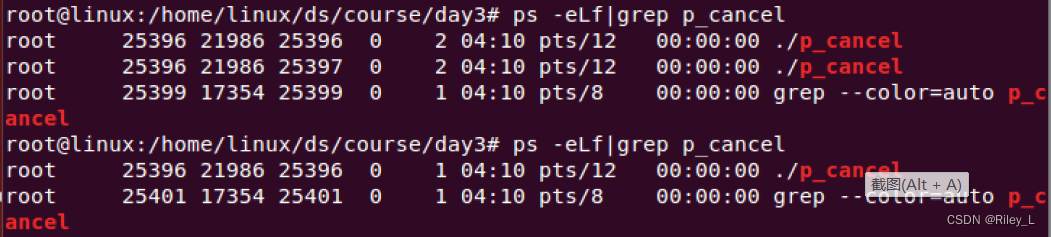
注意:线程的取消要有取消点才可以,不是说取消就取消,线程的取消点主要是阻塞的系统调用
如果没有取消点,手动设置一个:
void pthread_testcancel(void);
设置取消使能或禁止:
int pthread_setcancelstate(int state, int *oldstate);
PTHREAD_CANCEL_ENABLE //能取消
PTHREAD_CANCEL_DISABLE //不能取消
示例代码:线程运行时有些内容期望执行完再被取消,需要手动设置能否取消的参数。
void *func(void *arg)
{
    printf("This is child thread\n");

    pthread_setcancelstate(PTHREAD_CANCEL_DISABLE,NULL);//下面程序执行完前不能取消

    sleep(5);
    pthread_testcancel();//手动设置取消点

    pthread_setcancelstate(PTHREAD_CANCEL_ENABLE,NULL);//下面程序执行完前能取消

    while(1)
    {
        sleep(1);
    }
    pthread_exit("thread return");
}
设置取消类型(了解):
int pthread_setcanceltype(int type, int *oldtype);
PTHREAD_CANCEL_DEFERRED 等到取消点才取消
PTHREAD_CANCEL_ASYNCHRONOUS 目标线程会立即取消
二、线程的清理
必要性: 当线程非正常终止,需要清理一些资源
void pthread_cleanup_push(void (*routine) (void *), void *arg)
void pthread_cleanup_pop(int execute)
routine 函数被执行的条件:
- 被pthread_cancel取消掉。
- 执行pthread_exit
- 非0参数执行pthread_cleanup_pop()
注意:
- 必须成对使用,即使pthread_cleanup_pop不会被执行到也必须写上,否则编译错误。
- pthread_cleanup_pop()被执行且参数为0,pthread_cleanup_push回调函数routine不会被执行.
- pthread_cleanup_push 和pthread_cleanup_pop可以写多对,routine执行顺序正好相反
- 线程内的return 可以结束线程,也可以给pthread_join返回值,但不能触发pthread_cleanup_push里面的回调函数,所以我们结束线程尽量使用pthread_exit退出线程。
三、线程通信 – 互斥
1.互斥锁的相关概念
临界资源:
一次只允许一个任务(进程、线程)访问的共享资源
不能同时访问的资源,比如写文件,只能由一个线程写,同时写会写乱。
比如外设打印机,打印的时候只能由一个程序使用,外设基本上都是不能共享的资源。
生活中比如卫生间,同一时间只能由一个人使用。
必要性: 临界资源不可以共享
临界区:访问临界资源的代码
互斥机制 :mutex互斥锁,任务访问临界资源前申请锁,访问完后释放锁
2.互斥锁初始化 – pthread_mutex_init
#include <pthread.h>
int pthread_mutex_init(pthread_mutex_t *mutex,const pthread_mutexattr_t * attr);
要点:
成功时返回0,失败时返回错误码
mutex 指向要初始化的互斥锁对象
attr 互斥锁属性,NULL表示缺省属性
注:man手册找不到 pthread_mutex_xxxxxxx (提示No manual entry for pthread_mutex_xxx)的解决方法:
apt-get install manpages-posix-dev
3.互斥锁的创建、销毁和使用
(1)创建互斥锁
动态方式:
int pthread_mutex_init(pthread_mutex_t *restrict mutex,const pthread_mutexattr_t *restrict attr);
其中mutex attr用于指定互斥锁属性,如果为NULL则使用缺省属性。
静态方式:
pthread_mutex_t mutex = PTHREAD_MUTEX_INITIALIZER;
(2)锁的销毁:
int pthread_mutex_destroy(pthread_mutex_t *mutex)
在Linux中,互斥锁并不占用任何资源,因此LinuxThreads中的 pthread_mutex_destroy()除了检查锁状态以外(锁定状态则返回EBUSY)没有其他动作。
(3)互斥锁的使用:
int pthread_mutex_lock(pthread_mutex_t *mutex)
int pthread_mutex_unlock(pthread_mutex_t *mutex)
int pthread_mutex_trylock(pthread_mutex_t *mutex)
vim 设置代码全文格式化:gg=G
4.申请和释放锁
(1)申请锁 – pthread_mutex_lock
#include <pthread.h>
int pthread_mutex_lock(pthread_mutex_t *mutex);
int pthread_mutex_trylock(pthread_mutex_t *mutex)
要点:
成功时返回0,失败时返回错误码
mutex 指向要初始化的互斥锁对象
pthread_mutex_lock 如果无法获得锁,任务阻塞
pthread_mutex_trylock 如果无法获得锁,返回EBUSY而不是挂起等待
(2)释放锁 – pthread_mutex_unlock
#include <pthread.h>
int pthread_mutex_unlock(pthread_mutex_t *mutex);
要点:
成功时返回0,失败时返回错误码
mutex 指向要初始化的互斥锁对象 执行完临界区要及时释放锁
示例代码:实现多个线程写一个文件,使用互斥锁
#include <pthread.h>
#include <stdio.h>
#include <unistd.h>
#include <string.h>

pthread_mutex_t mutex = PTHREAD_MUTEX_INITIALIZER;//静态初始化
//如果有多个临界资源,需要定义多个锁

FILE *fp;

void *func2(void *arg)
{
    pthread_detach(pthread_self());
    printf("This is func2 thread\n");

    char str[] = "I write func2 line\n";
    char c;
    int i = 0;
    while(1)
    {
        pthread_mutex_lock(&mutex);//加锁
        while(i < strlen(str))//把字符一个个写进文件
        {
            c = str[i];
            fputc(c,fp);
            usleep(1);//usleep单位是微秒
            i++;
        }
        pthread_mutex_unlock(&mutex);//解锁
        i=0;
        usleep(1);//释放cpu,不让while(1)一直运行
    }

    pthread_exit("func2 exit");
}

void *func(void *arg)
{
    pthread_detach(pthread_self());
    printf("This is func1 thread\n");
    char str[] = "You read func1 thread\n";
    char c;
    int i = 0;
    while(1)
    {
        pthread_mutex_lock(&mutex);
        while(i < strlen(str))
        {
            c = str[i];
            fputc(c,fp);
            i++;
            usleep(1);
        }
        pthread_mutex_unlock(&mutex);
        i=0;
        usleep(1);
    }
    pthread_exit("func1 exit");
}


int main()
{
    pthread_t tid,tid2;
    void *retv;
    int i;
    fp = fopen("1.txt","a+");
    if(fp == NULL)
    {
        perror("fopen");
        return 0;
    }

    pthread_create(&tid,NULL,func,NULL);
    pthread_create(&tid2,NULL,func2,NULL);
    while(1)
    {
        sleep(1);
    }

}
四、读写锁
必要性:提高线程执行效率
1.读写锁特性:
写者:写者使用写锁,如果当前没有读者,也没有其他写者,写者立即获得写锁;否则写者将等待,直到没有读者和写者。
读者:读者使用读锁,如果当前没有写者,读者立即获得读锁;否则读者等待,直到没有写者。
注意:
(1)同一时刻只有一个线程可以获得写锁,同一时刻可以有多个线程获得读锁。
(2)读写锁出于写锁状态时,所有试图对读写锁加锁的线程,不管是读者试图加读锁,还是写者试图加写锁,都会被阻塞。
(3)读写锁处于读锁状态时,有写者试图加写锁时,之后的其他线程的读锁请求会被阻塞,以避免写者长时间的不写锁
2.读写锁的使用
初始化一个读写锁 pthread_rwlock_init
读锁定读写锁 pthread_rwlock_rdlock
非阻塞读锁定 pthread_rwlock_tryrdlock
写锁定读写锁 pthread_rwlock_wrlock
非阻塞写锁定 pthread_rwlock_trywrlock
解锁读写锁 pthread_rwlock_unlock
释放读写锁 pthread_rwlock_destroy
示例代码:读锁和写锁的使用区别
#include <pthread.h>
#include <stdio.h>
#include <unistd.h>
#include <string.h>


pthread_rwlock_t rwlock;//定义一个读写锁

FILE *fp;

void * read_func(void *arg)
{
    pthread_detach(pthread_self());
    printf("read thread\n");
    char buf[32] = {0};
    while(1)
    {
        rewind(fp);//把流指针指向这里
        pthread_rwlock_rdlock(&rwlock);//读锁
        while(fgets(buf,32,fp) != NULL)
        {
            printf("%d,rd=%s\n",(int)arg,buf);//第几个线程读的
            usleep(1000);
        }
        pthread_rwlock_unlock(&rwlock);//读解锁
        sleep(1);
    }

}


void *func2(void *arg)
{
    pthread_detach(pthread_self());
    printf("This is func2 thread\n");

    char str[] = "I write func2 line\n";
    char c;
    int i = 0;
    while(1)
    {
        pthread_rwlock_wrlock(&rwlock);//写锁
        while(i < strlen(str))
        {
            c = str[i];
            fputc(c,fp);
            usleep(1);
            i++;
        }
        pthread_rwlock_unlock(&rwlock);//写解锁
        i = 0;
        usleep(1);
    }

    pthread_exit("func2 exit");

}

void *func(void *arg)
{
    pthread_detach(pthread_self());
    printf("This is func1 thread\n");
    char str[] = "You read func1 thread\n";
    char c;
    int i = 0;
    while(1)
    {
        pthread_rwlock_wrlock(&rwlock);
        while(i < strlen(str))
        {
            c = str[i];
            fputc(c,fp);
            i++;
            usleep(1);
        }
        pthread_rwlock_unlock(&rwlock);
        i = 0;
        usleep(1);

    }
    pthread_exit("func1 exit");
}


int main()
{
    pthread_t tid1,tid2,tid3,tid4;
    void *retv;
    int i;
    fp = fopen("1.txt","a+");
    if(fp == NULL)
    {
        perror("fopen");
        return 0;
    }
    pthread_rwlock_init(&rwlock,NULL);
    pthread_create(&tid1,NULL,read_func,1);
    pthread_create(&tid2,NULL,read_func,2);
	sleep(3);
    pthread_create(&tid3,NULL,func,NULL);
    pthread_create(&tid4,NULL,func2,NULL);
    while(1)
    {
        sleep(1);
    }

}
五、死锁的避免
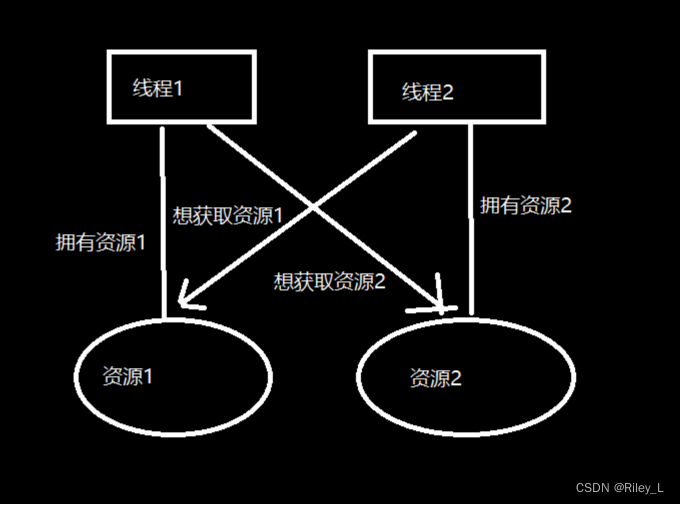
1.死锁的概念(两把或以上的锁才会出现死锁)
2.死锁的避免
(1)通过时间改变顺序
示例代码:
#include <pthread.h>
#include <stdio.h>
#include <unistd.h>
#include <string.h>

pthread_mutex_t mutex = PTHREAD_MUTEX_INITIALIZER;
pthread_mutex_t mutex2 = PTHREAD_MUTEX_INITIALIZER;//两把锁

FILE *fp;
void *func2(void *arg)
{
    pthread_detach(pthread_self());
    printf("This is func2 thread\n");

    char str[] = "I write func2 line\n";
    char c;
    int i = 0;
    while(1)
    {
        pthread_mutex_lock(&mutex2);//获得锁2
        printf("%d,I got lock2\n",(int)arg);//打印线程序号
        sleep(1);
        pthread_mutex_lock(&mutex);//获得锁1
        printf("%d,I got 2 locks\n",(int)arg);

        pthread_mutex_unlock(&mutex);
        pthread_mutex_unlock(&mutex2);
        sleep(10);
    }
    pthread_exit("func2 exit");
}

void *func(void *arg)
{
    pthread_detach(pthread_self());
    printf("This is func1 thread\n");
    char str[] = "You read func1 thread\n";
    char c;
    int i = 0;
    while(1)
    {
        pthread_mutex_lock(&mutex);
        printf("%d,I got lock1\n",(int)arg);
        sleep(1);
        pthread_mutex_lock(&mutex2);
        printf("%d,I got 2 locks\n",(int)arg);

        pthread_mutex_unlock(&mutex2);
        pthread_mutex_unlock(&mutex);
        sleep(10);//休息10s,这个时候线程2可以去获得了
    }
    pthread_exit("func1 exit");
}


int main()
{
    pthread_t tid,tid2;
    void *retv;
    int i;
    fp = fopen("1.txt","a+");
    if(fp == NULL)
    {
        perror("fopen");
        return 0;
    }
    pthread_create(&tid,NULL,func,1);
	sleep(5);//线程1先执行,两把锁都获得了并释放了,这个时候线程2才去获得,就不会死锁
    pthread_create(&tid2,NULL,func2,2);

    while(1)
    {
        sleep(1);
    }

}
(2)通过改变获得锁的顺序
示例代码:
#include <pthread.h>
#include <stdio.h>
#include <unistd.h>
#include <string.h>
pthread_mutex_t mutex = PTHREAD_MUTEX_INITIALIZER;
pthread_mutex_t mutex2 = PTHREAD_MUTEX_INITIALIZER;//两把锁
FILE *fp;
void *func2(void *arg)
{
pthread_detach(pthread_self());
printf("This is func2 thread\n");
char str[] = "I write func2 line\n";
char c;
int i = 0;
while(1)
{
pthread_mutex_lock(&mutex);
printf("%d,I got lock2\n",(int)arg);//打印线程序号
sleep(1);
pthread_mutex_lock(&mutex2);
printf("%d,I got 2 locks\n",(int)arg);
pthread_mutex_unlock(&mutex2);
pthread_mutex_unlock(&mutex);
sleep(10);
}
pthread_exit("func2 exit");
}
void *func(void *arg)
{
pthread_detach(pthread_self());
printf("This is func1 thread\n");
char str[] = "You read func1 thread\n";
char c;
int i = 0;
while(1)
{
pthread_mutex_lock(&mutex);
printf("%d,I got lock1\n",(int)arg);
sleep(1);
pthread_mutex_lock(&mutex2);
printf("%d,I got 2 locks\n",(int)arg);
pthread_mutex_unlock(&mutex2);
pthread_mutex_unlock(&mutex);
sleep(10);
}
pthread_exit("func1 exit");
}
int main()
{
pthread_t tid,tid2;
void *retv;
int i;
fp = fopen("1.txt","a+");
if(fp == NULL)
{
perror("fopen");
return 0;
}
pthread_create(&tid,NULL,func,1);
pthread_create(&tid2,NULL,func2,2);
while(1)
{
sleep(1);
}
}





 扫一扫
扫一扫


 994
994

 被折叠的 条评论
为什么被折叠?
被折叠的 条评论
为什么被折叠?
 到【灌水乐园】发言





