



 本文展示了Java中处理整型数组的一些基本操作,包括通过a.length获取数组长度,使用Arrays.sort进行升序和降序排列,以及用Arrays.fill给数组元素赋值和Arrays.toString将数组转化为字符串表示。示例代码详细解释了每个方法的用法。
一、a.length
作用:输出整形数组的长度
实操:
package 做题;
import java.util.Scanner;

import javax.naming.StringRefAddr;

import org.jcp.xml.dsig.internal.MacOutputStream;

public class Main
{
    public static void main(String[] args)
    {
         Scanner sc = new Scanner(System.in);

         int a[] = new int [10];
         System.out.println(a.length);
    }
}
二、Arrays.sort()
1、Arrays.sort(a)
实现数组a的升序排列
代码:
package 做题;
import java.lang.reflect.Array;
import java.security.PublicKey;
import java.util.Arrays;
import java.util.Scanner;

import javax.naming.StringRefAddr;

public class Main
{
    public static void main(String[] args)
    {
         Scanner sc = new Scanner(System.in);
         final int N = 10;

         String str;

         int n = sc.nextInt();
         int a[] = new int [n];
         for(int i = 0 ; i < n ; i ++)  a[i] = sc.nextInt();

         Arrays.sort(a);

         for(int x: a) System.out.printf("%d ",x);
    }
}
2、Arrays.sort(a,0,n);
实现数组a的升序排列
代码:
package 做题;
import java.lang.reflect.Array;
import java.security.PublicKey;
import java.util.Arrays;
import java.util.Scanner;

import javax.naming.StringRefAddr;

public class Main
{
    public static void main(String[] args)
    {
         Scanner sc = new Scanner(System.in);
         final int N = 10;

         String str;

         int n = sc.nextInt();
         int a[] = new int [n];
         for(int i = 0 ; i < n ; i ++)  a[i] = sc.nextInt();

         Arrays.sort(a,0,n);

         for(int x: a) System.out.printf("%d ",x);
    }
}
3、Arrays.sort(a,0,n,(x,y)->{return y - x;});
实现数组a的降序排列
package 做题;
import java.lang.reflect.Array;
import java.security.PublicKey;
import java.util.Arrays;
import java.util.Scanner;

import javax.naming.StringRefAddr;

public class Main
{
    public static void main(String[] args)
    {
         Scanner sc = new Scanner(System.in);
         final int N = 10;

         String str;

         int n = sc.nextInt();
         Integer a[] = new Integer [n];
         for(int i = 0 ; i < n ; i ++)  a[i] = sc.nextInt();

         Arrays.sort(a,0,n,(x,y)->{return y - x;});

         for(int x: a) System.out.printf("%d ",x);
    }
}
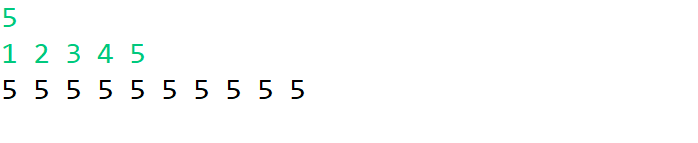
三、Arrays.fill(int a[], int val);
作用:将数组a中所有元素赋值为val
实操:
一维数组:
package 做题;
import java.lang.reflect.Array;
import java.security.PublicKey;
import java.util.Arrays;
import java.util.Scanner;

import javax.naming.StringRefAddr;

public class Main
{
    public static void main(String[] args)
    {
         Scanner sc = new Scanner(System.in);
         final int N = 10;
         int a[] = new int [N];

         int n = sc.nextInt();
         for(int i = 0 ; i < n ; i ++)  a[i] = sc.nextInt();

         Arrays.fill(a, 5);

         for(int x : a)  System.out.printf("%d ",x);
    }
}
二维数组:
import java.io.*;
import java.math.BigInteger;
import java.util.*;


public class Main
{
    static PrintWriter pw = new PrintWriter(new BufferedWriter(new OutputStreamWriter(System.out)));
    static math math_myself = new math();
    static int INF = (int)1e9;
    static int N = (int)2022;
    static int g[][] = new int[N][N];

    public static void main(String[] args) throws IOException
    {
        int n = rd.nextInt();
        int m = rd.nextInt();

        for(int i = 1 ; i <= n ; i ++)
        {
            for(int j = 1 ; j <= m ; j ++)
            {
                g[i][j] = rd.nextInt();
            }
        }

        for(int i = 1 ; i <= n ; i ++)  Arrays.fill(g[i],-1);

        for(int i = 1 ; i <= n ; i ++)
        {
            for(int j = 1 ; j <= m ; j ++)
            {
                pw.print(g[i][j] + " ");
            }
            pw.println();
        }

        pw.flush();
    }
}

class rd
{
    static BufferedReader reader = new BufferedReader(new InputStreamReader(System.in));
    static StringTokenizer tokenizer = new StringTokenizer("");

    static String nextLine() throws IOException { return reader.readLine(); }
    static String next() throws IOException
    {
        while(!tokenizer.hasMoreTokens())  tokenizer = new StringTokenizer(reader.readLine());
        return tokenizer.nextToken();
    }
    static int nextInt() throws IOException { return Integer.parseInt(next()); }
    static double nextDouble() throws IOException { return Double.parseDouble(next()); }
    static long nextLong() throws IOException { return Long.parseLong(next()); }
    static BigInteger nextBigInteger() throws IOException
    {
        BigInteger d = new BigInteger(rd.nextLine());
        return d;
    }
}

class PII
{
    int x,y;
    public PII(int x, int y)
    {
        this.x = x;
        this.y = y;
    }
}

class math
{
    long gcd(long a,long b)
    {
        if(b == 0)  return a;
        else return gcd(b,a % b);
    }

    long lcm(long a,long b)
    {
        return a * b / gcd(a, b);
    }

    // 求n的所有约数
    List get_factor(long n)
    {
        List<Long> a = new ArrayList<>();
        for(long i = 1; i <= Math.sqrt(n) ; i ++)
        {
            if(n % i == 0)
            {
                a.add(i);
                if(i != n / i)  a.add(n / i);  // 去重 // 避免一下的情况:x = 16时,i = 4 ,x / i = 4的情况,这样会加入两种情况  ^-^复杂度能减少多少是多少
            }
        }

        // 对因子排序(升序)
        Collections.sort(a);

        return a;
    }
}
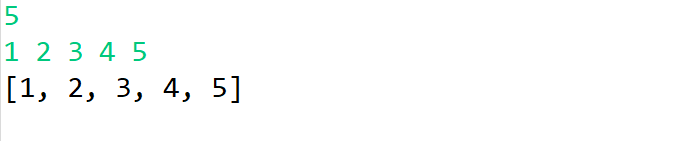
四、Arrays.toString(int a[])
作用:将整形数组a转换成[1,2,3,4,5]的形式
实操:
package 做题;
import java.lang.reflect.Array;
import java.security.PublicKey;
import java.util.Arrays;
import java.util.Scanner;

import javax.naming.StringRefAddr;

public class Main
{
    public static void main(String[] args)
    {
         Scanner sc = new Scanner(System.in);
         final int N = 10;

         String str;

         int n = sc.nextInt();
         int a[] = new int [n];
         for(int i = 0 ; i < n ; i ++)  a[i] = sc.nextInt();

         str = Arrays.toString(a);

         System.out.println(str);
    }
}





 扫一扫
扫一扫


 1363
1363

 被折叠的 条评论
为什么被折叠?
被折叠的 条评论
为什么被折叠?
 到【灌水乐园】发言





