


软件测试资料领取:[内部资源] 想拿年薪40W+的软件测试人员,这份资料必须领取~
软件测试面试刷题工具领取:软件测试面试刷题【800道面试题+答案免费刷】
前言
pytest测试框架提供的很多钩子函数方便我们对测试框架进行二次开发,可以根据自己的需求进行改造。
例如:钩子方法:pytest_runtest_makereport ,可以更清晰的了解测试用例的执行过程,并获取到每个测试用例的执行结果。
pytest_runtest_makereport方法简介
先看下相关的源码,在 _pytest/runner.py 文件下,可以导入之后查看:
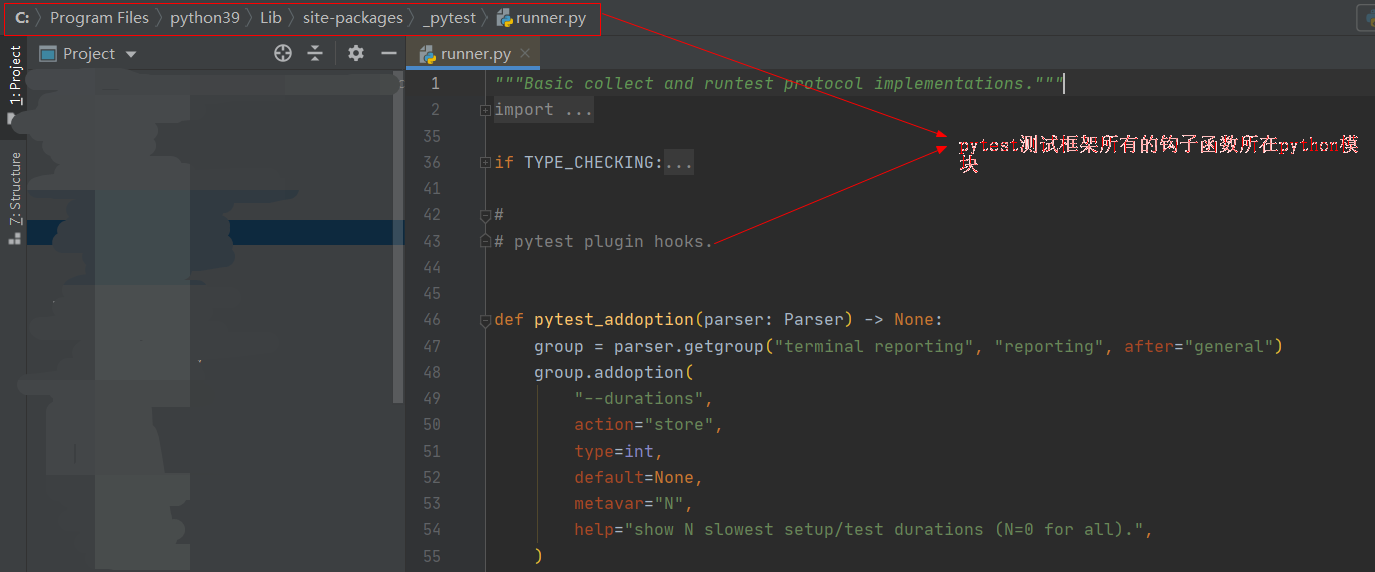
源码:
from _pytest import runner


# 对应源码

def pytest_runtest_makereport(item, call):

""" return a :py:class:`_pytest.runner.TestReport` object

for the given :py:class:`pytest.Item` and

:py:class:`_pytest.runner.CallInfo`.

"""
装饰器 pytest.hookimpl(hookwrapper=True, tryfirst=True) 解释:
@pytest.hookimpl(hookwrapper=True)装饰的钩子函数,有以下两个作用:
1、可以获取到测试用例不同执行阶段的结果(setup,call,teardown)
2、可以获取钩子方法 pytest_runtest_makereport(item, call) 的调用结果(yield返回一个测试用例执行后的result对象)和调用结果result对象中的测试报告(返回一个report对象)
pytest_runtest_makereport(item, call) 钩子函数参数解释:
1、 item 是测试用例对象;
2、 call 是测试用例的测试步骤;具体执行过程如下:
①先执行 when="setup" ,返回setup用例前置操作函数的执行结果。
②然后执行 when="call" ,返回call测试用例的执行结果。
③最后执行 when="teardown" ,返回teardown用例后置操作函数的执行结果。
 最低0.47元/天 解锁文章






 扫一扫
扫一扫


 1801
1801

 被折叠的 条评论
为什么被折叠?
被折叠的 条评论
为什么被折叠?
 到【灌水乐园】发言





