


目录
源文件命名:
Java源文件是编写Java程序的文本文件,通常以 .java 为后缀名。 一个Java源文件( .java )中最多只能有一个 public 修饰的类,且该类的名称必须与源文件名完全一致(包括大小写)。
object9.library 是一个包(package)其中包含了 operation(操作) , user(用户)两个包 operation 中放了可执行操作(类 c,接口 I) user 中为 用户的身份 管理员或普通用户
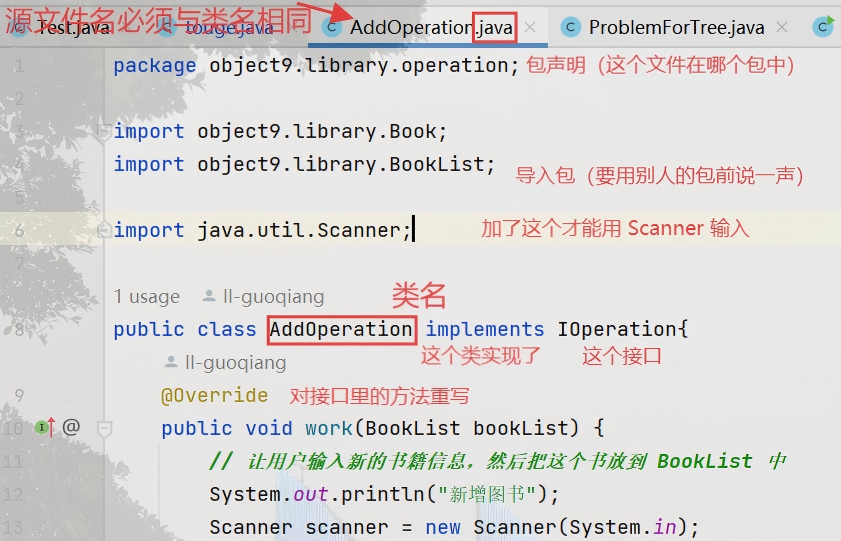
A.java
public class A { }
public class B { } // 编译错误:源文件中只能有一个public类
字节码文件 .class
由Java源文件( .java )通过 javac 编译生成
javac - 将Java源文件( .java )编译为字节码文件( .class ),供Java虚拟机(JVM)执行。
数据类型:
| 类型分类 | 类型名称 | 字节数 | 泛型对应包装类 | 取值范围 |
|---|---|---|---|---|
| 整数型 | byte | 1 字节 | Byte | -128 至 127 |
| 整数型 | short | 2 字节 | Short | -32768 至 32767 |
| 整数型 | int | 4 字节 | Integer | -2¹⁵ 至 2¹⁵-1(-32768 至 32767) |
| 整数型 | long | 8 字节 | Long | -2³¹ 至 2³¹-1(-2147483648 至 2147483647) |
| 浮点型 | float | 4 字节 | Float | ±1.4E-45 至 ±3.4028235E+38(科学计数法) |
| 浮点型 | double | 8 字节 | Double | ±4.9E-324 至 ±1.7976931348623157E+308 |
| 字符型 | char | 2 字节 | Character | \u0000(0)至 \uFFFF(65535) |
| 布尔型 | boolean | 1 字节 * | Boolean | true 或 false |
数据类型转换
自动转换
取值范围小的转的大 精度低的转精度大的
一、数据类型按取值范围从小到大排序
1. byte (-128~127,1字节)
2. short (-32768~32767,2字节)
3. char (0~65535,2字节,无符号)
4. int (-2¹⁵~2¹⁵-1,4字节)
5. long (-2³¹~2³¹-1,8字节)
6. float (±1.4E-45~±3.4028235E+38,4字节,单精度)
7. double (±4.9E-324~±1.7976931348623157E+308,8字节,双精度)
| 源类型(小范围 / 低精度) | 目标类型(大范围 / 高精度) | |
|---|---|---|
byte | short/int/long/float/double | |
short | int/long/float/double | |
char | int/long/float/double | |
int | long/float/double | |
long | float/double | |
float | double |
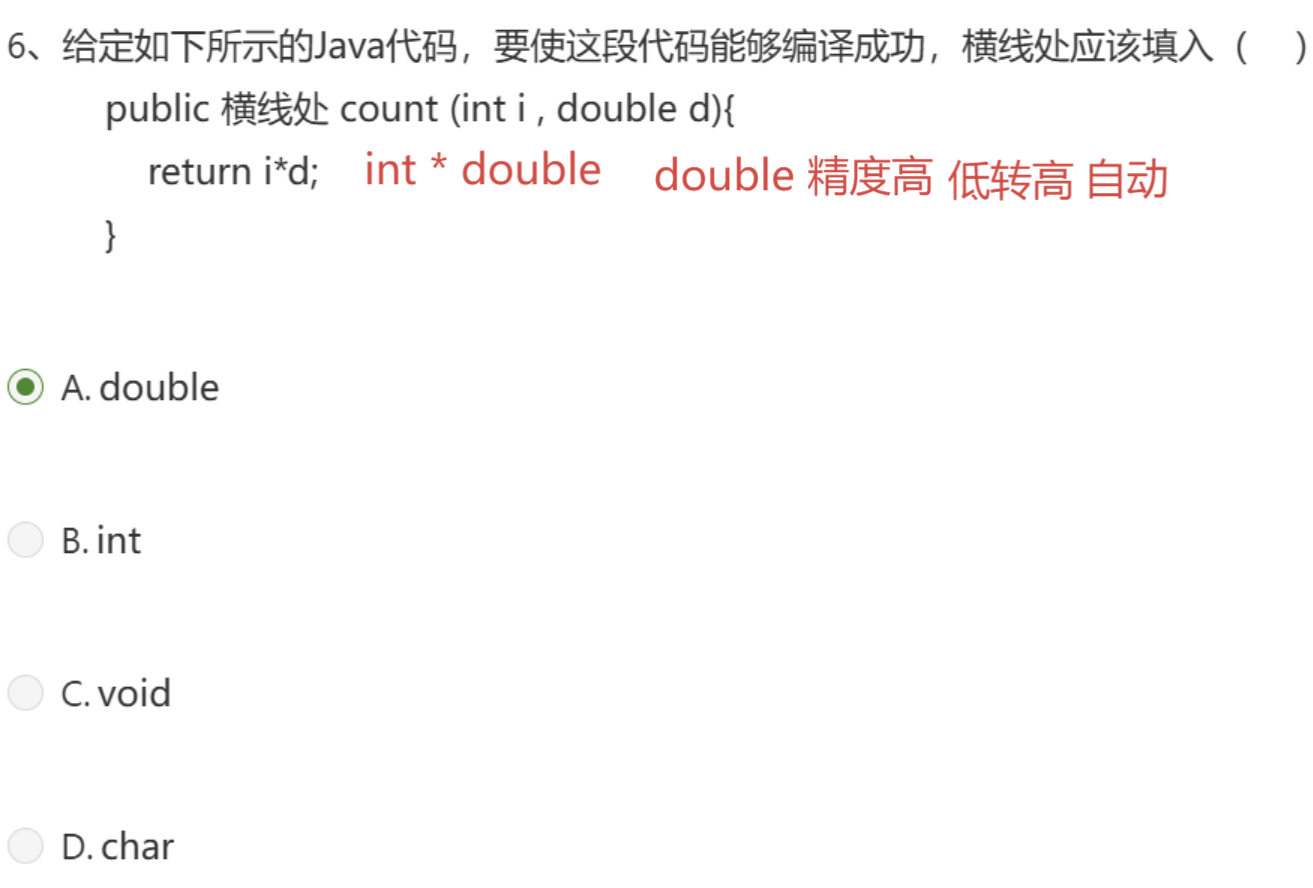
强制转换
小范围、低精度 转 大范围 大精度
eg: Float floatVar = 3.14f;
int intVar = (int)floatVar; // 强制转换Float→int直接截断小数部分,不进行四舍五入:
(int)3.14f → 3
| 源类型(大范围 / 高精度) | 目标类型(小范围 / 低精度) | |
|---|---|---|
short/int/long/float/double | byte | |
int/long/float/double | short | |
long/float/double | int | |
float/double | long | |
double | float | |
int/long/float/double | char |
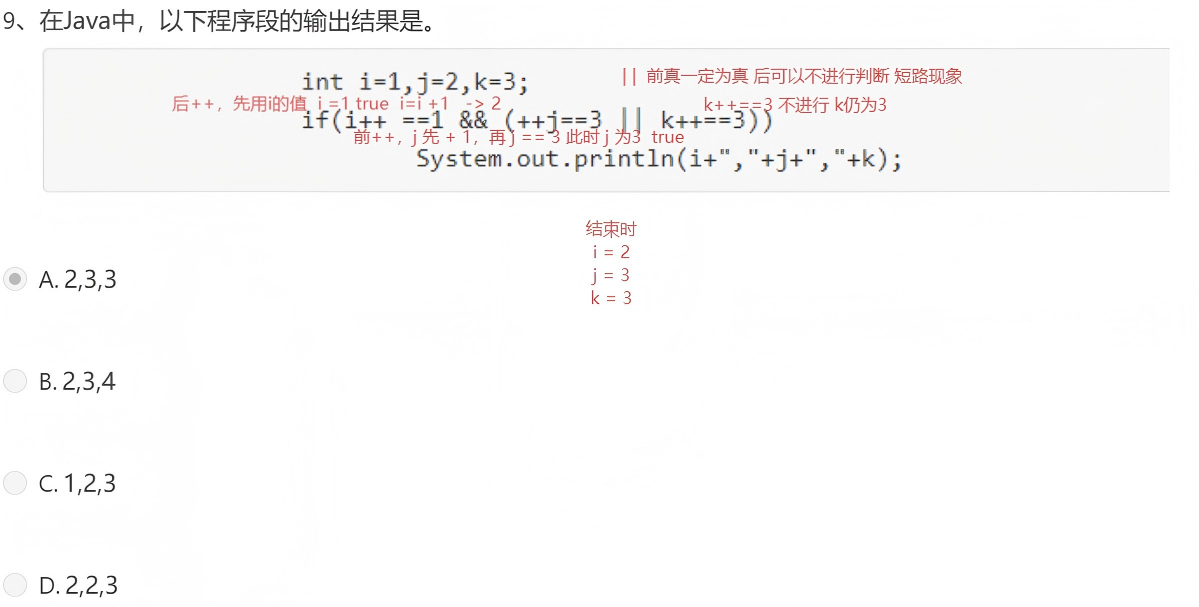
自增自减运算符
| 运算符 | 形式 | 执行逻辑 | 返回值 | 示例(假设 i=5) |
|---|---|---|---|---|
| 自增 | 前缀++i | 先将 i 加 1,再使用 i 的新值 | 加 1 后的值 | j = ++i → i=6,j=6 |
| 自增 | 后缀i++ | 先使用 i 的当前值,再将 i 加 1 | 加 1 前的原值 | j = i++ → i=6,j=5 |
| 自减 | 前缀--i | 先将 i 减 1,再使用 i 的新值 | 减 1 后的值 | j = --i → i=4,j=4 |
| 自减 | 后缀i-- | 先使用 i 的当前值,再将 i 减 1 | 减 1 前的原值 | j = i-- → i=4,j=5 |
关系运算符:
> , < , >=, <= , == , !=
逻辑运算符
&& 逻辑与 , || 逻辑或 , !逻辑取反
以上两种运算符 与C语言中不同的是 返回值 为 true 或 false 不是 1 , -1 , 0
if(a > b){} a > b 为真的情况 返回 true 进入 if 的 代码块 { } 反之跳过
while(!a > b) a > b 为真的情况 返回 true 但逻辑取反 ! 变为 false 不进入循环
a > b 为假的情况 返回 false 但逻辑取反 ! 变为 true 进入循环
开关语句:
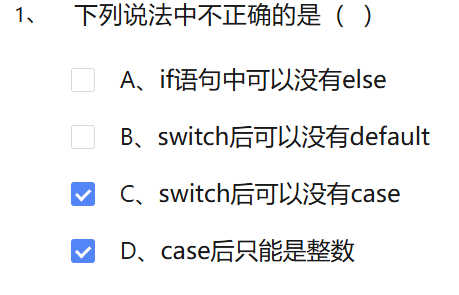
执行过程:当switch后表达式的值和case语句后的值相同时,从该位置开始向下执行,直到遇到break语句或者switch语句块结束;如果没有匹配的case语句则执行default块的代码。
case 后加 : 不是 ;
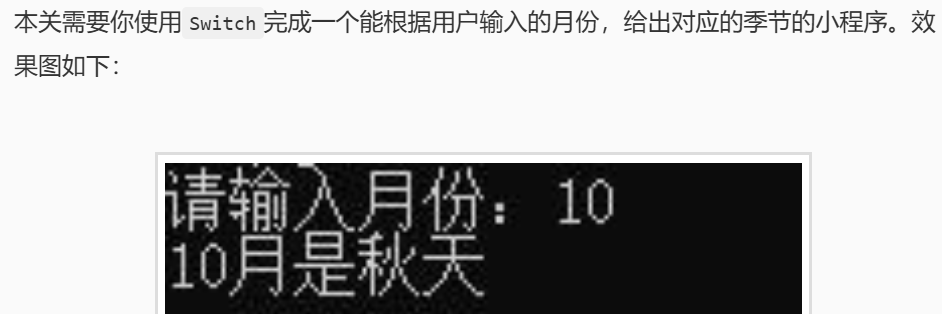
package step4;

import java.util.Scanner;

public class HelloSwitch {
	public static void main(String[] args) {
		Scanner sc = new Scanner(System.in);

		System.out.println("请输入月份:");

		int input = sc.nextInt();	//获取输入的月份

        //通过输入的月份来判断当前季节并输出
		/*****start*****/
		switch(input){
            case 3:
            case 4:
            case 5:
            System.out.println(input + "月是春天");
            break;
            case 6:
            case 7:
            case 8:
            System.out.println(input + "月是夏天");
            break;
            case 9:
            case 10:
            case 11:
            System.out.println(input + "月是秋天");
            break;
            case 12:
            case 1:
            case 2:
            System.out.println(input + "月是冬天");
            break;

            default:
                System.out.println("输入的月份无效,请输入 1 - 12 之间的整数");

        }
认识类
类
class 类名{
// 成员变量
成员变量 a; private/public/protected 变量名;
成员变量 b;// 构造方法 初始化的作用
public 类名(参数:可以没有 或 成员变量a,成员变量b){
this.a = a;
this.b = b;
}// 方法体 Getter Setter
public 返回值类型 getA (){
return a;
}
public void setA(成员变量 a){
this.a = a;
}
public 返回值类型 getB (){
return a;
}
public void setB(成员变量 b){
this.a = b;
}// 主方法
public static void main (String[] args){
}
}
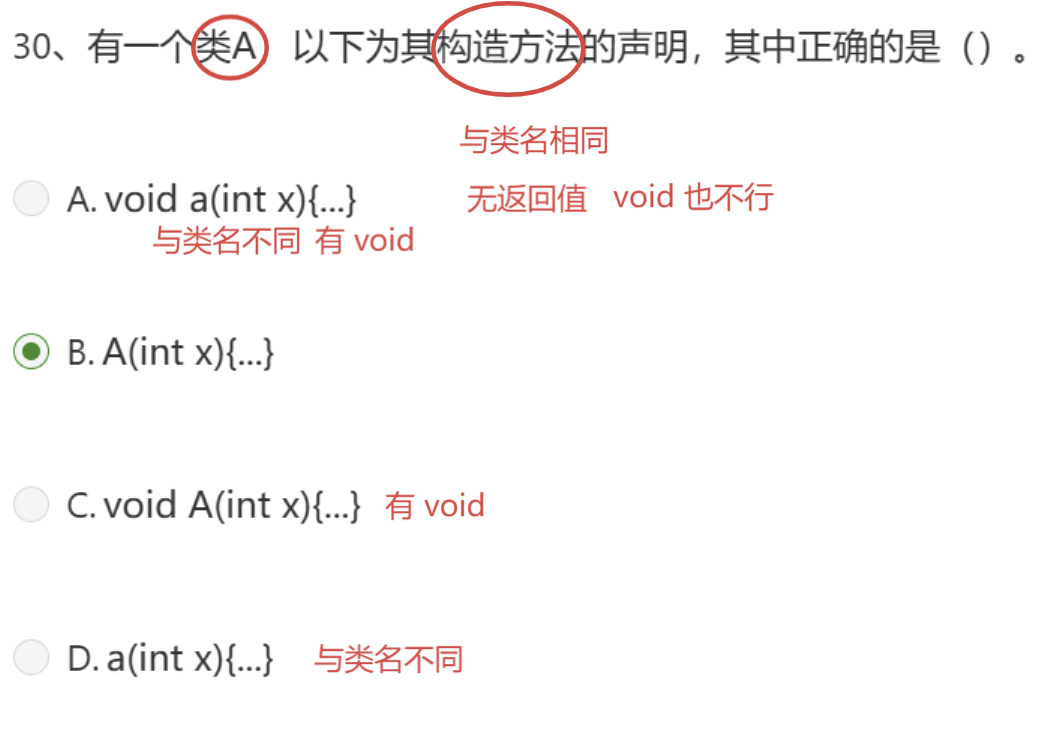
构造方法
一个实例
public class MyDate {
    public int year;
    //public int year = 2024;  就地初始化
    public int month;
    //public int month = 11;    就地初始化
    public int day;

   //代码块
//    {
//        year = 2024;
//        month = 11;
//        day = 21;
//          System.out.println("代码块初始化");
//    }

    //构造方法   一旦带有 void 就变为普通方法了
    public MyDate() {
        year = 2024;
        month = 11;
        day = 21;
        System.out.println("调用构造方法");
        //允许使用构造方法调用其他构造方法
       // this(2024,11,21);  this 只能做第一行代码

    }


    //    public void setDate(int y , int m ,int d){
//        year = y;
//        month = m;
//        day = d;
//    }
    public void setDate(int year , int month ,int day){
        // 优先将 year 作为形参 通过 this 关键字表明哪些是成员变量 特殊的引用 只能在方法中使用
        this.year = year;
        this.month = month;
        this.day = day;

    }
    public MyDate(int year, int month , int day){
        this.year =  year;
        this.month = month;
        this.day = day;
        System.out.println("调用第二个构造方法");

    }
    //this = new Date();  错误 this不是变量不能修改

    public void printDate(){
        System.out.println(year + "." + month + "." + day);
    }

    @Override    //在一个方法或类上 添加@  注解
    public String toString() {
        return "Date{" +
                "year=" + year +
                ", month=" + month +
                ", day=" + day +
                '}';
    }

    public static void main(String[] args) {
 //       Date date = new Date();// 只是对 date 初始化了   int year int month int day 还未初始化 通过构造方法初始化  1.构造方法的方法名,必须和类名一致并且不能有返回值  2 new 对象时自动调用
//        date.setDate(2024, 11 ,21);  // 这样的方法调用,在编译器底层看到的效果: public void setDate(Date this, int year,int month, int day)
        MyDate date = new MyDate(2024,11,21);
        date.printDate();
    }
}
        //允许使用构造方法调用其他构造方法
另一个实例
public class Book {
    //书名
    private String name;
    //作者
    private String author;
    // 类型
    private String type;
    // 价格
    private double price;
    // 是否借出
    private boolean isBorrowed;

    // 构造方法
    public Book(String name, String author, String type, double price) {
        this.name = name;
        this.author = author;
        this.type = type;
        this.price = price;
        this.isBorrowed = false; // 默认未借出
    }

    public String getName() {
        return name;
    }

    public void setName(String name) {
        this.name = name;
    }

    public String getAuthor() {
        return author;
    }

    public void setAuthor(String author) {
        this.author = author;
    }

    public String getType() {
        return type;
    }

    public void setType(String type) {
        this.type = type;
    }

    public double getPrice() {
        return price;
    }

    public void setPrice(double price) {
        this.price = price;
    }

    public boolean isBorrowed() {
        return isBorrowed;
    }

    public void setBorrowed(boolean borrowed) {
        isBorrowed = borrowed;
    }

    @Override
    public String toString() {
//        return "Book{" +
//                "name='" + name + '\'' +
//                ", author='" + author + '\'' +
//                ", type='" + type + '\'' +
//                ", price=" + price +
//                ", isBorrowed=" + isBorrowed +
//                '}';
         return  "[" + name + "," + author + "," + price + "," + type + "," + (isBorrowed ? "已借出" : "在库中") + "]";
    }
}
创建对象
类名 对象名 = new 类名;
eg: Scanner a = new Scanner(System.in); new 一个实例出来
就像在饭店吃饭 类是菜单 new 是点单的行为 对象即菜public Book(String name, String author, String type, double price) {
this.name = name;
this.author = author;
this.type = type;
this.price = price;
this.isBorrowed = false; // 默认未借出
}
上面那个 Book book = new Book("《java从入门到精通》" ,“肘子” , “教材”,“100.00”);name 书名 author 作者 type 书的类型 price 价格
括号内: 类的构造方法括号里的参数 若没有(即无参构造函数)可以不写
调用类中方法
对象名 . 方法; “. ”点运算符
以Book 类 为例Book book = new Book("java从入门到精通" ,“肘子” , “教材”,“100.00”);
String bookName = book.getName();
System.out.printfln(bookName); // 结果 《java从入门到精通》
类成员、类方法 static
关键词 static eg: static int x; 静态成员/ 类成员
static void text() {} 静态方法/ 类方法
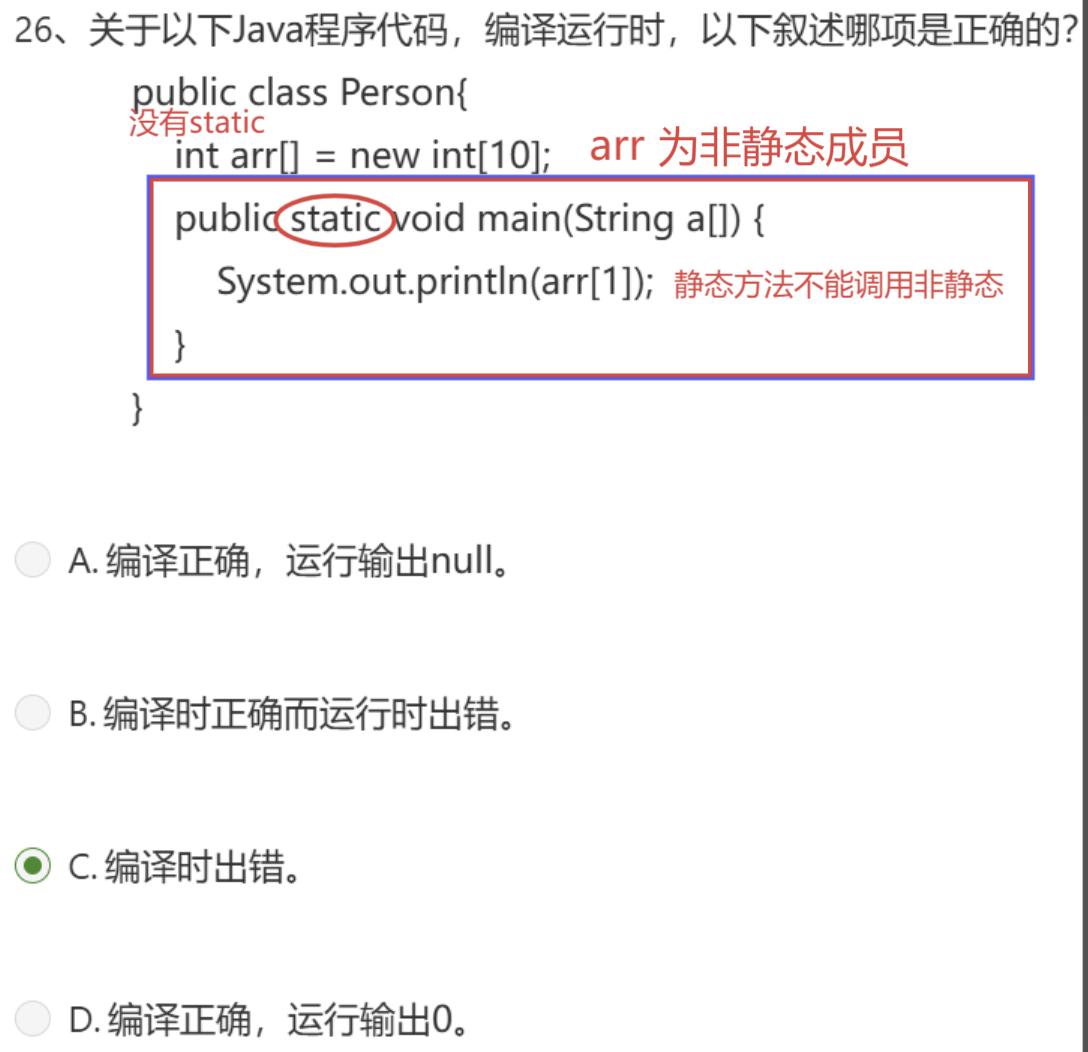
注意: 类成员 可以用 类名访问不创建对象
类方法- 1.不能访问非static成员
2. 内部不能使用 this
3. 全局仅执行一次
3. 全局仅执行一次
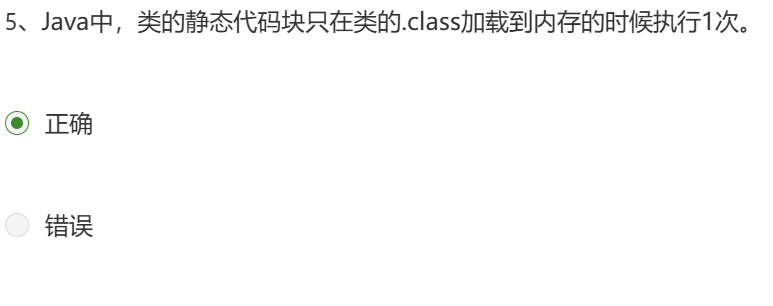
static 不能修饰 构造方法 选项中 this super 也可记下
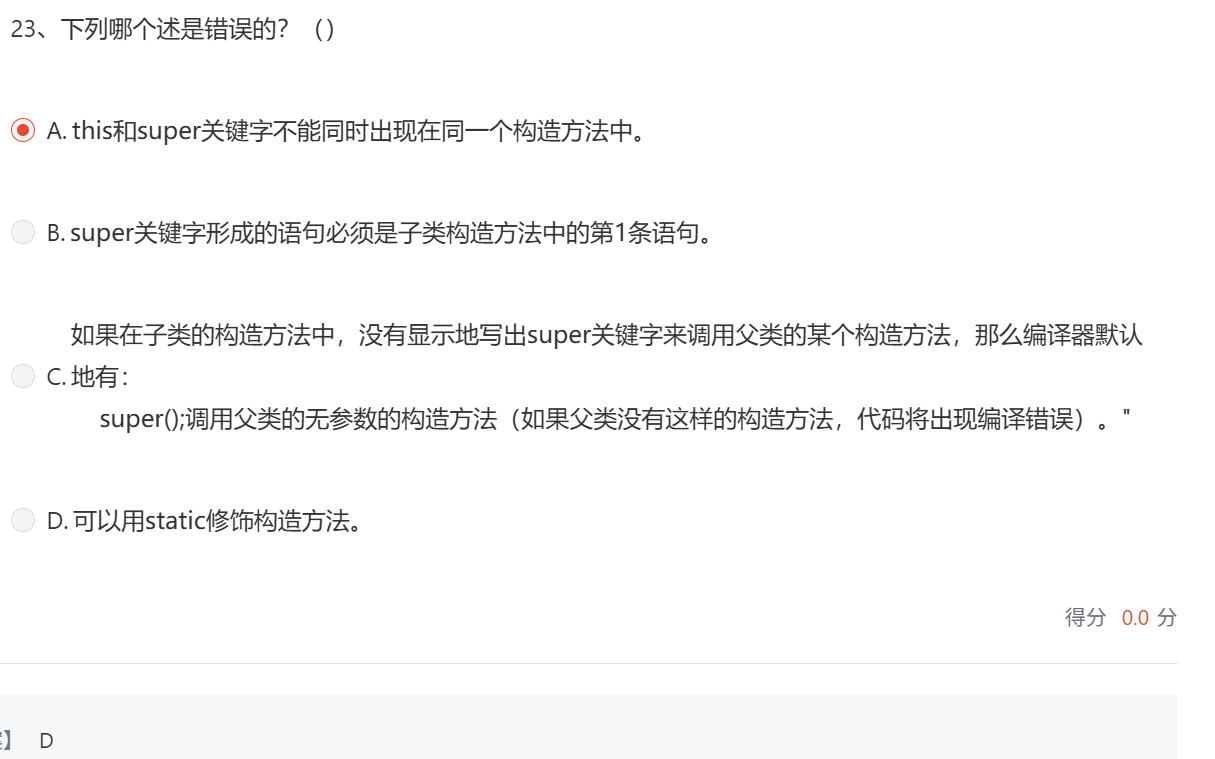
1.不能访问非static成员
继承,接口
继承 extends 接口 implements Object 是所有类的父类(祖宗)
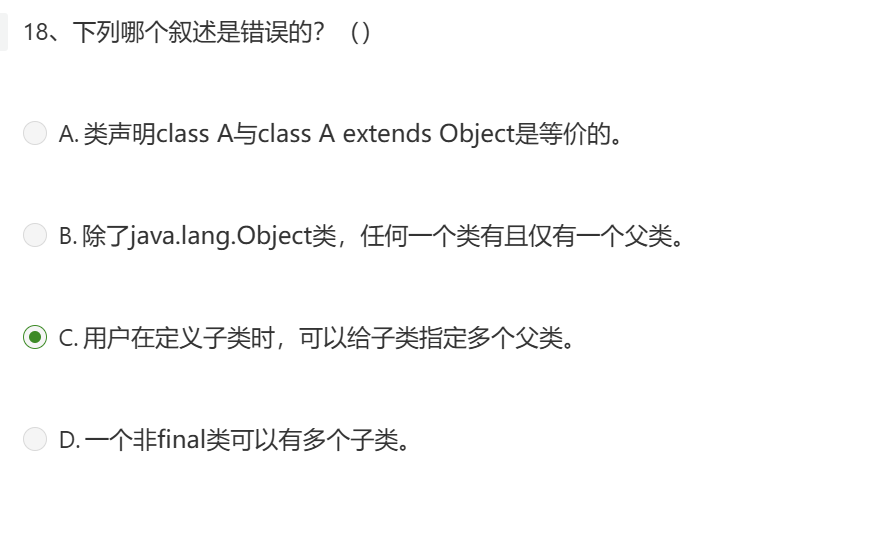
继承: 一个类可以有多个子类,但只能有一个父类
final 关键字 修饰的类不能被继承 且 final 修饰的方法不能被重写 final 修饰的变量不能被修改
区别接口 : 一个类可以实现多个接口
public interface MyInterface { /* 接口内容 */ }
可定义 抽象方法(JDK 7 及以前默认 public abstract ,可省略修饰符 )、默认方法(default 修饰,带方法体 )、静态方法(static 修饰,带方法体 )、常量(默认 public static final ,必须赋值 )。
接口继承接口 :用 extends 关键字,支持多继承
interface SubInter extends InterA, InterB { }
接口成员规则对比表
| 成员类型 | 语法示例 | 核心特性 | 实现类 / 子类处理方式 |
|---|---|---|---|
| 抽象方法 | void doTask(); | 隐式 public abstract 修饰(可省略)无方法体,仅声明行为规范 | 非抽象类必须重写;抽象类可选择不重写,留待子类实现。 |
| 默认方法(JDK 8+) | default void showMsg() { System.out.println("默认提示"); } | 用 default 修饰,必须包含方法体为接口提供默认实现逻辑,不强制实现类修改 | 实现类可直接继承使用,也可重写覆盖。 |
| 静态方法(JDK 8+) | static void log() { System.out.println("日志记录"); } | 用 static 修饰,必须包含方法体只能通过接口名调用(如 MyInterface.log()) | 实现类无法继承或重写,需通过接口名直接调用。 |
| 常量 | String VERSION = "1.0";(等价于 public static final String VERSION = "1.0";) | 隐式 public static final 修饰(可省略)值必须固定,不可修改 | 接口和实现类均可通过 接口名.常量名 访问。 |
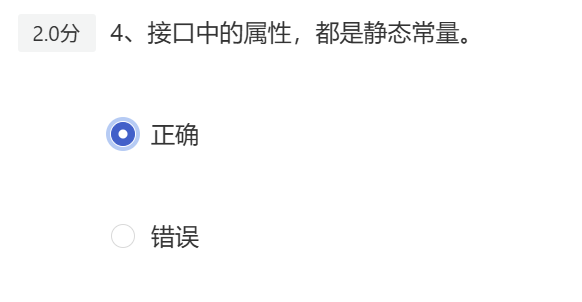
接口中声明的属性,会自动隐含 public static final 修饰符 。
interface MyInterface {
// 等价于 public static final int NUM = 10;
int NUM = 10;
}
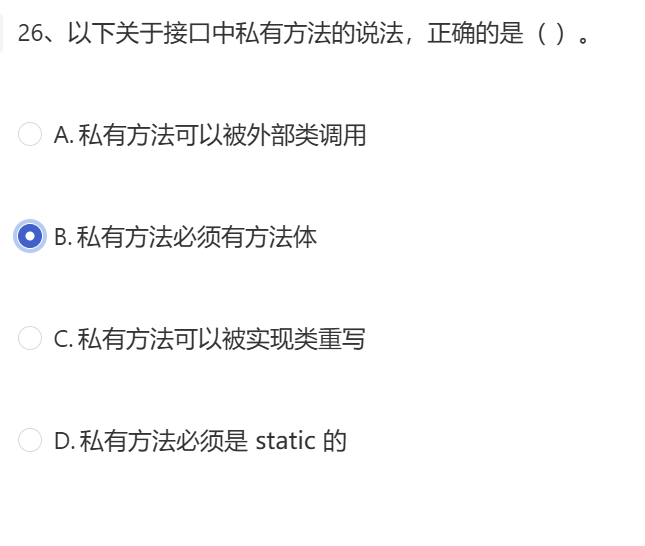
接口中的私有方法:有普通私有(private )归默认方法调用,静态私有 (private static)归静态方法调用。接口中默认方法,静态方法都必须有方法体。所以私有也得有
//  父类  且为抽象类  abstract

public abstract class User {
    protected String name;
    public User (String name){
          this.name = name;
{

    // 显示用户菜单,返回值为用户输入的序号
    public abstract int menu();    // 抽象方法 必须在子类中重写(除非子类同为抽象类)

}
//子类 Admin (管理员类) extends (继承自)User (用户类)
public class Admin extends User{

    public Admin(String name) {
        super(name);  //  通过 super 调用父类有参构造方法
        operations = new IOperation[] {
                new ExitOperation(),// 0
                new ListOperation(),// 1
                new FindOperation(),// 2
                new AddOperation(), // 3
                new DelOperation()  // 4
        };
    }

    @Override  // 重写抽象方法
    public int menu() {  // 与 int menu(); 保持一致
        // 打印管理员的菜单
        System.out.println("*********************************");
        System.out.println("欢迎您," + name);
        System.out.println("1.查看书籍列表");
        System.out.println("2.按照名字查找书籍");
        System.out.println("3.添加新书");
        System.out.println("4.删除书籍");
        System.out.println("0.退出");
        System.out.println("*********************************");
        System.out.println("请输入您的选项");
        Scanner scanner = new Scanner(System.in);
        int choice = scanner.nextInt();
        return choice;
    }
}
super调用的规则与细节
1. 隐式 vs 显式调用
- 隐式调用:若子类构造方法中省略
super(...),编译器会自动插入super()(即调用父类的无参构造)。public Admin(String name) { // 隐式调用super(),等价于: // super(); // 必须在第一句 } - 显式调用:当父类没有无参构造方法时,必须显式调用父类的其他构造方法。
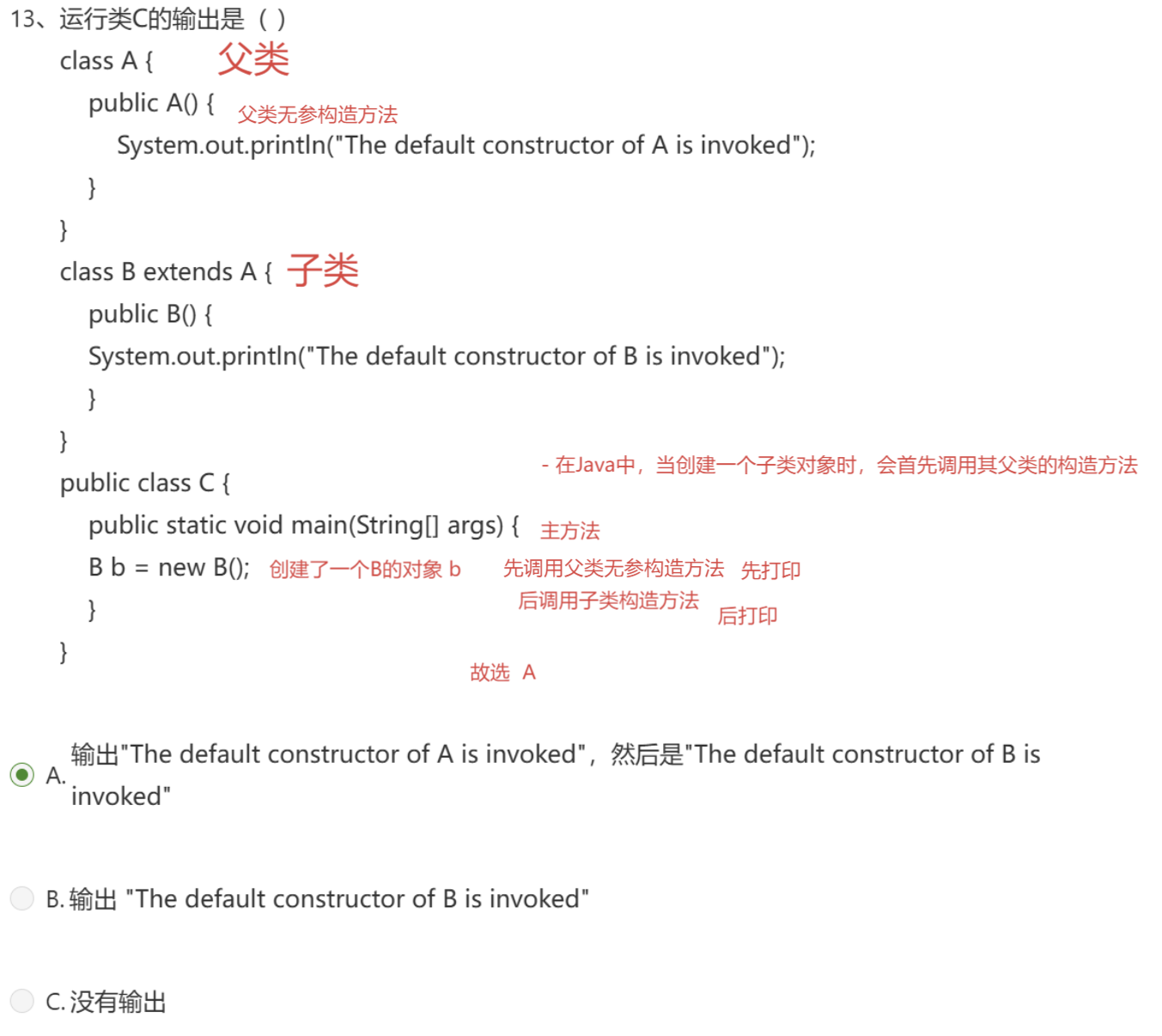
方法重载,重写
重载@overload : 指同一类中多个方法同名,但参数列表不同(参数数量、类型或顺序不同),编译器会根据调用时的参数自动匹配对应方法。
. 必须满足的条件
1- 方法名相同:如 calculate() 。
2- 参数列表不同(至少满足以下一项):
3- 参数数量不同:如 calculate(int a) 和 calculate(int a, int b) 。
4- 参数类型不同:如 calculate(int a) 和 calculate(double a) 。
5- 参数顺序不同:如 calculate(int a, double b) 和 calculate(double a, int b) 。
6- 返回值类型、访问修饰符无关:即使返回值不同,只要参数列表不同就构成重载(但仅返回值不同不能重载)。
重写 @override:是子类对父类同名方法的重新实现,体现了“运行时多态”特性。
必须满足的条件
1- 子类继承父类或实现接口。
2- 方法名、参数列表、返回值类型完全相同(例外:子类返回值类型是父类返回值的子类)。
3- 子类方法的访问修饰符不能比父类更严格(如父类方法是 protected ,子类不能是 default )。
例题
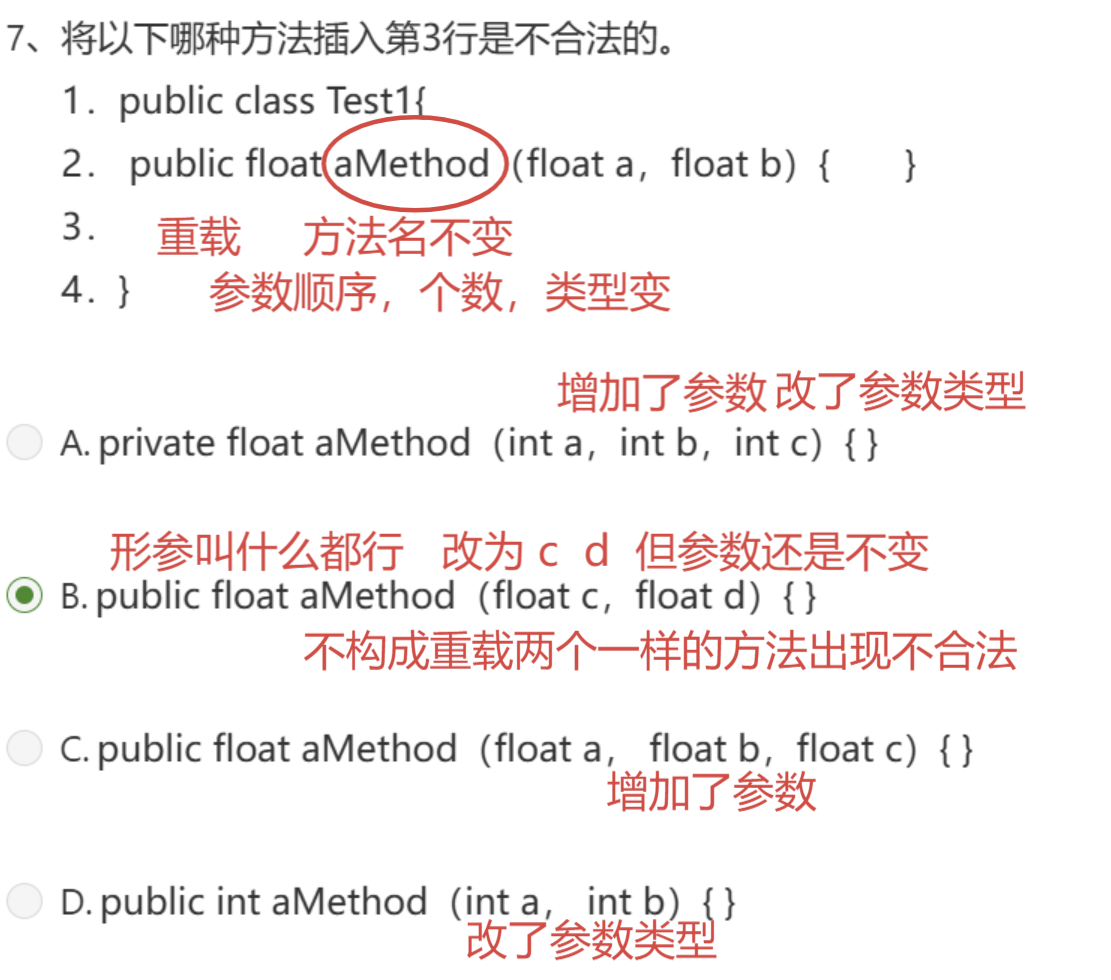
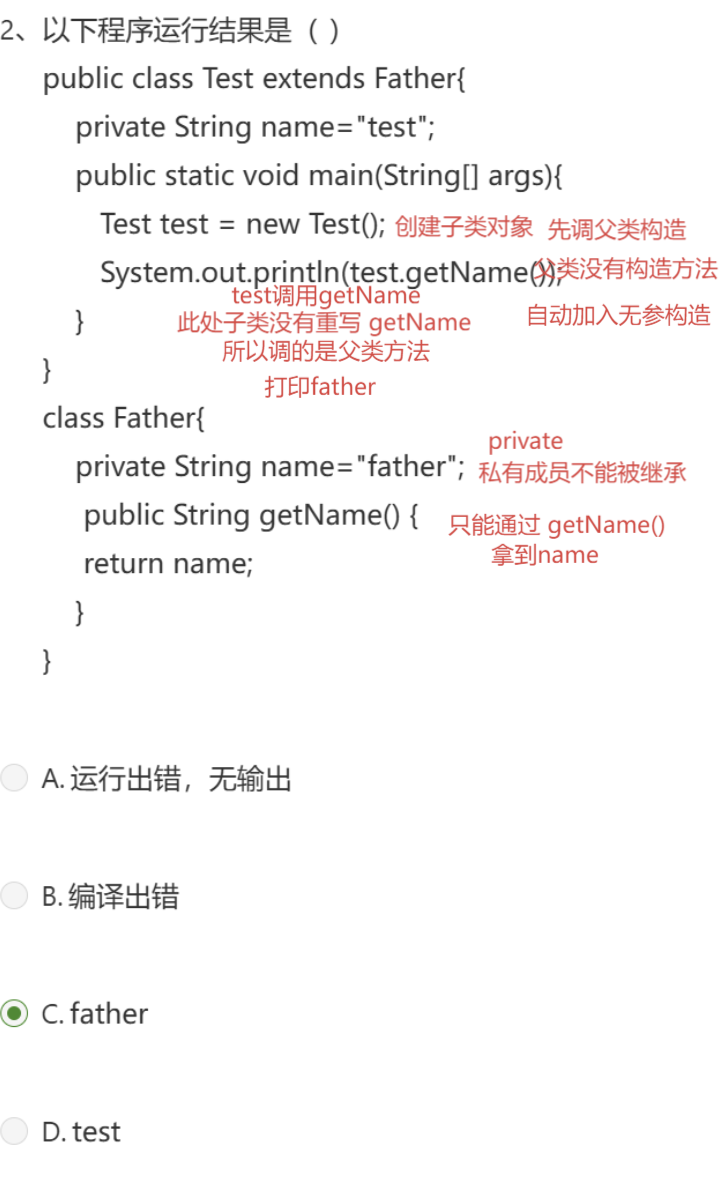
封装
把对象的属性(成员变量)和实现细节藏起来,通过公共方法(getter/setter) 对外提供访问,让外部无法直接修改内部状态
Java 用 访问修饰符 控制类成员的可见范围,常用的有:
| 修饰符 | 可见范围 | 典型场景 |
|---|---|---|
private | 仅当前类可见 | 隐藏核心属性 上面Book 类的 name .... 都用了private 提供了 getter setter 写法见上 |
default | 同包可见(不写修饰符时默认) | 包内工具类的内部协作 |
protected | 同包 + 子类可见 | 父类给子类开放的扩展入口 |
public | 所有类可见 | 对外暴露的核心功能(如main方法) |
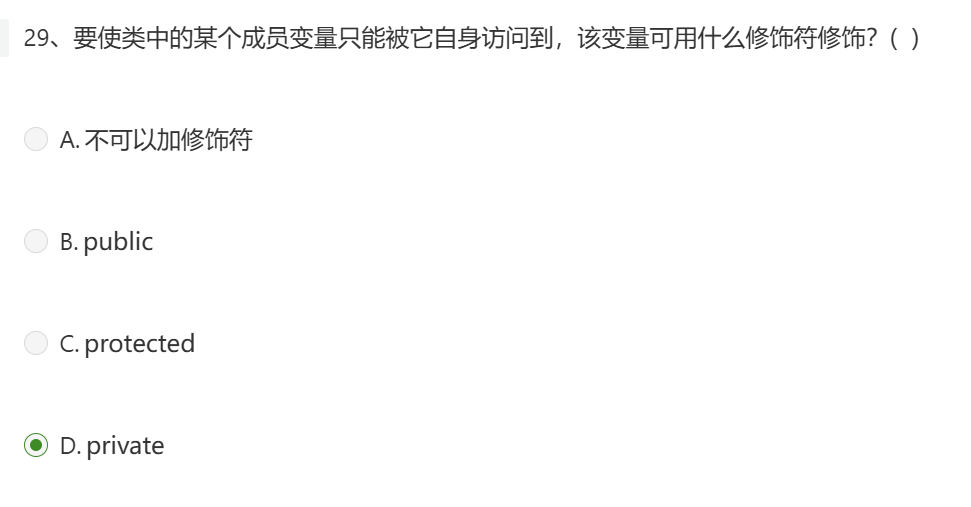
String 类
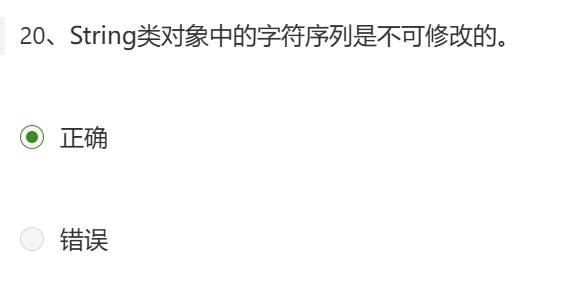
1. 不可变性:对象创建后内容不可修改,修改操作会生成新对象
2. 创建方式:
1.类似 String str = "abc",字符串入常量池,相同内容复用。
2.String str = new String("abc");
3. 字符串拼接:
+ 拼接, int a = 123 int b = 456 a + ""
4. 比较方式:
- equals() 比较内容, == 比较对象引用。
String s1 = new String("a");
String s2 = new String("a");
System.out.println(s1 == s2); // false s1 s2 引用(地址不同)
System.out.println(s1.equals(s2)); // true s1 s2 内容都是 “a”
- compareTo() 按字典序比较,返回差值。从左到右一个字符一个字符比 ASCII 码
5. 常用方法: length() 获长度、 charAt(index) 取指定字符、 substring() 截取子串、 toLowerCase() / toUpperCase() 转大小写、 split() 按规则拆分、 replace() / replaceAll() 替换等。
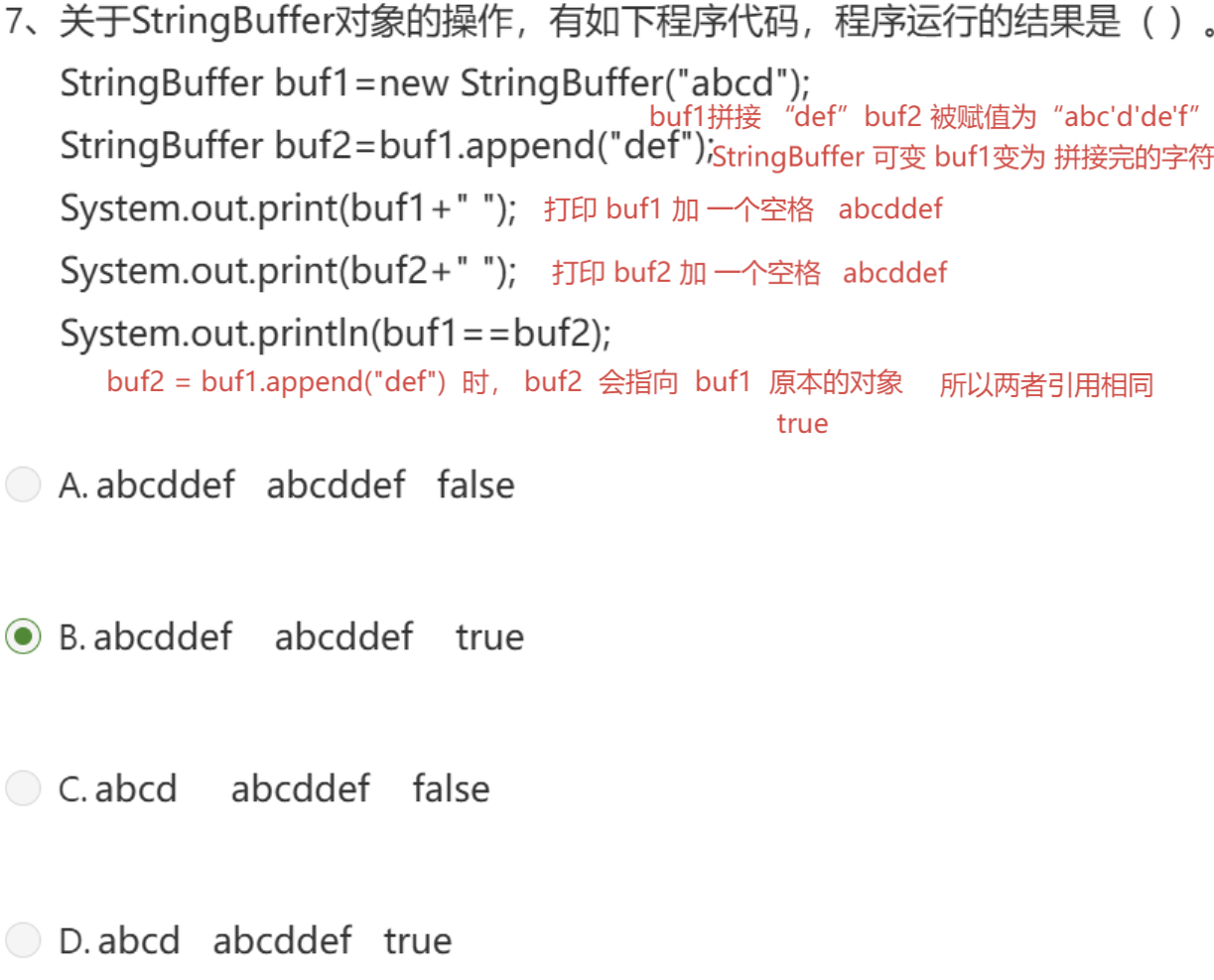
6. 与 StringBuilder、StringBuffer 区别: String 不可变,后两者可变,前者线程不安全、效率高,后者线程安全、效率稍低,大量拼接选后两者。
拼接 1 创建 StringBuffer stringBuffer = new StringBuffer();
2 调方法 s.append("要拼接的字符串");
7. 注意空值与空字符串: null 表示无对象, "" 是有对象但内容空,调用方法前需判空,避免空指针异常。
异常
受查异常(编译时异常,必须处理)
| 异常类名 | 说明 |
|---|---|
IOException | 输入输出操作异常(如文件不存在、读写失败) |
SQLException | 数据库操作异常(如 SQL 语法错误、连接失败) |
ClassNotFoundException | 类未找到异常(如通过反射加载类时类不存在) |
InterruptedException | 线程中断异常(如线程等待时被中断) |
FileNotFoundException | 文件未找到异常(如访问不存在的文件路径) |
非受查异常(运行时异常,无需显式处理)
| 异常类名 | 说明 |
|---|---|
NullPointerException | 空指针异常(访问 null 对象的方法或属性) |
ArrayIndexOutOfBoundsException | 数组越界异常(访问不存在的数组索引) |
ClassCastException | 类型转换异常(如将 Object 强制转换为不兼容类型) |
IllegalArgumentException | 非法参数异常(如方法传入无效参数) |
ArithmeticException | 算术异常(如除以 0) |
IllegalStateException | 状态异常(如集合已修改时迭代) |
IndexOutOfBoundsException | 索引越界(如 String、List 访问不存在的索引) |
NumberFormatException | 数字格式异常(如Integer.parseInt("abc")) |
异常处理关键字与语法
| 关键字 | 作用 |
|---|---|
try | 包裹可能抛出异常的代码块 |
catch | 捕获并处理特定类型的异常 |
finally | 无论是否发生异常,都会执行的代码块(常用于资源关闭) |
throw | 在方法中手动抛出异常对象 |
throws | 方法声明时抛出异常,由调用方处理 |
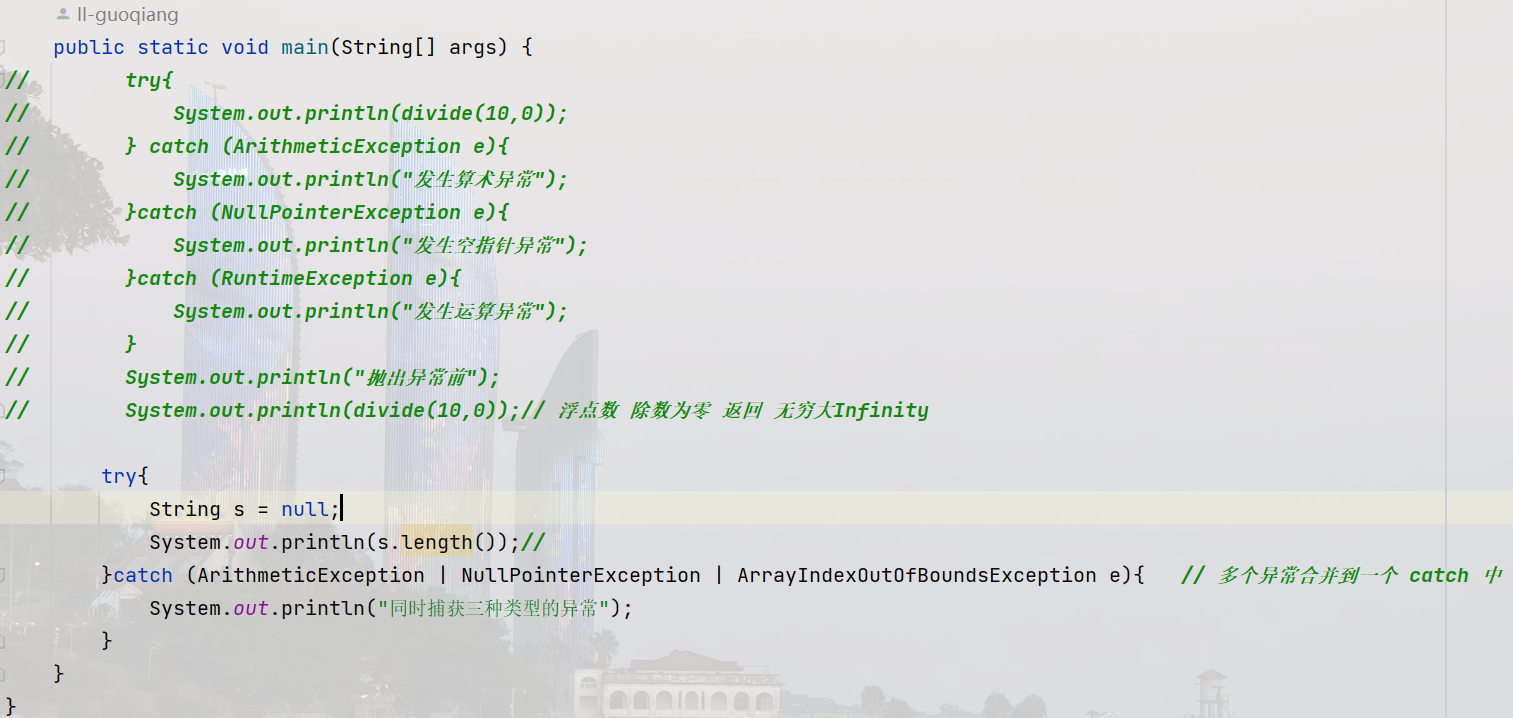
代码结构
//        try{
//           可能发生异常的代码
//        }catch(){
//           处理异常(打印异常信息)
//        }finally{  //  无论上方的 try 是否抛出异常
//                       此处的 finally 都是会执行的 (收尾工作)
//        }
输入输出流
需要导入包 import java.io*;
一、字节流与字符流体系
1. 字节流(处理二进制数据 )
- FileInputStream :从文件读字节数据,构造方法传文件路径, read 方法读字节(返回 -1 表示读完 )。
- FileOutputStream :向文件写字节数据,构造方法可传 (路径, true) 实现追加(默认覆盖 )。
- DataOutputStream :搭配其他输出流,写基本数据类型(writeInt 、 writeDouble )。
2. 字符流(处理文本数据 )
- FileReader :从文件读字符,适合文本文件, read 方法读字符或字符数组。
- FileWriter :向文件写字符,默认覆盖
二、缓冲流(提升读写效率 )
- BufferedInputStream / BufferedReader :构造方法需传入基础字节流/字符流(如 FileInputStream / FileReader ),通过缓冲区减少 IO 次数。
三、文件与目录操作
- isDirectory() : File 类方法,判断 File 对象是否表示目录。
- RandomAccessFile :支持随机访问文件,可灵活读写文件任意位置(如 seek 跳转、 read/write 随机读写 )。
四、异常与资源管理
- 流操作会抛 IOException (如文件不存在抛 FileNotFoundException ),需用 try-catch 捕获或 throws 声明。
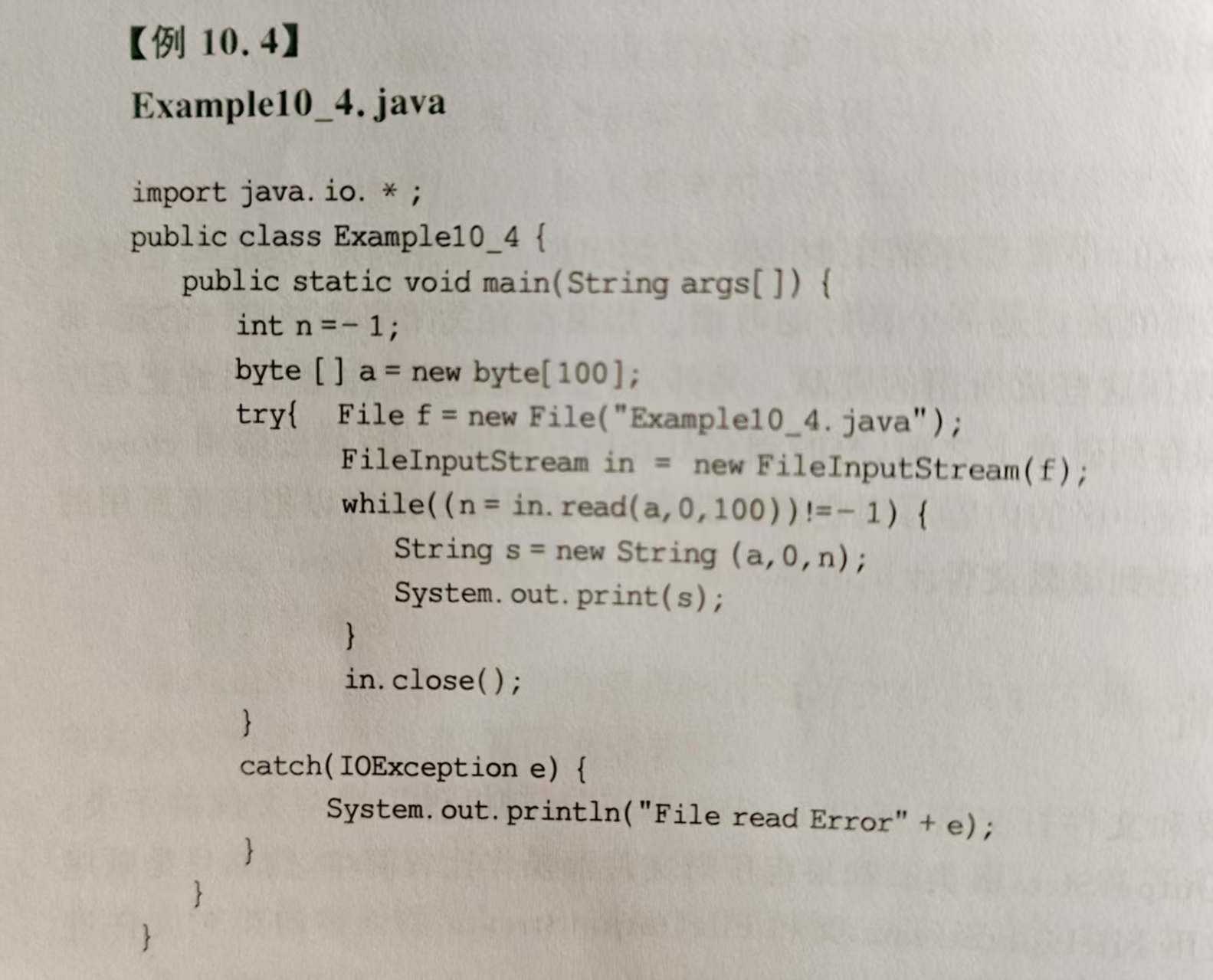
import java.io.*; // 导入 IO 相关类

public class Example10_4 {
    public static void main(String args[]) {
        int n = -1; // 用于存储每次读取的字节数
        byte[] a = new byte[100]; // 缓冲区,每次最多读 100 字节

        try {
            // 1. 创建 File 对象,关联要读取的文件
            File f = new File("Example10_4.java");
            // 2. 创建文件字节输入流(字节流,读二进制数据)
            FileInputStream in = new FileInputStream(f);

            // 3. 循环读取:read(a, 0, 100) 读入字节数组,返回实际读取的字节数
            while ((n = in.read(a, 0, 100)) != -1) {
                // 4. 将字节数组转为字符串(从 0 开始,取 n 个字节)
                String s = new String(a, 0, n);
                // 5. 输出字符串内容(拼接显示文件内容)
                System.out.print(s);
            }

            in.close(); // 6. 关闭流
        } catch (IOException e) {
            // 7. 捕获 IO 异常(文件不存在、读写失败等)
            System.out.println("File read Error" + e);
        }
    }
}
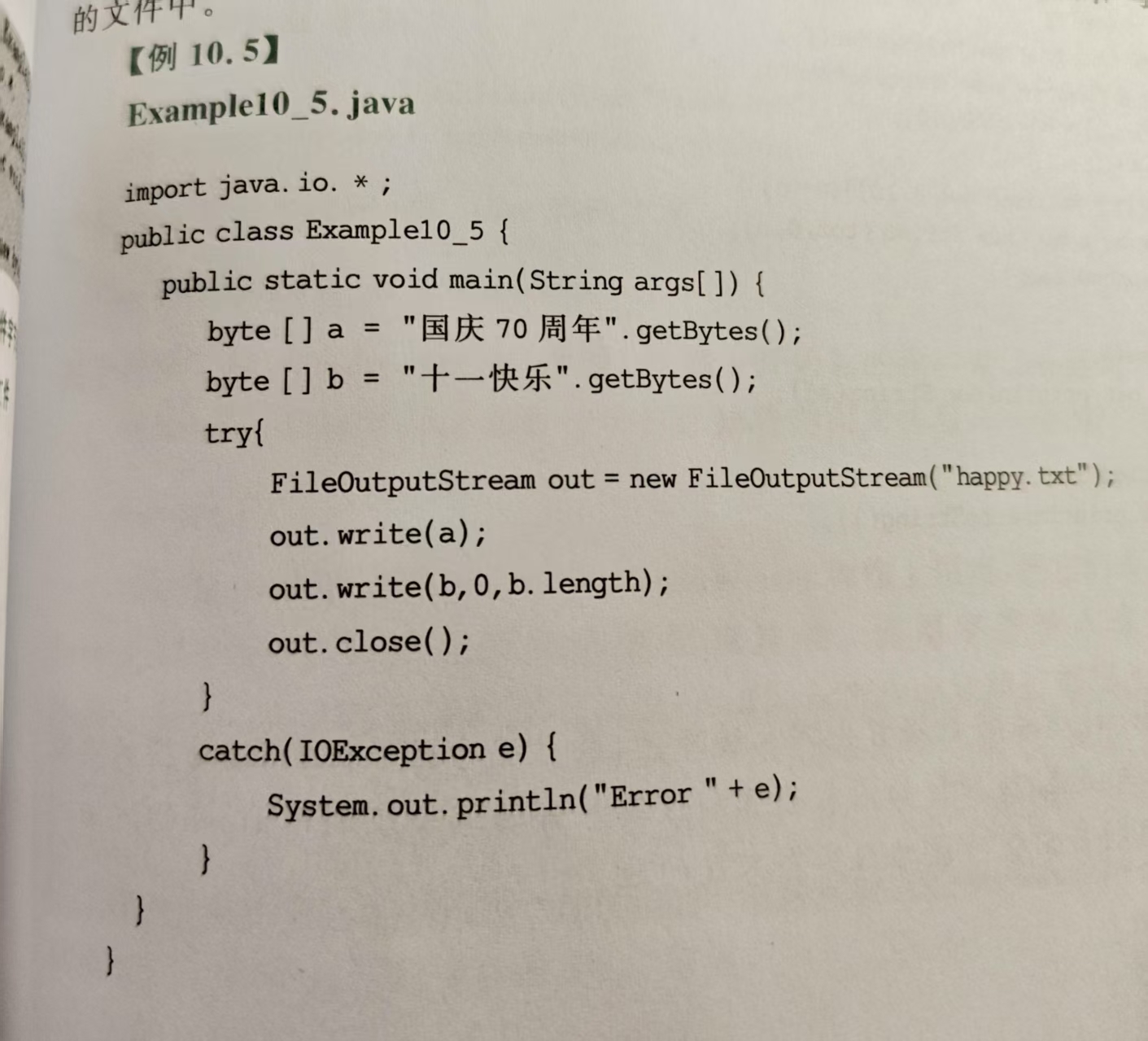
import java.io.*; // 导入 IO 相关类

public class Example10_5 {
    public static void main(String args[]) {
        // 1. 将字符串转为字节数组
        byte[] a = "国庆 70 周年".getBytes();
        byte[] b = "十一快乐".getBytes();

        try {
            // 2. 创建文件字节输出流(关联文件 happy.txt,默认覆盖内容)
            FileOutputStream out = new FileOutputStream("happy.txt");
            out.write(a); // 3. 写入字节数组 a(完整内容)
            // 4. 写入字节数组 b(从索引 0 开始,写 b.length 个字节)
            out.write(b, 0, b.length);
            out.close(); // 5. 关闭流
        } catch (IOException e) {
            // 6. 捕获 IO 异常
            System.out.println("Error " + e);
        }
    }
}
垃圾回收 gc (from 肘子秘籍)
Java是自动内存管理语言,垃圾回收由JVM的GC机制自动执行,无需程序员手
动释放内存。
核心原则:GC负责识别并回收不再被引用的对象所占用的内存。
程序员无法直接干预GC的执行时机,只能通过`System.gc()建议GC运行,但
JVM不一定立即执行。
不存在“指定时间释放内存对象”的编程接口,GC的触发时机由JVM内部策略决
定(如内存阈值、对象存活时间等)。
总结:Java 的 GC 是“自动、智能、难干预”的内存回收机制:自动识别无用对象,回收时机由 JVM 自己定,程序员只能建议( System.gc() ),但不一定被采纳 。
命名规范
| 分类 | 具体规则 | 示例(正确 / 错误对比) |
|---|---|---|
| 允许字符 | 字母(A - Z、a - z)、美元符号($)、下划线(_)、数字(0 - 9,不能开头) | 正确:studentName、_id、price\$10错误: 1num(数字开头) |
| 不建议内容 | 中文但可以 | class 人{} |
| 大小写规则 | 严格区分大小写,Name 和 name 是不同标识符 | 正确:UserDao userService |
| 关键字避免 | 禁止使用 Java 关键字(int/class/while 等)作为标识符 | 错误:int(变量名用 count 替代) |
| 类名规范 | 大驼峰(每个单词首字母大写,无连接符) | 如: User Admin |
| 方法、变量名规范 | 小驼峰(首单词小写,后续单词首字母大写),描述行为 / 属性 | 如:calculateTotal() productPrice |
| 常量名规范 | 全大写,单词间用下划线分隔,强调不可变性 | 如:MAX_RETRY DEFAULT_TIMEOUT |
数组
java 数组
创建 : int [ ] arr = {1,2,3};
int arr [ ] = {1,2,3};
int [ ] arr = new int [3];
int arr[ ] = new int [3];
数组下标:
eg:
int[] arr = {10, 20, 30};
arr[0] = 10; // 第一个元素
arr[2] = 30; // 第三个元素(最大索引 2 = 长度 3 - 1)int len = arr.length; // 获取数组长度 3
数组遍历
for (int i = 0; i < nums.length; i++) {
System.out.println(nums[i]);
}// for-each 遍历
for (int num : nums) {
System.out.println(num);
}
二维数组声明:
1. int[][] arr = {{3,3}};
2. int[][] arr = new int[3][4];3行4列
3. int[][] arr = new int[3][] 3行,暂不配列数
后会为每行分配列数
arr[0] = new int[2] 第1行2列
arr[1] = new int[3] 第2行3列
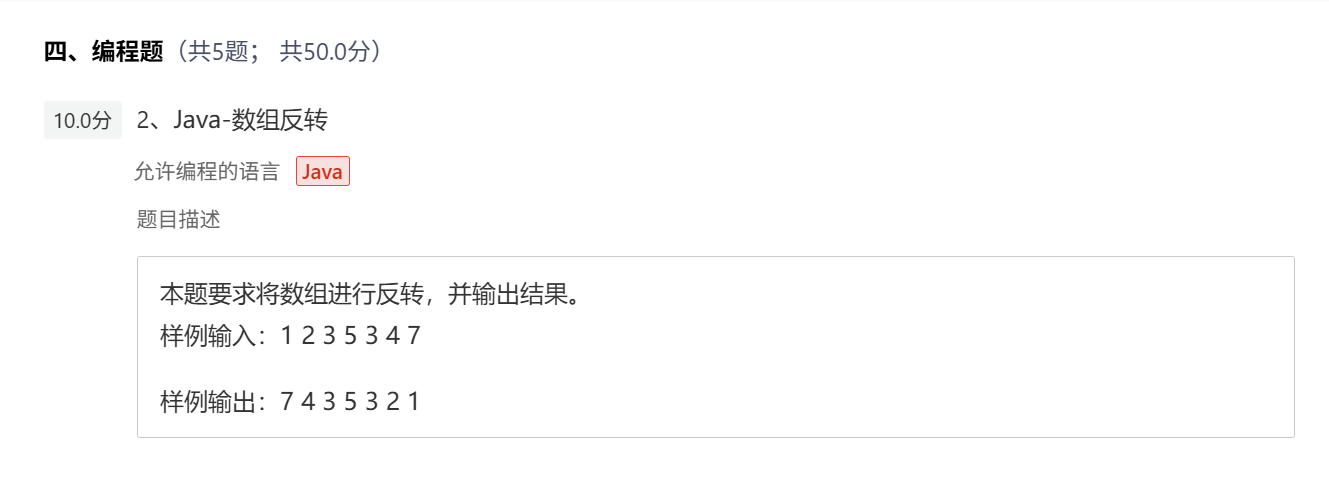
核心思想双指针:
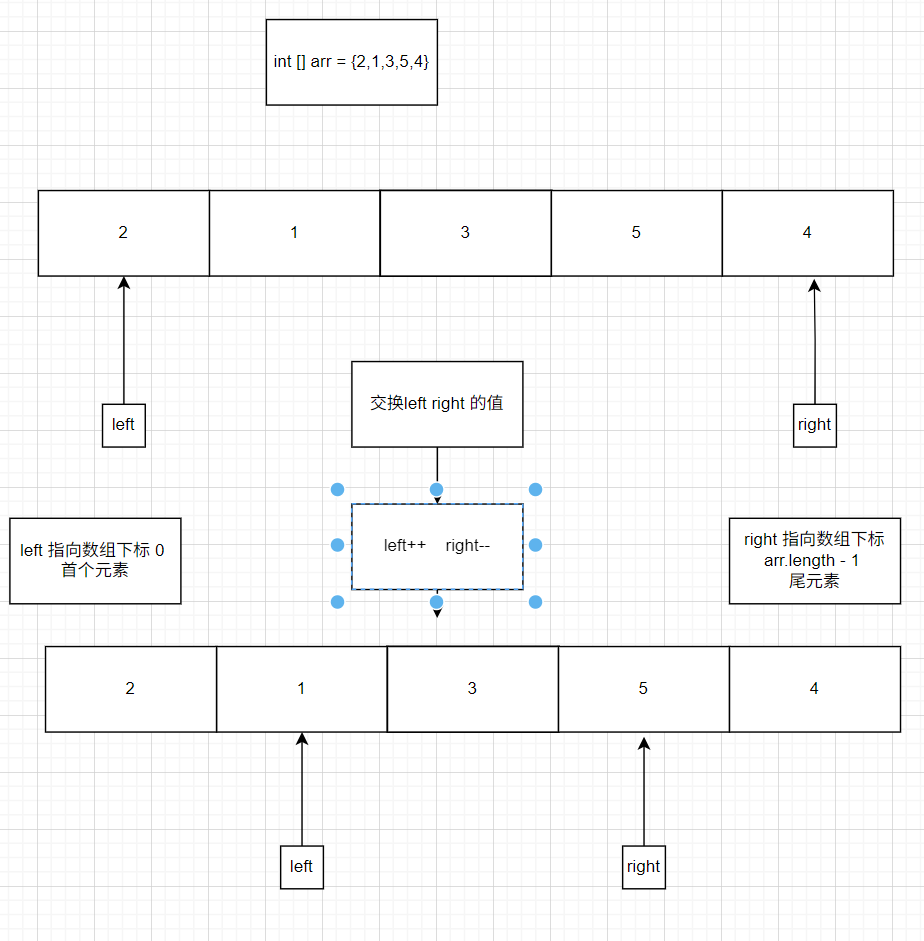
结果: [4,5,3,1,2]
代码实现
//  核心思想

public void reverseArray (int[] arr){

int left = 0;
int right = arr.length - 1;

while(left < right){
    int tmp = arr[left];
    arr[left] = arr[right];
    arr[right] = tmp;
    left ++;
    right --;

}
泛型,集合类
import java.util.*;

public class Main {
    public static void main(String args[]) {
        Scanner sc = new Scanner(System.in);
        List<Integer> list = new ArrayList<Integer>();
        while (sc.hasNext()) {
            list.add(sc.nextInt());
        }

 // list数组反转
        int left = 0;
        int right = list.size() - 1;
        while(left<right){
            Integer tmp = list.get(left);
            list.set(left,list.get(right));
            list.set(right,tmp);
            left++;
            right--;
        }
  // 循环输出list数组元素
        for(int i = 0; i < list.size(); i++){
            //System.out.println(Arry.toString(list);
            System.out.print(list.get(i) + " ");
        }

    }
}
题目给了list, 创建了一个线性表并实现了多组输入通过list.add()方法将数组元素入表
此时 数据类型变成了Integer 所以创建交换变量(tmp)时 应使用这个作为数据类型
list.get() 获取right的值
list.set() 将 right的值 赋给 left 将 right 设为 tmp (即left的值) 交换完成
left++ 指针向后走一步 right-- 指针向前走一步
list.size() 获取元素个数
包装类
| 基本类型 | 包装类 |
|---|---|
byte | Byte |
short | Short |
int | Integer |
long | Long |
float | Float |
double | Double |
char | Character |
boolean | Boolean |
集合类 List
一个接口类型,表示有序、可重复的集合
| 实现类 | 底层结构 | 基础方法 |
|---|---|---|
ArrayList | 动态数组 | .add() .remove() .set() .get() 增删改查 .size() 元素个数 |
LinkedList | 双向链表 | .add() .remove() .set() .get() 增删改查 .size() 元素个数 |
创建:List<Integer> list = new ArrayList<Integer>();
Integer:泛型参数,指定列表元素类型为包装类 Integer 写 <> 里面 后一个可省略
List<Integer> list = new ArrayList<>();
未完待续......
我看见 半晴天 好刺眼 好刺眼 它讲别怕往前 ———— DT 《半晴天》





 扫一扫
扫一扫


 171万+
171万+

 被折叠的 条评论
为什么被折叠?
被折叠的 条评论
为什么被折叠?
 到【灌水乐园】发言





