jdk源码浅读-HashSet

HashSet源码解析(基于JDK1.8) HashSet是Java中经常被用到的集合,弄清它的底层实现,有利于我们更好地使用它,又是这句话….. 不过HashSet相对于其他集合框架简单了不少。 老规矩,还是先看看它的UML图: ①:实现了Serializable接口,表明它支持序列化。 ②:实现了Cloneable接口,表明它支持克隆,可以调用超类的clone()方法进行浅拷贝。 ③继承了AbstractSet抽象类... 阅读详情

通过阅读源码发现,HashSet底层的实现源码其实就是调用HashMap的方法实现的,所以如果你阅读过HashMap或对HashMap比较熟悉的话,那么阅读HashSet就很轻松,也很容易理解了。我之前也写了一篇关于hashMap源码阅读的文章,可以点击这里查看。

使用过HashSet的都清楚它保存的元素是不可以重复的,其实HashSet的元素都是保存在HashMap的key中的,而HashMap的key是没有重复的。

构造函数

/**

* Constructs a new, empty set; the backing HashMap instance has

* the specified initial capacity and the specified load factor.

*

* @param initialCapacity the initial capacity of the hash map

* @param loadFactor the load factor of the hash map

* @throws IllegalArgumentException if the initial capacity is less

* than zero, or if the load factor is nonpositive

*/

public HashSet(int initialCapacity, float loadFactor) {

map = new HashMap<>(initialCapacity, loadFactor);

}

HashSet的构造方法都是直接调用了HashMap的构造方法,HashSet有很多个构造方法全部都是直接调用了HashMap的构造方法。

add方法

/**

* Adds the specified element to this set if it is not already present.

* More formally, adds the specified element e to this set if

* this set contains no element e2 such that

* (e==null ? e2==null : e.equals(e2)).

* If this set already contains the element, the call leaves the set

* unchanged and returns false.

*

* @param e element to be added to this set

* @return true if this set did not already contain the specified

* element

*/

public boolean add(E e) {

return map.put(e, PRESENT)==null;

}

contains方法

/**

* Returns true if this set contains the specified element.

* More formally, returns true if and only if this set

* contains an element e such that

* (o==null ? e==null : o.equals(e)).

*

* @param o element whose presence in this set is to be tested

* @return true if this set contains the specified element

*/

public boolean contains(Object o) {

return map.containsKey(o);

}

remove方法

/**

* Removes the specified element from this set if it is present.

* More formally, removes an element e such that

* (o==null ? e==null : o.equals(e)),

* if this set contains such an element. Returns true if

* this set contained the element (or equivalently, if this set

* changed as a result of the call). (This set will not contain the

* element once the call returns.)

*

* @param o object to be removed from this set, if present

* @return true if the set contained the specified element

*/

public boolean remove(Object o) {

return map.remove(o)==PRESENT;

}

其他的方法也都是直接调用HashMap的方法,所以在这里就不用贴出来了。

1、只要弄懂HashMap就很容易明白HashSet了,可以参考这篇文章:jdk源码浅读-HashMap https://www.cnblogs.com/rainple/p/9927263.html

2、我自己在看源码的时候也手写了HashMap、HashSet等数据结构的类,大家可以下载下来参考一下,有不懂或不理解的地方可以问我,如果有什么问题也随时欢迎骚扰。项目地址: https://github.com/rainple1860/MyCollection

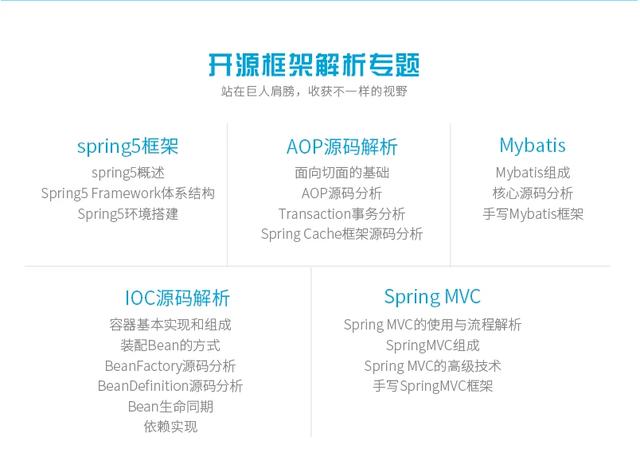
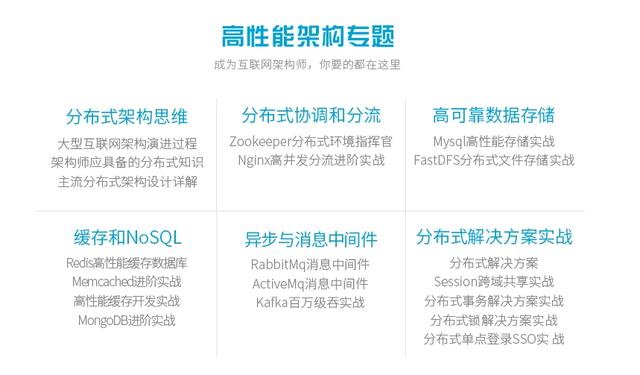
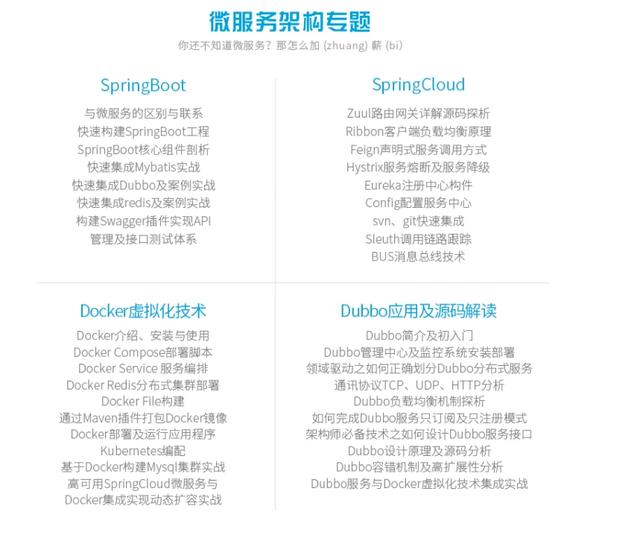
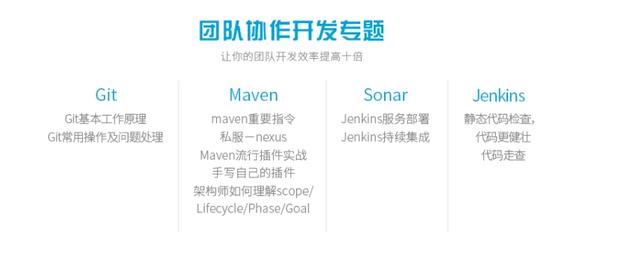
这里给大家推荐一个学习路线

架构筑基专题

13467292-3975b22c9bd81e53

开源框架源码

13467292-f74f1d6f34640d7e

高性能架构

13467292-2d1526be3f573317

微服务

13467292-08a7df9209c7e418

团队协作开发

13467292-56d70b6026c06906

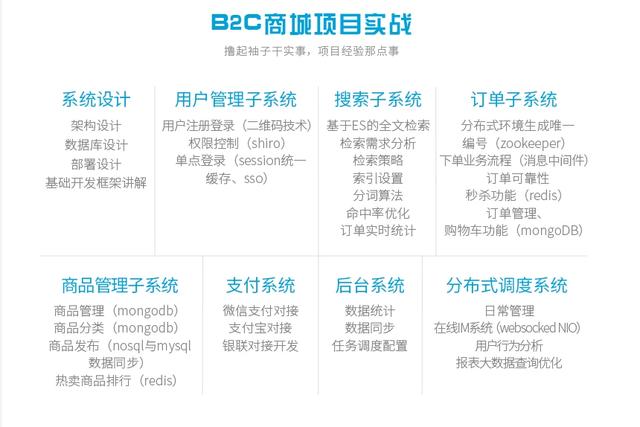
B2C商城

13467292-84c77959b3c40fe7

现在加群即可获取更加详细的Java架构脑图,还有Java工程化、高性能及分布式、高性能、高架构、zookeeper、性能调优、Spring、MyBatis、Netty源码分析和大数据等多个知识点高级进阶干货的直播免费学习权限及相关视频资料,群号:923116658

点击链接加入群聊【Java架构解析】:https://jq.qq.com/?_wv=1027&k=5e1QsXb

JDK8之HashSet 先上一张从网上找到的图片,这张图片概括了集合框架的结构。 上篇文章,对比说明了HashMap的实现以及在7和8两个版本中的区别,下面我们继续看下JDK8中HashSet的实现。 HashSet拥有两个成员变量 private transient HashMap map; // Dummy value to associate with an Object in the backi 阅读详情

相关推荐

深入解析Zynq Ultrascale+ RF Data Converter中的PLL配置与时钟管理

本文深入解析了Zynq Ultrascale+ RF Data Converter中PLL配置与时钟管理的核心原理与实践。文章将RFDC时钟系统比作交响乐团,详细阐述了PLL作为指挥的关键作用,以及系统时钟、Tile时钟、参考时钟与采样时钟的层级关系。重点剖析了PLL配置参数(如VCO频率、分频器设置)的计算方法与稳定性考量,并提供了从IP配置使能顺序到多Tile同步、DRP访问等常见问题的实战避坑指南与调试技巧,帮助工程师构建稳定的射频信号处理基石。

7up55的博客 449

Set去重原理和内部实现

Set可以去重,即不会出现重复元素。 分析 Set去重的原理非常简单,Set的内部是通过Map来实现的。 我们选取平时常的HashSet来分析 private transient HashMap&lt;E,Object&gt; map; private static final Object PRESENT = new Object(); /** * C...

徐冉的博客 1万+

电磁流量计模拟前端电路设计与优化

模拟前端电路(AFE)是传感器信号处理的核心环节,通过放大、滤波和模数转换实现信号调理。其设计需重点考虑放大器共模抑制比(CMRR)和ADC分辨率等关键参数,在电磁流量计等工业测量应用中,AD8220仪表放大器与AD7172-2 Σ-Δ型ADC的组合能有效简化传统多级架构。现代过采样技术结合数字滤波可替代模拟滤波器,显著提升系统集成度与测量精度,这种设计方法同样适用于压力传感、生物电信号采集等需要高精度信号调理的场景。

weixin_42602241的博客 618

java中不含重复元素_Java记录 -56- 详解HashSet不含重复元素的实现

详解HashSet不含重复元素的实现HashSet的add方法:publicbooleanadd(Ee)如果此set中尚未包含指定元素,则添加指定元素。更确切地讲,如果此set没有包含满足(e==null?e2==null:e.equals(e2))的元素e2,则向此set添加指定的元素e。如果此set已包含该元素,则该调用不更改set并返回false。...

weixin_42347634的博客 206

硬件级Dalvik字节码粒度无痕HOOK及VMP取址码定位分析

2.通过硬件读写断点的输出信息 可知pc寄存器就是art解释器的取码地址 直接硬件执行断点在这个pc 即可直接trace所有的smali执行流 通杀所有机型系统。本文即将探讨的是 如何在硬件级别实现dalvik bytecode粒度的无痕拦截技术 并实现鼠标点击一键hook 指哪儿打哪儿 感受 button power 的强大魅力!4.由于硬件断点是同步的 断下后可随时硬件dump下这一瞬间的app内存映像 写入unicorn的内存模拟执行。解释器在解释执行前必会读取内存中的bytecode。

2503_90751789的博客 1085

libcrypto.so.10(OPENSSL_1.0.2)(64bit) is needed by erlang-22.0.7-1.el7.x86_64

今天安装Rabbitmq的 erlang-22.0.7-1.el7.x86_64.rpmrpm包时遇到了这个坑,害找到说是不容易;错误信息在下面; [root@iz2zef7u84js1qeeq00ewwz RabbitMQ]# rpm -ivh erlang-22.0.7-1.el7.x86_64.rpm warning: erlang-22.0.7-1.el7.x86_64.rpm: Header V4 RSA/SHA1 Signature, key ID 6026dfca: NOKEY error:

qq_45782349的博客 5782

和阿里面试官对线,多亏看完这篇HashSet源码解析

这个世上没有无用的齿轮,也只有齿轮本身能决定自己的用途. ——东野圭吾《嫌疑犯X的献身》 0 前言 HashSet 是一个没有重复元素的集合.主要由 HashMap 实现,不保证元素顺序,而允许 null 元素.非线程安全,如果需要安全请自行加锁,或者使用 Collections.synchronizedSet包装.最好在创建时完成这一操作,以防止对该 set 进行意外的不同步访问. ...

JavaEdge全是干货的技术号 2222

QNX系统中的密码哈希格式——数据安全深度分析

综上所述,QNX系统中的Shadowed密码哈希格式提供了一种有效的数据安全机制,能够保护用户密码的安全性。通过将用户密码的哈希值存储在系统文件中,并结合哈希算法和盐值的使用,可以有效地防止明文密码泄露和密码破解。密码哈希是一种常用的安全技术,用于将用户密码转换为不可逆的哈希值,以保护用户的敏感信息。在QNX操作系统中,存在一种称为Shadowed密码哈希格式的机制,用于存储用户密码的安全散列值。当用户登录系统时,系统会将用户输入的密码与保存的哈希值进行比对,以验证密码的正确性。在上述代码中,首先使用。

UneDatabase的博客 252

java hashset 源码_Java8集合框架——HashSet源码分析

本文的目录结构:一、HashSet 的 Javadoc 文档注释和简要说明截个图,然后来观摩 HashSet 的javadoc,照样是几点总结摘抄:Set 接口的实现类,内部使用了一个 HashMap 实例;不保证 set 的迭代顺序(无序);允许存储 null通常情况下(假如 hash 分布比较均匀),基本操作(add, remove, contains 和 size)可以看成是 O(1) 的;...

weixin_35888497的博客 243

DeepSeek+即梦:AI视频创作从0到1全突破

本文为 DeepSeek 与即梦生成视频全攻略,从前期注册登录、熟悉工具界面及硬件网络准备入手,助读者开启 AI 视频创作。详细阐述利用 DeepSeek 构思脚本、即梦实现画面生成与静态图转动态视频的方法,包括提示词编写、参数调整等技巧。同时介绍后期合成音画、添加字幕特效及多平台适配要点,结合实战案例解析全流程。还分享进阶提示词优化、版权注意等避坑指南,为创作者提供从 0 到 1 的 AI 视频创作完整解决方案。

邓邓子的博客 8109

手把手教你学Simulink--基于Simulink的机械臂工业装配任务仿真建模

特点高精度要求:装配过程通常需要非常高的位置精度。多步骤操作:一个完整的装配任务可能包含多个连续的子任务,如抓取零件、移动到特定位置、装配等。动态环境:工作环境可能是动态变化的,例如其他机器人或人员在同一空间内工作。挑战复杂性管理:需要处理复杂的运动学和动力学问题,以及可能的碰撞避免。实时性:某些应用场景下需要快速响应以保证生产效率。集成度:需要与其他系统(如传感器、PLC等)无缝集成。首先明确要模拟的装配任务内容。零件的位置和尺寸。装配顺序。

MHD0815的博客 239

equals和HashCode深入理解以及Hash算法原理

equals()和HashCode()深入理解以及Hash算法原理(带源码分析)

K_天道酬勤 1万+

PCL:实现 PPF估计(附完整源码)

PCL:实现 PPF估计(附完整源码)

希望我的博客,能帮上你解决学习中工作中所遇到的问题 716

JDK 8 HashSet 详解及详细源码展示

JDK 8中的HashSet是基于HashMap实现的无序集合,内部使用HashMap存储元素(元素作为键,固定对象PRESENT作为值)。它提供O(1)时间复杂度的增删查操作,通过equals()和hashCode()保证元素唯一性。HashSet不保证迭代顺序,非线程安全,适合去重和快速查找场景。使用时需注意哈希码稳定性、线程安全等问题,有序需求可改用LinkedHashSet。核心优势在于利用HashMap实现高效集合操作,理解其底层实现有助于正确使用。

csdn_tom_168的博客 1127

假人有限元模型

假人模型,车辆碰撞假人有限元模型,适合做乘员安全的研究者利用

深度学习工具包 DeepLearningToolbox

深度学习工具包Deprecation notice.-----This toolbox is outdated and no longer maintained.There are much better tools available for deep learning than this toolbox, e.g. [Theano](http://deeplearning.net/software/theano/), [torch](http://torch.ch/) or [tensorflow](http://www.tensorflow.org/)I would suggest you use one of the tools mentioned above rather than use this toolbox.Best, Rasmus.DeepLearnToolbox================A Matlab toolbox for Deep Learning.Deep Learning is a new subfield of machine learning that focuses on learning deep hierarchical models of data.It is inspired by the human brain's apparent deep (layered, hierarchical) architecture.A good overview of the theory of Deep Learning theory is[Learning Deep Architectures for AI](http://www.iro.umontreal.ca/~bengioy/papers/ftml_book.pdf)For a more informal introduction, see the following videos by Geoffrey Hinton and Andrew Ng.* [The Next Generation of Neural Networks](http://www.youtube.com/watch?v=AyzOUbkUf3M) (Hinton, 2007)* [Recent Developments in Deep Learning](http://www.youtube.com/watch?v=VdIURAu1-aU) (Hinton, 2010)* [Unsupervised Feature Learning and Deep Learning](http://www.youtube.com/watch?v=ZmNOAtZIgIk) (Ng, 2011)If you use this toolbox in your research please cite [Prediction as a candidate for learning deep hierarchical models of data](http://www2.imm.dtu.dk/pubdb/views/publication_details.php?id=6284)```@MASTERSTHESIS\{IMM2012-06284, author = "R. B. Palm", title = "Prediction as a candidate for learning deep hierarchical models of data", year = "2012",}```Contact: rasmusbergpalm at gmail dot comDirectories included in the toolbox-----------------------------------`NN/` - A library for Feedforward Backpropagation Neural Networks`CNN/` - A library for Convolutional Neural Networks`DBN/` - A library for Deep Belief Networks`SAE/` - A library for Stacked Auto-Encoders`CAE/` - A library for Convolutional Auto-Encoders`util/` - Utility functions used by the libraries`data/` - Data used by the examples`tests/` - unit tests to verify toolbox is workingFor references on each library check REFS.mdSetup-----1. Download.2. addpath(genpath('DeepLearnToolbox'));Example: Deep Belief Network---------------------```matlabfunction test_example_DBNload mnist_uint8;train_x = double(train_x) / 255;test_x = double(test_x) / 255;train_y = double(train_y);test_y = double(test_y);%% ex1 train a 100 hidden unit RBM and visualize its weightsrand('state',0)dbn.sizes = [100];opts.numepochs = 1;opts.batchsize = 100;opts.momentum = 0;opts.alpha = 1;dbn = dbnsetup(dbn, train_x, opts);dbn = dbntrain(dbn, train_x, opts);figure; visualize(dbn.rbm{1}.W'); % Visualize the RBM weights%% ex2 train a 100-100 hidden unit DBN and use its weights to initialize a NNrand('state',0)%train dbndbn.sizes = [100 100];opts.numepochs = 1;opts.batchsize = 100;opts.momentum = 0;opts.alpha = 1;dbn = dbnsetup(dbn, train_x, opts);dbn = dbntrain(dbn, train_x, opts);%unfold dbn to nnnn = dbnunfoldtonn(dbn, 10);nn.activation_function = 'sigm';%train nnopts.numepochs = 1;opts.batchsize = 100;nn = nntrain(nn, train_x, train_y, opts);[er, bad] = nntest(nn, test_x, test_y);assert(er < 0.10, 'Too big error');```Example: Stacked Auto-Encoders---------------------```matlabfunction test_example_SAEload mnist_uint8;train_x = double(train_x)/255;test_x = double(test_x)/255;train_y = double(train_y);test_y = double(test_y);%% ex1 train a 100 hidden unit SDAE and use it to initialize a FFNN% Setup and train a stacked denoising autoencoder (SDAE)rand('state',0)sae = saesetup([784 100]);sae.ae{1}.activation_function = 'sigm';sae.ae{1}.learningRate = 1;sae.ae{1}.inputZeroMaskedFraction = 0.5;opts.numepochs = 1;opts.batchsize = 100;sae = saetrain(sae, train_x, opts);visualize(sae.ae{1}.W{1}(:,2:end)')% Use the SDAE to initialize a FFNNnn = nnsetup([784 100 10]);nn.activation_function = 'sigm';nn.learningRate = 1;nn.W{1} = sae.ae{1}.W{1};% Train the FFNNopts.numepochs = 1;opts.batchsize = 100;nn = nntrain(nn, train_x, train_y, opts);[er, bad] = nntest(nn, test_x, test_y);assert(er < 0.16, 'Too big error');```Example: Convolutional Neural Nets---------------------```matlabfunction test_example_CNNload mnist_uint8;train_x = double(reshape(train_x',28,28,60000))/255;test_x = double(reshape(test_x',28,28,10000))/255;train_y = double(train_y');test_y = double(test_y');%% ex1 Train a 6c-2s-12c-2s Convolutional neural network %will run 1 epoch in about 200 second and get around 11% error. %With 100 epochs you'll get around 1.2% errorrand('state',0)cnn.layers = { struct('type', 'i') %input layer struct('type', 'c', 'outputmaps', 6, 'kernelsize', 5) %convolution layer struct('type', 's', 'scale', 2) %sub sampling layer struct('type', 'c', 'outputmaps', 12, 'kernelsize', 5) %convolution layer struct('type', 's', 'scale', 2) %subsampling layer};cnn = cnnsetup(cnn, train_x, train_y);opts.alpha = 1;opts.batchsize = 50;opts.numepochs = 1;cnn = cnntrain(cnn, train_x, train_y, opts);[er, bad] = cnntest(cnn, test_x, test_y);%plot mean squared errorfigure; plot(cnn.rL);assert(er<0.12, 'Too big error');```Example: Neural Networks---------------------```matlabfunction test_example_NNload mnist_uint8;train_x = double(train_x) / 255;test_x = double(test_x) / 255;train_y = double(train_y);test_y = double(test_y);% normalize[train_x, mu, sigma] = zscore(train_x);test_x = normalize(test_x, mu, sigma);%% ex1 vanilla neural netrand('state',0)nn = nnsetup([784 100 10]);opts.numepochs = 1; % Number of full sweeps through dataopts.batchsize = 100; % Take a mean gradient step over this many samples[nn, L] = nntrain(nn, train_x, train_y, opts);[er, bad] = nntest(nn, test_x, test_y);assert(er < 0.08, 'Too big error');%% ex2 neural net with L2 weight decayrand('state',0)nn = nnsetup([784 100 10]);nn.weightPenaltyL2 = 1e-4; % L2 weight decayopts.numepochs = 1; % Number of full sweeps through dataopts.batchsize = 100; % Take a mean gradient step over this many samplesnn = nntrain(nn, train_x, train_y, opts);[er, bad] = nntest(nn, test_x, test_y);assert(er < 0.1, 'Too big error');%% ex3 neural net with dropoutrand('state',0)nn = nnsetup([784 100 10]);nn.dropoutFraction = 0.5; % Dropout fraction opts.numepochs = 1; % Number of full sweeps through dataopts.batchsize = 100; % Take a mean gradient step over this many samplesnn = nntrain(nn, train_x, train_y, opts);[er, bad] = nntest(nn, test_x, test_y);assert(er < 0.1, 'Too big error');%% ex4 neural net with sigmoid activation functionrand('state',0)nn = nnsetup([784 100 10]);nn.activation_function = 'sigm'; % Sigmoid activation functionnn.learningRate = 1; % Sigm require a lower learning rateopts.numepochs = 1; % Number of full sweeps through dataopts.batchsize = 100; % Take a mean gradient step over this many samplesnn = nntrain(nn, train_x, train_y, opts);[er, bad] = nntest(nn, test_x, test_y);assert(er < 0.1, 'Too big error');%% ex5 plotting functionalityrand('state',0)nn = nnsetup([784 20 10]);opts.numepochs = 5; % Number of full sweeps through datann.output = 'softmax'; % use softmax outputopts.batchsize = 1000; % Take a mean gradient step over this many samplesopts.plot = 1; % enable plottingnn = nntrain(nn, train_x, train_y, opts);[er, bad] = nntest(nn, test_x, test_y);assert(er < 0.1, 'Too big error');%% ex6 neural net with sigmoid activation and plotting of validation and training error% split training data into training and validation datavx = train_x(1:10000,:);tx = train_x(10001:end,:);vy = train_y(1:10000,:);ty = train_y(10001:end,:);rand('state',0)nn = nnsetup([784 20 10]); nn.output = 'softmax'; % use softmax outputopts.numepochs = 5; % Number of full sweeps through dataopts.batchsize = 1000; % Take a mean gradient step over this many samplesopts.plot = 1; % enable plottingnn = nntrain(nn, tx, ty, opts, vx, vy); % nntrain takes validation set as last two arguments (optionally)[er, bad] = nntest(nn, test_x, test_y);assert(er < 0.1, 'Too big error');```[![Bitdeli Badge](https://d2weczhvl823v0.cloudfront.net/rasmusbergpalm/deeplearntoolbox/trend.png)](https://bitdeli.com/free "Bitdeli Badge")

JDK17源码系列-HashSet源码解读

JDK17源码系列-HashSet源码解读

siyueguoji的博客 723

LinePhone3.2.7(android端最新版本) sip客户端

SIP客户端For android:LinePhone3.2.7(最新版本),官网地址:http://www.linphone.org/

调试JDK源码-HashSet实现原理

先看此文:调试JDK源码-一步一步看HashMap怎么Hash和扩容   代码 Set s=new HashSet(); s.add("http://blog.csdn.net/unix21"); s.add("ABCDEF"); s.add("123456");   hashSet是基于hashMap的   add

编程的本质是数学问题 1310

廖雪峰Python教程[完整版]

廖雪峰的python教程整理的,已经排好版了,而且还是完整的,适合小白

HashSet源码解析(JDK1.8)

HashSet源码解析(JDK1.8) 文章目录HashSet源码解析(JDK1.8)HashSet实现原理HashSet的属性HashSet的方法构造方法空参构造HashSet()HashSet(Collection<? extends E> c)HashSet(int initialCapacity, float loadFactor)HashSet(int initialCapacity)HashSet(int initialCapacity, float loadFactor, bool

qq_44709990的博客 955

JDK17集合源码阅读——HashSet+HashMap

摘要:HashSet基于HashMap实现,底层使用HashMap存储元素,其中键为元素值,值为固定虚设对象PRESENT。HashMap采用数组+链表+红黑树结构,默认容量16,负载因子0.75,当链表长度≥8且数组长度≥64时会转为红黑树。扩容时容量翻倍,通过(n-1)&hash计算索引位置。哈希冲突时采用拉链法,JDK1.8后引入红黑树优化查找效率。HashSet本质上是一个只使用Key的HashMap,通过HashMap的特性实现集合的唯一性和无序性。

fancyfor的博客 943

JAVA集合篇之HashSet底层源码(JDK8)

/至此,添加重复元素的逻辑处理结束,这里再分析一下再数组表中已经存在元素的时候的扩容机制resize(),分析见蓝色注释。// 将e指向p的下一个结点(p.next),判断p的下一个结点是否为null。else { // 计算出来的位置相同,但判断不是相同对象,也不是树结点,会进入该分支。//因此,当添加的元素已经有8个,继续添加的时候满足该if条件。// 因此,还要数组大小

qq_35099823的博客 2156

JDk Set及HashSet源码解析

Set源码解析 首先我们看看在JDK中Set端口的源码: package asdf; import java.util.*; import java.util.Collection; /** * Created by ping.miao on 2015/7/29. * set源码分析 */ public interface Set extends Collection { i

u010185262的博客 1328

JDK 8 HashSet 源码详解(完整版带详细注释)

JDK 8 的 HashSet 是基于 HashMap 实现的集合类,所有元素作为 HashMap 的 key 存储,对应的 value 统一使用 PRESENT 对象占位。核心特性包括:默认初始容量 16,负载因子 0.75;通过 HashMap 实现基本操作(add/remove/contains 时间复杂度 O(1));支持序列化和克隆;迭代器返回元素的顺序无序。LinkedHashSet 继承 HashSet,通过 LinkedHashMap 保持插入顺序。源码实现包含构造方法、核心操作方法(add

csdn_tom_168的博客 659

JDK源码之HashSet

1.定义   HashSet继承AbstractSet类,实现Set,Cloneable,Serializable接口。Set 接口是一种不包括重复元素的 Collection,它维持它自己的内部排序,所以随机访问没有任何意义。 public class HashSet<E> extends AbstractSet<E> implements Set<E&gt...

weixin_30556161的博客 85

JDK源码学习系列13----HashSet

JDK源码学习系列13----HashSet

毛毛虫的小哈 1252

【Java集合】HashSet源码深度分析

本篇博文是对单列集合Set的实现类HashSet的内容补充。之前在Set集合的详解篇,只是拿HashSet演示了Set接口中的常用方法,并没有对它进行深究本文会从底层源码的角度对HashSet进入深入研究通过Debug从底层解释HashSet如何添加元素如何判断重复元素扩容机制链表转化为红黑树的过程本篇博文对HashSet源码的解读基于主流的JDK 8.0的版本HashSet是单列集合Set接口的常用实现类之一,满足Set集合"无序,不可重复"的特点。

m0_55908255的博客 1105
上一篇: 「备战春招/秋招系列」程序员的简历就该这样写
下一篇: Redis源码剖析之主从复制
普通网友
博客等级 码龄8年 55粉丝 197原创
评论
成就一亿技术人!
拼手气红包6.0元
还能输入1000个字符
 
 条评论被折叠 查看
添加红包

请填写红包祝福语或标题

个

红包个数最小为10个

元

红包金额最低5元

当前余额3.43元 前往充值 >
需支付:10.00元
成就一亿技术人!
领取后你会自动成为博主和红包主的粉丝 规则
hope_wisdom
发出的红包
实付元
使用余额支付
点击重新获取
扫码支付
钱包余额 0

抵扣说明:

1.余额是钱包充值的虚拟货币,按照1:1的比例进行支付金额的抵扣。
2.余额无法直接购买下载,可以购买VIP、付费专栏及课程。

余额充值