



 Stride调度是一种结合时间片的优先级策略,资源权利由tickets表示,与进程的优先级和时间片分配直接相关。高优先级进程拥有更多tickets,从而在给定时间内获得更多的资源。Stride值与tickets成反比,pass字段则用于指示进程下次选择的时间点。实验展示了通过调整tickets比例,可以精确控制不同进程的调度频率。
Stride调度分析
论文链接:Stride Scheduling
在实验中使用的Stride算法是结合时间片的一种优先级调度策略。每一个时间片结束时,选择就绪状态的进程中Pass值最小的进程分配一个时间片,在一个时间段中进程所获得的时间片数量和进程的优先级大致成正比。
Resource rights are represented by tickets – abstract, first-class objects that can be issued in different amounts and passed between clients.
Throughput rates for active clients are directly proportional to their ticket allocations. Thus, a client with twice as many tickets as another will receive twice as much of a resource in a given time interval. Client response times are inversely proportional to ticket allocations. Therefore a client with twice as many tickets as another will wait only half as long before acquiring a resource.
resource right:进程获得时间片的权利。
ticket:在一个系统中,所有进程的ticket总和是固定的。根据进程的优先级将一定总量的ticket分配给各进程,可以将ticket数量看作进程优先级的一个体现,优先级越高,ticket值越大。ticket值越大,resource right越大,一定时间内获得的时间片越多。
The stride field is inversely proportional to tickets, and represents the interval between selections, measured in passes. The pass field represents the virtual time index for the client’s next selection.
stride:可翻译为步幅,和进程的ticket值成反比,每当一个进程获得一个时间片,pass值会增大一个stride,因此stride是pass值增长的单位。 为大整数。
pass:进程通过的虚拟距离,以stride为单位增长。是选择进程分配时间片的指标,每次选择pass值最小的进程分配。
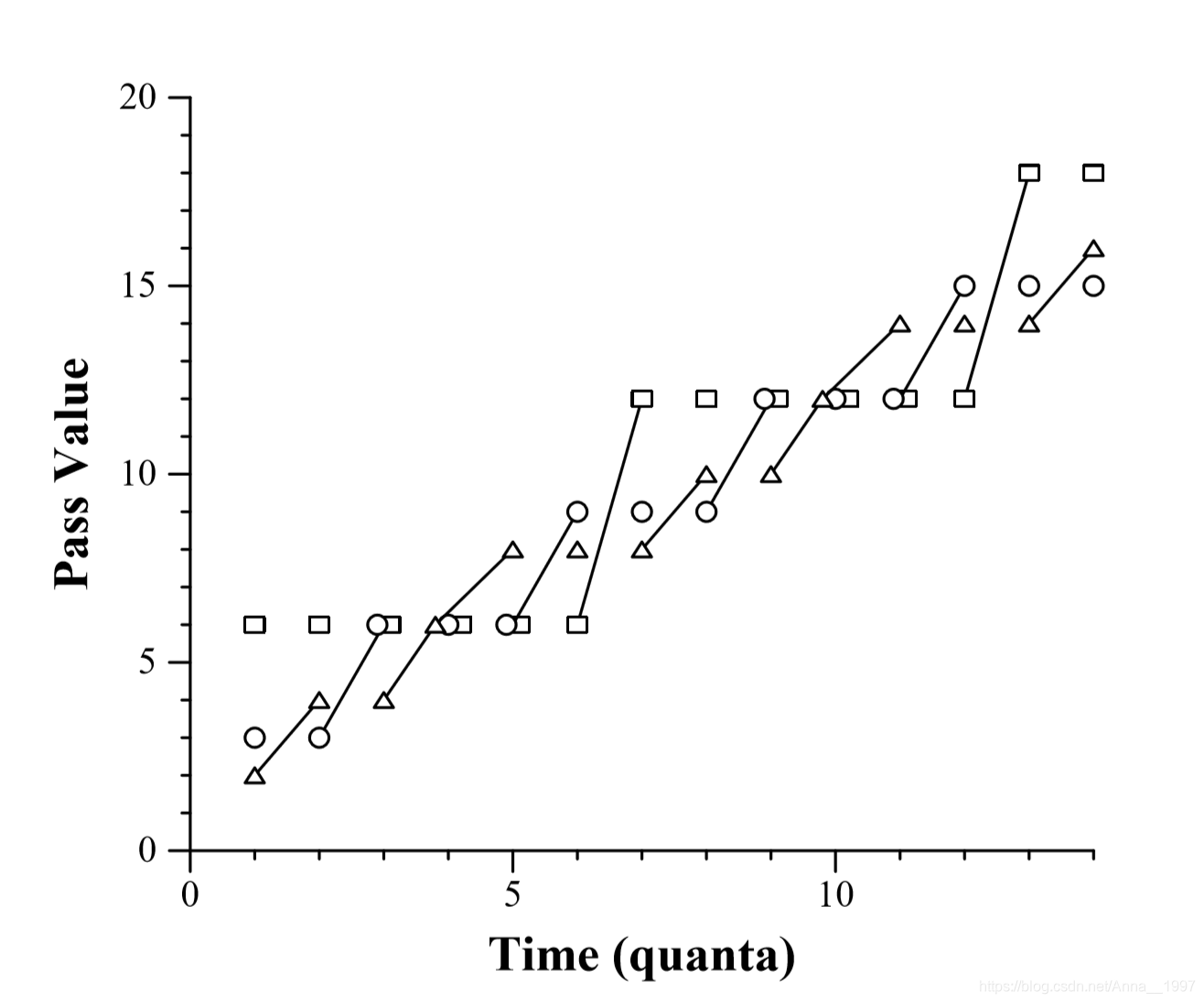
上图时表示随着时间的推移各进程的pass值的变化,每一个时间单位相当于一个时间片结束,选择一个进程分配时间片,□、○、△分别代表三个进程。
ticket 比例:□ : ○ : △ = 1 : 2 : 3
stride 比例:□ : ○ : △ = 6 : 3 : 2
可以看到,在每个时间点,三个进程的pass值都非常接近,因此个进程获得调度的次数和ticket成正比。因此可以通过优先级给进程指定ticket值,从而较为精确地控制进程获得时间片地数量。






 扫一扫
扫一扫


 1890
1890

 被折叠的 条评论
为什么被折叠?
被折叠的 条评论
为什么被折叠?
 到【灌水乐园】发言





