



 本文详细探讨了Mybatis核心组件MapperMethod的工作原理,包括MapperProxy如何处理目标方法的增强,MapperMethod的构造及执行过程。重点讲解了MapperMethod的构造函数,如SqlCommand和MethodSignature的作用,以及execute方法中的convertArgsToSqlCommandParam解析入参的逻辑,涉及@Param注解的处理。同时,文章还提及了SqlSessionTemplate在执行过程中的角色。
mybatis核心组件之MapperMethod
注释: 跟踪
mapper执行接口方法到数据库执行
sql语句的源码过程
// mybatis-spring
UserMapper mapper = context.getBean(UserMapper.class);
System.out.println(mapper.selectAny());
可以看到mapper是MapperProxy产生的代理类,那么MapperProxy中可定有invok方法对目标方法进行了增强处理
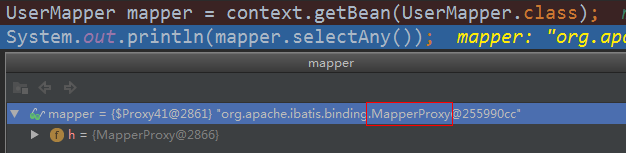
MapperProxy
public Object invoke(Object proxy, Method method, Object[] args) throws Throwable {
    // 如果方法是Object类的方法,则直接反射执行
    if (Object.class.equals(method.getDeclaringClass())) {
        try {
            return method.invoke(this, args);
        } catch (Throwable var5) {
            throw ExceptionUtil.unwrapThrowable(var5);
        }
    } else {
       // 获取MapperMethod
        MapperMethod mapperMethod = this.cachedMapperMethod(method);
        // 执行sql语句
        return mapperMethod.execute(this.sqlSession, args);
    }
}
- 先判断执行的方法是不是Object类的方法,比如
tostring,hashcode等方法,是的话则直接反射执行这些方法 - 如果不是,从缓存中获取MapperMethod,如果为空则创建并加入缓存,然后执行
sql语句
private MapperMethod cachedMapperMethod(Method method) {
    // 根据方法从缓存中获取
    MapperMethod mapperMethod = (MapperMethod)this.methodCache.get(method);
    if (mapperMethod == null) {
        // 不存在则创建一个
        mapperMethod = new MapperMethod(this.mapperInterface, method, this.sqlSession.getConfiguration());
        // 放入缓存
        this.methodCache.put(method, mapperMethod);
    }
    return mapperMethod;
}
MapperMethod
构造函数
private final MapperMethod.SqlCommand command;
private final MapperMethod.MethodSignature method;

public MapperMethod(Class<?> mapperInterface, Method method, Configuration config) {
    this.command = new MapperMethod.SqlCommand(config, mapperInterface, method);
    this.method = new MapperMethod.MethodSignature(config, mapperInterface, method);
}
SqlCommand一个内部类 封装了SQL标签的类型 insert update delete select
MethodSignature一个内部类 封装了方法的参数信息 返回类型信息等
execute执行
判断sql的执行类型,执行相应的方法
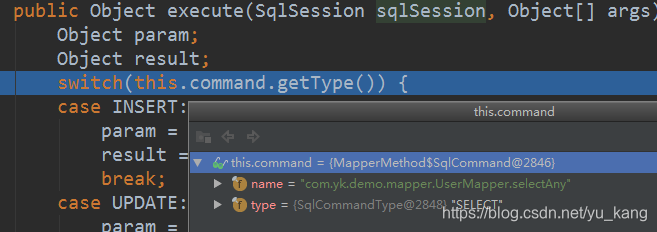
public Object execute(SqlSession sqlSession, Object[] args) {
    Object param;
    Object result;
    switch(this.command.getType()) {
    case INSERT:
        param = this.method.convertArgsToSqlCommandParam(args);
        result = this.rowCountResult(sqlSession.insert(this.command.getName(), param));
        break;
    case UPDATE:
        param = this.method.convertArgsToSqlCommandParam(args);
        result = this.rowCountResult(sqlSession.update(this.command.getName(), param));
        break;
    case DELETE:
        param = this.method.convertArgsToSqlCommandParam(args);
        result = this.rowCountResult(sqlSession.delete(this.command.getName(), param));
        break;
    case SELECT:
        if (this.method.returnsVoid() && this.method.hasResultHandler()) { // 返回类型为void
            this.executeWithResultHandler(sqlSession, args);
            result = null;
        } else if (this.method.returnsMany()) { // 返回类型为集合或数组
            result = this.executeForMany(sqlSession, args);
        } else if (this.method.returnsMap()) {// 由@MapKey控制返回
            result = this.executeForMap(sqlSession, args);
        } else if (this.method.returnsCursor()) {// 返回类型为Cursor<T>,采用游标
            result = this.executeForCursor(sqlSession, args);
        } else {
            // 其他类型
            param = this.method.convertArgsToSqlCommandParam(args);
            result = sqlSession.selectOne(this.command.getName(), param);
        }
        break;
    case FLUSH:
        result = sqlSession.flushStatements();
        break;
    default:
        throw new BindingException("Unknown execution method for: " + this.command.getName());
    }

    if (result == null && this.method.getReturnType().isPrimitive() && !this.method.returnsVoid()) {
        throw new BindingException("Mapper method '" + this.command.getName() + " attempted to return null from a method with a primitive return type (" + this.method.getReturnType() + ").");
    } else {
        return result;
    }
}
抽出这一段代码跟踪一下源码
// 其他类型
param = this.method.convertArgsToSqlCommandParam(args);
result = sqlSession.selectOne(this.command.getName(), param);
convertArgsToSqlCommandParam解析入参
ParamNameResolver.getNamedParams
public Object convertArgsToSqlCommandParam(Object[] args) {
    return this.paramNameResolver.getNamedParams(args);
}
解析@Param注解
names是SortedMap,在构造函数中赋值的,判断入参有没有@Param注解。
key是入参的顺序,从0开始;value是@Param中的值
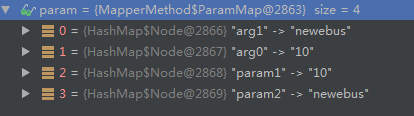
如果没有@Param注解,则value值为arg0、arg1…
将入参名与值匹配
public Object getNamedParams(Object[] args) {
    int paramCount = this.names.size();
    if (args != null && paramCount != 0) {
        // 只有一个入参时,返回入参值
        if (!this.hasParamAnnotation && paramCount == 1) {
            return args[((Integer)this.names.firstKey()).intValue()];
        } else {
            // 多个入参时,返回一个Map
            Map<String, Object> param = new ParamMap();
            int i = 0;
            for(Iterator i$ = this.names.entrySet().iterator(); i$.hasNext(); ++i) {
                Entry<Integer, String> entry = (Entry)i$.next();
                param.put(entry.getValue(), args[((Integer)entry.getKey()).intValue()]);
                String genericParamName = "param" + String.valueOf(i + 1);
                if (!this.names.containsValue(genericParamName)) {
                    param.put(genericParamName, args[((Integer)entry.getKey()).intValue()]);
                }
            }
            return param;
        }
    } else {
        return null;
    }
}
示例1: 多个入参,没有加@Param注解
@Select("SELECT count(0) from es_inter_invokfaillog where rownum = #{num} and invok_type=#{type}")
public Integer selectAny(int num,String type);
这样执行sql会报错,找不到num,可以改为#{arg1}或#{param1}
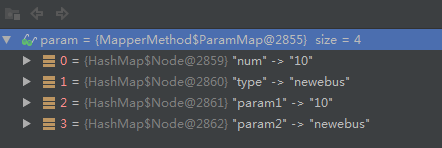
示例2:多个入参,加@Param注解
@Select("SELECT count(0) from es_inter_invokfaillog where rownum = #{num} and invok_type=#{type}")
public Integer selectAny(@Param("num")int num,@Param("type")String type);
示例3:多个入参,部分加@Param注解,部分不加
@Select("SELECT count(0) from es_inter_invokfaillog where rownum = #{num} and invok_type=#{arg1}")
public Integer selectAny(@Param("num")int num,String type);
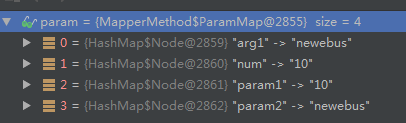
提示:只有一个入参时不存在这些问题,因为一个入参直接返回的是它的值,是一个String不是Map
执行SqlSessionTemplate中的方法
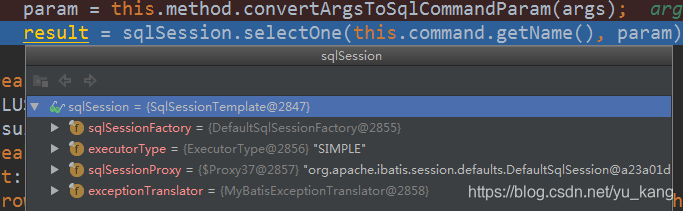
这里的sqlSession就是SqlSessionTemplate,mybatis与spring的整合之SqlSessionTemplate
result = sqlSession.selectOne(this.command.getName(), param);
public <T> T selectOne(String statement, Object parameter) {
    return this.sqlSessionProxy.selectOne(statement, parameter);
}
sqlSessionProxy是动态代理生成的,每一次执行方法时都会重新去 new 一个DefaultSqlSession,可以看下invoke方法部分代码
// 获取session,这里有个事物的判断
SqlSession sqlSession = SqlSessionUtils.getSqlSession(SqlSessionTemplate.this.sqlSessionFactory, SqlSessionTemplate.this.executorType, SqlSessionTemplate.this.exceptionTranslator);
Object unwrapped;
try {
    // 真正执行sql语句的地方
    Object result = method.invoke(sqlSession, args);
    if (!SqlSessionUtils.isSqlSessionTransactional(sqlSession, SqlSessionTemplate.this.sqlSessionFactory)) {
        sqlSession.commit(true);
    }

    unwrapped = result;
}





 扫一扫
扫一扫


 283
283

 被折叠的 条评论
为什么被折叠?
被折叠的 条评论
为什么被折叠?
 到【灌水乐园】发言





