



顺序存储结构实现
-
SeqString.h
#ifndef __SEQSTRING_H__ #define __SEQSTRING_H__ #define MAXSIZE 256 typedef struct { char data[MAXSIZE]; int len; }SeqString; int StrLength(char *s); int StrCat(char s1[],char s2[]); int SubStr(char* s, char t[], int i, int len); int StrCmp(char* s1, char* s2); int StrInsert(char *s,int i,char *t); #endif // !__SEQSTRING_H__ -
SeqString.cpp
#include"SeqString.h"
#include<stdio.h>
int StrLength(char* s)
{
	int count = 0;
	while (*s != '\0')
	{
		count++;
		s++;
	}
	return count;
}
int StrCat(char s1[], char s2[])
{
	int len1 = StrLength(s1);
	int len2 = StrLength(s2);
	if (len1 + len2 > MAXSIZE - 1)
		return 0;
	char* p1 = s1 + len1;
	//while (*p1 != '\0')
	//	p1++;
	char* p2 = s2;
	while (*p2 != '\0')
	{
		*p1 = *p2;
		p1++;
		p2++;
	}
	*p1 = '\0';
	return 1;
}
int SubStr(char* s, char t[], int i, int len)
{ // 用数组t返回串s中从第i个字符开始长度为len的字串
	int j = 0;
	int sLen = StrLength(s);
	if (i<1 || i>sLen || len<0 || len>sLen - i + 1)
		return 0;
	while (len > 0)
	{
		t[j] = *(s + i + j);
		len--;
	}
	return 1;
}
int StrCmp(char* s1, char* s2)
{
	char* p1 = s1;
	char* p2 = s2;
	while (*p1 != '\0' && *p2 != '\0')
	{
		if (*p1 > *p2)
			return 1;
		else if (*p1 < *p2)
			return -1;
		else
		{
			p1++; p2++;
		}
	}
	if (*p1 != '\0')
		return 1;
	else if (*p2 != '\0')
		return -1;
}
int StrInsert(char* s, int i, char* t)
{
	int sLen = StrLength(s);
	int tLen = StrLength(t);
	if (sLen + tLen > MAXSIZE)
	{
		printf("String is full\n");
		return -1;
	}
	char* p1 = s + i;
	char* p2 = p1 + tLen;
	while (tLen > 0)
	{
		*p2 = *p1;
		p1++;
		p2++;
		tLen--;
	}
	*p2 = '\0';
	p1 = s + i;
	while (*t != '\0')
	{
		*p1 = *t;
		p1++;
		t++;
	}
	return StrLength(s) + StrLength(t);
}
链式存储结构实现
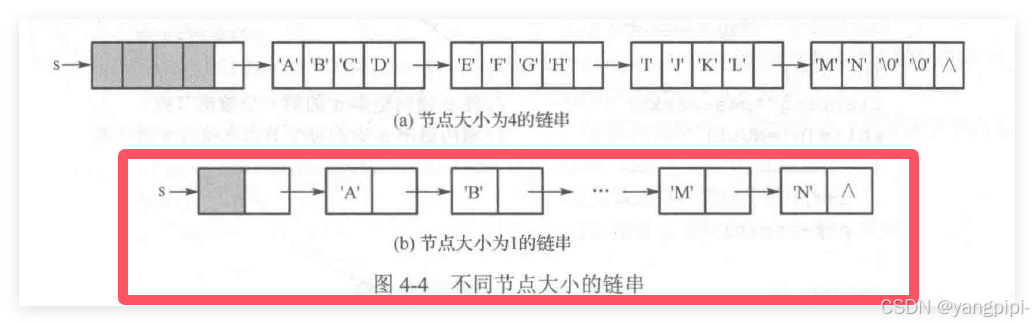
- LiString.h
#ifndef __LISTRING_H__ #define __LISTRING_H__ typedef struct snode { char data; struct snode* next; }LiString; void StringLiAssign(LiString** s, char str[]); int StrLiLength(LiString* s); void StrLiCat(LiString* s, LiString* t); void printLiStr(LiString* s); void SubLiStr(LiString* s, LiString** str, int i, int len); void StrLiInsert(LiString* s, int i, LiString* t); #endif // !__LISTRING_H__ - LiString.cpp
#include<stdio.h>
#include<stdlib.h>
#include<string.h>
#include"LiString.h"

void StringLiAssign(LiString** s, char str[])
{
	char* p = str;
	LiString *head = (LiString*)malloc(sizeof(LiString));
	head->next = NULL;
	*s = head;
	LiString* rear = head;
	while (*p != '\0')
	{
		LiString* node = (LiString*)malloc(sizeof(LiString));
		node->data = *p;
		node->next = NULL;
		p++;
		rear->next = node;
		rear = rear->next;
	}
}
int StrLiLength(LiString* s)
{
	LiString* node = s->next;
	int count = 0;
	while (node != NULL)
	{
		count++;
		node = node->next;
	}
	return count;
}
void StrLiCat(LiString* s, LiString* t)
{
	LiString* rear = s->next;
	if (rear == NULL)
	{
		printf("s is empty\n");
	}
	while (rear->next != NULL)
		rear = rear->next;
	rear->next = t->next;
	free(t); // 释放t的头结点
}
void SubLiStr(LiString* s, LiString** str, int i, int len)
{
	int count = 0;
	LiString* p = s;
	while (i>1)
	{
		p = p->next;
		i--;
	}
	LiString* Beforbegin = p;
	LiString *head = (LiString*)malloc(sizeof(LiString));
	head->next = Beforbegin->next;
	while (len > 0)
	{
		p = p->next;
		len--;
	}
	LiString* end = p;
	Beforbegin->next = end->next;
	end->next = NULL;
	*str = head;
}
void printLiStr(LiString* s)
{
	s = s->next;
	while (s)
	{
		printf("%c  ",s->data);
		s = s->next;
	}
	printf("\n");
}

// 还没有测试通过~~~~
void StrLiInsert(LiString* s, int i, LiString* t)
{
	while (i > 1)
	{
		s = s->next;
		i--;
	}

	LiString* tmp = s->next;
	//printf("\n ----- %c   %c", tmp->data, t->next->data);
	s->next = t->next;

	s = t->next;


	while (s->next != NULL)
		s = s->next;
	s->next = tmp;
	free(t); // 释放t的头结点
}
模式匹配
BF算法
- Brute-Force
#include<stdio.h>
#include<stdlib.h>
#include<string.h>
#include"BF.h"

int SrtIndex_BF(char* s, char* T)
{
	int j = 0,i=0;
	int flag = 0;
	for (i = 0; i < strlen(s); i++)
	{
		j = 0;

		int tmp = i;
		while (s[i] == T[j] && s[i] != '\0')
		{

			i++;
			j++;
			if (T[j] == '\0')
			{
				printf("Success\n");
				flag = 1;
				break;
			}
		}
		if (flag == 1)
			break;
		i = tmp;
	}
	if (flag)
		return i - j;
	else
		return -1;
}
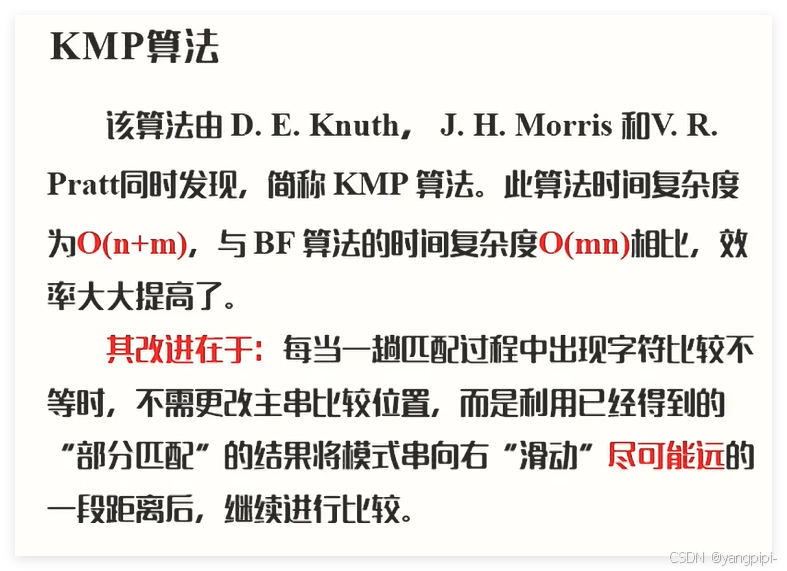
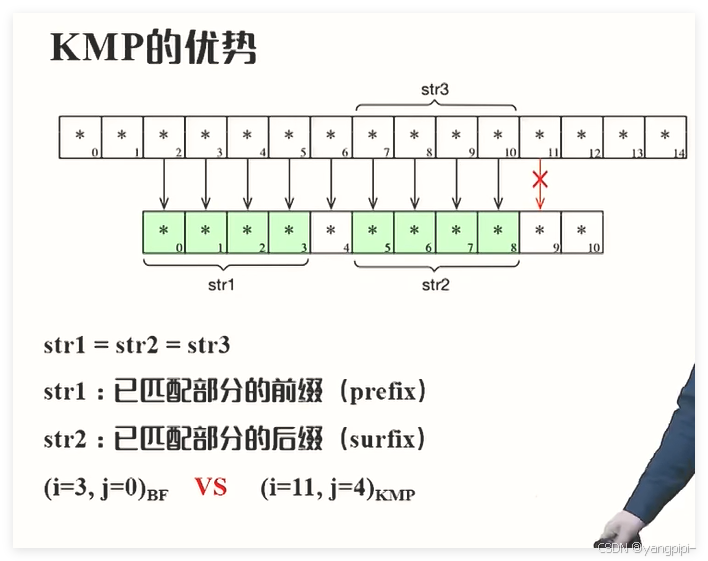
KMP算法
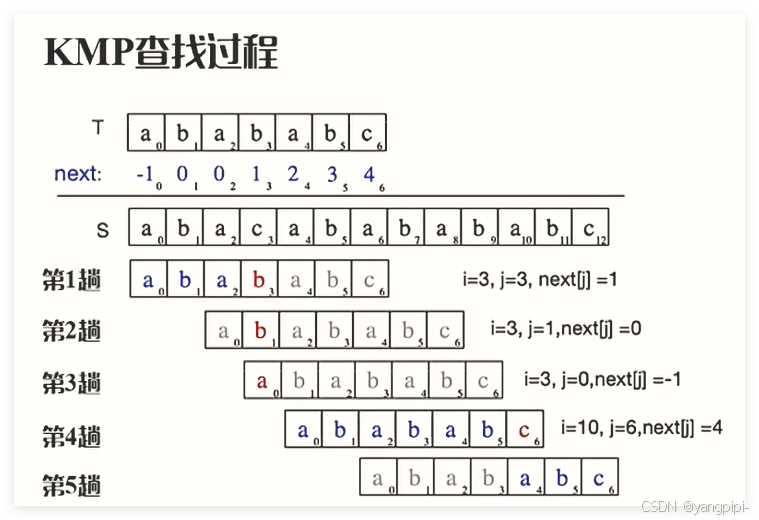
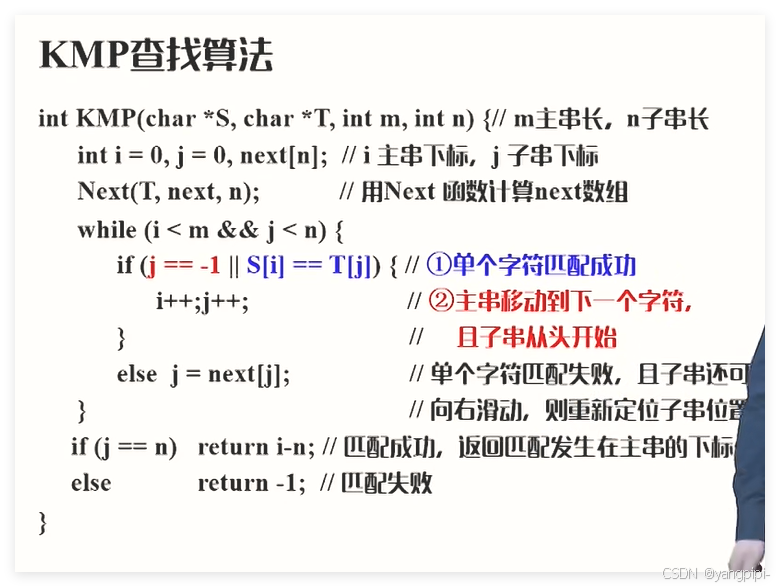
#include"BF.h"
#include<stdio.h>
#include<stdlib.h>
#include<string.h>
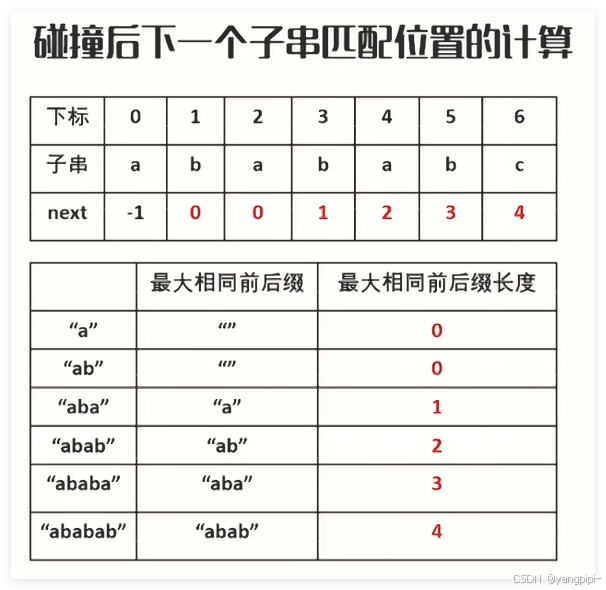
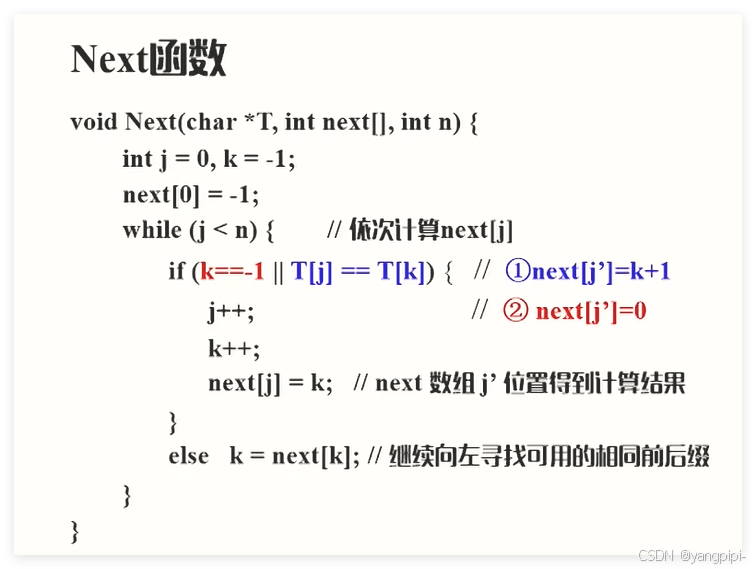
void Next(char* T, int next[], int n)
{
	int j = 0, k = -1;
	next[0] = -1;
	while (j < n)
	{
		if (k == -1 || T[j] == T[k])
		{
			j++;
			k++;
			next[j] = k;
		}
		else
			k = next[k];
	}
}

int KMP(char* S, char* T, int m, int n)
{
	int i = 0, j = 0;
	int* next = (int*)malloc(sizeof(int)*n);
	memset(next,0,sizeof(next)*n);
	Next(T,next,n);
	while (i < m && j < n)
	{
		if (j == -1 || S[i] == T[j])
		{
			i++;
			j++;
		}
		else
			j = next[j];
	}
	if (j == n)
		return i - n;
	else
		return -1;
}
next数组
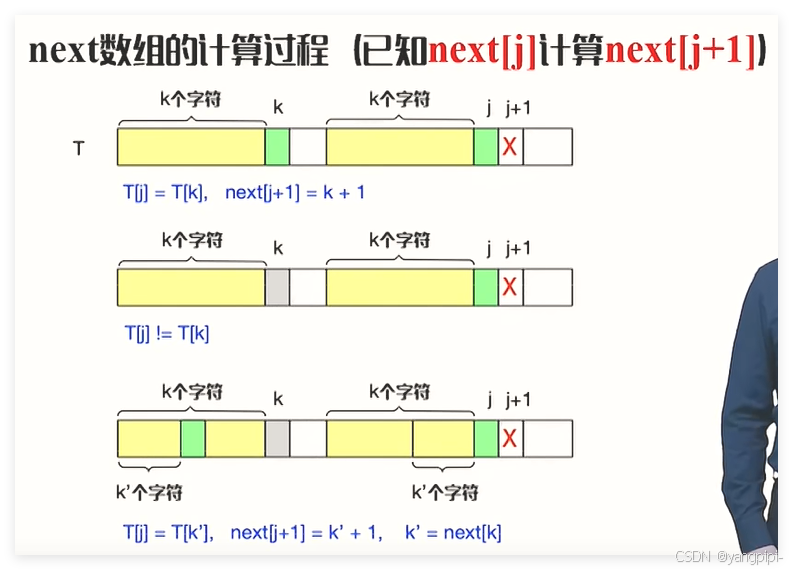
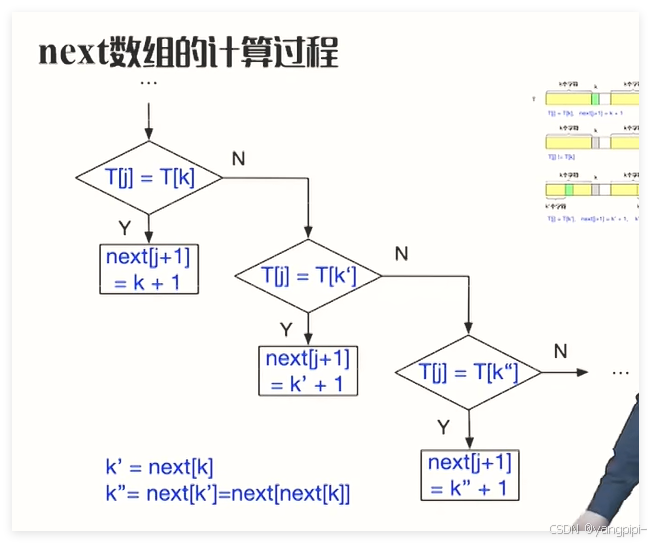
课后题
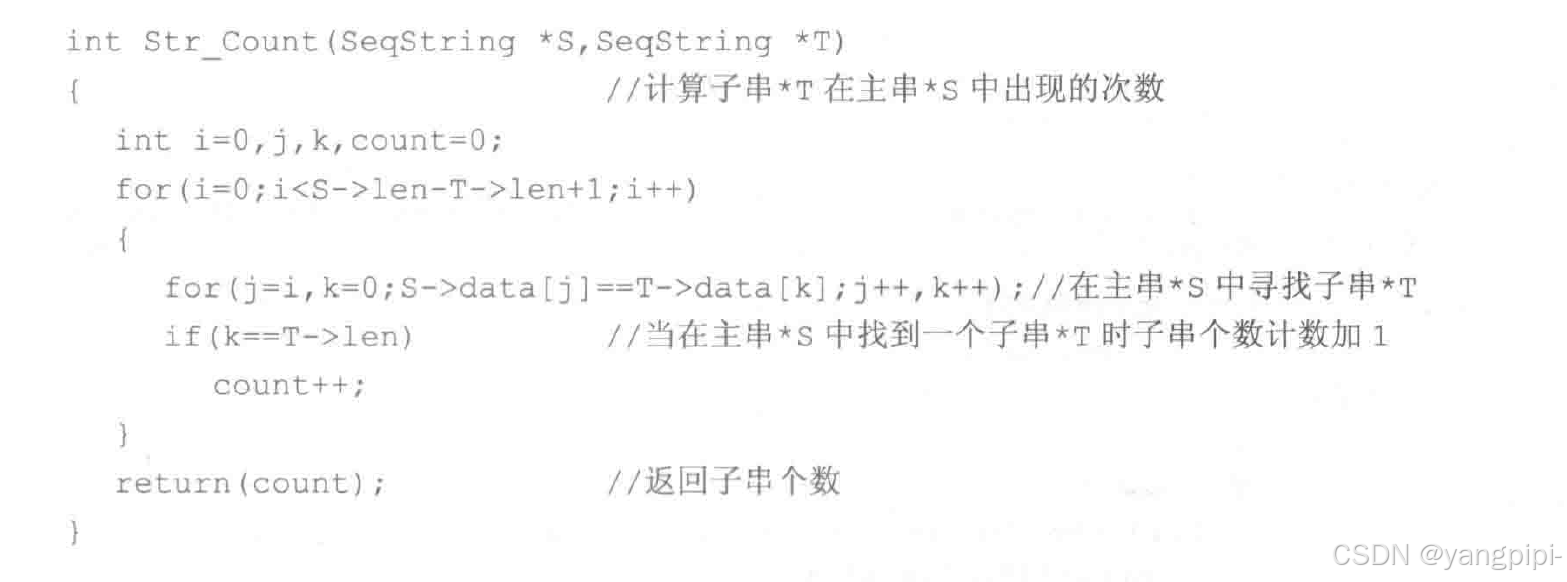
查找字串出现的次数

BP算法
KMP算法
int Soll6(char* str, char* T, int strSize, int Tsize)
{
	int lenStr = strSize;
	int res = 0,count=0;
	char* p = (char*)malloc(sizeof(char)*(strSize+1));
	strcpy(p,str); // 会将str中的\0复制过去
	while (res != -1)
	{
		/*
	char str[] = "123456123456123";
	char T[] = "123";
		*/
		res = KMP(p, T, lenStr - res-Tsize, Tsize);
		if (res == -1) // 没有找到
			break;
		count++;
		p = p + res+Tsize;
	}
	return count;
}
思路:利用KMP算法,从上次找到的位置之后继续使用KMP算法进行查找
回文字符判断

- 见代码随想录
等值子串

int Sol9(char* str)
{
	char* p = str;
	int count = 1,max=0;
	int endInex = 0;
	int i = 0;
	while (*(p+i) != '\0')   //121234566666
	{
		if (*(p+i) == *(p +i+1))
     		count++;
		else
		{
			if (max < count)
			{
				max = count;
				count = 1;
				endInex = i;
			}
		}
		i++;
	}
	if(max<=0)
		return -1;
	else
	{
		printf("%s最长的等值子串为:",str);
		for (int i = 0; i < max; i++)
			printf("%c",*(str+ endInex-max+1+i));
		printf("\n长度为%d\n",max);
		return max;
	}
}





 扫一扫
扫一扫


 被折叠的 条评论
为什么被折叠?
被折叠的 条评论
为什么被折叠?
 到【灌水乐园】发言





