



 本文探讨了Spring AOP中方法内部调用导致增强失效的问题,分析了其根本原因,并提供了三种解决方案,包括使用AopContext.currentProxy()、ProxyFactory和BeanFactory获取代理对象。
参考:https://docs.spring.io/spring/docs/5.1.3.RELEASE/spring-framework-reference/core.html#aop-understanding-aop-proxies
public class SimplePojo implements Pojo {

    public void foo() {
        // this next method invocation is a direct call on the 'this' reference
        this.bar();
    }

    public void bar() {
        // some logic...
    }
}
你会发现foo方法调用的bar方法并没有织入对应的增强。
原因分析:
AOP的本质是:通过创建新的代理对象,在代理对象里面添加对应的增强代码实现。完成代理对象的调用,即完成了增强的过程。
public class SimplePojoProxy implements Pojo {
   Pojo pojo;

    public void foo() {
        before();
		pojo.foo();
        after();
    }

    public void bar() {
        before();
		pojo.bar();
        after();
    }
}
如上,SimplePojoProxy代理对象调用foo方法,切入了对应的增强,但是在foo方法调用bar方法的时候,其实是针对pojo也就是目标对象发生调用的(目标对象方法中并没有对应的增强),而非SimplePojoProxy代理的bar方法,所以导致增强失效。
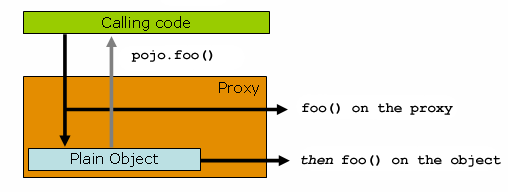
解决方案1:
注意:使用这种方式必须设置aop-config标签的expose-proxy属性为true,具体原理请参考AOPUtils分析
public class SimplePojo implements Pojo {

    public void foo() {
        ((Pojo) AopContext.currentProxy()).bar();
    }

    public void bar() {
        // some logic...
    }
}
解决方案2
public class Main {

    public static void main(String[] args) {

        ProxyFactory factory = new ProxyFactory(new SimplePojo());
        factory.adddInterface(Pojo.class);
        factory.addAdvice(new RetryAdvice());
        factory.setExposeProxy(true);

        Pojo pojo = (Pojo) factory.getProxy();

        // this is a method call on the proxy!
        pojo.foo();
    }
}
解决方案3
通过beanFactory获取到代理对象,调用对应方法。





 扫一扫
扫一扫


 981
981

 被折叠的 条评论
为什么被折叠?
被折叠的 条评论
为什么被折叠?
 到【灌水乐园】发言





