


 ConcurrentLinkedQueue是一个无界线程安全的FIFO队列,它基于链接节点实现,利用CAS操作保证并发插入和获取元素的正确性。队列头部是最旧的元素,尾部是最新的元素。在多线程环境下,ConcurrentLinkedQueue是添加和移除元素的理想选择。添加元素时,使用循环和CAS确保节点的正确插入;获取元素时,通过检查和更新头节点来实现非阻塞的出队操作。然而,size操作由于不使用锁,所以可能不准确且效率较低。
介绍
基于链接节点的无界线程安全队列,对元素 FIFO(先进先出)进行排序。 队列的头部是队列中最长时间的元素,队列的尾部是队列中最短时间的元素。 在队列的尾部插入新元素,队列检索操作获取队列头部的元素。
当许多线程共享对公共集合的访问 ConcurrentLinkedQueue 是一个合适的选择。 与大多数其他并发集合实现一样,此类不允许使用 null 元素。
基本使用
public class ConcurrentLinkedQueueTest {

    public static void main(String[] args) {

        ConcurrentLinkedQueue<String> queue = new ConcurrentLinkedQueue<String>();

        // 将指定元素插入此队列的尾部。
        queue.add("liuzhihang");
        // 将指定元素插入此队列的尾部。
        queue.offer("liuzhihang");

        // 获取但不移除此队列的头,队列为空返回 null。
        queue.peek();
        // 获取并移除此队列的头,此队列为空返回 null。
        queue.poll();

    }
}
源码分析
基本结构
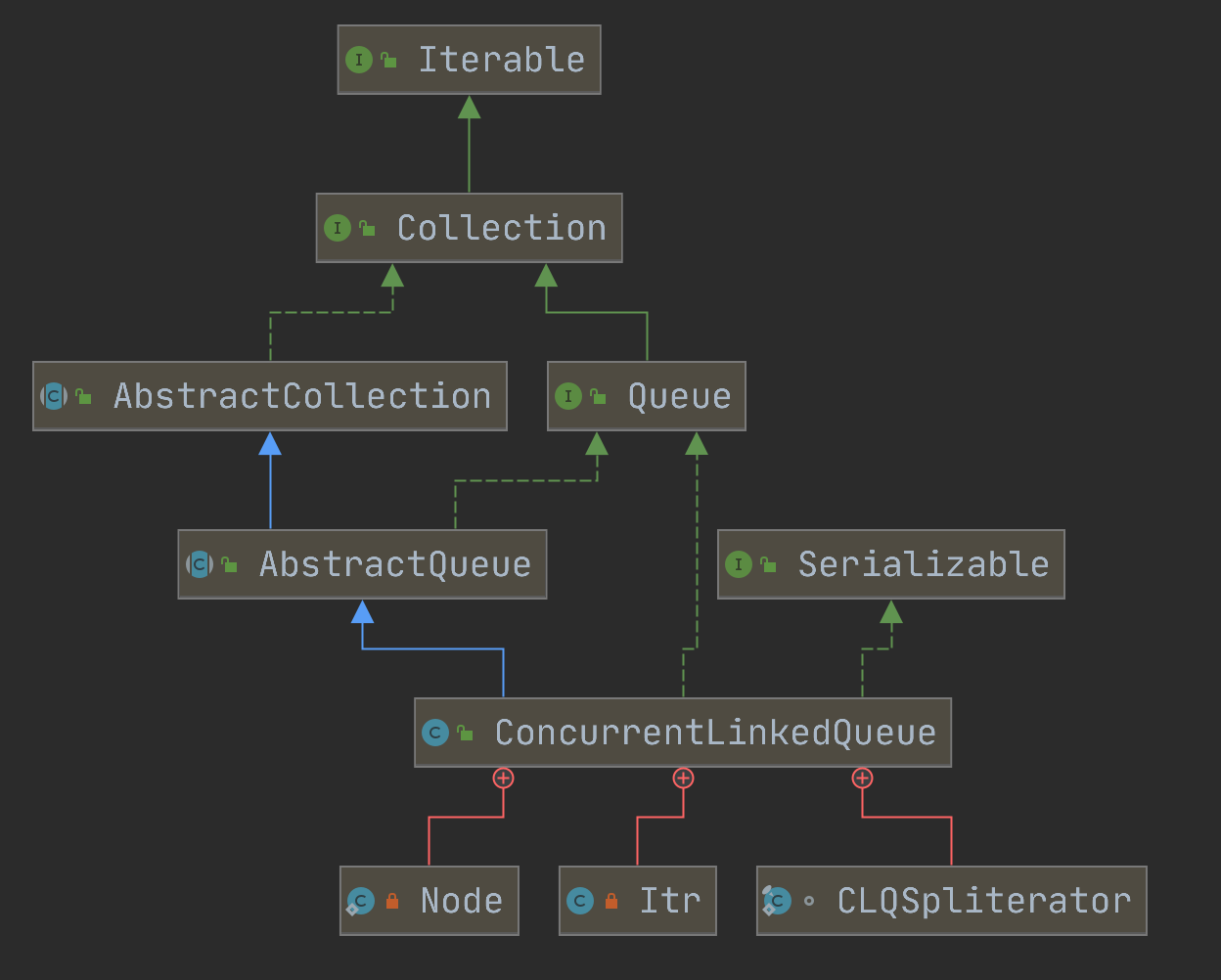
参数介绍
private static class Node<E> {

    // 节点中的元素
    volatile E item;
    // 下一个节点
    volatile Node<E> next;

    Node(E item) {
        UNSAFE.putObject(this, itemOffset, item);
    }
    // CAS 的方式设置节点元素
    boolean casItem(E cmp, E val) {
        return UNSAFE.compareAndSwapObject(this, itemOffset, cmp, val);
    }
    // 设置下一个节点
    void lazySetNext(Node<E> val) {
        UNSAFE.putOrderedObject(this, nextOffset, val);
    }

    // CAS 的方式设置下一个节点
    boolean casNext(Node<E> cmp, Node<E> val) {
        return UNSAFE.compareAndSwapObject(this, nextOffset, cmp, val);
    }

    // 省略 ……
}
在 ConcurrentLinkedQueue 内部含有一个内部类 Node,如上所示,这个内部类用来标识链表中的一个节点,通过代码可以看出,在 ConcurrentLinkedQueue 中的链表为单向链表。
public class ConcurrentLinkedQueue<E> extends AbstractQueue<E>
        implements Queue<E>, java.io.Serializable {

    // 其他省略

    // 头结点
    private transient volatile Node<E> head;

    // 尾节点
    private transient volatile Node<E> tail;
}
头尾节点使用 volatile 修饰,保证内存可见性。
构造函数
public ConcurrentLinkedQueue() {
    head = tail = new Node<E>(null);
}
复制代码
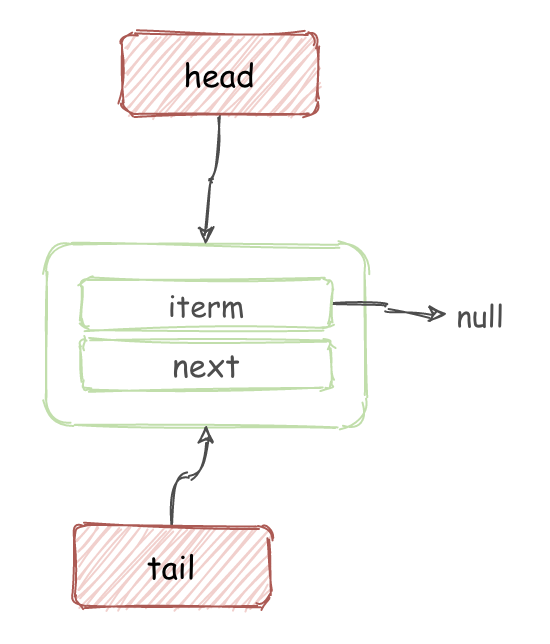
当创建对象时,头尾节点都是指向一个空节点。
添加元素
public boolean add(E e) {
    return offer(e);
}
public boolean offer(E e) {

    // 验证是否为空
    checkNotNull(e);

    // 创建节点
    final Node<E> newNode = new Node<E>(e);

    // 循环入队列
    // t 是当前尾节点,p 初始为 t
    for (Node<E> t = tail, p = t;;) {
        // q 为尾节点的下一个节点
        Node<E> q = p.next;
        if (q == null) {
            // 为空,说明后面没有节点,则 CAS 设置尾节点
            if (p.casNext(null, newNode)) {
                // 此时 p.next 是 newNode
                // 如果 p != t 说明有并发
                if (p != t)
                    // 其他线程已经更新了 tail
                    // q = p.next 所以 q == null 不正确了
                    // q 取到了 t.next
                    // 此时将 tail 更新为 新节点
                    casTail(t, newNode);  // Failure is OK.
                return true;
            }
            // Lost CAS race to another thread; re-read next
        }
        // 多线程情况下, poll ,操作移除元素,可能会导致 p == q
        // 此时要重新查找
        else if (p == q)
            //
            p = (t != (t = tail)) ? t : head;
        else
            // 检查 tail 并更新
            p = (p != t && t != (t = tail)) ? t : q;
    }
}
画图说明:
单线程情况下:
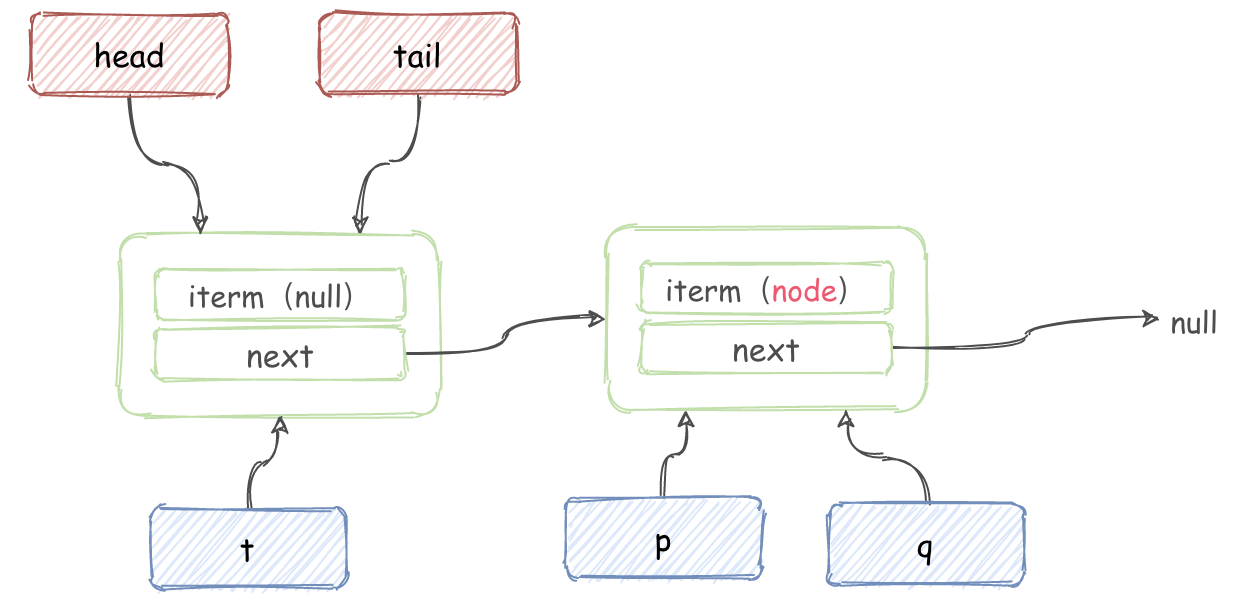
当执行到 Node<E> q = p.next; 时,当前情况如图所示:
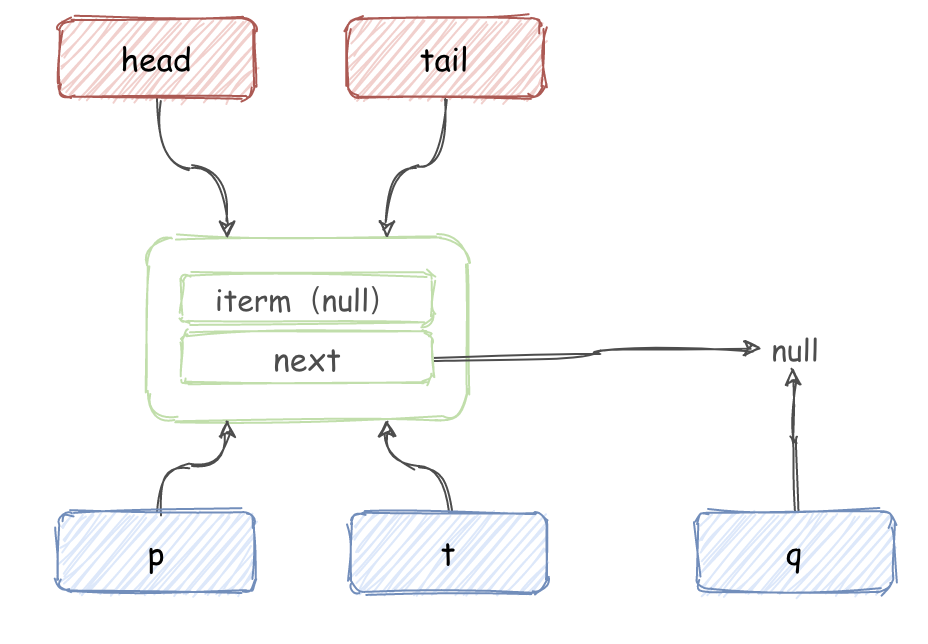
判断 q == null,满足条件,此时便会执行 p.casNext(null, newNode) 使用 CAS 设置 p.next。
设置成功之后,p == t 没有变动,所以程序退出。
多线程情况下:
当执行到 Node<E> q = p.next; 时,当前情况如图所示:
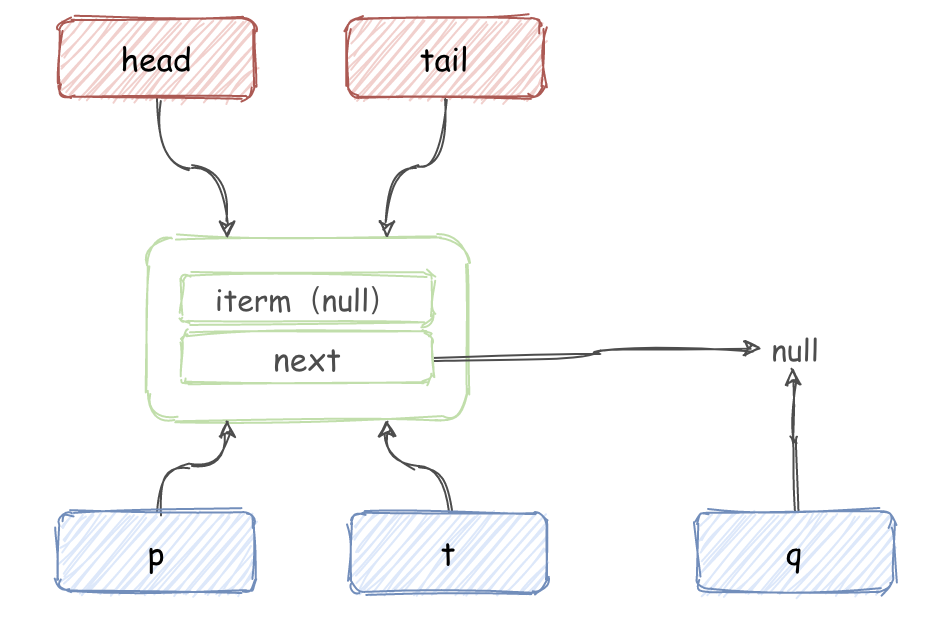
多个线程执行 p.casNext(null, newNode) 使用 CAS 设置 p.next。
A 线程 CAS 设置成功:
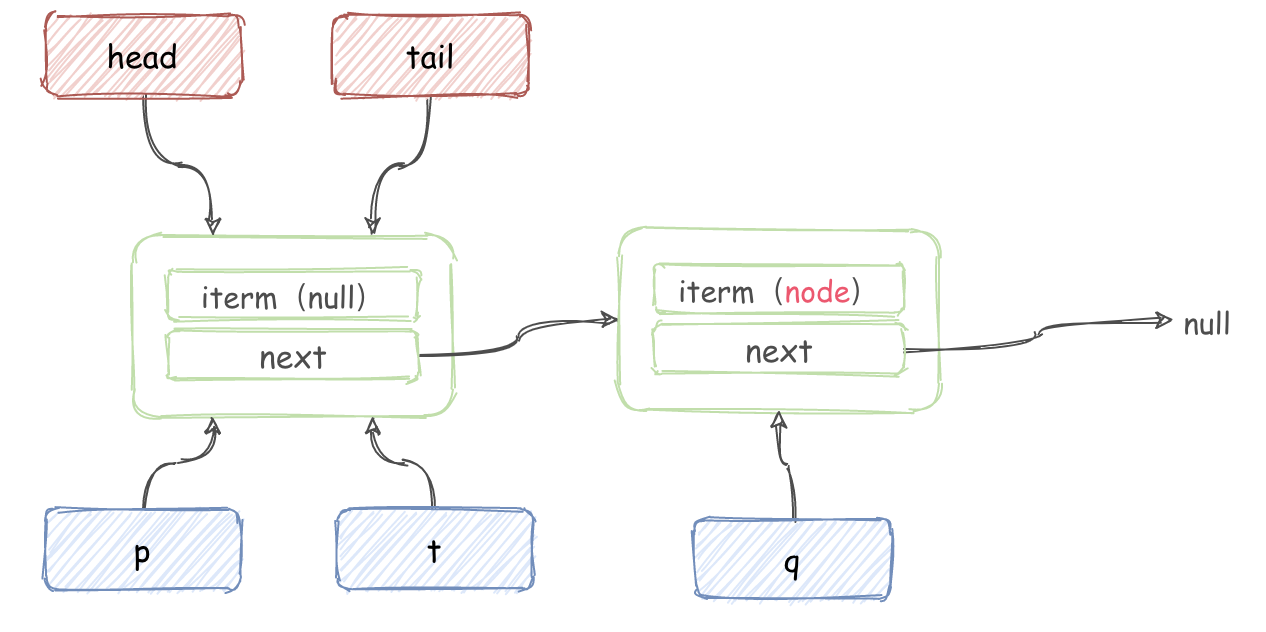
B 线程 CAS 执行失败, 重新循环,会执行到 p = (p != t && t != (t = tail)) ? t : q。
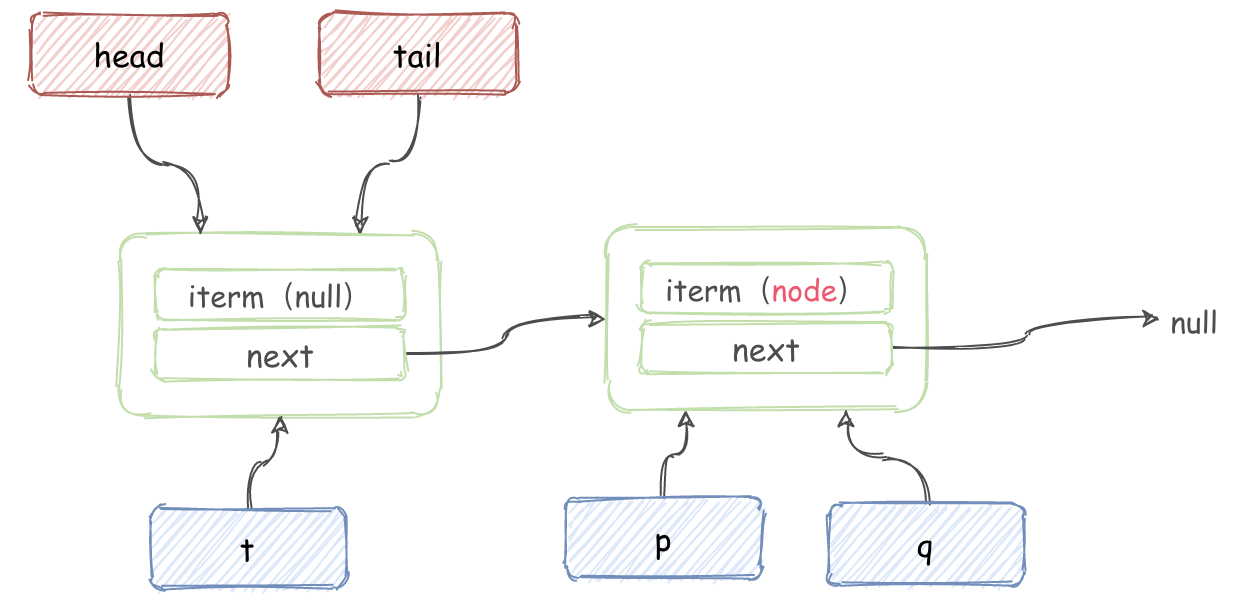
再次循环就可以成功设置上了。
获取元素
public E poll() {
    restartFromHead:
    // 无限循环
    for (;;) {
        for (Node<E> h = head, p = h, q;;) {
            // 头结点的 iterm
            E item = p.item;
            // 当前节点如果不为 null CAS 设置为 null
            if (item != null && p.casItem(item, null)) {
                // CAS 成功 则标记移除
                if (p != h) // hop two nodes at a time
                    updateHead(h, ((q = p.next) != null) ? q : p);
                return item;
            }
            // 当前队列未空 返回 null
            else if ((q = p.next) == null) {
                updateHead(h, p);
                return null;
            }
            // 自引用了, 重新进行循环
            else if (p == q)
                continue restartFromHead;
            else
                p = q;
        }
    }
}
画图过程如下:
在执行内层循环时,如果队列为空:E item = p.item; 此时,iterm 为 null,会 updateHead(h, p) 并返回 null。
假设同时有并发插入操作,添加了一个元素,此时如图所示:
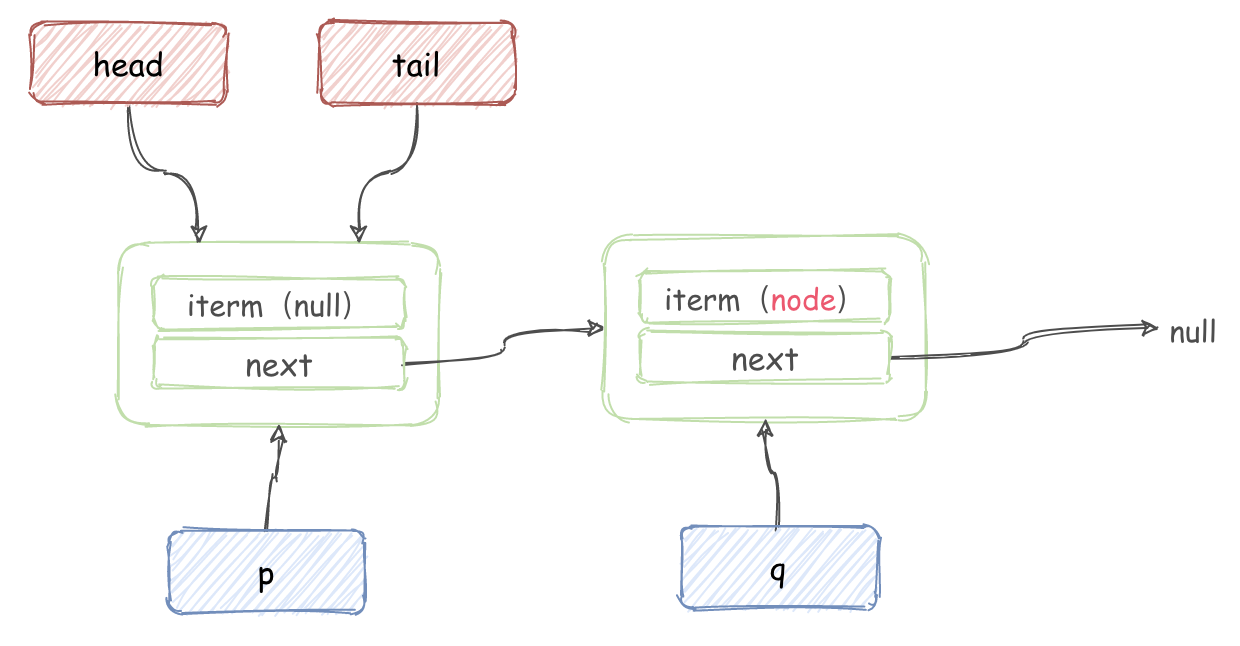
这时会执行最后的 else 将 p = q
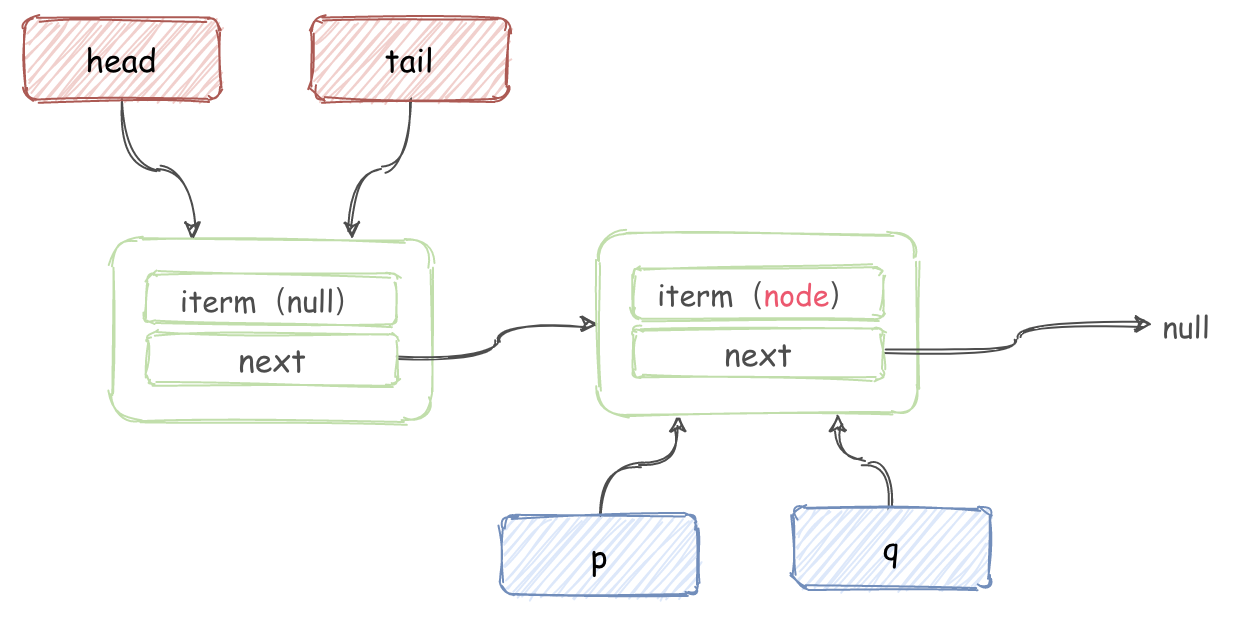
继续循环获取 item,并执行 p.casItem(item, null) , 然后判断 p != h,更新 head 并返回 item。
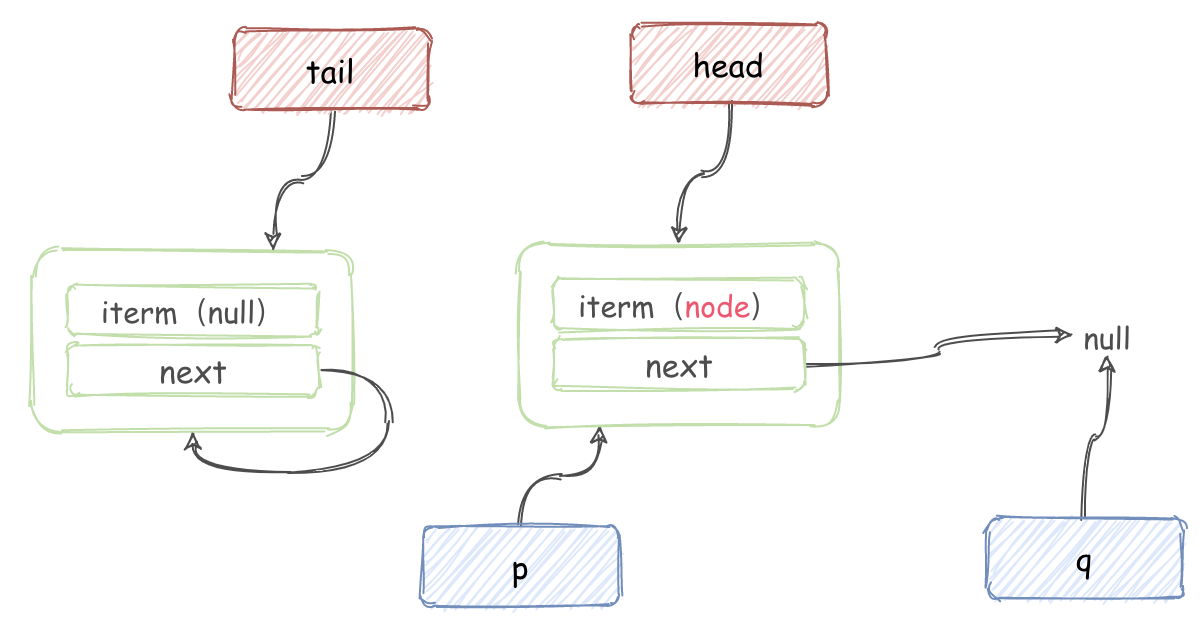
这里的情况比较复杂,这里只是列举一种,如果需要可以自己多列举几种。
而查看元素的代码和获取元素代码类似就不多介绍了。
size 操作
public int size() {
    int count = 0;
    for (Node<E> p = first(); p != null; p = succ(p))
        if (p.item != null)
            // Collection.size() spec says to max out
            if (++count == Integer.MAX_VALUE)
                break;
    return count;
}
CAS 没有加锁,所以 size 是不准确的。并且 size 会遍历一遍列表,比较耗费性能。
介绍
基于链接节点的无界线程安全队列,对元素 FIFO(先进先出)进行排序。 队列的头部是队列中最长时间的元素,队列的尾部是队列中最短时间的元素。 在队列的尾部插入新元素,队列检索操作获取队列头部的元素。
当许多线程共享对公共集合的访问 ConcurrentLinkedQueue 是一个合适的选择。 与大多数其他并发集合实现一样,此类不允许使用 null 元素。
基本使用
publicclassConcurrentLinkedQueueTest {publicstaticvoidmain(String[] args) { ConcurrentLinkedQueue<String> queue = newConcurrentLinkedQueue<String>();// 将指定元素插入此队列的尾部。 queue.add("liuzhihang");// 将指定元素插入此队列的尾部。 queue.offer("liuzhihang");// 获取但不移除此队列的头,队列为空返回 null。 queue.peek();// 获取并移除此队列的头,此队列为空返回 null。 queue.poll(); }}复制代码
源码分析
基本结构
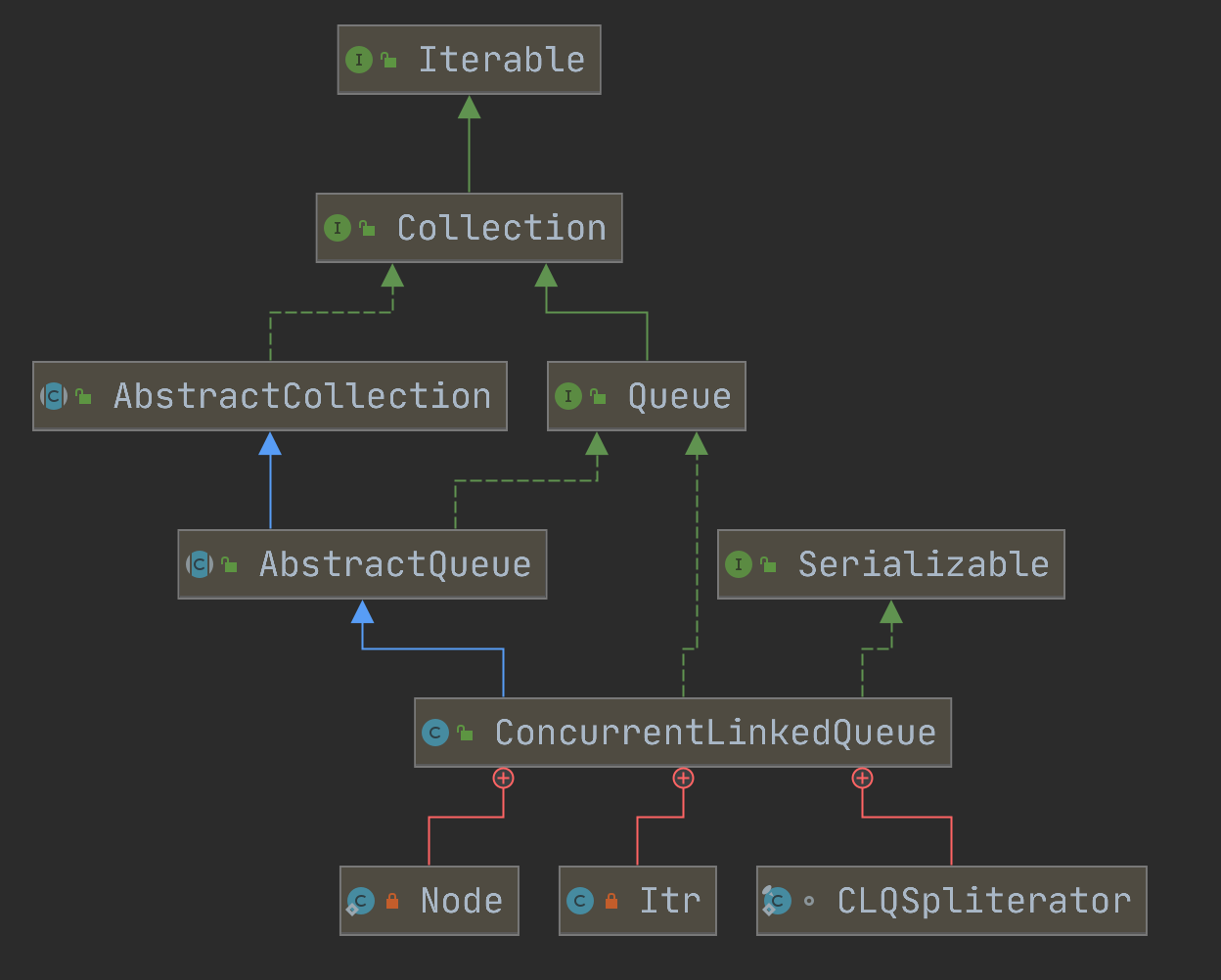
参数介绍
privatestaticclassNode<E> {// 节点中的元素volatile E item;// 下一个节点volatile Node<E> next; Node(E item) { UNSAFE.putObject(this, itemOffset, item); }// CAS 的方式设置节点元素booleancasItem(E cmp, E val) {return UNSAFE.compareAndSwapObject(this, itemOffset, cmp, val); }// 设置下一个节点voidlazySetNext(Node<E> val) { UNSAFE.putOrderedObject(this, nextOffset, val); }// CAS 的方式设置下一个节点booleancasNext(Node<E> cmp, Node<E> val) {return UNSAFE.compareAndSwapObject(this, nextOffset, cmp, val); }// 省略 ……}复制代码
在 ConcurrentLinkedQueue 内部含有一个内部类 Node,如上所示,这个内部类用来标识链表中的一个节点,通过代码可以看出,在 ConcurrentLinkedQueue 中的链表为单向链表。
publicclassConcurrentLinkedQueue<E> extendsAbstractQueue<E>implementsQueue<E>, java.io.Serializable {// 其他省略// 头结点privatetransientvolatile Node<E> head; // 尾节点privatetransientvolatile Node<E> tail;}复制代码
头尾节点使用 volatile 修饰,保证内存可见性。
构造函数
publicConcurrentLinkedQueue() { head = tail = newNode<E>(null);}复制代码
当创建对象时,头尾节点都是指向一个空节点。
添加元素
publicbooleanadd(E e) {return offer(e);}publicbooleanoffer(E e) {// 验证是否为空 checkNotNull(e);// 创建节点final Node<E> newNode = newNode<E>(e);// 循环入队列// t 是当前尾节点,p 初始为 tfor (Node<E> t = tail, p = t;;) {// q 为尾节点的下一个节点 Node<E> q = p.next;if (q == null) {// 为空,说明后面没有节点,则 CAS 设置尾节点if (p.casNext(null, newNode)) {// 此时 p.next 是 newNode// 如果 p != t 说明有并发if (p != t) // 其他线程已经更新了 tail// q = p.next 所以 q == null 不正确了// q 取到了 t.next// 此时将 tail 更新为 新节点 casTail(t, newNode); // Failure is OK.returntrue; }// Lost CAS race to another thread; re-read next }// 多线程情况下, poll ,操作移除元素,可能会导致 p == q // 此时要重新查找elseif (p == q)// p = (t != (t = tail)) ? t : head;else// 检查 tail 并更新 p = (p != t && t != (t = tail)) ? t : q; }}复制代码
画图说明:
单线程情况下:
当执行到 Node<E> q = p.next; 时,当前情况如图所示:

判断 q == null,满足条件,此时便会执行 p.casNext(null, newNode) 使用 CAS 设置 p.next。
设置成功之后,p == t 没有变动,所以程序退出。
多线程情况下:
当执行到 Node<E> q = p.next; 时,当前情况如图所示:
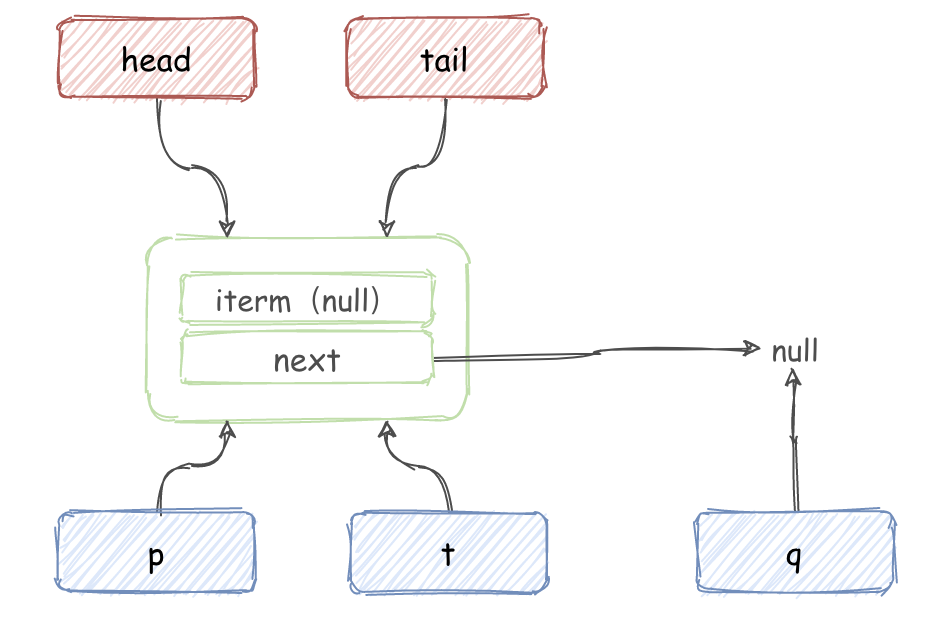
多个线程执行 p.casNext(null, newNode) 使用 CAS 设置 p.next。
A 线程 CAS 设置成功:
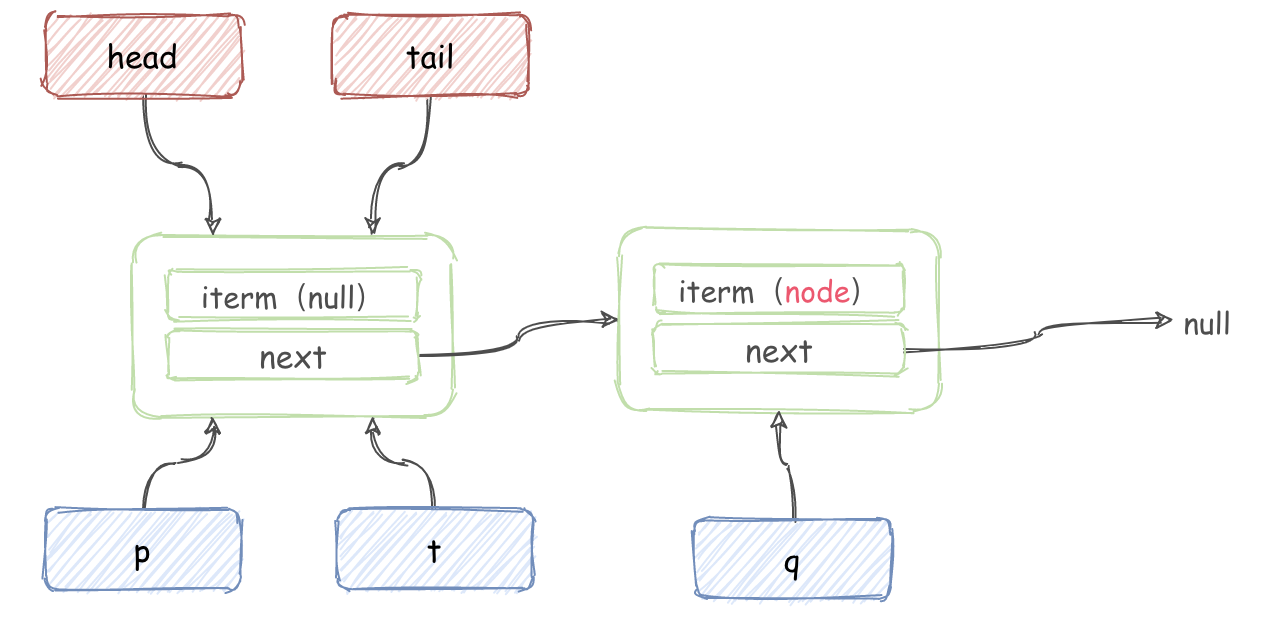
B 线程 CAS 执行失败, 重新循环,会执行到 p = (p != t && t != (t = tail)) ? t : q。
再次循环就可以成功设置上了。
获取元素
public E poll() { restartFromHead:// 无限循环for (;;) {for (Node<E> h = head, p = h, q;;) {// 头结点的 itermEitem= p.item;// 当前节点如果不为 null CAS 设置为 nullif (item != null && p.casItem(item, null)) {// CAS 成功 则标记移除if (p != h) // hop two nodes at a time updateHead(h, ((q = p.next) != null) ? q : p);return item; }// 当前队列未空 返回 nullelseif ((q = p.next) == null) { updateHead(h, p);returnnull; }// 自引用了, 重新进行循环elseif (p == q)continue restartFromHead;elsep= q; } }}复制代码
画图过程如下:
在执行内层循环时,如果队列为空:E item = p.item; 此时,iterm 为 null,会 updateHead(h, p) 并返回 null。
假设同时有并发插入操作,添加了一个元素,此时如图所示:
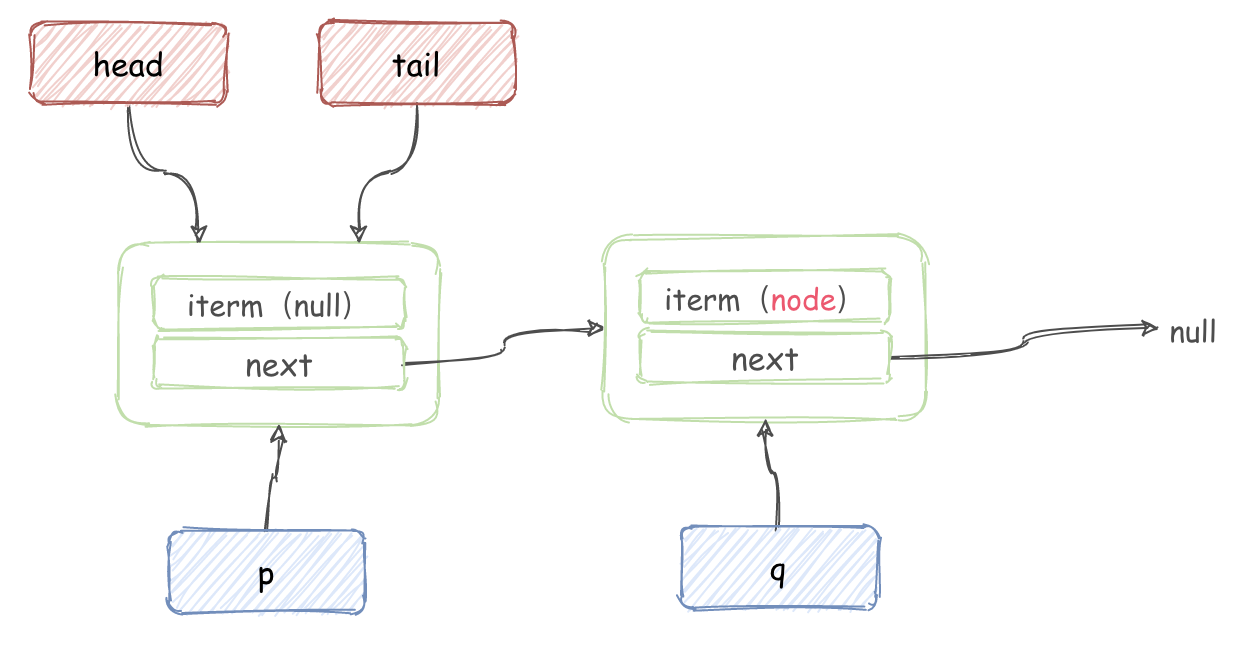
这时会执行最后的 else 将 p = q
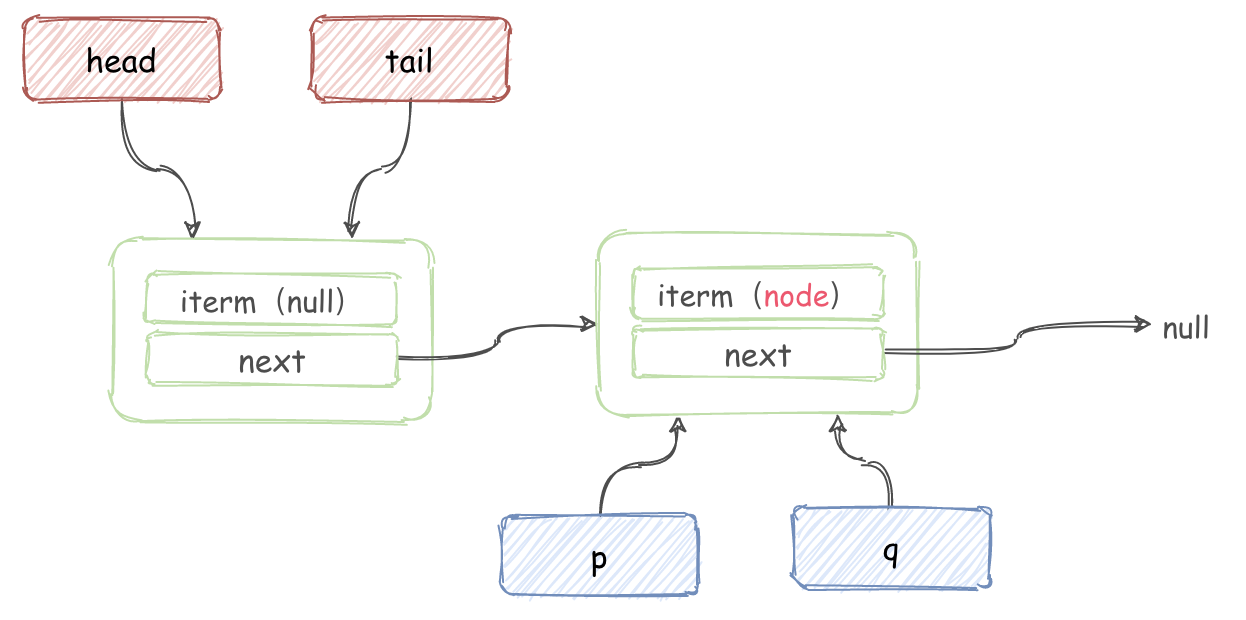
继续循环获取 item,并执行 p.casItem(item, null) , 然后判断 p != h,更新 head 并返回 item。
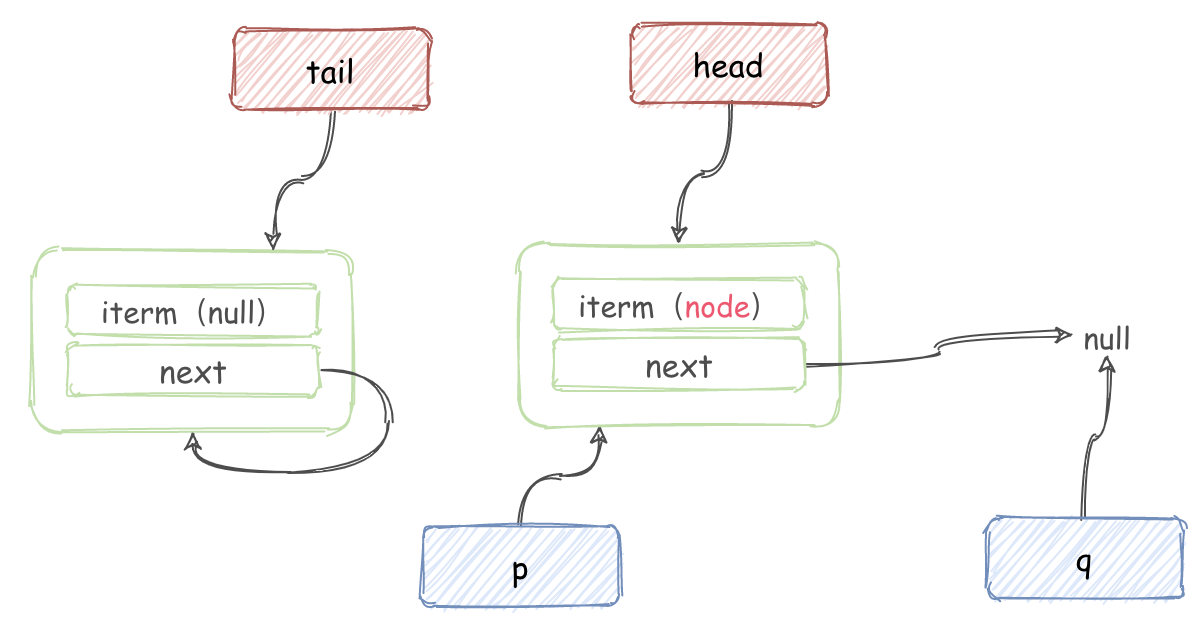
这里的情况比较复杂,这里只是列举一种,如果需要可以自己多列举几种。
而查看元素的代码和获取元素代码类似就不多介绍了。
size 操作
public int size() {
    int count = 0;
    for (Node<E> p = first(); p != null; p = succ(p))
        if (p.item != null)
            // Collection.size() spec says to max out
            if (++count == Integer.MAX_VALUE)
                break;
    return count;
}
复制代码
CAS 没有加锁,所以 size 是不准确的。并且 size 会遍历一遍列表,比较耗费性能。





 扫一扫
扫一扫


 1002
1002

 被折叠的 条评论
为什么被折叠?
被折叠的 条评论
为什么被折叠?
 到【灌水乐园】发言





