


#include <stdio.h>
#include <malloc.h>

#define DEFAULT_SIZE 5

typedef struct StaticLinkedNode{
	char data;

	int next;
} *NodePtr;

typedef struct StaticLinkedList{
	NodePtr nodes;
	int* used;
} *ListPtr;

//初始化
ListPtr initLinkedList(){

	ListPtr tempPtr = (ListPtr)malloc(sizeof(struct StaticLinkedList));
	tempPtr->nodes = (NodePtr)malloc(sizeof(struct StaticLinkedNode) * DEFAULT_SIZE);
	tempPtr->used = (int*)malloc(sizeof(int) * DEFAULT_SIZE);
	tempPtr->nodes[0].data = '\0';
	tempPtr->nodes[0].next = -1;
	tempPtr->used[0] = 1;
	for (int i = 1; i < DEFAULT_SIZE; i ++){
		tempPtr->used[i] = 0;
	}

	return tempPtr;
}

void printList(ListPtr paraListPtr){
	int p = paraListPtr->nodes[0].next;;
	while (p != -1) {
		printf("%c", paraListPtr->nodes[p].data);
		p = paraListPtr->nodes[p].next;
	}
	printf("\r\n");
}

void insertElement(ListPtr paraListPtr, char paraChar, int paraPosition){
	int p, q, i;

	p = 0;
	for (i = 0; i < paraPosition; i ++) {
		p = paraListPtr->nodes[p].next;
		if (p == -1) {
			printf("The position %d is beyond the scope of the list.\r\n", paraPosition);
			return;
		}
	}

	for (i = 1; i < DEFAULT_SIZE; i ++){
		if (paraListPtr->used[i] == 0){
			printf("Space at %d allocated.\r\n", i);
			paraListPtr->used[i] = 1;
			q = i;
			break;
		}
	}
	if (i == DEFAULT_SIZE){
		printf("No space.\r\n");
		return;
	}

	paraListPtr->nodes[q].data = paraChar;
	printf("linking\r\n");
	paraListPtr->nodes[q].next = paraListPtr->nodes[p].next;
	paraListPtr->nodes[p].next = q;
}

void deleteElement(ListPtr paraListPtr, char paraChar){
	int p, q;
	p = 0;
	while ((paraListPtr->nodes[p].next != -1) && (paraListPtr->nodes[paraListPtr->nodes[p].next].data != paraChar)){
		p = paraListPtr->nodes[p].next;
	}

	if (paraListPtr->nodes[p].next == -1) {
		printf("Cannot delete %c\r\n", paraChar);
		return;
	}

	q = paraListPtr->nodes[p].next;
	paraListPtr->nodes[p].next = paraListPtr->nodes[paraListPtr->nodes[p].next].next;
	paraListPtr->used[q] = 0;
}

void outputMemory(ListPtr paraListPtr) {
	int i;
    printf("Now output the memory.\r\n");
    printf("The address of the list: %ld\r\n", paraListPtr);
    printf("The address of nodes: %ld\r\n", paraListPtr->nodes);
    printf("The address of used: %ld\r\n", paraListPtr->used);
    printf("The contents the memory: [data, next, used]\r\n");
	for (i = 0; i < DEFAULT_SIZE; i ++) {
		printf("[%c, %d, %d]\r\n", paraListPtr->nodes[i].data, paraListPtr->nodes[i].next, paraListPtr->used[i]);
	}
}

void appendInsertDeleteTest(){
	ListPtr tempList = initLinkedList();
	printList(tempList);
	outputMemory(tempList);
	insertElement(tempList, 'H', 0);
	outputMemory(tempList);
	insertElement(tempList, 'e', 1);
	outputMemory(tempList);
	insertElement(tempList, 'l', 2);
	outputMemory(tempList);
	insertElement(tempList, 'l', 3);
	outputMemory(tempList);
	insertElement(tempList, 'o', 4);
	printList(tempList);
	printf("Deleting 'e'.\r\n");
	deleteElement(tempList, 'e');
	outputMemory(tempList);
	printf("Deleting 'a'.\r\n");
	deleteElement(tempList, 'a');
	printf("Deleting 'o'.\r\n");
	deleteElement(tempList, 'o');
	printList(tempList);

	insertElement(tempList, 'x', 2);
	printList(tempList);

	outputMemory(tempList);
}

int main(){
	appendInsertDeleteTest();
	return 0;
}
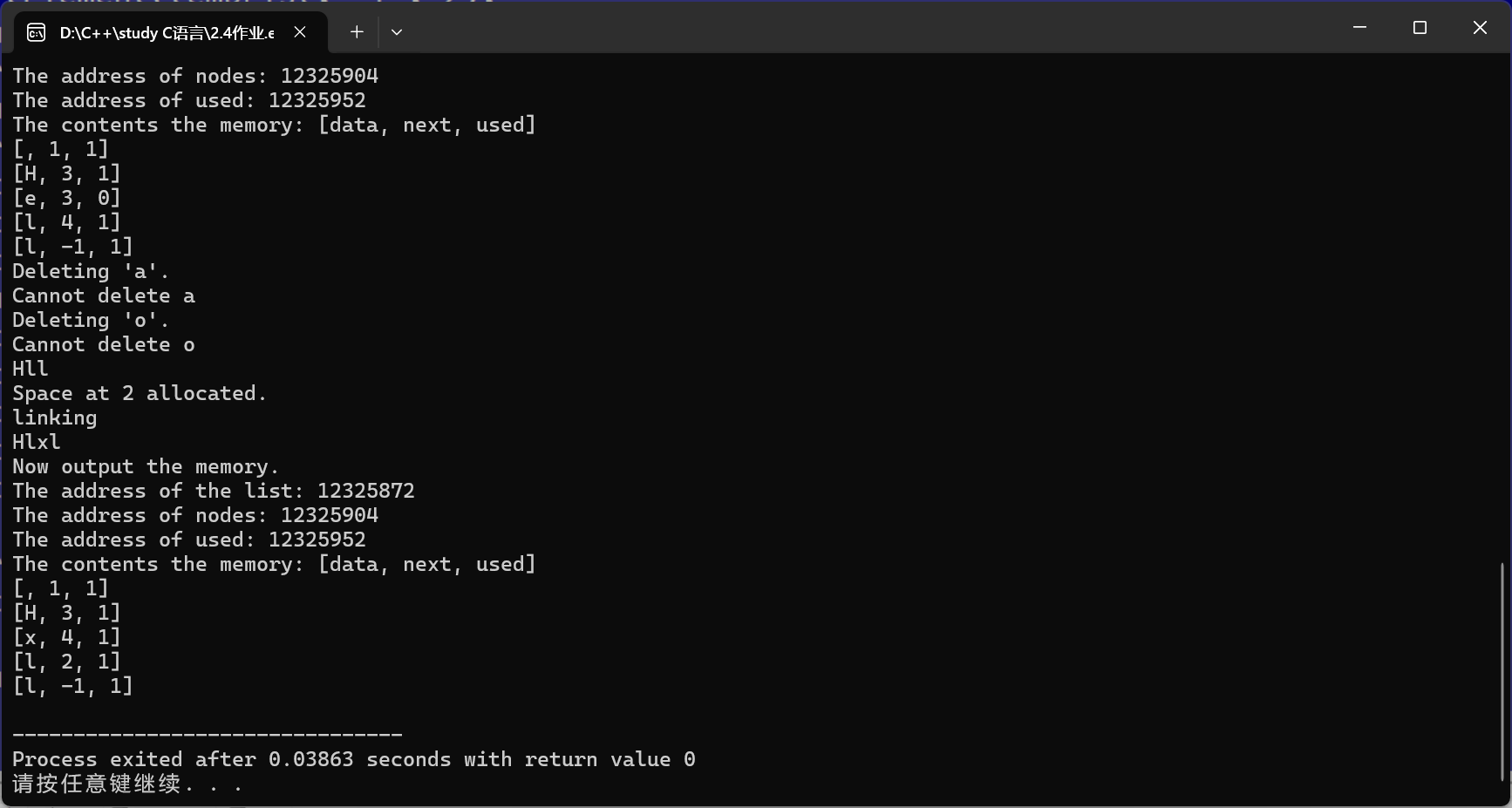 1.静态链表是一种使用数组来模拟链表结构的数据结构。它通过数组中的每个元素包含数据域和游标域来实现链表的功能。
2.静态链表结合了顺序表和链表的优点;实现方式使他更有效地利用空间;适用于没有指针的语言环境。
3.数组中的下标代表的是元素在数组中的位置。而地址是数据在存储器中的位置(地址)。





 扫一扫
扫一扫


 3578
3578

 被折叠的 条评论
为什么被折叠?
被折叠的 条评论
为什么被折叠?
 到【灌水乐园】发言





