



1.反转链表
给你单链表的头节点 head ,请你反转链表,并返回反转后的链表。

方法1:双指针
/**
 * Definition for singly-linked list.
 * public class ListNode {
 *     int val;
 *     ListNode next;
 *     ListNode() {}
 *     ListNode(int val) { this.val = val; }
 *     ListNode(int val, ListNode next) { this.val = val; this.next = next; }
 * }
 */
class Solution {
    //双指针,链表的最后一位为null
    public ListNode reverseList(ListNode head) {
        ListNode prev = null;//前驱
        ListNode cur = head;//当前节点为head
        ListNode temp = null;//用于暂时存放节点

        while(cur!=null){
            temp = cur.next;//暂时存储cur节点的下一个节点
            cur.next= prev;//当第一次执行时,连接到null
            prev = cur;//向后移动
            cur = temp;//向后移动

        }
        return prev;
    }
}
方法二:递归
/**
 * Definition for singly-linked list.
 * public class ListNode {
 *     int val;
 *     ListNode next;
 *     ListNode() {}
 *     ListNode(int val) { this.val = val; }
 *     ListNode(int val, ListNode next) { this.val = val; this.next = next; }
 * }
 */
class Solution {
    //递归
    public ListNode reverseList(ListNode head) {
        return reverse(null,head);
    }

    private ListNode reverse(ListNode prev,ListNode cur){
        if(cur==null){
            return prev;
        }
        ListNode temp = null;
        temp = cur.next;//先保存下一个节点
        cur.next=prev;//反转
        //更新prev,cur的位置
        prev =cur;
        cur =temp;
        return reverse(prev,cur);
    }
}
2.反转链表 II
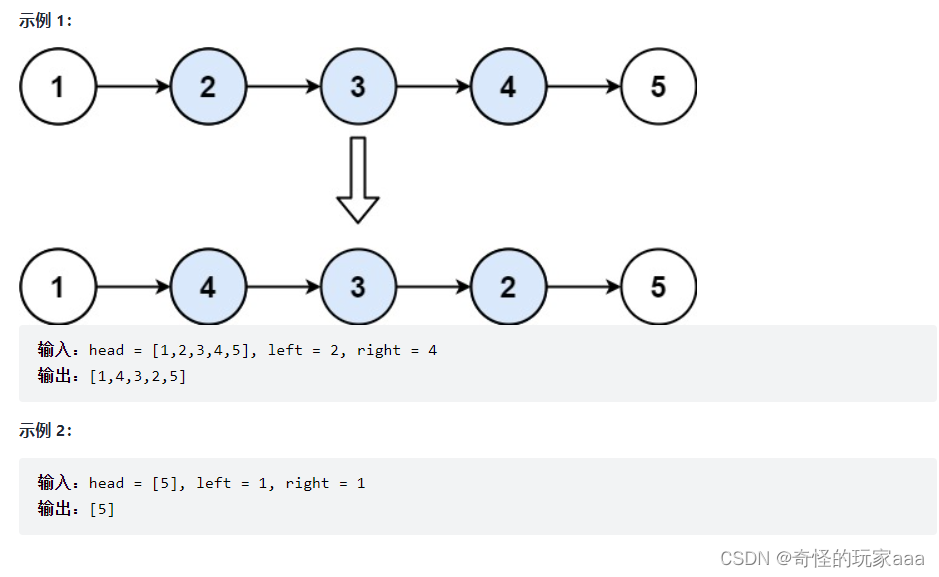
给你单链表的头指针 head 和两个整数 left 和 right ,其中 left <= right 。请你反转从位置 left 到位置 right 的链表节点,返回 反转后的链表 。
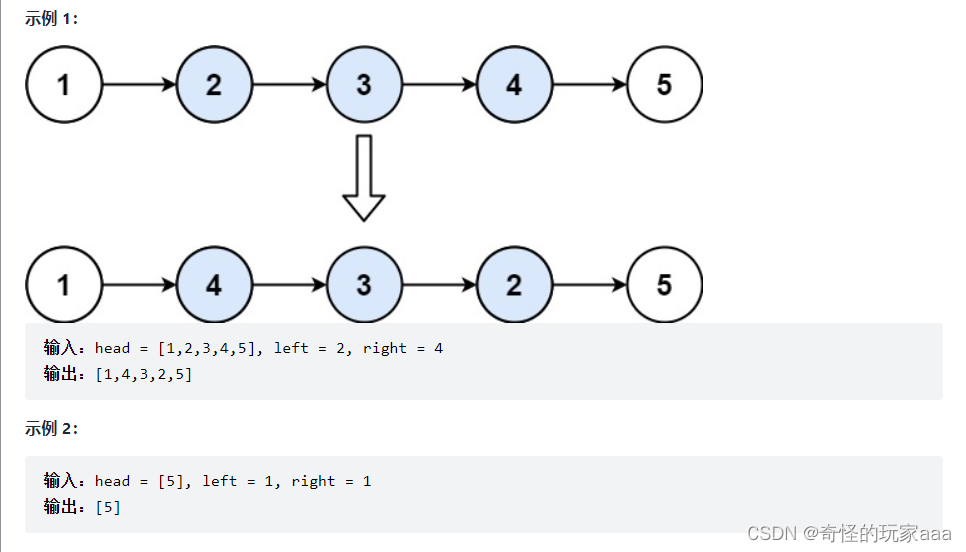
思路:
1.先得到left前的第一个节点
2.然后进行反转链表。同上
class Solution {
    public ListNode reverseBetween(ListNode head, int left, int right) {
        ListNode dummy = new ListNode(0);
        dummy.next = head;
        ListNode prev = dummy;

       //得到left的前一个节点
        for(int i =1;i<left;i++){
            prev =prev.next;
        }
        ListNode cur = prev.next;//为我们当前要操作的节点
        for(int i=left;i<right;i++){
            ListNode temp = cur.next;
            cur.next = temp.next;
            temp.next=prev.next;//以prev为标准,注意不能为cur
            prev.next = temp;
        }
    return dummy.next;

    }
}
3.回文链表
给你一个单链表的头节点 head ,请你判断该链表是否为回文链表。如果是,返回 true ;否则,返回 false 。
方法一:模拟数组
1.先的到链表的长度
2.将链表里的值放入新建等长数组中
3.回文处理
/**
 * Definition for singly-linked list.
 * public class ListNode {
 *     int val;
 *     ListNode next;
 *     ListNode() {}
 *     ListNode(int val) { this.val = val; }
 *     ListNode(int val, ListNode next) { this.val = val; this.next = next; }
 * }
 */

 /*
 *  模拟数组
 */
class Solution {
    public boolean isPalindrome(ListNode head) {
        int len = 0;
        //统计链表长度
        ListNode cur =head;
        while(cur!=null){
            cur = cur.next;
            len++;
        }
        cur = head;//回归头节点

        int [] res = new int[len];//建立数表模拟
        //将元素添加到数组中
        for(int i =0;i<res.length;i++){
            res[i]=cur.val;
            cur =cur.next;
        }
        //比较是否回文
        for(int i =0,j=len-1;i<j;i++,j--){
            if(res[i]!=res[j]){
                return false;
            }
        }
        return true;

    }
}
方法二:快慢指针
1.用快慢指针,快指针有两步,慢指针走一步,快指针遇到终止位置时,慢指针就在链表中间位置。
2.我们得到慢指针前一个位置,然后断开。链表将分为两个部分。
3.将第二部分反转链表,然后与第一部分比较。
/**
 * Definition for singly-linked list.
 * public class ListNode {
 *     int val;
 *     ListNode next;
 *     ListNode() {}
 *     ListNode(int val) { this.val = val; }
 *     ListNode(int val, ListNode next) { this.val = val; this.next = next; }
 * }
 */
class Solution {
    /*
    *  快慢指针
    */
    public boolean isPalindrome(ListNode head) {
        //如果链表为空,或者只有一个节点,返回true
        if(head==null||head.next==null){
            return true;
        }

        ListNode slow = head;
        ListNode fast = head;
        ListNode prev = head;

        while(fast!=null&&fast.next!=null){
            prev = slow;//记录slow的前一个节点
            slow = slow.next;//慢节点移动一位
            fast = fast.next.next;//快节点移动两位
        }
        prev.next = null;//根据prev,分割两个链表

        //前半部分
        ListNode cur1 = head;
        //后半部分,这里使用了反转链表,反转slow后的部分
        ListNode cur2 = reverseList(slow);

        // 前后部分进行比较
        while(cur1!=null){
            if(cur1.val!=cur2.val)  return false;
            cur1=cur1.next;
            cur2 =cur2.next;
        }
        return true;
    }

    //反转链表
    private ListNode reverseList(ListNode head){
        ListNode prev = head;
        ListNode temp = head;
        while(head!=null){
            temp = head.next;
            head.next =prev;//第一位指向null
            prev=head;
            head=temp;
        }
        return prev;
    }
}





 扫一扫
扫一扫


 3231
3231

 被折叠的 条评论
为什么被折叠?
被折叠的 条评论
为什么被折叠?
 到【灌水乐园】发言





