



 本文详细介绍了React组件的生命周期,包括初始化加载时的constructor、getDerivedStateFromProps、render和componentDidMount,以及更新阶段的getDerivedStateFromProps、shouldComponentUpdate、render、getSnapshotBeforeUpdate和componentDidUpdate。在componentDidMount中常用于启动定时器和网络请求,componentWillUnmount则用于清理资源。了解这些生命周期对于优化React应用性能至关重要。
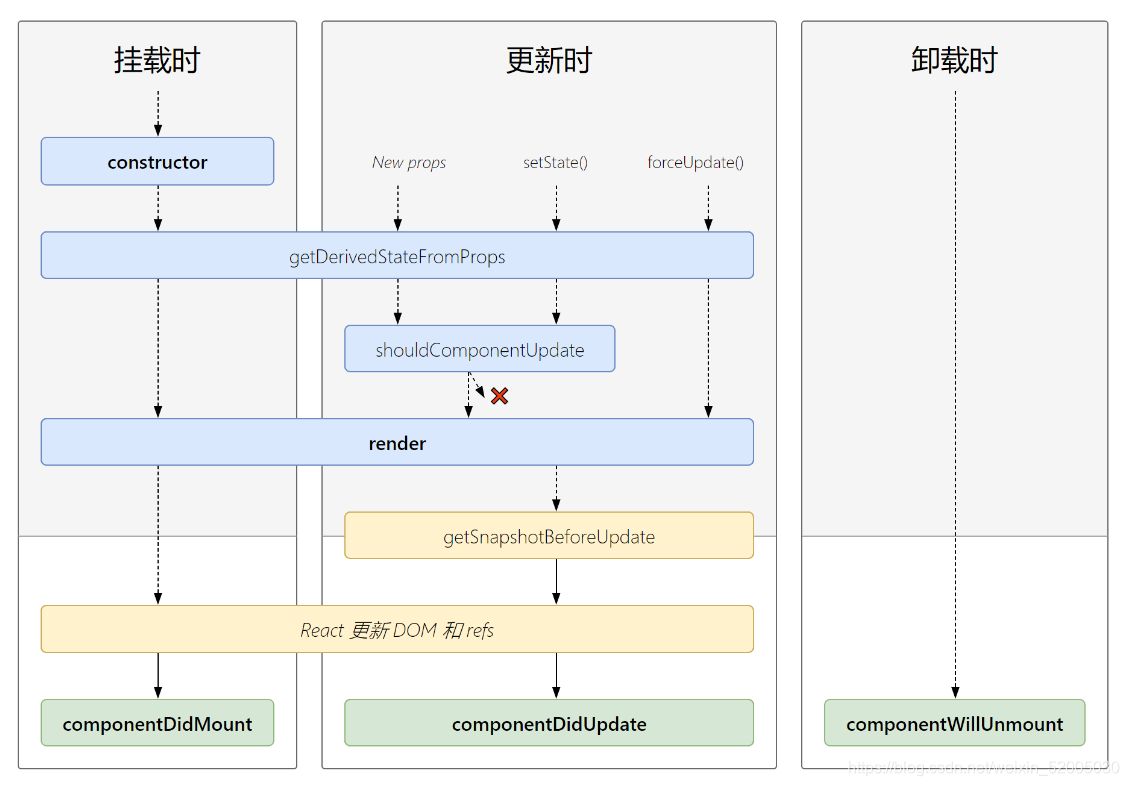
react的生命周期:
初始化加载的时候:
由ReactDOM.render()触发---初次渲染
1. constructor()
2. getDerivedStateFromProps
3. render()
4. componentDidMount() =====> 常用一般在这个钩子中做一些初始化的事,例如:开启定时 器、发送网络请求、订阅消息
	      //构造器
			constructor(props){
				console.log('Count---constructor');
				super(props)
			}

			//若state的值在任何时候都取决于props,那么可以使用getDerivedStateFromProps
			static getDerivedStateFromProps(props,state){
				console.log('getDerivedStateFromProps',props,state);
				return null
			}

           render(){}

          //组件挂载完毕的钩子
			componentDidMount(){
				console.log('Count---componentDidMount');
			}
更新的时候:
2. 更新阶段: 由组件内部this.setSate()或父组件重新render触发
1. getDerivedStateFromProps
2. shouldComponentUpdate()
3. render()
4. getSnapshotBeforeUpdate
5. componentDidUpdate()
3. 卸载组件: 由ReactDOM.unmountComponentAtNode()触发
1. componentWillUnmount() =====> 常用一般在这个钩子中做一些收尾的事,例如:关闭定时器、取消订阅消息





 扫一扫
扫一扫


 721
721

 被折叠的 条评论
为什么被折叠?
被折叠的 条评论
为什么被折叠?
 到【灌水乐园】发言





