



1.设计循环队列
1.设计循环队列:
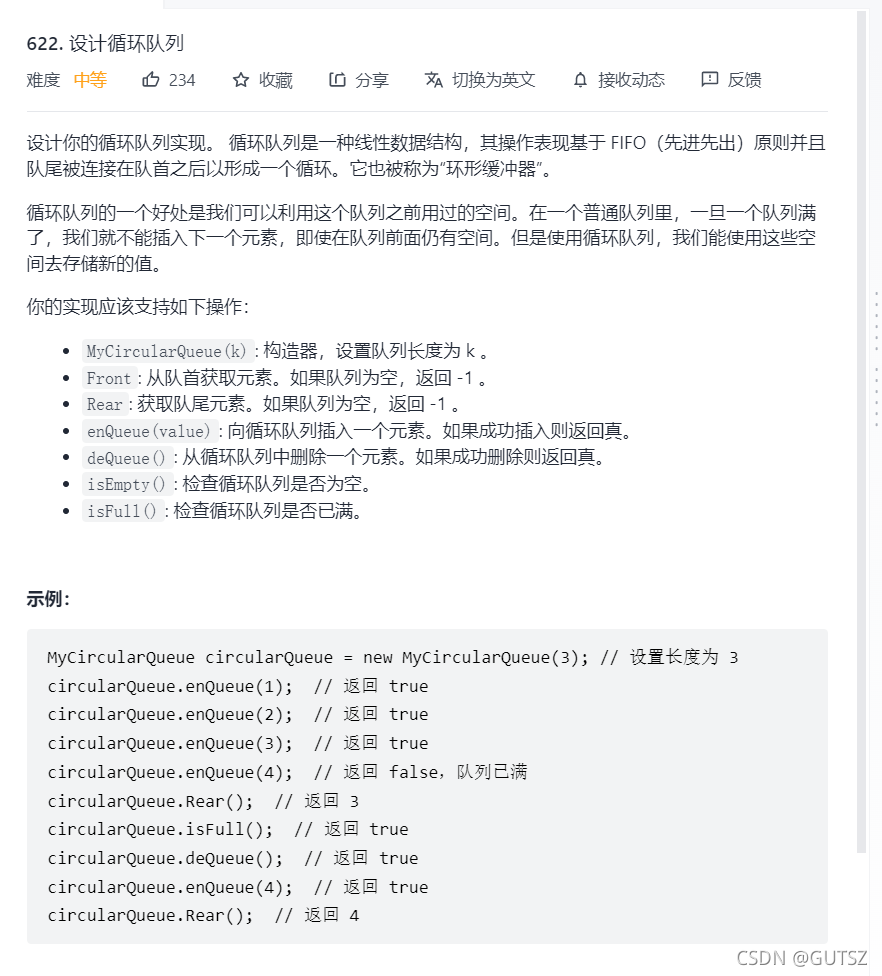
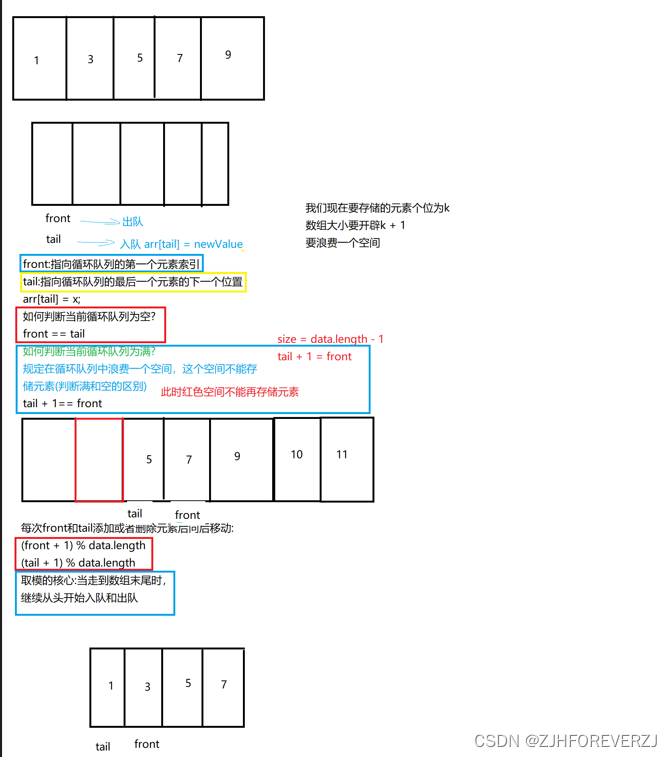
方法一:
(1)代码:
class MyCircularQueue {
    private int[] array;
    private int size;
    private int front=0;
    private int rear=0;
    public MyCircularQueue(int k) {
        array=new int[k];
    }

    public boolean enQueue(int value) {
        if(size==array.length){
            System.out.println("queue is full!");
            return false;
        }
        array[rear]=value;
        rear=(rear+1)%array.length;
        size++;
        return true;
    }

    public boolean deQueue() {
        if(size==0){
            System.out.println("queue is empty!");
            return false;
        }
        front=(front+1)%array.length;
        size--;
        return true;
    }

    public int Front() {
        if(size==0){
            System.out.println("queue is empty!");
            return -1;
        }
        return array[front];
    }

    public int Rear() {
        if(size==0){
            System.out.println("queue is empty!");
            return -1;
        }
        int last=(rear-1+array.length)%array.length;
        return array[last];
    }

    public boolean isEmpty() {
        return size==0;
    }

    public boolean isFull() {
        return size==array.length;
    }
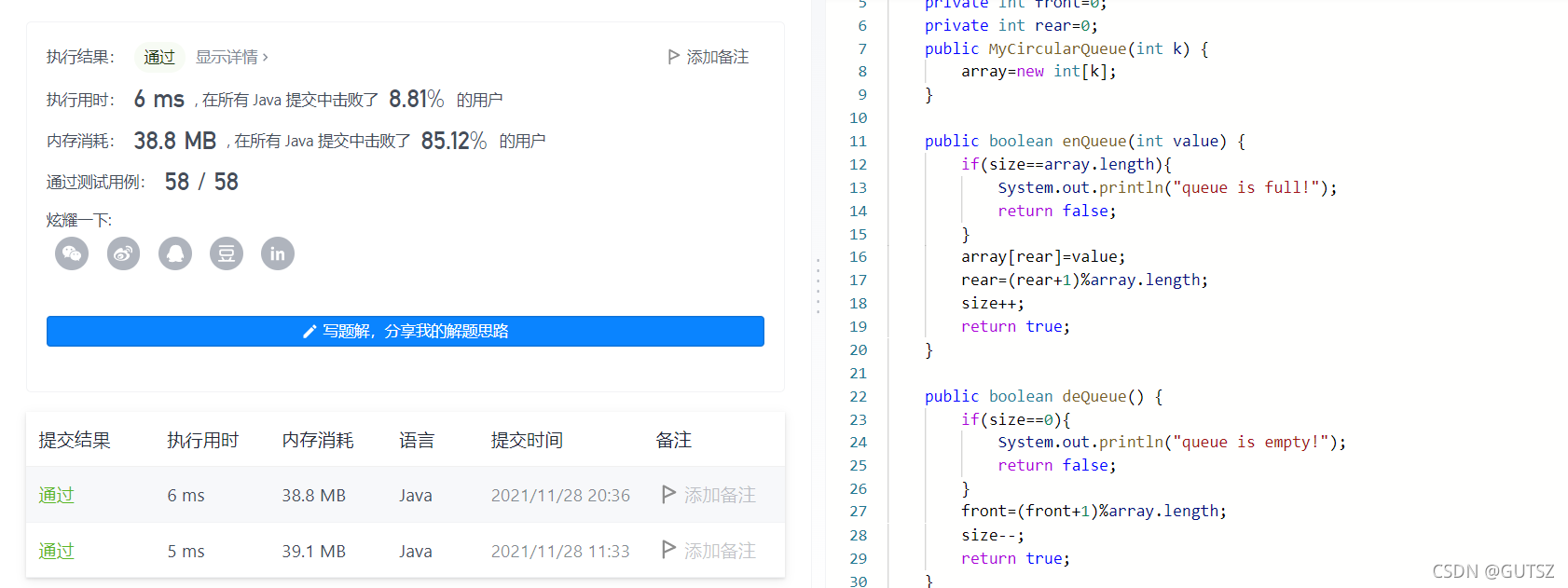
(2)运行截图:
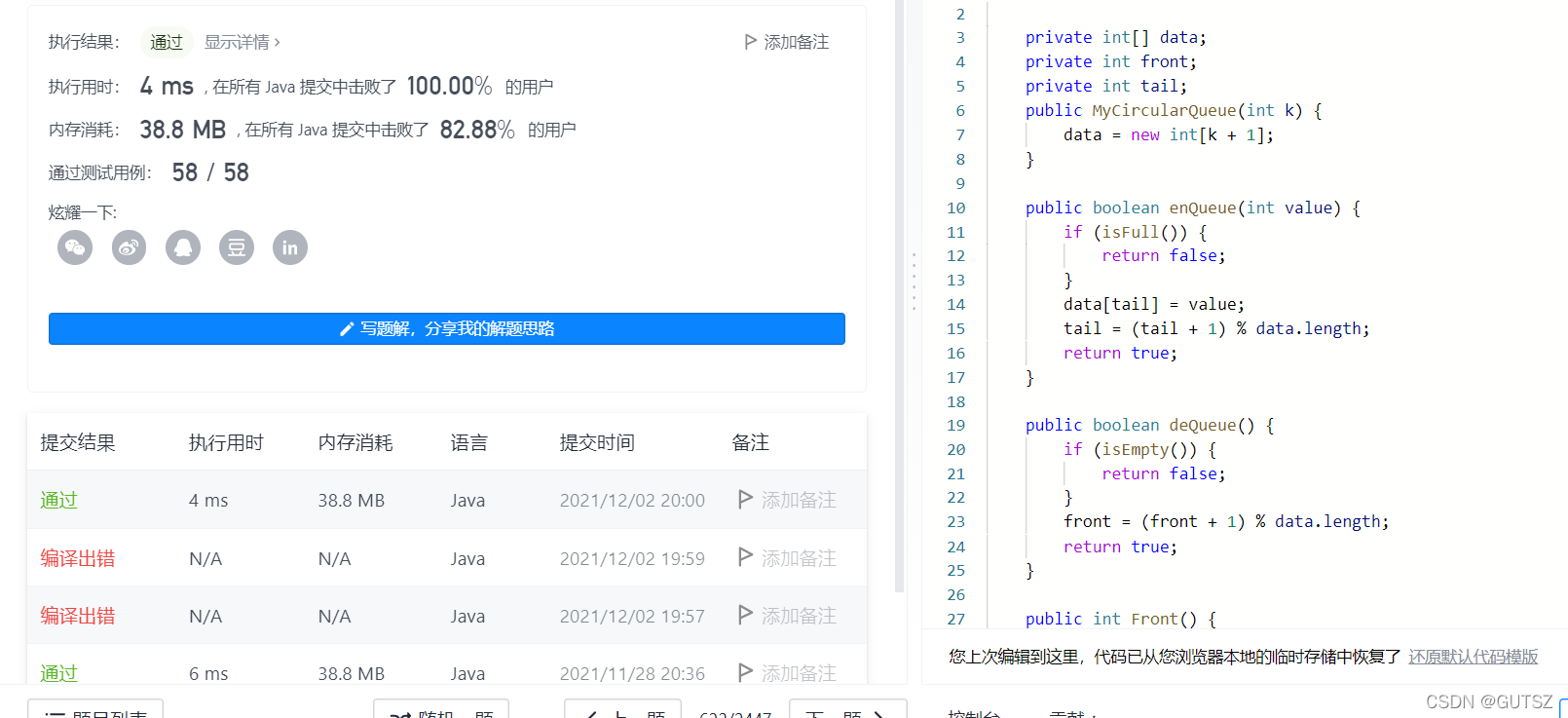
方法二:
package stack_queue.leetcode;

/**
 * 设计循环队列
 */
public class MyCircularQueue {
    private int[] data;
    private int front;
    private int tail;
    public MyCircularQueue(int k) {
        data = new int[k + 1];
    }

    public boolean enQueue(int value) {
        if (isFull()) {
            return false;
        }
        data[tail] = value;
        tail = (tail + 1) % data.length;
        return true;
    }

    public boolean deQueue() {
        if (isEmpty()) {
            return false;
        }
        front = (front + 1) % data.length;
        return true;
    }

    public int Front() {
        if (isEmpty()) {
            return -1;
        }
        return data[front];
    }

    public int Rear() {
        if (isEmpty()) {
            return -1;
        }
        int index = tail == 0 ? data.length - 1 : tail - 1;
        return data[index];
    }

    public boolean isEmpty() {
        return front == tail;
    }

    public boolean isFull() {
        return (tail + 1) % data.length == front;
    }
}
2.有效的括号
2.有效的括号:
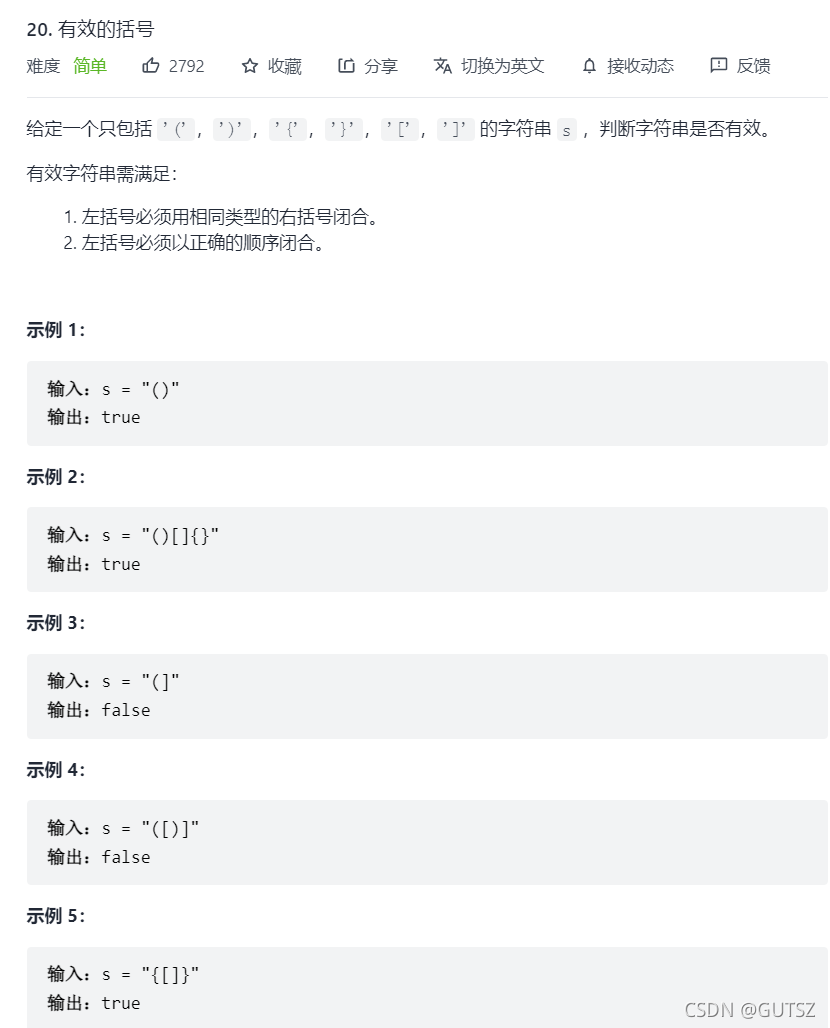
(1)代码:
package stack_queue.leetcode;
import java.util.Stack;

public class Num20 {
    public boolean isValid(String s) {
        //遍历字符串,在遍历过程中,将左括号全部入栈
        //碰到右括号就弹出栈顶元素查看括号是否匹配
        //1.将字符串转换为字符数组String->char[]
        Stack<Character> stack = new Stack<>();
        char[] ret = s.toCharArray();
        for (int i = 0; i < ret.length; i++) {
            char c = ret[i];
            //判断c是否是左括号
            if (c == '{' || c == '[' || c == '(') {
                stack.push(c);
            } else {
                 if(stack.isEmpty()) {
                    return false;
                }
                 //此时c是个右括号
                char tmp=stack.pop();
                 if(c=='}'&& tmp !='{'){
                     return false;
                 }
                 if(c==']' && tmp!='['){
                     return false;
                 }
                 if(c==')'&& tmp!='('){
                     return false;
                 }
            }
        }
        return stack.isEmpty();
    }
}
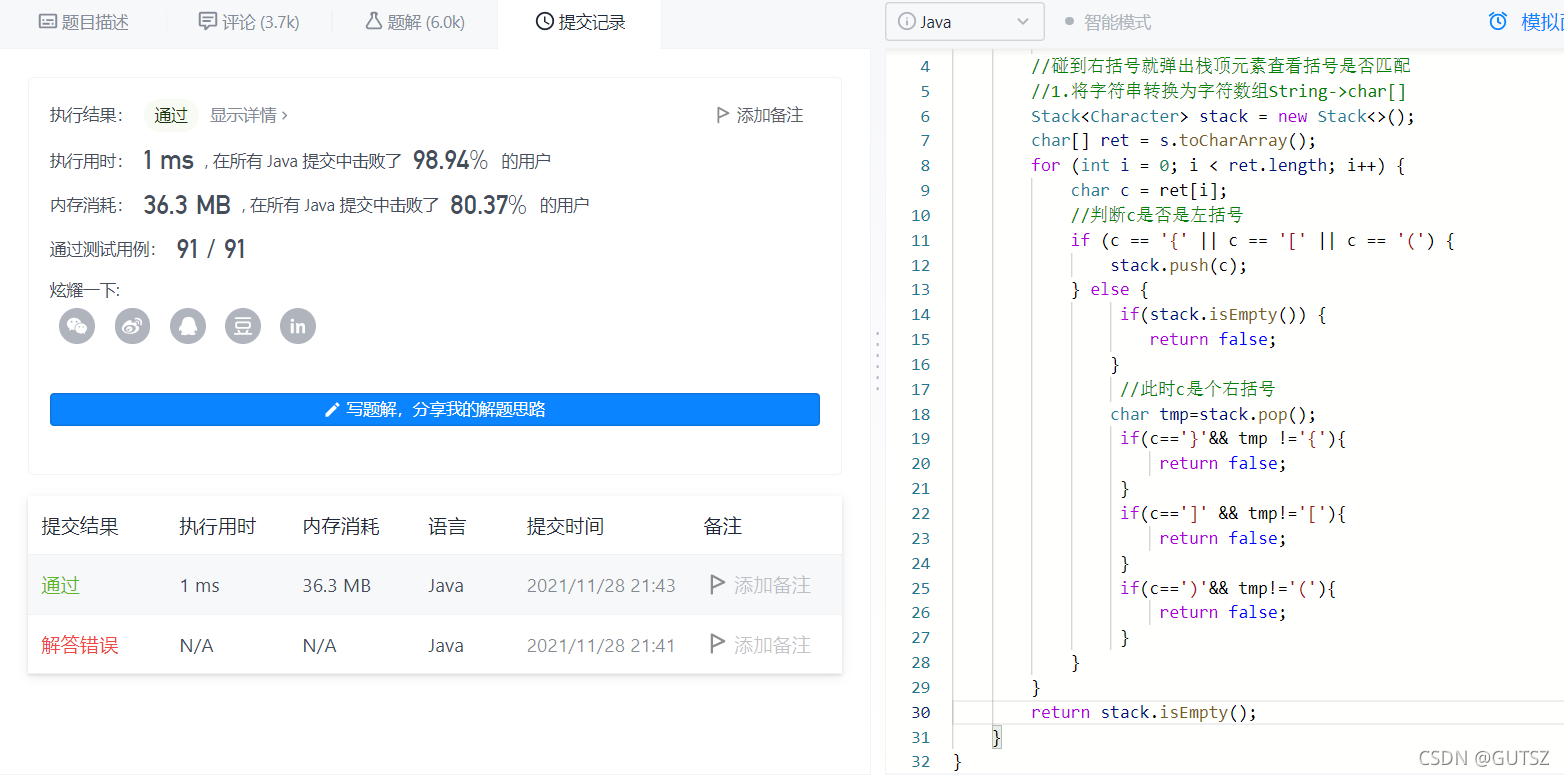
(2)运行截图:
3.最小栈
3.最小栈
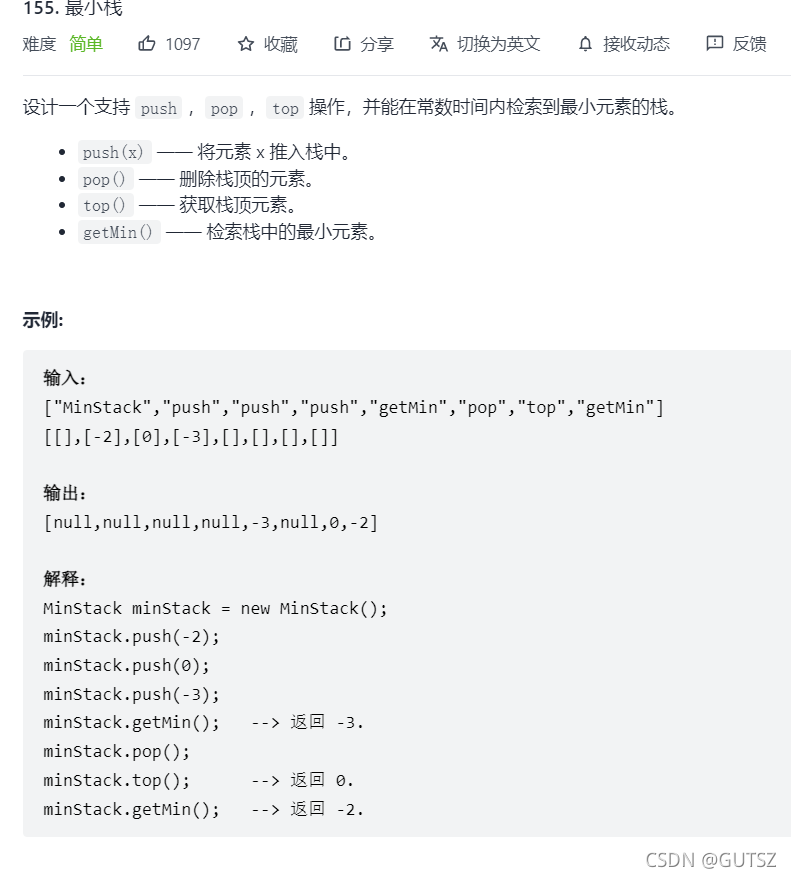
(1)代码:
package stack_queue.leetcode;
import java.util.Stack;

//双栈实现最小栈
public class Num155 {
    // 具体存储元素
    private Stack<Integer> element = new Stack<>();
    // 辅助栈,一直保存最小元素
    private Stack<Integer> support = new Stack<>();

    public Num155() {
    }

    public void push(int val) {
        element.push(val);
        if (support.isEmpty()) {
            support.push(val);
        } else {
            int tmpMin = support.peek();
            // 比较当前元素和tmpMin谁更小
            // 将最小的元素push进辅助栈中
            int min = Math.min(val, tmpMin);
            support.push(min);
        }
    }

    public void pop() {
        element.pop();
        support.pop();
    }

    public int top() {
        return element.peek();
    }

    public int getMin() {
        return support.peek();
    }
}
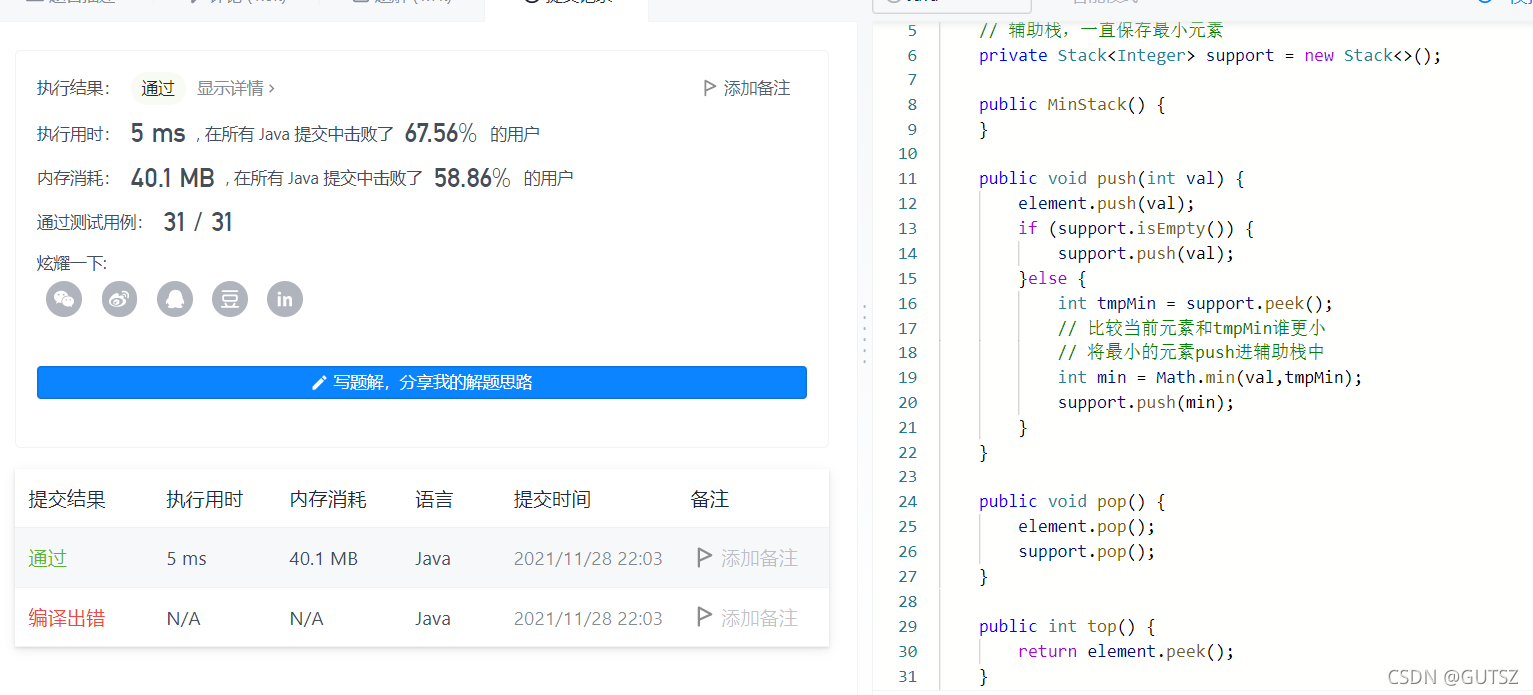
(2)运行截图:
4.用队列实现栈
4.用队列实现栈:
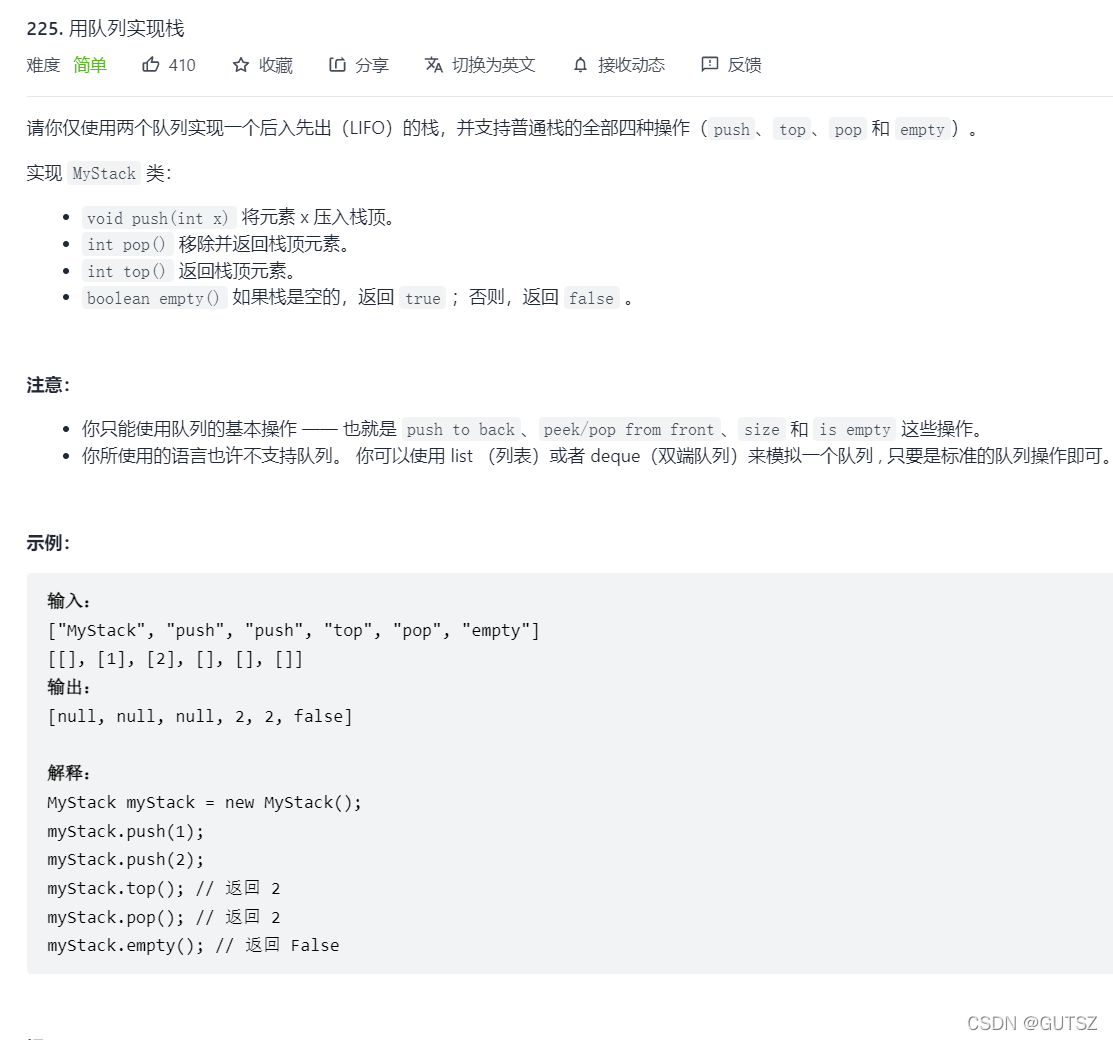
解题思路:
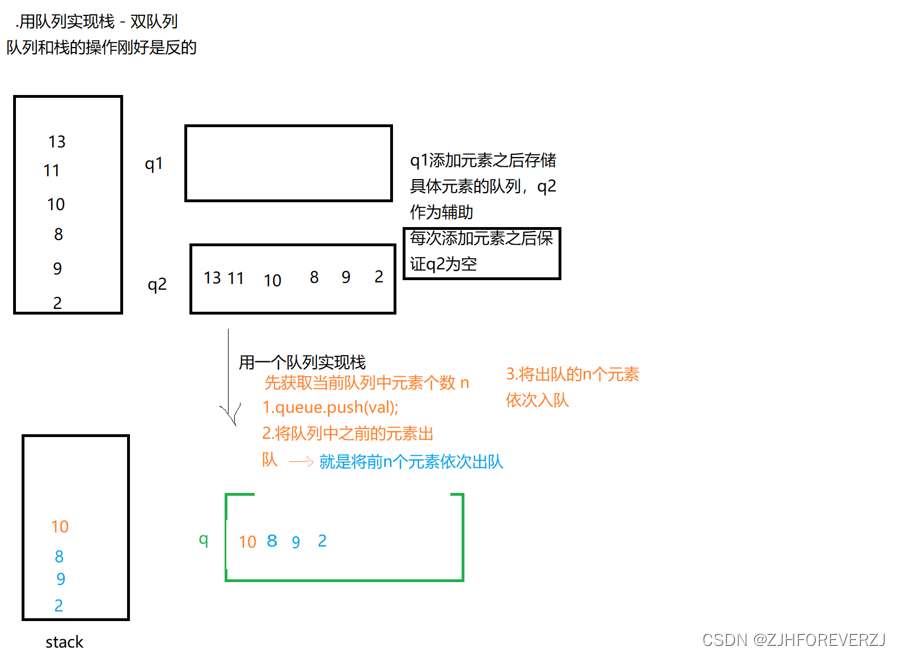
(1)代码实现:
package stack_queue.leetcode;

import java.util.LinkedList;
import java.util.Queue;

//Num225
//双队列实现栈
public class MyStack {
    //q1永远是保存元素的那个队列
    private Queue<Integer> queue1=new LinkedList<>();
    //q2永远保持为空,元素先入q2,然后将q1的元素出队再入q2
    //q1和q2换名字
    private Queue<Integer> queue2=new LinkedList<>();
    public MyStack() {

    }

    public void push(int x) {
        queue2.offer(x);
        //将q1的所有元素依次出队而后入q2
        while(! queue1.isEmpty()){
            queue2.offer(queue1.poll());
        }
        //刺水q1为空,q2存元素,q1与q2互换名字
        Queue<Integer> tmp=queue1;
        queue1=queue2;
        queue2=tmp;
    }

    public int pop() {
        return  queue1.poll();
    }

    public int top() {
        return queue1.peek();
    }

    public boolean empty() {
        return queue1.isEmpty();
    }
}
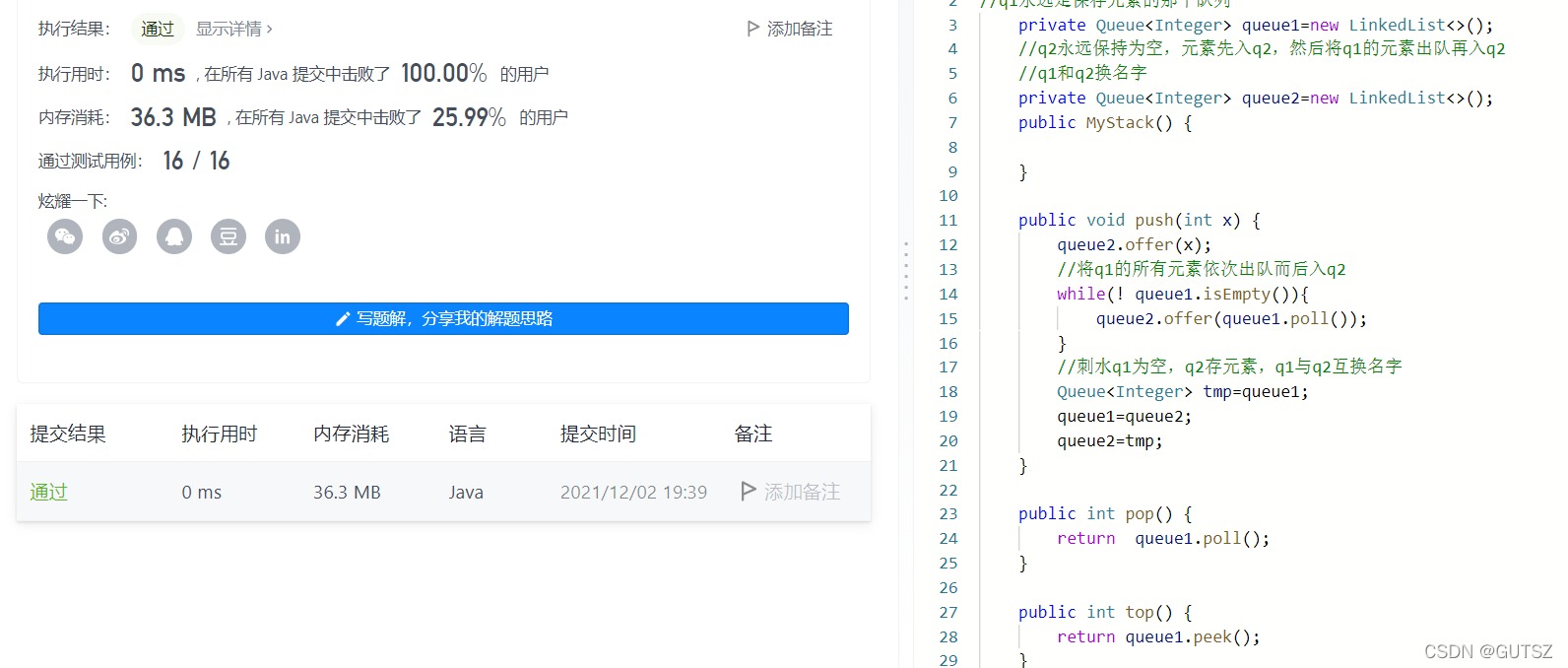
(2)运行截图:
5.双栈实现队列
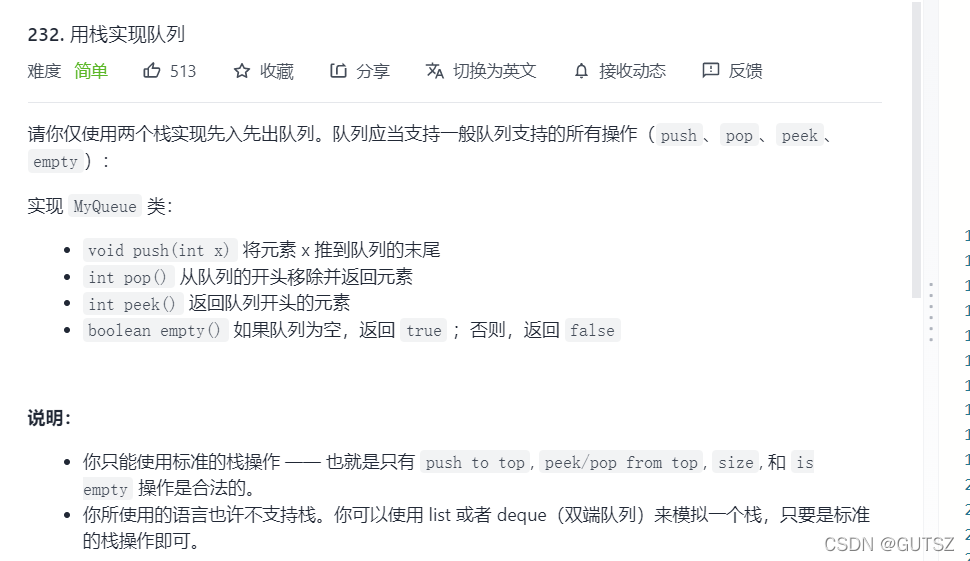
解题思考:
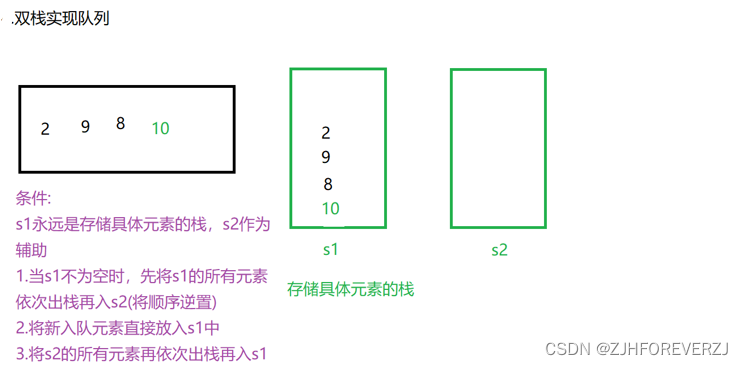
(1)代码实现:
package stack_queue.leetcode;
import java.util.Stack;

//Num232
//双栈实现队列
public class MyQueue {
    //s1存储具体元素
    private Stack<Integer> s1;
    //s2作为辅助
    private Stack<Integer> s2;
    public MyQueue(){
        s1=new Stack<>();
        s2=new Stack<>();
    }
    public void push(int x){
        if(s1.isEmpty()){
            s1.push(x);
        }else{
            while(! s1.isEmpty()){
                s2.push(s1.pop());
            }
            //直接将队尾元素入s1
            s1.push(x);
            //将s2的所有元素依次出栈再入栈s1
            while(! s2.isEmpty()){
                s1.push(s2.pop());
            }
        }
    }

    public int pop(){
        return s1.pop();
    }
    public int peek(){
        return s1.peek();
    }
    public boolean empty(){
        return s1.isEmpty();
    }
}
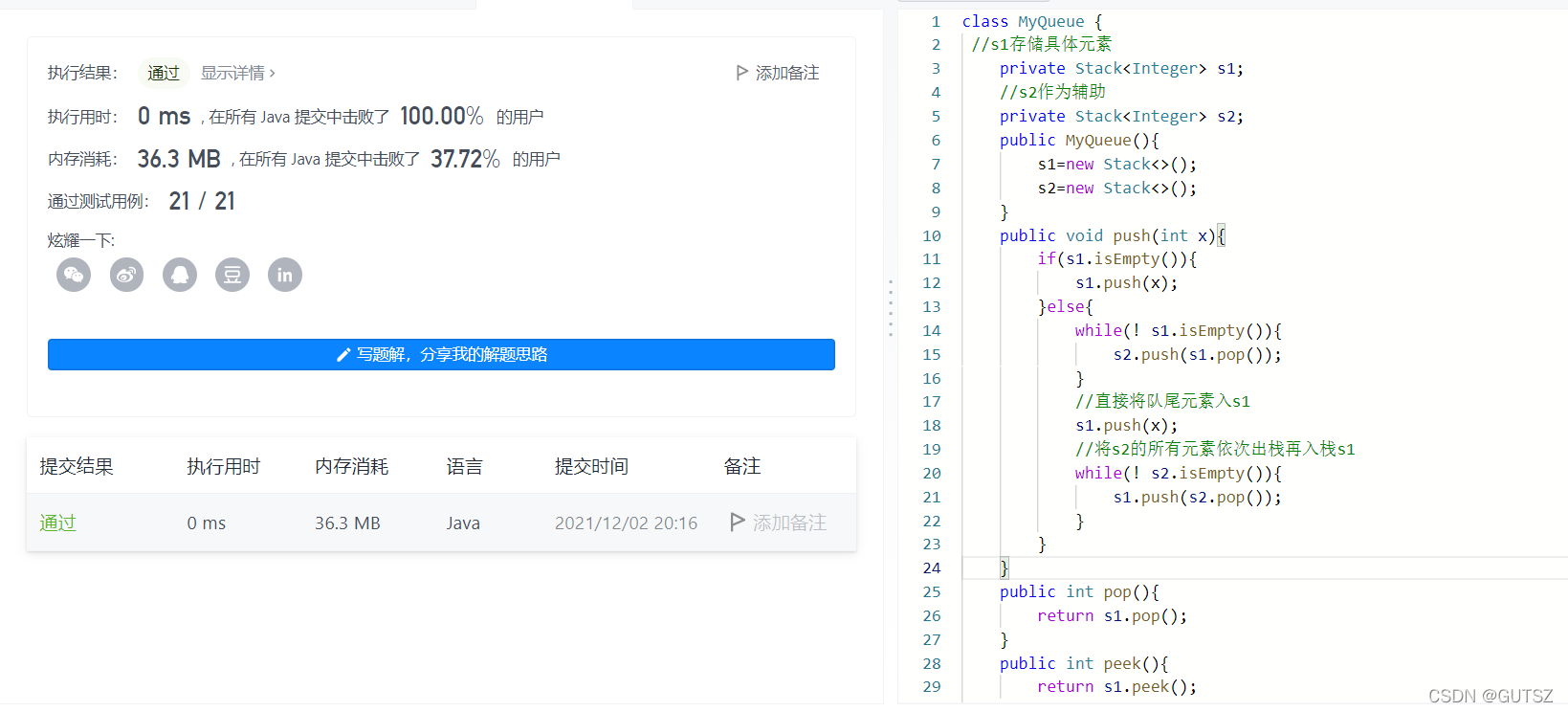
(2)运行截图:
6.一个队列实现栈结构
package stack_queue.leetcode;

import java.util.LinkedList;
import java.util.Queue;

//一个队列实现栈结构
public class MyStackByOneQueue {
    public Queue<Integer> queue;
    public MyStackByOneQueue(){
        queue=new LinkedList<>();
    }

    public void push(int x){
        //获取当前队列元素个数
        int n=queue.size();
        //1.先入队
        queue.add(x);
        //2.3将前n个元素依次出队再入队
        for (int i = 0; i <n  ; i++) {
            queue.add(queue.poll());
        }
    }

    public int pop(){
        return queue.poll();
    }
    public int top(){
        return queue.peek();
    }
    public boolean empty(){
        return queue.isEmpty();
    }
}





 扫一扫
扫一扫


 1306
1306

 被折叠的 条评论
为什么被折叠?
被折叠的 条评论
为什么被折叠?
 到【灌水乐园】发言





