


 本文探讨如何利用Dijkstra算法解决智能交通系统中的最佳路径选择问题。通过邻接矩阵作为存储结构,程序旨在找到从一个地点到另一个地点的最小花费路径。文章提到了在CodeBlocks中遇到的'`to_string`'未声明的问题,并提供了解决方案链接。
编写程序,实现智能交通中的最佳路径选择问题:设有n个地点,编号为0→n-1,m条路径的起点、终点和代价由用户输入提供,使用 [邻接表] 邻接矩阵为存储结构,寻找最佳路径方案(如花费时间最少,路径长度最短,交通费用最少等问题任选其一即可)
为什么用的是邻接矩阵?
没有为什么,看错题目了。。。。:)
codeblocks中报错:‘to_string’ was not declared in this scope解决方案:
https://blog.youkuaiyun.com/haofandedaima/article/details/90137837#commentBox
char转string
#include <sstream>
char c;
string str;
stringstream stream;
stream << c;
str = stream.str();
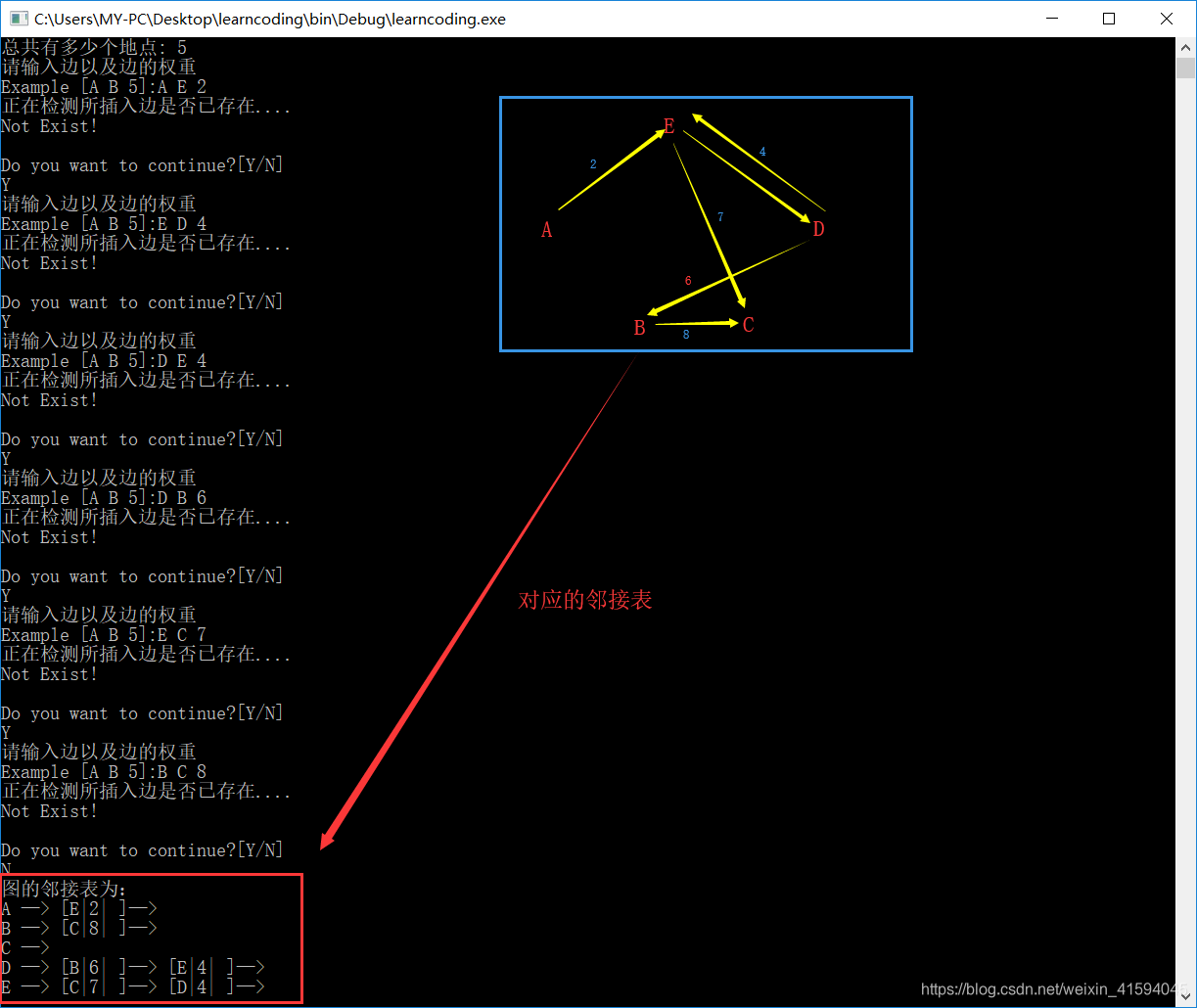
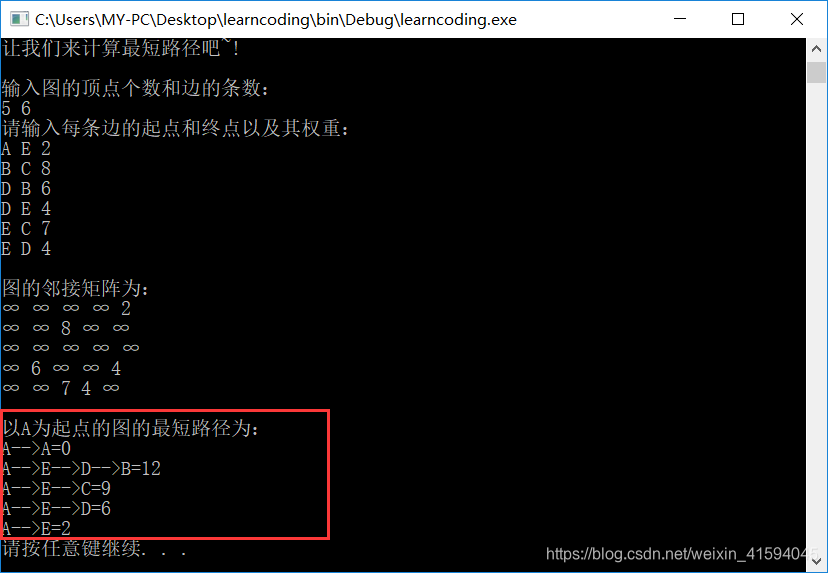
ITS.cpp [ Intelligent Transportation System ]
#include <iostream>
#include <stdio.h>
#include <stdlib.h>
#include "Queue.h"
#include "Dijkstra.h"
using namespace std;
typedef struct eNode{
char adjVex; //任意顶点u相邻接的顶点
int w; //边的权值
struct eNode* nextArc; //指向下一个边结点
}eNode;
typedef struct{
int n; //图的当前顶点数
int e; //图的当前边数
eNode **a; //指向一维指针数组
}lGraph;
int Init(lGraph *lg,int nSize){
//初始化函数
int i;
lg->n = nSize;
lg->e = 0;
lg->a = (eNode **)malloc(sizeof(eNode*)*nSize);
if(!lg->a){
return 0;
}
else{
for(i=0;i<nSize;i++){
lg->a[i] = NULL;
}
}
return 0;
}
void Print(lGraph *lg){
//打印邻接表的函数
int i=0;
eNode *p;
for(i=0;i<lg->n;i++){
cout<<char(65+i)<<" —> ";
p = lg->a[i];
while(p){
cout<<"["<<p->adjVex<<"|"<<p->w<<"| ]—> ";
p = p->nextArc;
}
cout<<endl;
}
}
int Exist(lGraph *lg,char u,char v){
//检查边是否存在的函数
eNode *p;
if(int(u)<65||int(v)<65||int(u)>65 + lg->n-1||int(v)>65 + lg->n-1||u==v)
return 0;
p = lg->a[int(u)-65];
while(p&&p 最低0.47元/天 解锁文章





 扫一扫
扫一扫


 6698
6698

 被折叠的 条评论
为什么被折叠?
被折叠的 条评论
为什么被折叠?
 到【灌水乐园】发言





