


 本文深入探讨了C++中模板元编程技术的应用,通过具体实例展示了如何使用函数指针和模板来实现高效的数据操作。重点讲解了如何通过模板元编程优化代码结构,提高程序的复用性和可维护性。
#include <iostream>
#include <string>

using namespace std;

//传入的参数是数组的指针,返回值是数组的指针
string (*fun(string (*s)[10]))[10]
{
    return s;

}

//using str_arr = string (*)[10];
/*typedef string (*str_arr)[10];
str_arr fun1(str_arr s) {
return s;
}
*/

typedef string str_arr[10];
str_arr *fun1(str_arr *s) {
    return s;
}

auto fun2(string (*s)[10])  -> string (*)[10]
{
    return s;
}


string d[10];
decltype(d) *fun3(decltype(d) *s)
{
    return s;
}


int main(int argc, char *argv[])
{
    string s[10] = { "1", "2", "3", "4", "5", "6", "7", "8", "9", "1"};
    //decltype(s) *ds = fun(&s);
    decltype(s) *ds = fun1(&s);
    //decltype(s) *ds = fun2(&s);
    //decltype(s) *ds = fun3(&s);
    (*ds)[1] = "han";
    for (const auto &a : s)
    {
        cout << a << endl;
    }
    cout << endl;

    return 0;
}
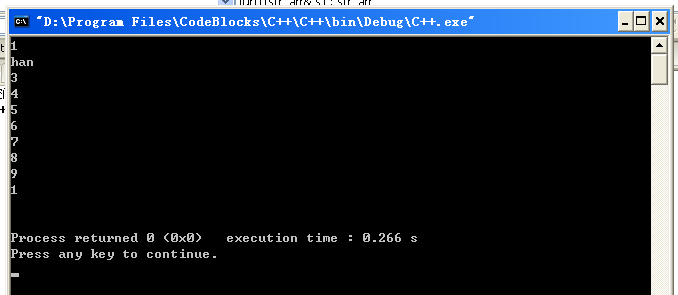
运行结果如下:






 扫一扫
扫一扫


 847
847

 被折叠的 条评论
为什么被折叠?
被折叠的 条评论
为什么被折叠?
 到【灌水乐园】发言





