from tensorflow.keras.applications import VGG16, InceptionV3, MobileNetV2, ResNet50, DenseNet121, EfficientNetB0
from tensorflow.keras.layers import Layer, Dropout, LayerNormalization, Dense
class MultiHeadSelfAttention(Layer):
"""
Multi-Head Self Attention Layer.
This layer implements the multi-head self-attention mechanism used in transformers.
It projects the input into multiple heads, performs scaled dot-product attention
on each head, and then concatenates and projects the results.
Attributes:
embed_dim: Dimensionality of the embedding.
num_heads: Number of attention heads.
dropout_rate: Dropout rate for regularization.
"""
def __init__(self, embed_dim=256, num_heads=8, dropout_rate=0.1):
"""
Initialize the layer.
Args:
embed_dim: Dimensionality of the embedding.
num_heads: Number of attention heads.
dropout_rate: Dropout rate for regularization.
"""
super(MultiHeadSelfAttention, self).__init__()
self.num_heads = num_heads
self.embed_dim = embed_dim
self.dropout_rate = dropout_rate
if embed_dim % num_heads != 0:
raise ValueError(f"embedding dimension = {embed_dim} should be divisible by number of heads = {num_heads}")
self.projection_dim = embed_dim // num_heads
# Define dense layers for query, key, and value projections
self.query_dense = Dense(embed_dim)
self.key_dense = Dense(embed_dim)
self.value_dense = Dense(embed_dim)
# Define dense layer to combine the heads
self.combine_heads = Dense(embed_dim)
# Define dropout and layer normalization layers
self.dropout = Dropout(dropout_rate)
self.layernorm = LayerNormalization(epsilon=1e-6)
def attention(self, query, key, value):
"""
Compute scaled dot-product attention.
Args:
query: Query tensor.
key: Key tensor.
value: Value tensor.
Returns:
attention: Result of the attention mechanism.
"""
score = tf.matmul(query, key, transpose_b=True) # Calculate dot product
dim_key = tf.cast(tf.shape(key)[-1], tf.float32) # Get dimension of key
scaled_score = score / tf.math.sqrt(dim_key) # Scale the scores
weights = tf.nn.softmax(scaled_score, axis=-1) # Apply softmax to get attention weights
attention = tf.matmul(weights, value) # Multiply weights with values
return attention
def separate_heads(self, x, batch_size):
"""
Separate the heads for multi-head attention.
Args:
x: Input tensor.
batch_size: Batch size of the input.
Returns:
x: Tensor with separated heads.
"""
x = tf.reshape(x, (batch_size, -1, self.num_heads, self.projection_dim))
return tf.transpose(x, perm=[0, 2, 1, 3])
def call(self, inputs):
"""
Forward pass for the layer.
Args:
inputs: Input tensor.
Returns:
output: Output tensor after applying multi-head self-attention.
"""
batch_size = tf.shape(inputs)[0]
# Project inputs to query, key, and value tensors
query = self.query_dense(inputs)
key = self.key_dense(inputs)
value = self.value_dense(inputs)
# Separate the heads for multi-head attention
query = self.separate_heads(query, batch_size)
key = self.separate_heads(key, batch_size)
value = self.separate_heads(value, batch_size)
# Compute attention
attention = self.attention(query, key, value)
# Concatenate the heads and reshape the tensor
attention = tf.transpose(attention, perm=[0, 2, 1, 3])
concat_attention = tf.reshape(attention, (batch_size, -1, self.embed_dim))
# Combine heads and apply dropout and layer normalization
output = self.combine_heads(concat_attention)
output = self.dropout(output)
output = self.layernorm(inputs + output)
# Reduce mean across the time dimension to get fixed-size output
output = tf.reduce_mean(output, axis=1)
return output
def compute_output_shape(self, input_shape):
"""
Compute the output shape of the layer.
Args:
input_shape: Shape of the input tensor.
Returns:
Output shape.
"""
return input_shape[0], self.embed_dim
def compute_output_shape(self, input_shape):
return input_shape[0], self.embed_dim
def create_vgg16_model():
base_model = VGG16(weights='/kaggle/input/transfer-learning-weights/Transfer-learning-weights/vgg16_weights_tf_dim_ordering_tf_kernels_notop.h5', include_top=False, input_shape=(128, 128, 3))
for layer in base_model.layers:
layer.trainable = False
model = models.Sequential()
model.add(base_model)
model.add(layers.GlobalAveragePooling2D())
model.add(layers.Dense(256, activation='relu'))
model.add(MultiHeadSelfAttention(embed_dim=256, num_heads=8))
model.add(layers.Dense(256, activation='relu'))
model.add(layers.Dropout(0.5))
model.add(layers.Dense(num_classes, activation='softmax'))
return model
def create_inceptionv3_model():
base_model = tf.keras.applications.InceptionV3(weights='/kaggle/input/transfer-learning-weights/Transfer-learning-weights/inception_v3_weights_tf_dim_ordering_tf_kernels_notop.h5', include_top=False, input_shape=(128, 128, 3))
for layer in base_model.layers:
layer.trainable = False
model = models.Sequential()
model.add(base_model)
model.add(layers.GlobalAveragePooling2D())
model.add(layers.Dense(256, activation='relu'))
model.add(MultiHeadSelfAttention(embed_dim=256, num_heads=8))
model.add(layers.Dense(256, activation='relu'))
model.add(layers.Dropout(0.5))
model.add(layers.Dense(num_classes, activation='softmax'))
return model
def create_mobilenet_model():
base_model = MobileNetV2(weights='/kaggle/input/transfer-learning-weights/Transfer-learning-weights/mobilenet_v2_weights_tf_dim_ordering_tf_kernels_1.0_128_no_top.h5', include_top=False, input_shape=(128, 128, 3))
for layer in base_model.layers:
layer.trainable = False
model = models.Sequential()
model.add(base_model)
model.add(layers.GlobalAveragePooling2D())
model.add(layers.Dense(256, activation='relu'))
model.add(MultiHeadSelfAttention(embed_dim=256, num_heads=8))
model.add(layers.Dense(256, activation='relu'))
model.add(layers.Dropout(0.5))
model.add(layers.Dense(num_classes, activation='softmax'))
return model
def create_cnn_model():
model = models.Sequential()
model.add(layers.Conv2D(32, (3, 3), activation='relu', input_shape=(128, 128, 3)))
model.add(layers.BatchNormalization())
model.add(layers.MaxPooling2D((2, 2)))
model.add(layers.Dropout(0.3))
model.add(layers.Conv2D(64, (3, 3), activation='relu'))
model.add(layers.BatchNormalization())
model.add(layers.MaxPooling2D((2, 2)))
model.add(layers.Dropout(0.3))
model.add(layers.Conv2D(128, (3, 3), activation='relu'))
model.add(layers.BatchNormalization())
model.add(layers.MaxPooling2D((2, 2)))
model.add(layers.Dropout(0.3))
model.add(layers.Conv2D(256, (3, 3), activation='relu'))
model.add(layers.BatchNormalization())
model.add(layers.MaxPooling2D((2, 2)))
model.add(layers.Dropout(0.3))
model.add(layers.Flatten())
model.add(layers.Dense(512, activation='relu', kernel_regularizer=tf.keras.regularizers.l2(0.01)))
model.add(layers.Dropout(0.5))
model.add(MultiHeadSelfAttention(embed_dim=512, num_heads=8))
model.add(layers.Dense(256, activation='relu', kernel_regularizer=tf.keras.regularizers.l2(0.01)))
model.add(layers.Dropout(0.5))
model.add(layers.Dense(num_classes, activation='softmax'))
return model
def create_densenet121_model():
base_model = DenseNet121(weights='/kaggle/input/transfer-learning-weights/Transfer-learning-weights/densenet121_weights_tf_dim_ordering_tf_kernels_notop.h5', include_top=False, input_shape=(128, 128, 3))
for layer in base_model.layers:
layer.trainable = False
model = models.Sequential()
model.add(base_model)
model.add(layers.GlobalAveragePooling2D())
model.add(layers.Dense(256, activation='relu'))
model.add(MultiHeadSelfAttention(embed_dim=256, num_heads=8))
model.add(layers.Dense(256, activation='relu'))
model.add(layers.Dropout(0.5))
model.add(layers.Dense(num_classes, activation='softmax'))
return model
from tensorflow.keras.applications import Xception, NASNetMobile, ResNet101, VGG19, InceptionResNetV2,ResNet50
def create_xception_model():
base_model = Xception(weights='/kaggle/input/transfer-learning-weights/Transfer-learning-weights/xception_weights_tf_dim_ordering_tf_kernels_notop.h5', include_top=False, input_shape=(128, 128, 3))
for layer in base_model.layers:
layer.trainable = False
model = models.Sequential()
model.add(base_model)
model.add(layers.GlobalAveragePooling2D())
model.add(layers.Dense(256, activation='relu'))
model.add(MultiHeadSelfAttention(embed_dim=256, num_heads=8))
model.add(layers.Dense(256, activation='relu'))
model.add(layers.Dropout(0.5))
model.add(layers.Dense(num_classes, activation='softmax'))
return model
def create_nasnet_mobile_model():
base_model = NASNetMobile(weights='/kaggle/input/transfer-learning-weights/Transfer-learning-weights/NASNet-mobile-no-top.h5', include_top=False, input_shape=(128, 128, 3))
for layer in base_model.layers:
layer.trainable = False
model = models.Sequential()
model.add(base_model)
model.add(layers.GlobalAveragePooling2D())
model.add(layers.Dense(256, activation='relu'))
model.add(MultiHeadSelfAttention(embed_dim=256, num_heads=8))
model.add(layers.Dense(256, activation='relu'))
model.add(layers.Dropout(0.5))
model.add(layers.Dense(num_classes, activation='softmax'))
return model
def create_vgg19_model():
base_model = VGG19(weights='/kaggle/input/transfer-learning-weights/Transfer-learning-weights/vgg19_weights_tf_dim_ordering_tf_kernels_notop.h5', include_top=False, input_shape=(128, 128, 3))
for layer in base_model.layers:
layer.trainable = False
model = models.Sequential()
model.add(base_model)
model.add(layers.GlobalAveragePooling2D())
model.add(layers.Dense(256, activation='relu'))
model.add(MultiHeadSelfAttention(embed_dim=256, num_heads=8))
model.add(layers.Dense(256, activation='relu'))
model.add(layers.Dropout(0.5))
model.add(layers.Dense(num_classes, activation='softmax'))
return model
def create_inception_resnet_v2_model():
base_model = InceptionResNetV2(weights='/kaggle/input/transfer-learning-weights/Transfer-learning-weights/inception_resnet_v2_weights_tf_dim_ordering_tf_kernels_notop.h5',
include_top=False, input_shape=(128, 128, 3))
for layer in base_model.layers:
layer.trainable = False
model = models.Sequential()
model.add(base_model)
model.add(layers.GlobalAveragePooling2D())
model.add(layers.Dense(256, activation='relu'))
model.add(MultiHeadSelfAttention(embed_dim=256, num_heads=8))
model.add(layers.Dense(256, activation='relu'))
model.add(layers.Dropout(0.5))
model.add(layers.Dense(num_classes, activation='softmax'))
return model
######## new
def create_densenet201_model():
base_model = tf.keras.applications.DenseNet201(weights='/kaggle/input/tf-keras-pretrained-model-weights/No Top/densenet201_weights_tf_dim_ordering_tf_kernels_notop.h5',
include_top=False, input_shape=(128, 128, 3))
for layer in base_model.layers:
layer.trainable = False
model = models.Sequential()
model.add(base_model)
model.add(layers.GlobalAveragePooling2D())
model.add(layers.Dense(256, activation='relu'))
model.add(MultiHeadSelfAttention(embed_dim=256, num_heads=8))
model.add(layers.Dense(256, activation='relu'))
model.add(layers.Dropout(0.5))
model.add(layers.Dense(num_classes, activation='softmax'))
return model
def create_resnet50_model():
base_model = ResNet50(weights='/kaggle/input/tf-keras-pretrained-model-weights/No Top/resnet50_weights_tf_dim_ordering_tf_kernels_notop.h5',
include_top=False, input_shape=(128, 128, 3))
for layer in base_model.layers:
layer.trainable = False
model = models.Sequential()
model.add(base_model)
model.add(layers.GlobalAveragePooling2D())
model.add(layers.Dense(256, activation='relu'))
model.add(MultiHeadSelfAttention(embed_dim=256, num_heads=8))
model.add(layers.Dense(256, activation='relu'))
model.add(layers.Dropout(0.5))
model.add(layers.Dense(num_classes, activation='softmax'))
return model
# Define dictionary of models
models_dict = {
"DenseNet201": create_densenet201_model(),
"ResNet50": create_resnet50_model(),
"VGG16": create_vgg16_model(),
"InceptionV3": create_inceptionv3_model(),
"MobileNetV2": create_mobilenet_model(),
"DenseNet121": create_densenet121_model(),
"Xception": create_xception_model(),
"NASNetMobile": create_nasnet_mobile_model(),
"VGG19": create_vgg19_model(),
"InceptionResNetV2": create_inception_resnet_v2_model(),
}
from tensorflow.keras import backend as K
# Define focal loss function
def focal_loss(gamma=2., alpha=0.25):
"""
Compute focal loss for multi-class classification.
Parameters:
gamma (float): Focusing parameter.
alpha (float): Balancing parameter.
Returns:
function: Loss function.
"""
def focal_loss_fixed(y_true, y_pred):
epsilon = K.epsilon()
y_pred = K.clip(y_pred, epsilon, 1. - epsilon)
y_true = tf.one_hot(tf.cast(y_true, tf.int32), depth=y_pred.shape[-1])
alpha_t = y_true * alpha + (K.ones_like(y_true) - y_true) * (1 - alpha)
p_t = y_true * y_pred + (K.ones_like(y_true) - y_true) * (1 - y_pred)
fl = - alpha_t * K.pow((K.ones_like(y_true) - p_t), gamma) * K.log(p_t)
return K.mean(K.sum(fl, axis=-1))
return focal_loss_fixed
from sklearn.utils.class_weight import compute_class_weight
# Compute class weights
class_weights = compute_class_weight('balanced', classes=np.unique(y_train), y=y_train)
class_weights_dict = {i: class_weights[i] for i in range(len(class_weights))}
from tensorflow.keras.optimizers import SGD,Adam
# Train and evaluate models
results = {}
for model_name, model in models_dict.items():
print(f"Training {model_name} model...")
from tensorflow.keras.callbacks import EarlyStopping, ReduceLROnPlateau
# Define callbacks for early stopping and learning rate reduction
early_stopping = EarlyStopping(monitor='val_accuracy', mode='max', patience=8, restore_best_weights=True)
reduce_lr = ReduceLROnPlateau(monitor='val_loss', mode='min', factor=0.5, patience=3, min_lr=1e-8)
# Compile the model
model.compile(optimizer=Adam(learning_rate=1e-3), loss=focal_loss(gamma=2., alpha=0.25), metrics=['accuracy'])
# Train the model
model.fit(X_train, y_train, epochs=20, validation_data=(X_val, y_val), callbacks=[early_stopping, reduce_lr],verbose=0)
# Restore best weights
if early_stopping.best_weights is not None:
model.set_weights(early_stopping.best_weights)
print("Restored best model weights")
print("Evaluation...")
# Predict validation set
y_pred = model.predict(X_val, verbose=0)
if isinstance(y_pred, tf.RaggedTensor):
y_pred = y_pred.to_tensor()
y_pred_classes = np.argmax(y_pred, axis=1)
# Calculate metrics
accuracy = accuracy_score(y_val, y_pred_classes)
precision = precision_score(y_val, y_pred_classes, average='weighted')
recall = recall_score(y_val, y_pred_classes, average='weighted')
f1 = f1_score(y_val, y_pred_classes, average='weighted')
# Store results
results[model_name] = {
"Accuracy": accuracy,
"Precision": precision,
"Recall": recall,
"F1-score": f1
}
# Plot confusion matrix
conf_mat = confusion_matrix(y_val, y_pred_classes)
plt.figure(figsize=(7, 6))
sns.heatmap(conf_mat, annot=True, fmt='d', cmap='Blues', xticklabels=label_names, yticklabels=label_names)
plt.title(f'Confusion Matrix - {model_name}')
plt.xlabel('Predicted')
plt.ylabel('True')
plt.savefig(f'confusion_matrix_{model_name}.png')
plt.show()
if num_classes==2:
# Plot ROC curves for binary classification
from sklearn.metrics import roc_curve, auc
import matplotlib.pyplot as plt
# 假设 y_val 是真实标签,y_pred 是预测概率
# Compute ROC curve and AUC for binary classification
fpr, tpr, _ = roc_curve(y_val, y_pred[:, 1]) # 只使用正类的概率
roc_auc = auc(fpr, tpr)
# Plotting ROC curve
plt.figure()
plt.plot(fpr, tpr, color='darkorange', lw=2,
label='ROC curve (area = {0:0.2f})'.format(roc_auc))
plt.plot([0, 1], [0, 1], color='gray', lw=2, linestyle='--')
plt.xlim([-0.01, 1.0])
plt.ylim([-0.01, 1.05])
plt.xlabel('False Positive Rate')
plt.ylabel('True Positive Rate')
plt.title(f'Receiver Operating Characteristic (ROC) - {model_name}')
plt.legend(loc="lower right")
plt.savefig(f'roc_curve_{model_name}.png')
plt.show()
else:
# Plot ROC curves
y_val_bin = label_binarize(y_val, classes=label_names)
n_classes = y_val_bin.shape[1]
fpr = dict()
tpr = dict()
roc_auc = dict()
for i in range(n_classes):
fpr[i], tpr[i], _ = roc_curve(y_val_bin[:, i], y_pred[:, i])
roc_auc[i] = auc(fpr[i], tpr[i])
plt.figure()
colors = ['aqua', 'darkorange', 'cornflowerblue']
for i, color in zip(range(n_classes), colors):
plt.plot(fpr[i], tpr[i], color=color, lw=2,
label='ROC curve of {0} (area = {1:0.2f})'
''.format(label_names[i], roc_auc[i]))
plt.plot([0, 1], [0, 1], 'k--', lw=2)
plt.xlim([-0.01, 1.0])
plt.ylim([-0.01, 1.05])
plt.xlabel('False Positive Rate')
plt.ylabel('True Positive Rate')
plt.title(f'Receiver Operating Characteristic (ROC) - {model_name}')
plt.legend(loc="lower right")
plt.savefig(f'roc_curve_{model_name}.png')
plt.show()
# Print results
for model_name, metrics in results.items():
print(f"Results for {model_name}:")
for metric, value in metrics.items():
print(f"{metric}: {value}")
print("\n")
帮我解释这个代码,选择cnn模型,并将我得代码梳理
最新发布


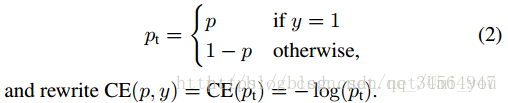
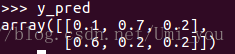
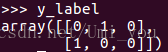
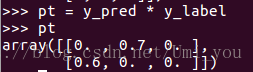
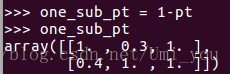
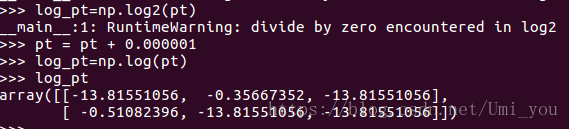
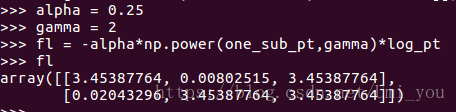
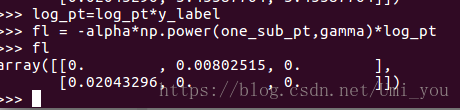
 本文围绕Focal loss展开,用于解决分类问题中数据类别不平衡等问题。作者记录了Focal loss在多分类上的实现过程,解读了二分类和多分类在loss上的区别,给出了多分类和二分类的交叉熵公式,还通过三分类例子模拟流程,最后给出Keras版本代码。







 扫一扫
扫一扫


 1699
1699

 被折叠的 条评论
为什么被折叠?
被折叠的 条评论
为什么被折叠?
 到【灌水乐园】发言





