



Keynote speakers
Prof. YANG Qiang
Hong Kong Polytechnic University, Hong Kong, China
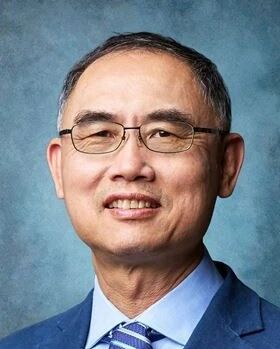
Professor Qiang Yang received his BSc. degree in Astrophysics from Peking University, MSc degree in Astrophysics, MSc in Computer Science and PhD in Computer Science at University of Maryland, USA. Since joining PolyU on 1 April 2025, Professor Yang holds multiple roles, including Director of PolyU Academy of Artificial Intelligence, Chief Artificial Intelligence Officer of the University, and half-time Chair Professor of AI in the Department of Data Science and Artificial Intelligence. He is a fellow of Canadian Academy of Engineering (CAE) and Royal Society of Canada (RSC) and a fellow of IEEE, ACM, AAAI, AAAS, IAPR and CAAI. He was the Founding Editor in Chief of the ACM Transactions on Intelligent Systems and Technology (ACM TIST) and of IEEE Transactions on Big Data (IEEE TBD).
Prof. Jie Wu
Temple University, USA
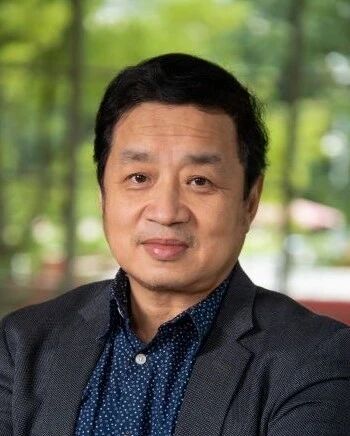
Jie Wu is the Director of the Center for Networked Computing and Laura H. Carnell professor at Temple University. Prior to joining Temple University, he was a program director at the National Science Foundation and was a distinguished professor at Florida Atlantic University. His current research interests include mobile computing and wireless networks, routing protocols, network trust and security, distributed algorithms, and cloud computing. Dr. Wu regularly publishes in scholarly journals, conference proceedings, and books. He serves on several editorial boards, including IEEE Transactions on Mobile Computing and IEEE Transactions on Service Computing. Dr. Wu is/was general chair/co-chair for IEEE IPDPS’08, IEEE DCOSS’09, IEEE ICDCS’13, ACM MobiHoc’14, ICPP’16, IEEE CNS’16, WiOpt’21, and ICDCN’22 as well as program chair/cochair for IEEE MASS’04, IEEE INFOCOM’11, CCF CNCC’13, and ICCCN’20. Dr. Wu is a Fellow of the AAAS and a Fellow of the IEEE. He is the recipient of the 2011 China Computer Federation (CCF) Overseas Outstanding Achievement Award.
Prof. Jiangchuan Liu
Simon Fraser University, Canada
Jiangchuan Liu is a Full Professor in the School of Computing Science, Simon Fraser University, British Columbia, Canada. He is a Fellow of The Canadian Academy of Engineering, an IEEE Fellow, and an NSERC E.W.R. Steacie Memorial Fellow. He is also a Distinguished Guest Professor of Tsinghua Shenzhen International Graduate School. He received the BEng degree (cum laude) from Tsinghua University, Beijing, China, in 1999, and the PhD degree from The Hong Kong University of Science and Technology in 2003, both in computer science. He is a co-recipient of the inaugural Test of Time Paper Award of IEEE INFOCOM (2015), ACM SIGMM TOMCCAP Nicolas D. Georganas Best Paper Award (2013), ACM Multimedia Best Paper Award (2012), and IEEE MASS Best Paper Award (2021). His research interests include multimedia systems and networks, cloud and edge computing, social networking, online gaming, and Internet of things/RFID/backscatter. He has served on the editorial boards of IEEE/ACM Transactions on Networking, IEEE Transactions on Network Sciences and Engineering, IEEE Transactions on Big Data, IEEE Transactions on Multimedia, IEEE Communications Surveys and Tutorials, and IEEE Internet of Things Journal. He is a Steering Committee member of IEEE Transactions on Mobile Computing and Steering Committee Chair of IEEE/ACM IWQoS (2015-2017). He was TPC Co-Chair of IEEE INFOCOM'2021 and IEEE Satellite’2022.
Prof. Yanyong Zhang
University of Science and Technology of China, China

Yanyong obtained her B.S. from USTC in 1997, and her Ph.D. from Penn State in 2002, both in Computer Science. In July 2002, she joined the Electrical and Computer Engineering Department and Winlab at Rutgers University as an Assistant Professor. She was promoted to an Associate Professor with tensure in 2008, and a Professor in 2015. In July 2018, she moved back to her alma mater -- School of Computer Science at USTC. She has served on many organization committees sand TPC committees for international conferences. In the year of 2022, she serves as the TPC co-chair for ACM/IEEE IPSN. She has served as the Associate Editor for the following journals: IEEE TCC (cloud computing), IEEE TDSC, IEEE/ACM ToN, IEEE TMC, IEEE TSC, and Elsevier Smart Health. She is a Fellow of the IEEE. And she is the winner of ACM Mobicom 2021 Best Paper Runner-Up Award.
Prof. Wei Zhang
The University of New South Wales, Australia

Wei Zhang received his PhD degree in Electronic Engineering from the Chinese University of Hong Kong in 2005. He was Research Fellow at the Department of Electronic and Computer Engineering, Hong Kong University of Science and Technology in 2006-2007. In May 2008, he joined the School of Electrical Engineering & Telecommunications, UNSW as Senior Lecturer (2008-2012), Associate Professor (2013-2017) and then Full Professor in November 2017. He was Editor-in-Chief of IEEE Wireless Communications Letters from January 2016 to December 2019. Currently, he is Editor-in-Chief of Journal of Communications and Information Networks (JCIN). He also serves Area Editor of IEEE Transactions on Wireless Communications. Previously, he served as an Editor for IEEE Transactions on Communications (2015-2018), for IEEE Transactions on Cognitive Communications and Networking (2015-2017) and for IEEE Journal on Selected Areas in Communications - Cognitive Radio Series in 2012-2014 and an Editor for IEEE Transactions on Wireless Communications (2010-2015). He served as a TPC Co-Chair of Communications Theory Symposium of IEEE ICC 2011, a TPC Co-Chair of Wireless Communications Symposium of IEEE ICCCAS 2009, a TPC Co-Chair of Wireless Communications Systems Symposium of IEEE ICCC 2013, TPC Chair of Signal Processing for Cognitive Radios and Networks Symposium of the IEEE GlobalSIP 2014, TPC Co-Chair of Wireless Communications Symposium of ICNC 2016, and TPC Co-Chair of Cognitive Radio Track of VTC 2016 Fall. He served as Student Session Chair of IEEE ICASSP 2016. He is a TPC Co-Chair of APCC 2017 and a Workshop Co-Chair of IEEE Globecom 2017. He was TPC Chair of ICCC 2019, Changchun, China. His current research interests include cognitive radio and massive MIMO. He has published 3 books and over 200 papers in the IEEE journals and conferences. Currently, he serves as Chair of IEEE Wireless Communications Technical Committee. He is Vice Director of IEEE Communications Society Asia Pacific Board and Member-at-Large of IEEE Communications Society. He was a Distinguished Lecturer of IEEE Communications Society (2016-2017). He is Fellow of the IEEE and Fellow of the IET.
Prof. Chengzhong XU
University of Macau, Macao SAR, China

Dr. Chengzhong Xu, IEEE Fellow, is the Dean of Faculty of Science and Technology and the Interim Director of Institute of Collaborative Innovation, University of Macau, and a Chair Professor of Computer and Information Science. He was a professor of Wayne State University and the Director of Institute of Advanced Computing of Shenzhen Institutes of Advanced Technologies, Chinese Academy of Sciences before he joined UM in 2019. Dr. Xu is a Chief Scientist of Key Project on Smart City of MOST, China and the principal investigator of the Key Project on Autonomous Driving of FDCT, Macau SAR. Dr. Xu’s research focuses on parallel and distributed computing, with an emphasis on resource management for performance, reliability, availability, power efficiency, and security. His work spans servers and cloud datacenters, wireless embedded devices and edge AI systems , with applications in smart city and autonomous driving. He has authored two research monographs and more than 600 papers, which have garnered more than 22K citations with an H-index of 77, and has been cited in over 300 international patents (including 230 USA patents as of year 2024, per SciVal). His research has been recognized with Best Paper Awards or Nominations at top-tier conferences, including 2021 ACM Symposium on Cloud Computing (SoCC’2021), 2013 IEEE High Performance Computer Architecture (HPCA), the 2013 ACM High Performance Distributed Computing (HPDC), IEEE Cluster’2016, ICPP’2005, GPC’2018, UIC’2018, AIMS’2019, IEEE Edge’2020, as well as a Test-of-Time Paper Award from Frontiers of Computer Science (2024). Additionally, he holds over 200 patents or PCT patents and co-founded “Shenzhen Baidou Applied Technology,” a company specializing in location-based services and technologies. An active contributor to the academic community, he serves or served on the editorial boards, including IEEE Transactions on Computers (TC), IEEE Transactions on Cloud Computing (TCC), IEEE Transactions on Parallel and Distributed Systems (TPDS), Journal of Parallel and Distributed Computing (JPDC), and Science China: Information Science. He is the Associate Editor-in-Chief of ZTE Communication since 2012. From 2015 to 2020, he chaired IEEE Technical Committee on Distributed Processing (TCDP). He obtained his BSc (1986) and MSc (1989) from Nanjing University and his PhD (1993) from the University of Hong Kong in Computer Science and Engineering.
Prof. Yunhuai Liu
Peking University, China
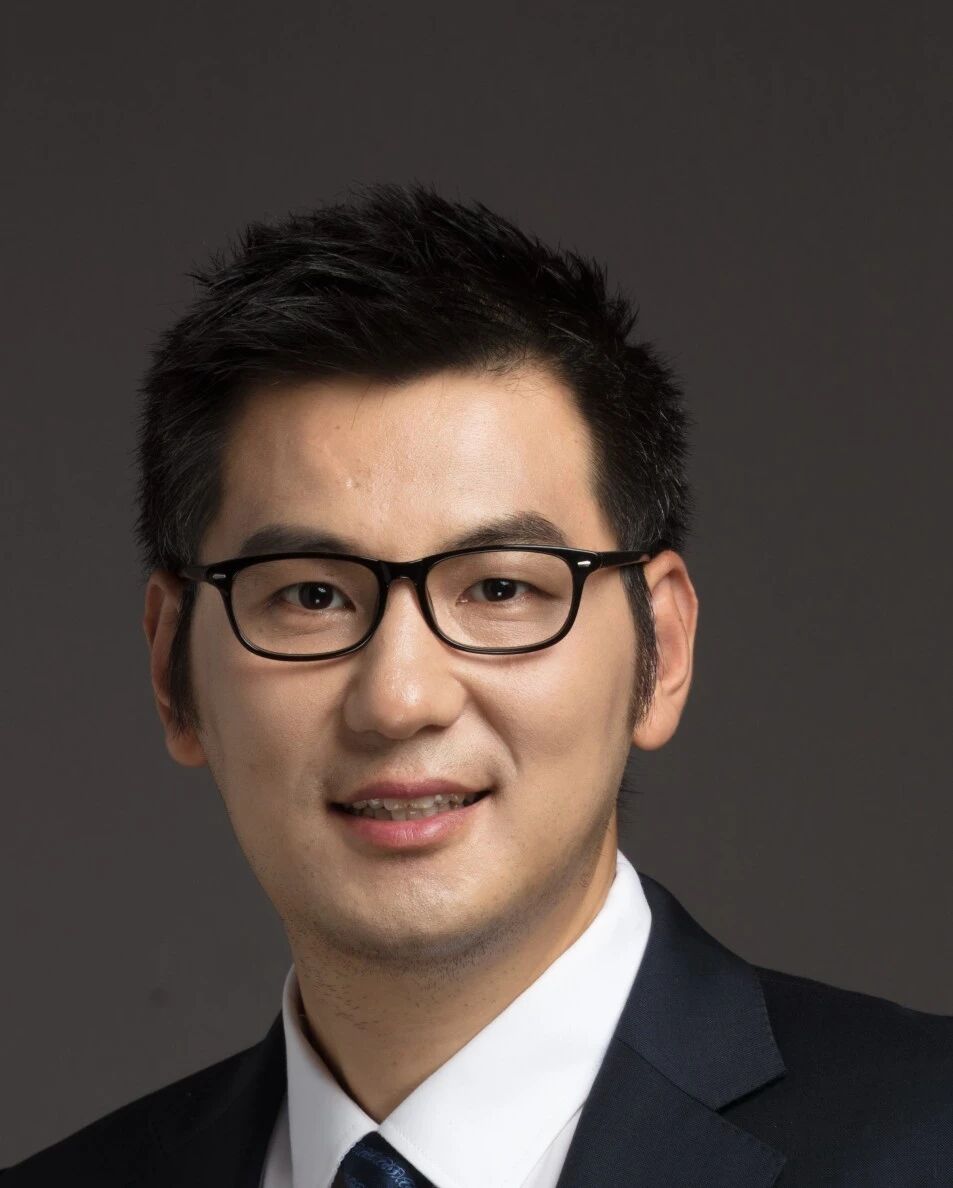
Dr. Yunhuai Liu is now a full professor with the School of Computer Science at the Peking University, P.R. China. He received his Ph.D. degree from Hong Kong University of Science and Technology. Dr. Liu is the recipient of the National Distinguished Young Scholar of NSFC (2019), and National Talented Young Scholar program (2015), and Boya Professorship (2021) of Peking University. He is now serving as the Vice chair of ACM China Council, and served as the Associate Editor for IEEE TNSE and IEEE TPDS respectively, and TPC members for ACM Sensys, IEEE INFOCOM and etc. He received the Outstanding Paper Award at the 2008 the 28th IEEE ICDCS, and 2018 the 25th SANER. He has published over 100 peer-reviewed technical papers with over 4800 citations (google scholar). His H-index is 37.
会议官网:IEEE International Conference on Parallel and Distributed Systems – ICPADS 2025





 扫一扫
扫一扫


 1046
1046

 被折叠的 条评论
为什么被折叠?
被折叠的 条评论
为什么被折叠?
 到【灌水乐园】发言





