 C++多继承示例



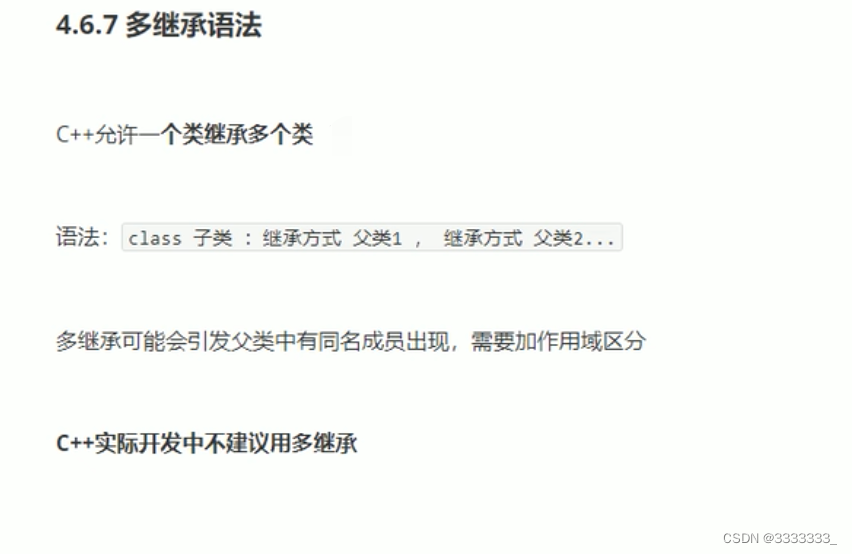
 本文介绍了C++中多继承的基本概念及其实现方式,并通过具体代码示例展示了如何定义和使用多继承类。特别关注了当基类存在同名成员变量时如何正确访问的问题。

#include <iostream>
#include <string>

using namespace std;

//多继承

class Base1 {
public:
    Base1() {
        a = 100;
    }

    int a;
};

class Base2 {
public:
    Base2() {
        b = 200;
    }

    int b;
};

//子类 集成Base1和Base2
//语法  class 子类 :public 父类1,public 父类2...
class Son : public Base1, public Base2 {
public:
    Son() {
        c = 300;
    }

    int c;
};

void test() {
    Son s;
    cout << sizeof(s) << endl;
}

int main() {
    test();
    return 0;
}
12
#include <iostream>
#include <string>
using namespace std;

//多继承

class Base1 {
public:
    Base1() {
        a = 100;
    }

    int a;
};

class Base2 {
public:
    Base2() {
        a = 200;
        b = 200;
    }

    int a;
    int b;
};

//子类 集成Base1和Base2
//语法  class 子类 :public 父类1,public 父类2...
class Son : public Base1, public Base2 {
public:
    Son() {
        c = 300;
    }

    int c;
};

void test() {
    Son s;
    cout << sizeof(s) << endl;
    //当父类出现同名成员,需要加作用域区分
    cout << "base1 a=" << s.Base1::a << endl;
    cout << "base2 a=" << s.Base2::a << endl;
}

int main() {
    test();
    return 0;
}





 扫一扫
扫一扫


 808
808

 被折叠的 条评论
为什么被折叠?
被折叠的 条评论
为什么被折叠?
 到【灌水乐园】发言





